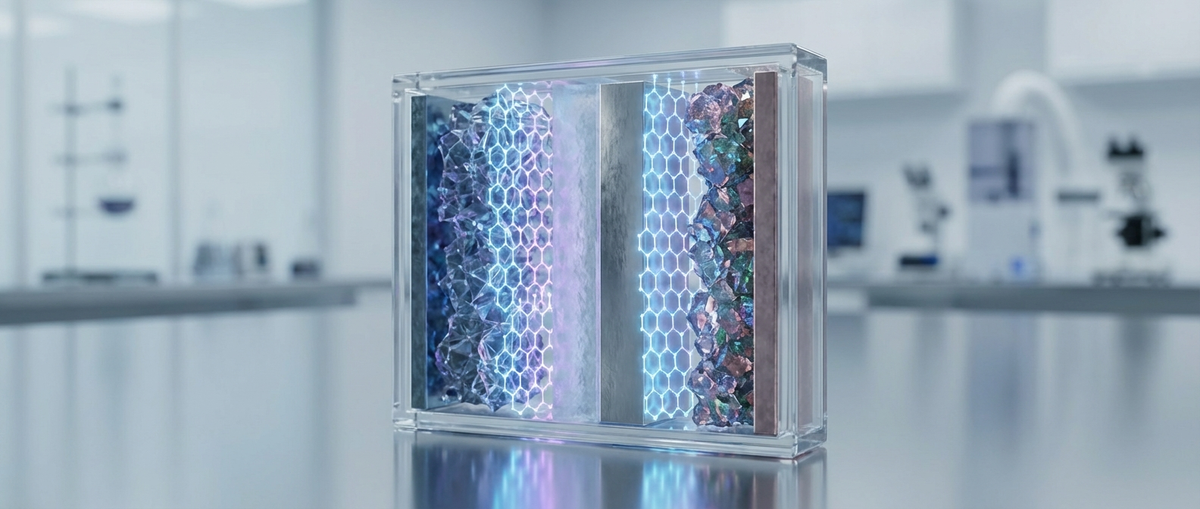
The advent of solid-state batteries represents a pivotal shift in energy storage technology, promising unparalleled safety, higher energy density, and faster charging capabilities compared to conventional lithium-ion counterparts. While the theoretical advantages are compelling, practical implementation faces significant hurdles, primarily at the critical interfaces between solid-state electrolytes and electrodes. These interfaces often suffer from high impedance, poor mechanical stability, and insufficient contact, hindering ion transport and overall battery performance. Graphene, with its extraordinary electrical, thermal, and mechanical properties, emerges as a transformative material capable of addressing these precise challenges, unlocking the full potential of solid-state battery technology.
The Imperative of Solid-State Batteries and Graphene's Interfacial Promise
Current lithium-ion batteries, reliant on flammable liquid electrolytes, pose inherent safety risks and have reached a plateau in energy density improvements. Solid-state electrolytes (SSEs) offer a non-flammable alternative, enhancing safety and enabling the use of high-energy lithium metal anodes, which could dramatically boost energy density. However, SSEs introduce their own set of complexities, including poor wetting at the electrode interface, high interfacial resistance due to limited physical contact, and mechanical stresses arising from volume changes during charging and discharging cycles. Overcoming these interfacial limitations is paramount for solid-state batteries to move from laboratory curiosity to widespread commercial reality. This is where graphene, in its various forms, offers a compelling solution, specifically designed to engineer more robust, conductive, and stable interfaces.
Graphene’s unique combination of high electrical conductivity, exceptional thermal conductivity, superior mechanical strength, and chemical inertness makes it an ideal candidate for tailoring these critical interfacial regions. By strategically integrating graphene, battery developers can mitigate issues like poor charge transfer kinetics, localized heat buildup, and detrimental side reactions that plague current solid-state designs. The material acts as an intelligent mediator, bridging the gap between dissimilar materials and ensuring efficient energy flow. Its ability to create a stable, low-resistance pathway for ions and electrons directly contributes to improved performance, extended cycle life, and enhanced safety, transforming the fundamental behavior of the battery at its most vulnerable points.
Graphene as an Interfacial Enabler: Solving Key Bottlenecks
Graphene adds significant value in solid-state batteries by directly addressing several concrete bottlenecks that impede performance and durability. One primary challenge is conductivity limits at the electrode-electrolyte interface, where high resistance hinders ion and electron transport. Graphene’s ultra-high electrical conductivity can create efficient pathways, significantly reducing charge transfer resistance and enabling faster kinetics for charging and discharging. This direct improvement in conductivity is critical for achieving high power density in solid-state cells.
Another critical issue is heat buildup, especially during rapid charging or discharging cycles, which can accelerate degradation and pose safety risks. Graphene’s exceptional thermal conductivity allows it to efficiently dissipate localized heat, preventing hot spots and maintaining a more uniform temperature profile across the battery. This thermal management capability contributes directly to extended battery life and improved safety under demanding operating conditions. Graphene also plays a crucial role in mitigating material fatigue and improving mechanical stability. Its inherent strength and flexibility can accommodate the volume changes that electrodes undergo during cycling, such as the expansion and contraction of silicon anodes or the plating and stripping of lithium metal. By reinforcing interfaces, graphene prevents crack formation, delamination, and the breakdown of physical contact, which are common failure modes in solid-state systems.
Furthermore, graphene can act as a protective barrier, reducing corrosion and controlling permeability. It can shield electrode materials from unwanted side reactions with the solid electrolyte, preventing degradation and improving long-term stability. Its barrier properties can also inhibit electrolyte decomposition, maintaining the integrity of the cell over many cycles. The most significant contribution lies in addressing interface instability itself. Graphene can form a stable, protective layer that mediates interactions between the electrode and electrolyte, reducing interfacial resistance and preventing the growth of detrimental dendrites in lithium metal anodes. For practical teams, defining measurable Key Performance Indicators (KPIs) before selecting specific graphene formulations is essential to quantify these improvements effectively.
Practical Graphene Forms and Engineering Considerations
Most commercially viable solid-state battery products do not rely on perfect, pristine monolayer graphene, which is often difficult and expensive to produce at scale. Instead, practical applications leverage more accessible and scalable forms of graphene materials, each offering a unique balance of properties and processability. These include graphene nanoplatelets (GNPs), reduced graphene oxide (rGO), and various hybrid carbon systems. This pragmatic approach is normal in production environments, where repeatability, cost-effectiveness, and ease of integration matter significantly more than achieving lab-record values that may not be scalable.
Graphene nanoplatelets consist of a few layers of graphene, offering excellent electrical and thermal conductivity, along with superior mechanical reinforcement at a more favorable cost point. Their morphology allows for easier dispersion and processing compared to single-layer graphene, making them suitable for conductive additives or structural enhancements at interfaces. Reduced graphene oxide (rGO) is derived from graphene oxide, which possesses abundant oxygen-containing functional groups that facilitate dispersion in various solvents. A subsequent reduction process removes most of these groups, restoring significant electrical conductivity while retaining some residual functionalities that can be leveraged for surface engineering and chemical bonding with other battery components. This tunability makes rGO a versatile material for creating stable, functionalized interfaces.
Hybrid carbon systems involve combining graphene materials with other carbon allotropes, such as carbon black, carbon nanotubes, or even highly graphitic carbons. This approach allows engineers to optimize for a specific property profile—for example, achieving a balance between high conductivity, mechanical resilience, and overall cost. The choice of graphene form depends entirely on the specific application requirements within the battery, whether it is enhancing conductivity at the cathode-electrolyte interface, improving mechanical stability at the anode, or creating a protective layer. Process compatibility is paramount, encompassing factors such as the mixing profile, rheology window, solids loading, drying dynamics, and interface chemistry. These engineering considerations are crucial for successful integration and determine the final performance of the graphene-enhanced battery.
The Criticality of Dispersion and Process Compatibility
The success of graphene integration into solid-state batteries hinges critically on achieving excellent dispersion and ensuring full process compatibility within existing or new manufacturing workflows. Poor dispersion can entirely erase the expected performance gains from graphene, leading to agglomerates that create defects, reduce active surface area, and increase electrical resistance. A uniform distribution of graphene throughout the interfacial layer or electrode matrix is essential to consistently deliver its remarkable properties. This requires meticulous control over the mixing profile, which involves optimizing shear forces, mixing duration, and solvent selection to effectively exfoliate and separate graphene flakes without damaging their structure.
The rheology window of graphene-containing slurries is another vital consideration, dictating how the material behaves during coating, casting, or printing processes. The viscosity, yield stress, and thixotropy must be carefully managed to ensure smooth, uniform layers without defects or sagging. Solids loading, representing the concentration of graphene and other active materials in the slurry, must be optimized to achieve desired performance without compromising dispersibility or processability. Too high a loading can lead to aggregation, while too low may not provide sufficient enhancement.
Drying dynamics following deposition are equally important. Rapid or uneven drying can cause graphene flakes to migrate and re-agglomerate, negating previous dispersion efforts and creating an inconsistent final structure. Careful control over temperature, humidity, and airflow is necessary to achieve a stable, well-integrated interface. Finally, interface chemistry plays a pivotal role in optimizing performance. Functionalization of graphene surfaces can promote better adhesion with solid electrolytes or electrode active materials, reducing interfacial impedance and enhancing chemical stability. Understanding and controlling these parameters are not merely engineering challenges but fundamental requirements for unlocking graphene’s full potential in solid-state battery manufacturing.
Economic Viability and Lifecycle Advantages
The adoption decisions for graphene in solid-state batteries must extend beyond the immediate raw material cost to encompass the total lifecycle cost of the final product. While graphene materials may carry a higher initial price tag than conventional additives, their ability to deliver even moderate gains in thermal management, electrical efficiency, or mechanical stability can generate major downstream savings. These savings materialize through lower maintenance requirements, improved system uptime, and significantly longer service life for the battery. In applications such as electric vehicles, grid-scale energy storage, or aerospace, where battery replacement or servicing is costly and complex, extending the battery’s operational lifespan by even a small percentage can translate into millions of dollars in total cost reduction over the product’s lifecycle.
For example, a graphene-enhanced interface that reduces internal resistance not only improves power delivery but also minimizes heat generation, which directly correlates to less degradation and a longer cycle life. Similarly, a mechanically robust interface prevents crack propagation and delamination, delaying capacity fade and improving overall reliability. These benefits contribute to a superior value proposition where the upfront investment in graphene technology is justified by enhanced performance, increased safety, and reduced operational expenses over the long term. Graphene is not merely a component; it is an enabler of higher-value products with superior economics.
In regulated or safety-critical sectors, such as automotive or medical devices, the cost of failure is exceptionally high, making reliability paramount. Here, the qualification planning for graphene-enhanced solid-state batteries should begin early in the development cycle. Teams must test under a comprehensive range of realistic conditions, including rigorous thermal cycling, extended humidity exposure, and duty profiles that accurately reflect real-world usage. This proactive and thorough testing regime is crucial to identify and mitigate potential issues early, avoiding costly late-stage surprises and accelerating market acceptance. The economic case for graphene is therefore built on a foundation of performance, reliability, and long-term value creation, rather than simply raw material price.
Overcoming Adoption Challenges and Strategic Deployment
The successful integration and widespread adoption of graphene in solid-state batteries require a strategic approach to overcome several persistent challenges. One of the top hurdles remains dispersion consistency. Ensuring that graphene is uniformly distributed without re-agglomeration throughout the manufacturing process, from slurry preparation to final drying, is fundamental. This necessitates advanced characterization techniques, standardized processing protocols, and often, customized graphene formulations designed for specific battery chemistries and manufacturing methods. Addressing this challenge will require close collaboration between graphene producers and battery manufacturers to tailor solutions that fit specific production lines.
Process compatibility is another critical constraint. Integrating graphene materials must be seamless with existing battery manufacturing infrastructure or require minimal modifications. This involves optimizing graphene’s interaction with binders, solvents, and other active materials, ensuring that its presence does not negatively impact other critical processing steps like calendering or packaging. Quality standardization is also paramount. Establishing clear, universally accepted metrics for graphene material properties—such as layer count, lateral dimensions, purity, and functionalization level—specifically for battery applications, is essential. This allows for consistent material procurement and predictable performance outcomes, building trust across the supply chain.
Finally, supply-chain repeatability is crucial for commercial scale-up. Battery manufacturers need assurance of consistent quality and volume from their graphene suppliers to avoid production disruptions and ensure product reliability. Strategic deployment of graphene in solid-state batteries will therefore involve a multi-faceted approach. This includes fostering interdisciplinary teams that combine materials science expertise with battery engineering and manufacturing know-how. It also means investing in early-stage, rigorous qualification planning, subjecting graphene-enhanced prototypes to extensive thermal cycling, humidity exposure, and realistic duty profiles. By proactively addressing these challenges and focusing on a disciplined workflow—identifying target metrics, optimizing dispersion, running stress tests, and scaling only after consistency is proven—the path to widespread adoption becomes clearer and more efficient.
FAQ
Is graphene commercially viable today in solid-state batteries?
Yes, graphene is commercially viable today, particularly in high-value applications where its measurable performance improvements in areas like conductivity, thermal management, and mechanical stability justify the integration effort and cost. Its deployment is increasing as manufacturing processes become more refined and the long-term economic benefits become clearer.
What are the top challenges for graphene integration in solid-state batteries?
The primary challenges for graphene integration include achieving consistent and uniform dispersion within battery components, ensuring process compatibility with existing manufacturing lines, establishing robust quality standardization across different graphene forms, and guaranteeing supply-chain repeatability for mass production. These factors are critical for reliable performance and scalability.
How does graphene improve battery safety in solid-state designs?
Graphene enhances battery safety by improving thermal management, dissipating localized heat efficiently to prevent hot spots that can lead to thermal runaway. Its mechanical strength can also prevent the formation of cracks and delamination, contributing to overall cell integrity. Furthermore, graphene can act as a protective layer, inhibiting dendrite growth in lithium metal anodes, which is a significant safety concern.
What forms of graphene are most commonly used in battery applications?
In practical battery applications, graphene nanoplatelets (GNPs), reduced graphene oxide (rGO), and hybrid carbon systems are the most commonly utilized forms. These materials offer a balance of performance, cost-effectiveness, and processability, making them suitable for industrial-scale integration where consistency and manufacturing ease are prioritized over pristine, single-layer properties.
What kind of performance improvements can be expected with graphene integration?
With correct integration, graphene can lead to significant performance improvements including reduced interfacial resistance for faster charging and discharging, enhanced cycle life due to improved mechanical stability and reduced degradation, and increased power density. It can also contribute to higher energy density by enabling more stable lithium metal anodes and overall better thermal management.
The future of energy storage critically depends on breakthroughs in solid-state battery technology, and graphene stands as a pivotal enabler of this revolution. By meticulously engineering the interfaces within these advanced batteries, graphene offers a pathway to unlock unprecedented levels of performance, durability, and safety. Its ability to concurrently enhance conductivity, dissipate heat, improve mechanical stability, and stabilize critical interfaces addresses the most significant hurdles facing solid-state designs. The journey from laboratory innovation to widespread commercialization requires a disciplined approach, focusing on practical graphene forms, meticulous process control, and a clear understanding of lifecycle economics. As research and development continue to refine integration techniques and standardize material quality, graphene-enhanced solid-state batteries are poised to redefine energy storage, powering the next generation of electric vehicles, portable electronics, and grid-scale solutions with unparalleled efficiency and reliability.