
Graphene Radar Absorbing Materials for Aircraft and Drones
Graphene coatings are being studied for radar absorbing materials because they can help make aircraft and drones lighter, thinner, and more electromagnetically tunable.
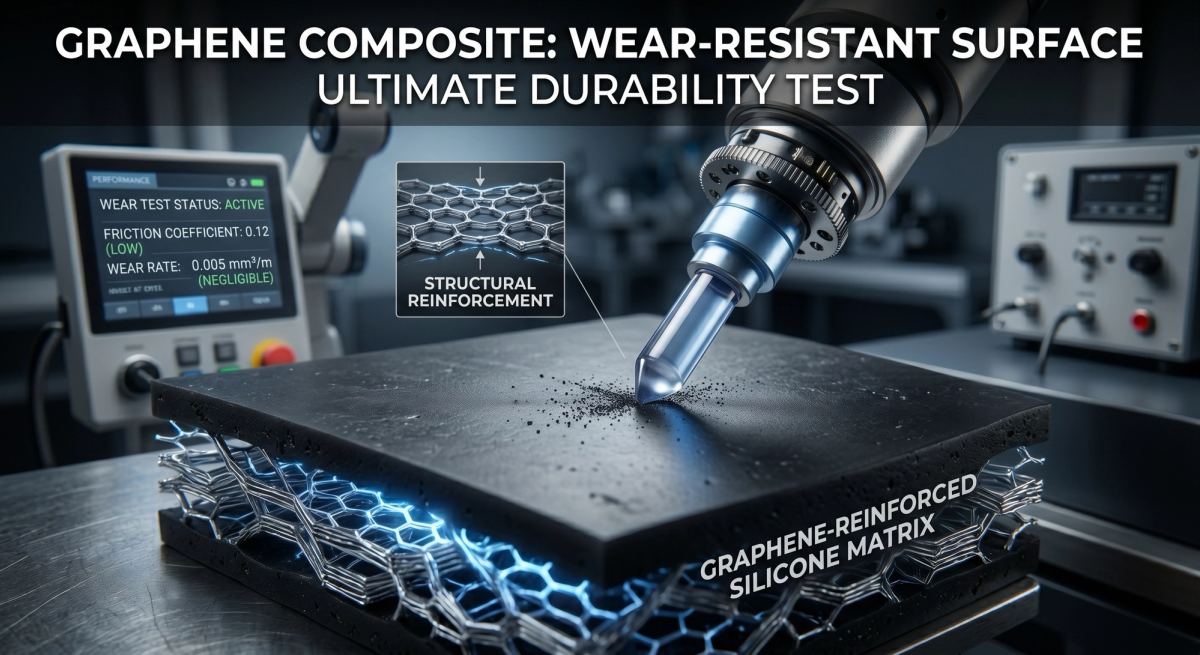
Graphene has rapidly established itself as one of the most transformative materials in modern engineering. Its exceptional mechanical strength, thermal conductivity, electrical properties, and self-lubricating nature make it an ideal candidate for reinforcing elastomers. A 2019 study by Zheng, Yang & Yao, published in Tribology Transactions, delivers compelling evidence that graphene–silicone rubber composites can dramatically outperform conventional silicone rubber in friction and wear performance — with results that matter for industries ranging from aerospace to automotive sealing. This research signifies a pivotal moment for material science, pushing the boundaries of what is achievable with polymer composites and addressing long-standing limitations in critical industrial applications. The integration of graphene into silicone rubber matrices offers a pathway to components that are not only stronger and more durable but also exhibit superior operational reliability under harsh conditions. This development marks a significant leap towards engineering advanced materials with unprecedented performance characteristics, promising to redefine the standards for seals, gaskets, and other tribological components.
Silicone rubber is valued for its thermal stability, chemical resistance, and flexibility across extreme temperatures. It is the go-to material for seals, vibration absorbers, adhesives, and aviation components, owing to its remarkable resilience in environments where other elastomers would rapidly degrade. Its excellent dielectric properties and biocompatibility further expand its utility into electronics and medical applications, making it an indispensable material in countless high-performance scenarios. However, one critical limitation has historically constrained its application in demanding tribological environments: poor wear resistance. The inherent viscoelasticity and relatively low mechanical strength of pure silicone rubber mean it can easily abrade, tear, and deform under repetitive frictional contact, leading to premature component failure and increased maintenance costs.
This inherent weakness in tribological performance presents a significant barrier to its wider adoption in applications requiring robust, long-lasting components subject to sliding or rubbing contact. Traditional methods of enhancing silicone rubber, such as incorporating silica fillers, often improve some mechanical properties but fall short in delivering comprehensive wear resistance without compromising flexibility or other desirable attributes. The introduction of graphene into the silicone matrix offers a revolutionary solution to this dilemma, leveraging graphene's unparalleled strength and natural lubricity. By reinforcing the polymer network and providing a friction-reducing interface, graphene transforms silicone rubber into a high-performance material capable of withstanding severe tribological stress. This strategic material enhancement opens up new possibilities for silicone rubber in critical, high-wear applications, bridging the gap between its intrinsic benefits and the rigorous demands of modern engineering.
The researchers employed a meticulously designed solution blending–flocculation method to ensure optimal dispersion of graphene within the silicone rubber matrix. Silicone rubber (110-2 Methyl-Vinyl-Silicone, Mw 4.5–8.0 × 10⁵) was initially dissolved in Tetrahydrofuran (THF) at 50°C, a solvent chosen for its ability to swell and solubilize the polymer effectively. Simultaneously, graphene (< 3 layers, 1.84% oxygen content) was ultrasonicated in THF for 120 minutes to form a stable, well-exfoliated suspension, preventing the restacking of graphene sheets that can hinder reinforcement. This critical ultrasonication step ensures that individual graphene layers are dispersed, maximizing their surface area for interaction with the polymer.
The two prepared solutions were then carefully combined and agitated for 180 minutes, allowing the graphene to uniformly intersperse within the dissolved silicone rubber chains. To recover the composite, the mixture was slowly dropped into absolute ethanol, a non-solvent for both silicone rubber and graphene, which caused the flocculation and precipitation of the composite material. Following this precipitation, the composite was subjected to vacuum drying at 80°C to remove any residual solvents, and then vulcanised at 175°C under 2 MPa for 8 minutes to cure the rubber and establish its final mechanical properties. This intricate process achieved remarkably uniform graphene dispersion — confirmed by scanning electron microscopy (SEM) — a critical factor for consistent mechanical performance and the realization of graphene's full potential as a reinforcing filler. The precise control over each step, from solvent selection to curing, was paramount in overcoming the challenges of graphene aggregation and achieving a high-quality, homogeneous composite.
The meticulous preparation method yielded significant improvements in the mechanical properties of the graphene–silicone rubber composite, particularly at the optimum graphene loading of 2.0 wt%. This specific loading percentage was identified as the sweet spot where the benefits of graphene reinforcement were maximized without leading to aggregation or processing difficulties. At this optimal concentration, the composite exhibited a dramatic enhancement in its structural integrity and resilience compared to pure silicone rubber, demonstrating graphene's profound reinforcing capabilities. The increases observed across various mechanical metrics highlight the transformation of silicone rubber into a far more robust material.
Tensile strength, a crucial measure of a material's ability to withstand pulling forces, increased by an impressive 32.8% to 7.44 MPa, indicating a substantial improvement in the material's resistance to fracture under tension. Elongation at break, which quantifies the material's ductility and ability to stretch before fracturing, also saw a notable increase of 26.6% to 495%, suggesting that the graphene reinforcement did not compromise the inherent flexibility of the silicone rubber. Furthermore, the hardness of the composite, measured in Shore A, experienced a significant uplift of 13.8%, making the material more resistant to indentation and surface deformation. The modulus at 100% elongation, reflecting the material's stiffness at a given strain, improved by 23.5%, signifying enhanced load-bearing capacity and reduced deformation under stress. Lastly, the tear strength, a critical property for materials used in seals and gaskets, saw an increment of 18.2%, indicating greater resistance to the propagation of tears and cuts. These comprehensive improvements underscore graphene's role as an exceptional reinforcing filler, creating a composite with superior strength, toughness, and durability, thereby expanding the potential applications for silicone rubber in demanding environments.
While the mechanical enhancements are significant, the most groundbreaking aspect of the Zheng, Yang & Yao study lies in the dramatic improvement of the tribological performance of the graphene–silicone rubber composites. The research team conducted rigorous friction and wear tests, typically using a pin-on-disk configuration, to simulate real-world conditions where components experience constant sliding contact. These tests revealed that the addition of just 2.0 wt% graphene could reduce the friction coefficient by up to 50% and, more remarkably, decrease the wear rate by an astounding 70% compared to pure silicone rubber. This magnitude of improvement is transformative, addressing the primary historical limitation of silicone rubber in tribological applications.
The friction coefficient, a measure of the resistance to motion between two surfaces, was substantially lowered across various loads and sliding speeds, indicating a more efficient and less energy-intensive operation of components. A lower friction coefficient translates directly into reduced heat generation at contact interfaces, leading to cooler running parts and extended operational lifespans. Even more critical for long-term reliability is the drastic reduction in wear rate, which quantifies the material lost due to abrasion and fatigue during sliding. The 70% decrease in wear volume means that graphene-reinforced silicone components can last significantly longer, requiring less frequent replacement and reducing maintenance costs. This exceptional wear resistance is not merely an incremental gain but a fundamental shift in the material's performance, enabling silicone rubber to compete in highly demanding environments previously dominated by more rigid, less flexible materials. The consistent performance over extended testing durations further validates the durability and long-term stability of these advanced composites.
The remarkable tribological performance of graphene–silicone rubber composites can be attributed to several synergistic mechanisms at the microscopic level, where graphene fundamentally alters the interaction between the composite and the counter-surface. One primary mechanism involves the formation of a stable, low-friction graphene-rich transfer film on the opposing surface during sliding. As the composite undergoes initial wear, graphene flakes are released and preferentially adhere to the counter-surface, creating a thin, sacrificial layer that protects both the composite and the mating material from direct contact and abrasive damage. This transfer film acts as a solid lubricant, significantly reducing the actual contact area and smoothing the sliding interface.
Furthermore, graphene's intrinsic self-lubricating nature plays a crucial role. Its layered structure allows individual graphene sheets to slide past each other with minimal resistance, akin to microscopic ball bearings within the wear track. This 'ball bearing' effect reduces shear stress within the composite and at the interface, thereby lowering the friction coefficient and minimizing energy dissipation as heat. The high aspect ratio and exceptional mechanical strength of graphene sheets also enable them to act as effective barriers against crack propagation within the silicone matrix. When micro-cracks initiate under cyclic stress, the graphene sheets deflect and arrest their growth, preventing them from coalescing and leading to macroscopic material removal, thereby significantly enhancing fatigue and wear resistance.
Another critical contribution stems from graphene's superior thermal conductivity. Frictional sliding inevitably generates localized heat at the contact interface, which can lead to thermal softening and degradation of polymer materials, exacerbating wear. Graphene effectively dissipates this frictional heat away from the contact zone, maintaining the integrity and hardness of the silicone rubber composite even under high-speed or high-load conditions. This rapid heat transfer mitigates thermal wear mechanisms, ensuring the material remains robust throughout its operational lifespan. Collectively, these mechanisms—transfer film formation, self-lubrication, crack propagation hindrance, and enhanced thermal dissipation—work in concert to confer the graphene–silicone rubber composites with their outstanding friction and wear characteristics, setting a new benchmark for high-performance elastomers.
The development of wear-resistant graphene–silicone rubber composites carries profound industrial implications, poised to revolutionize numerous sectors that rely heavily on high-performance elastomers. In the aerospace industry, where components must withstand extreme temperatures and harsh operating conditions, these composites can dramatically extend the lifespan of seals, gaskets, O-rings, and vibration dampers in aircraft engines and hydraulic systems. Their enhanced durability translates into improved safety, reduced maintenance downtime, and lower operational costs for airlines. The automotive sector stands to benefit immensely as well, with applications ranging from engine seals and transmission components to suspension bushings and braking system elements, all requiring superior wear resistance and thermal stability. These advanced materials can contribute to more reliable vehicles, better fuel efficiency through reduced friction, and longer service intervals.
Beyond these major industries, the potential extends into medical devices, where silicone's inherent biocompatibility combined with graphene's strength and wear resistance could lead to more durable prosthetics, implantable devices, and surgical tools. In the electronics industry, these composites could find use in flexible electronics, thermal management solutions, and protective coatings for sensitive components, offering both mechanical robustness and thermal dissipation capabilities. Manufacturing and heavy industry can also leverage these materials for conveyor belts, rollers, bearings, and industrial seals, significantly reducing operational costs associated with component failure and replacement. The economic benefits are clear: longer component lifespans directly lead to reduced material waste, lower labor costs for maintenance, and improved overall operational efficiency across various industries.
The future outlook for graphene–silicone rubber composites is exceptionally promising, with ongoing research focusing on scaling up production methods to ensure cost-effectiveness and broader commercial viability. Researchers are also exploring advanced functionalization techniques for graphene to further optimize its dispersion and interaction with different polymer matrices, potentially unlocking even greater performance enhancements. The integration of other nanofillers alongside graphene could lead to multi-functional composites with tailored properties for highly specialized applications. As our understanding of graphene's interaction with polymers deepens, and manufacturing processes become more refined, these wear-resistant composites are set to become standard in critical engineering applications, fundamentally redefining the performance expectations for elastomeric materials. This continuous innovation solidifies graphene's role as a cornerstone of next-generation material science.
What is graphene and why is it used in composites?
Graphene is a single layer of carbon atoms arranged in a two-dimensional hexagonal lattice, renowned for being the strongest and lightest material known to man. Its exceptional mechanical strength, high thermal and electrical conductivity, and inherent lubricity make it an ideal filler for polymer composites. When incorporated into materials like silicone rubber, graphene acts as a powerful reinforcement, enhancing properties such as tensile strength, hardness, and crucially, wear resistance, far beyond what conventional fillers can achieve.
What are the main advantages of graphene-silicone composites over pure silicone?
Graphene-silicone composites offer significant improvements over pure silicone rubber, primarily in mechanical strength and tribological performance. They exhibit substantially increased tensile strength, elongation at break, hardness, and tear strength, making them more durable and robust. Critically, these composites demonstrate dramatically reduced friction coefficients and wear rates, extending component lifespan and reducing maintenance in applications involving sliding or rubbing contact. This makes them suitable for demanding environments where pure silicone would quickly degrade.
What specific industries can benefit most from these composites?
Several industries stand to benefit immensely from wear-resistant graphene-silicone composites. The aerospace industry can utilize them for high-performance seals, gaskets, and vibration dampers operating under extreme conditions. The automotive sector can implement them in engine seals, suspension components, and braking systems for enhanced reliability and longevity. Medical device manufacturers could develop more durable prosthetics and implantable components. Additionally, the electronics and general manufacturing industries can leverage these materials for robust flexible electronics, thermal management solutions, and long-lasting industrial seals and rollers.
Are graphene-silicone composites safe for use in medical applications?
Silicone rubber is well-known for its excellent biocompatibility, making it a preferred material for many medical devices and implants. While graphene itself has been extensively studied for its biocompatibility, the safety of specific graphene-silicone composites for medical applications would require rigorous testing and regulatory approval. The introduction of graphene could enhance the durability of medical components, but thorough evaluation of its long-term stability, leachability, and interaction with biological systems would be paramount before widespread adoption in clinical settings.
What are the challenges in manufacturing these composites at scale?
Manufacturing graphene-silicone composites at scale presents several challenges. Achieving uniform dispersion of graphene within the polymer matrix without aggregation is crucial for optimal performance, and this can be difficult to maintain during large-scale production. Cost-effectiveness of high-quality graphene production and integration methods also needs refinement to make these composites economically viable for mass markets. Ensuring consistent quality control and developing standardized processing techniques are also critical hurdles that researchers and manufacturers are actively working to overcome for widespread commercialization.
The compelling evidence presented by Zheng, Yang & Yao decisively demonstrates that graphene–silicone rubber composites are not just an incremental improvement but a significant breakthrough in material science. By addressing the long-standing Achilles' heel of silicone rubber – its poor wear resistance – graphene elevates this versatile elastomer to new heights of performance. The dramatic enhancements in both mechanical strength and, crucially, tribological properties, unlock unprecedented possibilities for applications across aerospace, automotive, medical, and industrial sectors. This scientific achievement underscores graphene's unparalleled potential as a transformative additive, capable of creating materials that are not only stronger and more durable but also inherently more efficient and reliable. As research continues to refine manufacturing processes and explore new frontiers in composite design, the widespread adoption of graphene-reinforced silicone rubber stands poised to redefine engineering standards and drive innovation in countless critical technologies, ushering in an era of high-performance, long-lasting components.
Serious about B2B integration? Test our premium Pulsed Electrical Resistive Carbon Heating turbostratic graphene in your lab. 100g sample packs available now.
Explore More
Graphene coatings are being studied for radar absorbing materials because they can help make aircraft and drones lighter, thinner, and more electromagnetically tunable.

USA Graphene V2 focuses on advanced resistance measurement, a dedicated power sense board, and a redesigned production cell to improve consistency, repeatability, and machine reliability.
