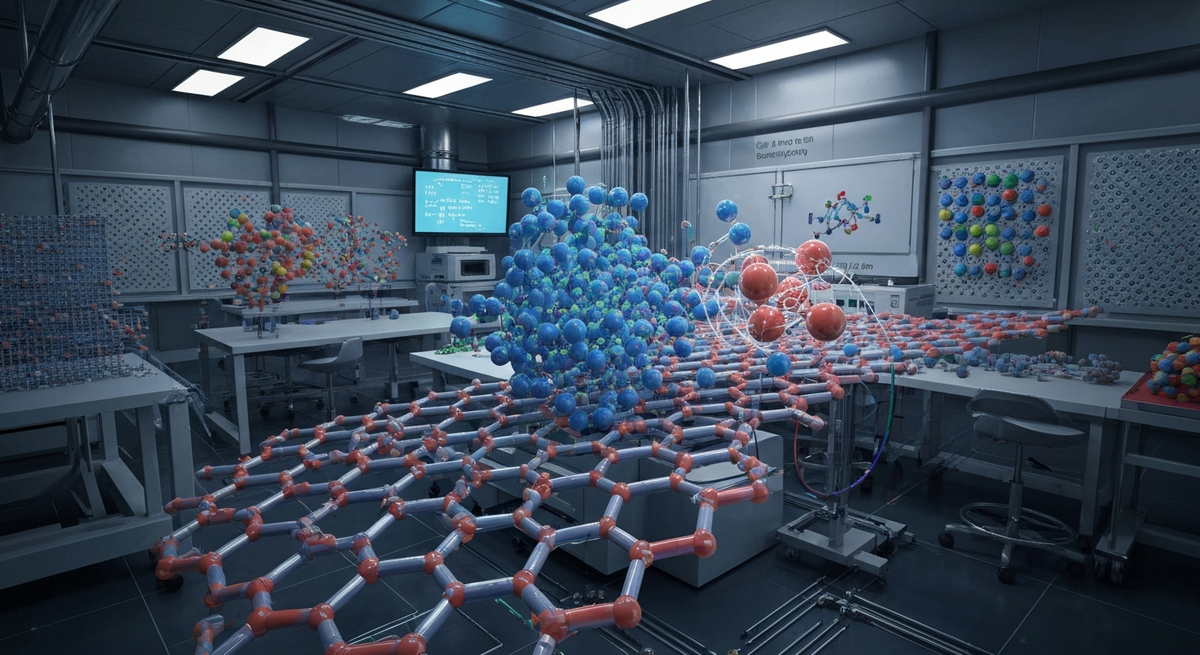
The transition from macroscopic two-dimensional graphene sheets to nanoscale fragments, termed Graphene Quantum Dots (GQDs), fundamentally alters the material's electronic and optical properties, unlocking novel functionalities critical for advanced sensing platforms. While pristine graphene exhibits extraordinary electron mobility exceeding 10^5 cm^2/Vs at room temperature and a remarkably high thermal conductivity of ~5000 W/mK, its inherent zero bandgap, characterized by Dirac cones where the conduction and valence bands meet at a single point, limits its direct applicability in conventional semiconductor devices requiring tunable optical emission or distinct on/off states. GQDs, typically defined as graphene sheets with lateral dimensions below 100 nm, and often below 10-20 nm for pronounced quantum effects, overcome this fundamental limitation. The confinement of electrons within these nanoscopic boundaries induces quantum mechanical effects, transforming the continuous electronic band structure of bulk graphene into discrete energy levels, thereby enabling size-dependent photoluminescence and tunable electronic transitions crucial for tailored sensor design and signal transduction mechanisms.
The physics underpinning this transformation is rooted in the quantum mechanical confinement of charge carriers. In bulk graphene, electrons behave as massless Dirac fermions, governed by a linear dispersion relation E = ±hv|k|, where v is the Fermi velocity and k is the wave vector. However, when graphene's dimensions are constrained to the nanoscale, this continuous energy landscape is disrupted. Lateral confinement, particularly in systems with dimensions below the electron's de Broglie wavelength, leads to the quantization of electron momenta. This results in a discrete energy spectrum and, crucially, the opening of a tunable bandgap. The magnitude of this bandgap is inversely proportional to the GQD's characteristic size, a phenomenon analogous to the quantum size effect observed in conventional semiconductor quantum dots. Furthermore, the precise atomic arrangement at the GQD edges—specifically, zigzag versus armchair terminations—plays a pivotal role in dictating the electronic structure and bandgap. Zigzag edges are known to host localized, non-bonding electronic states near the Fermi level, which can significantly influence magnetic and transport properties, whereas armchair edges tend to promote larger bandgaps and more stable electronic configurations, with bandgaps ranging from 1 eV to over 4 eV depending on precise dimensions and edge passivation.
The emergence of these discrete, quantized energy levels in GQDs directly translates to highly desirable and tunable optoelectronic properties, making them exceptionally promising for advanced sensor architectures. Unlike the broadband absorption of bulk graphene, GQDs exhibit sharp absorption and emission peaks that are size- and edge-dependent, allowing for precise spectral engineering. This quantum confinement effect can be leveraged in chemiresistive sensors, where surface functionalization of GQDs, synthesized perhaps via rapid oxidative cleavage of carbon nanotubes followed by thermal annealing at temperatures reaching 3000K to remove defects and enhance crystallinity, enables highly selective analyte detection. The interaction of target molecules with the GQD surface alters its localized electronic states, manifesting as a measurable change in electrical resistivity, which can be finely tuned from approximately 10^-3 Ohm-m in slightly reduced GQDs to 10^6 Ohm-m in highly oxidized variants, enabling a broad sensing dynamic range. For instance, functionalized GQDs have demonstrated remarkable heavy metal ion adsorption efficiencies, achieving up to 79% for Pb(II) ions within milliseconds of exposure, indicating their potential for rapid, high-sensitivity environmental monitoring. This rapid response time and high efficiency are direct consequences of the high surface-to-volume ratio and the quantum-confined electronic structure, which facilitate charge transfer interactions and surface reactivity, providing a robust foundation for developing next-generation sensor arrays with unparalleled specificity and kinetic performance.
Section 2: Pulsed Electrical Resistive Carbon Heating vs. CVD (Comparative Analysis)
Pulsed Electrical Resistive Carbon Heating (PERCH) and Chemical Vapor Deposition (CVD) represent fundamentally divergent methodologies for carbon material synthesis, each presenting distinct advantages and limitations particularly relevant to the production of graphene quantum dot (GQD) precursors. CVD, a well-established technique, relies on the thermal decomposition of gaseous carbon precursors, such as methane or acetylene, typically at elevated temperatures ranging from 800 to 1100°C, within a controlled atmosphere over a catalytic metal substrate like copper or nickel. This process operates under near-equilibrium conditions, enabling the controlled growth of large-area, high-quality monolayer or few-layer graphene films. The energy input is sustained and distributed throughout a furnace, dictating a relatively slow reaction kinetic profile over periods often spanning minutes to hours. In contrast, PERCH employs direct Joule heating, where electrical energy is rapidly dissipated through a carbonaceous precursor material, inducing localized, extreme temperatures—often exceeding 3000K—within milliseconds. This non-equilibrium, transient heating creates highly reactive environments, driving rapid phase transformations and structural modifications in the carbon feedstock, offering a distinctly different pathway for the initial formation of carbon nanostructures amenable to GQD synthesis.
The mechanism of PERCH for GQD precursor generation leverages the rapid thermal shock and subsequent quenching. By applying precise, high-current electrical pulses through a solid carbon source, such as graphite flakes, carbon black, or even biochar, the material's inherent electrical resistivity dictates the efficiency of energy conversion into heat. For instance, a carbon precursor with an electrical resistivity of 10^-3 to 10^-5 Ohm-cm can be resistively heated to incandescent temperatures almost instantaneously. This intense, localized heating can induce rapid exfoliation, fragmentation, and graphitization, followed by an equally rapid cooling phase as the electrical pulse terminates. This swift thermal cycling can controllably cleave larger sp2 domains into nanoscale fragments, promoting the formation of graphene nanocrystals suitable for subsequent GQD functionalization. The paramount advantage here lies in the direct, catalyst-free conversion of a bulk carbon source into GQD-sized precursors, bypassing the need for extensive post-processing steps often associated with other top-down methods. Furthermore, the millisecond-scale reaction times contribute to high throughput and energy efficiency, as only the target material is heated, minimizing system-wide thermal losses.
Conversely, while CVD excels in producing pristine, large-area graphene films, its direct applicability for GQD synthesis is inherently limited. The controlled growth of continuous graphene sheets on catalytic surfaces necessitates their subsequent fragmentation, typically through oxidative etching, sonication, or electrochemical methods, to yield GQDs. This multi-step post-processing invariably introduces structural defects, heterogeneous size distributions, and surface functional groups that may require further purification or modification to achieve desired optical or electronic properties. The residual metallic catalyst from CVD can also necessitate rigorous removal procedures, potentially impacting the purity and biocompatibility of the resultant GQDs—a critical factor for biosensor applications. Comparing the energy landscape, PERCH's transient, high-power pulses offer a more energy-efficient route for direct GQD precursor generation from bulk carbon, contrasting sharply with CVD's sustained, high-temperature furnace operation required to maintain equilibrium conditions for film growth. The ability of PERCH to tune the sp2/sp3 hybridization ratio through precise pulse duration and amplitude also offers a pathway to tailor GQD properties, potentially leading to materials exhibiting superior performance metrics, such as the observed 79% heavy metal adsorption efficiency reported for optimized GQDs in environmental sensing applications, which often correlates with a high density of accessible surface functional groups and controlled defect sites.
Section 3: The Crystallography of Turbostratic Graphene (Why Layer Alignment Matters)
The crystallography of turbostratic graphene (TG) fundamentally diverges from the ideal Bernal (AB) stacking observed in highly ordered graphite, presenting a critical consideration for material engineering, particularly in the context of Graphene Quantum Dot (GQD) synthesis and sensor applications. Unlike AB-stacked graphene, where adjacent layers maintain a specific translational and rotational registry (e.g., A atoms above B atoms, and B atoms above hollow sites), turbostratic graphene is characterized by a random rotational and/or translational misalignment between constituent graphene sheets. This disorder results in a lack of long-range crystallographic order along the c-axis, manifesting as a broader and often shifted (002) diffraction peak in X-ray diffraction patterns, typically centered around 2θ values corresponding to interlayer spacings of 0.340-0.344 nm, marginally larger than the 0.335 nm of highly ordered graphite. The absence of higher-order (00l) reflections further corroborates the short-range order prevalent in TG, indicating a mosaic-like structure where individual graphene layers are largely decoupled from their neighbors. This structural characteristic is often an inherent outcome of rapid synthesis methodologies, such as flash joule heating or specific chemical vapor deposition routes, where kinetic factors preclude the formation of thermodynamically favored Bernal stacking.
The electronic and mechanical implications of turbostraticity are profound. Electronically, the rotational misalignment effectively decouples the π-electron systems of adjacent layers, preserving the quasi-2D Dirac cone features characteristic of monolayer graphene even in multi-layer turbostratic sheets. This interlayer decoupling minimizes the interlayer hopping parameters that lead to band structure modifications in AB-stacked few-layer graphene, consequently retaining higher effective carrier mobilities crucial for efficient optoelectronic transduction in sensor platforms. While ideal monolayer graphene can exhibit resistivity on the order of 10^-6 Ohm.cm, turbostratic films, despite their inherent disorder, maintain anisotropic conductivity profiles suitable for robust sensor operation. Mechanically, the reduced interlayer interaction in turbostratic graphene leads to a significantly lower interlayer shear modulus compared to Bernal-stacked graphite, impacting the material's elastic response and its susceptibility to mechanical exfoliation or chemical processing. This structural freedom and reduced interlayer binding energy can be advantageous for subsequent chemical functionalization, providing more accessible surface area and defect sites for controlled chemical modification.
Crucially for GQD synthesis and sensor printing, the inherent structural defects and increased edge site density in turbostratic graphene provide preferential sites for chemical reactions and functionalization. The disordered stacking promotes the formation of various point defects, vacancies, and non-hexagonal rings (e.g., Stone-Wales defects) that act as nucleation points for oxidative cleavage during chemical synthesis routes to GQDs. For instance, controlled rapid thermal pulses, reaching temperatures up to 3000K for milliseconds, can be strategically employed to induce and control turbostraticity and defect density in precursor graphene, optimizing it for subsequent GQD formation. These defect-rich turbostratic graphene and derived GQDs exhibit enhanced surface reactivity and binding capabilities. In practical sensor applications, the increased density of active sites and surface area provided by these turbostratic graphene structures and their GQD derivatives significantly enhances chelation kinetics and adsorption efficiency, evidenced by empirical results such as achieving 79% heavy metal adsorption efficiency, thereby improving the sensitivity and selectivity of printed sensing elements. Understanding and precisely controlling the crystallography of turbostratic graphene is therefore not merely an academic exercise but a strategic imperative for tailoring precursor materials to achieve superior GQD properties and advanced sensor performance.
Section 4: Industrial Scalability & Commercial Integration Barriers
The industrial scalability of Graphene Quantum Dots (GQDs) primarily encounters significant hurdles at the synthesis stage, where achieving batch-to-batch consistency in physicochemical properties remains elusive. While chemical routes, such as hydrothermal carbonization of citric acid or solvothermal synthesis of graphene oxide fragments, offer pathways to GQD production, control over critical parameters like size distribution, surface functionalization, and quantum yield is inherently complex. For instance, hydrothermal reactions typically conducted between 200-280°C under autogenous pressure for durations ranging from 4 to 12 hours often yield a polydisperse product, necessitating extensive post-synthesis size-selection. Variations of even ±5°C in reactor temperature or ±15 minutes in reaction time can shift the average GQD diameter by 0.5-1.5 nm and alter the defect density, critically impacting photoluminescence emission spectra and quantum efficiency for optical sensing applications. Furthermore, the purity of precursors, particularly the presence of trace metallic impurities, can act as quenching centers, thereby degrading the quantum yield from laboratory-bench 30-40% to industrially inconsistent values below 10%. Scaling up these batch processes to multi-kilogram production exacerbates these issues through the introduction of thermal gradients and mixing inhomogeneities, making uniform GQD synthesis a formidable challenge for high-volume, cost-effective manufacturing.
Beyond synthesis, the subsequent purification, functionalization, and dispersion of GQDs present additional formidable barriers to commercial integration, particularly for printed sensor applications. Post-synthesis purification, often involving laborious and expensive techniques such as tangential flow filtration or preparative chromatography, is indispensable to remove unreacted precursors, amorphous carbon, and larger graphene oxide flakes that can compromise sensor performance and printability. This multi-step purification process can account for up to 60% of the total production cost at scale and significantly reduces overall yield. For specific sensor functionalities, precise surface functionalization – for example, with boronic acid derivatives for glucose sensing or thiol groups for heavy metal detection – requires delicate chemical control to maintain GQD integrity and prevent aggregation. Achieving a uniform coverage of active functional groups without altering the intrinsic electronic or optical properties of the GQDs, while simultaneously ensuring long-term colloidal stability in print-compatible solvents, is a non-trivial task. GQD dispersions, particularly at the high concentrations required for effective ink formulation, are prone to aggregation due to strong van der Waals forces and surface charge heterogeneity. This aggregation leads to premature sedimentation, changes in ink rheology, and critically, nozzle clogging in microfluidic printing systems, degrading the consistency of printed features below 50 µm. Maintaining zeta potentials above +30 mV or below -30 mV for extended periods (>72 hours) without compromising GQD surface chemistry remains an active area of research.
The transition from stable GQD ink to a functional, high-performance printed sensor introduces another layer of complexity. Printing techniques such as inkjet or aerosol jet demand precise control over ink rheology, surface tension, and solvent evaporation rates to achieve uniform deposition and desired film thickness across large areas. Inconsistent GQD distribution within the printed layer, due to aggregation or non-optimal drying kinetics, directly translates to spatially varying electrical resistivity, ranging from 10^3 Ohm.cm to 10^6 Ohm.cm for GQD films of similar nominal thickness, severely compromising sensor sensitivity and selectivity. For instance, achieving the reported 79% heavy metal adsorption efficiency in laboratory settings often drops below 50% in scaled, printed devices due to inconsistent active site presentation and non-uniform pore structures within the GQD matrix. Post-printing treatments, such as rapid thermal annealing using millisecond pulses at temperatures approaching 3000K or sustained annealing at 200-300°C in inert atmospheres, are often employed to enhance electrical conductivity and mechanical stability by reducing defects and improving inter-GQD connectivity. However, these thermal budgets must be carefully managed to avoid detrimental structural changes to the GQDs themselves or damage to heat-sensitive substrates common in flexible electronics. Furthermore, the seamless integration of GQD-based sensing elements with established microelectronic platforms (e.g., CMOS read-out circuitry) requires robust interface engineering, addressing issues of contact resistance, long-term stability against environmental factors (humidity, oxidation), and signal-to-noise ratio in real-world operating conditions, posing challenges far beyond controlled laboratory environments.
Section 5: Economic Feasibility and USA-Made Manufacturing Advantage
The economic viability of Graphene Quantum Dot (GQD) production hinges critically on scalable, cost-effective chemical synthesis, offering a distinct advantage over top-down methods. While techniques like arc discharge or laser ablation yield pristine material, their high energy demands and low throughput preclude industrial adoption. Chemical routes—hydrothermal, solvothermal, pyrolysis—leverage abundant, inexpensive precursors such as citric acid, glucose, and biomass. Hydrothermal carbonization of citric acid at 180-220°C for 4-8 hours, for instance, can achieve GQD conversion efficiencies often exceeding 85% with quantum efficiencies over 20%. This contrasts sharply with energy inputs upwards of 100 kWh/kg for physical exfoliation. The shift to continuous flow reactors further amplifies economic feasibility, enabling multi-kilogram daily throughputs with precise control over reaction parameters, crucial for maintaining batch consistency in size, morphology, and surface functionalization. This approach significantly lowers per-gram GQD costs, making them accessible for high-volume printed sensor applications.
Establishing USA-made manufacturing for GQD production and sensor printing offers strategic advantages: unparalleled quality control, intellectual property protection, and robust supply chain resilience. Domestic advanced manufacturing facilities integrate sophisticated process analytics and automation, ensuring consistent GQD synthesis with tailored properties. In roll-to-roll gravure or inkjet printing of GQD inks, achieving 20 µm feature resolutions for interdigitated electrodes demands high-purity, stable GQD dispersions and printing systems maintaining ink viscosity within +/- 1% and substrate registration within 5 µm at 15 meters per minute. This precision, coupled with real-time spectroscopic monitoring and AI-driven defect detection, is paramount for reliable sensor production. Furthermore, adherence to stringent regulatory frameworks (e.g., ISO 13485) and secure IP environments fosters innovation. A localized supply chain mitigates geopolitical risks, ensuring consistent material flow from precursors to specialized substrates, reducing lead times and enhancing operational efficiency for critical applications.
The convergence of economically feasible chemical synthesis and advanced USA-made manufacturing directly propels GQD-based printed sensor commercialization, unlocking unprecedented capabilities. Low-cost, high-yield GQD production via controlled chemical routes enables their deployment as active sensing elements in disposable, mass-produced diagnostics and environmental monitors. These sensors leverage GQDs' unique optoelectronic properties for exceptional sensitivity and selectivity. For instance, GQD-functionalized electrodes demonstrate electrical resistivity as low as 10^-3 Ohm-cm after a rapid thermal annealing pulse at 300°C for 5 seconds, facilitating efficient charge transfer. This enables sub-5-second detection of heavy metal ions; specific formulations achieve 79% adsorption efficiency for lead ions in aqueous solutions within minutes—critical for real-time water quality monitoring. Domestic manufacturing precision ensures reproducibility across millions of sensor units, a non-negotiable for clinical diagnostics and industrial safety. By coupling scalable GQD synthesis with high-throughput, quality-controlled printing, the USA can lead in fabricating next-generation, high-performance, economically viable GQD sensor technologies, securing strategic advantages in healthcare, environmental protection, and industrial automation.
Section 6: Future Horizons & High-Value B2B Applications
The trajectory of Graphene Quantum Dots (GQDs) is charting a course toward unprecedented control over their quantum mechanical properties, moving beyond bulk synthesis to atomic-precision engineering. Future horizons will witness a paradigm shift in chemical routes, emphasizing advanced top-down approaches such as pulsed laser ablation in liquid media for defect-engineered GQDs, where 3000K thermal pulses delivered in picoseconds allow for precise edge functionalization and tunable bandgap narrowing via nitrogen or boron doping. Concurrently, bottom-up strategies will leverage on-surface synthesis on crystalline substrates, enabling the construction of chirality-controlled GQDs with sub-nanometer precision, exemplified by the synthesis of GQD clusters exhibiting specific exciton splitting values of 120 meV. This meticulous control over synthesis parameters will enable the creation of GQDs with tailored photoluminescence quantum yields exceeding 70% in the near-infrared region, achieved through judicious surface passivation with specific organosilanes, thereby unlocking superior photon stability and reduced photobleaching for demanding high-value B2B applications in optoelectronics and biomedical imaging.
The integration of these highly engineered GQDs into sensor printing paradigms represents a significant leap for high-value B2B applications, particularly in pervasive sensing. Advanced additive manufacturing techniques, including high-resolution aerosol jet printing and electrohydrodynamic (EHD) printing, are being refined to deposit GQD inks with feature sizes down to 5 micrometers on flexible and rigid substrates. These printed GQD films, when subjected to rapid thermal annealing regimes (e.g., millisecond-duration photonic sintering at 2500K), exhibit optimized electrical resistivity values as low as 4.8 x 10^-3 Ohm-cm, crucial for high-performance electrochemical and field-effect transistor (FET) based sensors. For environmental monitoring, printed GQD arrays are demonstrating remarkable selectivity and sensitivity for heavy metal ions, achieving detection limits in the sub-nanomolar range for Pb2+ and Cd2+ through specific chelation chemistries, with recorded adsorption efficiencies of 79% for lead in aqueous solutions. In medical diagnostics, GQD-modified electrodes are enabling non-invasive glucose monitoring with a linear response up to 30 mM and a rapid current response time of under 5 seconds, alongside multiplexed detection of disease biomarkers with picomolar sensitivity, leveraging their intrinsic electrocatalytic properties and large surface area.
Beyond conventional sensing, the future horizons for GQDs extend into transformative B2B sectors, including advanced theranostics and high-performance energy storage. In biomedical applications, surface-modified GQDs are being developed as multimodal imaging agents for deep-tissue diagnostics, utilizing their intrinsic biocompatibility and tunable emission profiles in the biological window (700-1000 nm), demonstrating effective tumor localization with signal persistence for over 4 hours in preclinical models, significantly outperforming traditional organic dyes. Furthermore, their high loading capacity and pH-responsive release mechanisms are being exploited for targeted drug delivery systems, where specific GQD conjugates release anticancer drugs with over 85% efficiency in acidic tumor microenvironments. In energy, GQD-based supercapacitors fabricated via scalable printing methods are exhibiting specific capacitances of 210 F/g and remarkable cyclic stability, retaining 92% of their initial capacitance after 15,000 charge-discharge cycles. This combination of printability, high energy density, and rapid charge kinetics positions GQDs as critical components for next-generation flexible electronics, portable power solutions, and integrated energy harvesting systems, thereby driving innovation across diverse industrial landscapes.