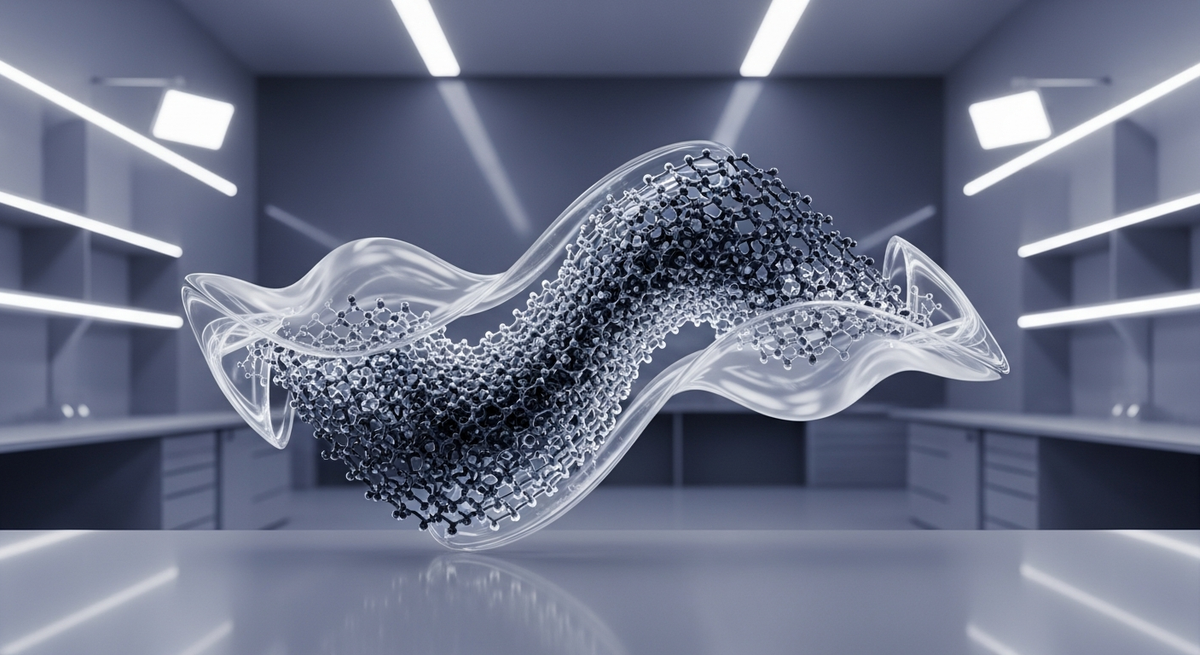
The advent of graphene, a single atomic layer of carbon arranged in a hexagonal lattice, has heralded a new era in material science. Its extraordinary properties—unrivaled strength, exceptional electrical conductivity, superior thermal transfer, and remarkable impermeability—make it an ideal candidate for revolutionizing various industries. A particularly promising application lies in its integration with polymers to create next-generation polymer nanocomposites.
However, the term “graphene” itself can be misleading, as the methods used to obtain it significantly dictate its final characteristics and, consequently, the performance of the resulting composite material. For engineers and business professionals seeking to leverage the full potential of this wonder material, understanding the nuances of graphene preparation routes is not merely academic; it is critical for industrial success and the development of truly high-performance products. This article delves into the straightforward routes for preparing graphene-based polymer nanocomposites, emphasizing how the choice of graphene type, from pristine exfoliated material to functionalized variants, fundamentally shapes the final properties and unlock unprecedented capabilities in a wide array of polymer systems.
The Graphene Spectrum: Understanding Your Nanofiller’s Origin
The landscape of “graphene” products available today is diverse, often leading to confusion and, at times, misapplications. The processes utilized for its preparation—including expansion, exfoliation, functionalization, oxidation, and oxidation/reduction—each yield a distinct form of carbon nanomaterial with unique properties. This critical distinction is not merely semantic; it directly influences the overall final properties of the polymer material to which the nanofiller is added. For instance, reduced graphene oxide (rGO), while derived from graphene oxide (GO), possesses different characteristics compared to pristine graphene obtained through direct physical exfoliation.
Reduced graphene oxide, obtained through the chemical reduction of graphene oxide, typically retains a significant number of defects and residual oxygen-containing functional groups in its structure. While these functional groups can sometimes aid dispersion and interfacial adhesion with certain polymer matrices, they also compromise the intrinsic electrical and mechanical properties of the pristine graphene sheet. Consequently, rGO may not deliver the peak performance expected from defect-free graphene, particularly in applications demanding ultra-high conductivity or superior mechanical reinforcement. Its preparation often involves harsh chemical treatments that inevitably introduce structural imperfections, making it a distinct material from its pristine counterpart.
Another widely used form is graphene nanoplatelets (GNPs), defined as graphene mono- or few-layers, which may or may not bear functional groups attached to their carbon structure. GNPs are obtained through various exfoliation processes such as milling, sonication, or thermal expansion, often in the presence of chemically reactive compounds for functionalization. While GNPs are prevalent in the market due to their availability and relatively straightforward production, the chapter highlights a crucial caveat: they should be used with caution. The fabrication processes used to produce GNPs frequently induce a notable number of defects that remain within their structure, meaning they can hardly be considered “real graphene” in its most pristine, defect-free form. These defects can hinder optimal load transfer, reduce electrical conductivity, and compromise thermal transport within the polymer composite, underscoring the necessity of a discerning approach when selecting the appropriate nanofiller.
The Gold Standard: Direct Exfoliation for Pristine Graphene
Amidst the variety of graphene products, direct exfoliation from colloidal suspensions of graphite stands out as a superior route for obtaining high-quality, defect-free graphene. This method is lauded for its straightforward protocol, low-energy consumption, and capacity for high-volume production, making it particularly attractive for industrial scalability and cost-effectiveness. Crucially, the graphene obtained via direct sonication maintains its structural integrity substantially without any process-induced defects, a distinct advantage over chemically modified or mechanically processed variants like rGO or many forms of GNP.
This method involves the physical separation of graphene layers from graphite in a suitable common solvent, often aided by surfactants or monomers, through the application of low-energy sonication. Unlike chemical oxidation and subsequent reduction, direct exfoliation bypasses the introduction of oxygen-containing functional groups or structural imperfections that can degrade graphene’s intrinsic properties. The resulting nanofiller, essentially pristine graphene, offers an unparalleled opportunity to fully harness the material’s inherent strength, electrical conductivity, and thermal transfer capabilities when incorporated into polymer matrices. Its pristine nature ensures maximum efficiency in phenomena such as load transfer in mechanical applications and electron transport in conductive composites.
Furthermore, the graphene produced through direct exfoliation can be directly incorporated into both thermoplastic and thermoset polymer nanocomposites, either from its colloidal suspension or by polymerizing monomers around the dispersed graphene. This versatility simplifies the fabrication process and ensures that the superior properties of the defect-free graphene are effectively translated to the final composite material. The ability to produce high-purity, defect-free graphene cost-effectively and at scale represents a significant advancement, paving the way for truly transformative material innovations. It addresses the fundamental challenge of integrating a pristine nanomaterial into a bulk polymer, preserving the exceptional attributes that make graphene so coveted in advanced engineering applications.
Revolutionizing Thermoplastic Polymers with Graphene
Thermoplastic polymers, known for their ability to be repeatedly melted and re-molded, form the backbone of countless everyday products and sophisticated industrial components. Their versatility, combined with the extraordinary properties of graphene, creates a powerful synergy for developing advanced materials with enhanced functionality. When high-quality, defect-free graphene is judiciously incorporated into thermoplastic matrices, it can significantly elevate their performance across multiple parameters, unlocking new application possibilities.
One of the most notable improvements is in the mechanical properties. Polymers like Polyethylene and Polypropylene, widely used in packaging, automotive, and construction, can experience dramatic increases in tensile strength, flexural modulus, and impact resistance with even low graphene loadings. The high aspect ratio and exceptional intrinsic strength of graphene enable efficient load transfer from the polymer matrix to the nanofiller, effectively reinforcing the material and preventing crack propagation. For instance, incorporating graphene into Polycarbonate, known for its robustness, can lead to even tougher materials suitable for demanding electronic housings or ballistic applications. Poly(Lactic Acid) (PLA), a biodegradable polymer, benefits from graphene by gaining enhanced mechanical integrity and barrier properties, broadening its scope in sustainable packaging and biomedical fields.
Thermal properties are also profoundly enhanced. Graphene’s outstanding thermal conductivity allows for efficient heat dissipation, transforming polymers into excellent thermal management materials. This is crucial for applications in electronics, where overheating can degrade performance and shorten lifespan. Polymers like Poly(Etherimide) and Liquid Crystalline Polymers can see their thermal stability and heat deflection temperatures significantly improved, making them viable for high-temperature environments in aerospace and automotive sectors.
In terms of electrical conductivity, graphene is a game-changer. By forming a conductive network within an insulating polymer matrix, graphene can turn conventional plastics into electrically conductive materials, even at low percolation thresholds. This is particularly valuable for applications in antistatic coatings, electromagnetic interference (EMI) shielding, and flexible electronics. Polymers such as Polystyrene, typically an insulator, can become conductive, enabling advanced sensors or antistatic packaging. Furthermore, conductive polymers like Polyaniline, Polypyrrole, and Poly(Ethylenedioxythiophene) can have their conductivity further boosted by graphene, creating super-capacitors, advanced battery electrodes, and highly efficient smart textiles. The direct sonication method ensures that the graphene maintains its excellent intrinsic conductivity, translating to superior composite performance.
Beyond these, graphene integration can impart improved barrier properties against gases and liquids, crucial for food packaging and protective coatings, and can also contribute to reduced flammability, enhancing safety in various applications. The key to realizing these profound improvements lies in achieving uniform dispersion of defect-free graphene within the thermoplastic melt or solution, preventing re-aggregation, and ensuring strong interfacial adhesion between the nanofiller and the polymer matrix. Strategic processing techniques, often involving melt blending or solution blending, are meticulously optimized to leverage the full potential of high-quality graphene.
Advanced Thermosetting Composites: The Graphene Advantage
Thermosetting polymers, once cured, form an irreversible, cross-linked network, providing excellent dimensional stability, chemical resistance, and high-temperature performance. Integrating graphene into these matrices offers a powerful pathway to overcoming some inherent limitations of thermosets, particularly in terms of toughness and specific performance characteristics. The strong, three-dimensional network of thermosets can be synergistically reinforced and enhanced by the inclusion of well-dispersed, high-quality graphene.
Epoxy resins, widely used in structural adhesives, coatings, and high-performance composites for aerospace, automotive, and construction industries, benefit immensely from graphene incorporation. The inherent brittleness of many epoxy systems can be significantly mitigated, as graphene acts as a crack deflection and bridging agent, leading to substantial increases in fracture toughness, stiffness, and ultimate strength. Furthermore, graphene can dramatically improve the thermal conductivity of epoxy, enabling its use in thermal management applications, and enhance electrical conductivity for antistatic or EMI shielding purposes. The strong interfacial bonding between graphene and the epoxy matrix, often facilitated during the curing process, is crucial for optimal load transfer and performance.
Hydrogels, which are cross-linked polymer networks capable of absorbing large amounts of water, are increasingly important in biomedical applications, soft robotics, and sensors. The incorporation of graphene can significantly enhance their mechanical integrity and elasticity, addressing a common challenge with many hydrogels that often lack sufficient strength for load-bearing applications. Beyond mechanical reinforcement, graphene can introduce electrical conductivity, enabling the development of electrically responsive hydrogels for biosensors, drug delivery systems, and tissue engineering scaffolds. The defect-free nature of exfoliated graphene is paramount here, preserving the bio-compatibility and functionality critical for these sensitive applications.
Polyacrylate-based systems, commonly used in coatings, adhesives, and sealants, can gain improved abrasion resistance, hardness, and thermal stability with graphene inclusion. Graphene acts as a reinforcing filler, improving the cross-linked network's resistance to wear and environmental degradation. Similarly, Polyurethane (PUR), encompassing a broad range of polymers used in foams, coatings, adhesives, and elastomers, can experience enhanced mechanical properties, including toughness and tear strength, as well as improved thermal and electrical conductivity. This opens avenues for more durable and functional PUR products, from high-performance insulation to resilient protective coatings.
Elastomers, characterized by their high elasticity and resilience, also see significant improvements with graphene. Incorporating graphene can boost their tensile strength, tear resistance, and dynamic mechanical properties, without compromising their flexibility. This makes them ideal for applications requiring enhanced durability, such as high-performance tires, sealing elements, and vibration dampers. The challenge often lies in achieving uniform dispersion within the highly viscous elastomer matrix, but successful integration leads to materials with superior longevity and performance, outperforming traditional carbon black or silica fillers in many aspects. The ability to integrate pristine graphene into these thermosetting and elastomeric systems represents a leap forward, enabling the creation of materials that withstand extreme conditions and deliver extended service life.
Strategic Integration: Best Practices for Graphene-Polymer Success
The successful development of high-performance graphene-based polymer nanocomposites hinges not just on the choice of polymer, but fundamentally on the quality and type of graphene utilized, coupled with sophisticated integration strategies. As detailed, the provenance of graphene—whether it's pristine material from direct sonication, functionalized graphene nanoplatelets, or reduced graphene oxide—exerts a profound influence on the final properties of the composite. For engineers and material scientists, selecting the optimal graphene form and integration method is paramount to unlocking the full potential of these advanced materials.
Dispersion techniques play a critical role. Achieving a uniform, homogeneous dispersion of graphene within the polymer matrix is often the most significant challenge. Graphene’s high surface area and strong van der Waals forces can lead to re-aggregation, diminishing its reinforcing and conductive effects. Common techniques include solution blending, melt blending, and in-situ polymerization. In solution blending, graphene is first dispersed in a solvent, followed by polymer dissolution, and then solvent removal, a method often effective for achieving good dispersion but limited by solvent compatibility and scalability. Melt blending, suitable for thermoplastics, involves dispersing graphene directly into the molten polymer, which is scalable but requires careful optimization of shear forces and processing parameters to prevent graphene damage and ensure de-agglomeration. In-situ polymerization, particularly effective for thermosets, involves dispersing graphene into the liquid monomer before polymerization, allowing the polymer chains to grow around and encapsulate the graphene sheets, leading to excellent interfacial adhesion and dispersion.
The morphological peculiarities of the resulting nanocomposites are directly influenced by the dispersion quality. A uniform distribution of individual or few-layer graphene sheets, ideally exfoliated and aligned, maximizes the surface area for interaction with the polymer matrix, leading to superior load transfer, enhanced barrier properties, and more efficient conductive pathways. Poor dispersion, characterized by graphene agglomerates, can lead to stress concentration points and diminished overall performance, effectively negating the benefits of graphene.
From a thermal perspective, well-dispersed graphene significantly increases the thermal conductivity and often the glass transition temperature (Tg) of the polymer. Graphene acts as an efficient conduit for phonons, enhancing heat dissipation in electrically active components or improving the thermal stability of structural parts. The ability of graphene to create tortuous paths for heat flow, when appropriately oriented, can also improve flame retardancy, showcasing its versatile thermal management capabilities.
Physico-mechanical properties such as tensile strength, modulus, toughness, and hardness are dramatically improved through the synergistic interaction between graphene and the polymer. Graphene’s high intrinsic strength and stiffness reinforce the polymer, while its two-dimensional structure can effectively impede crack propagation. This leads to lighter, stronger, and more durable materials, crucial for applications in aerospace, automotive, and sporting goods, where weight reduction and performance are critical. The chapter’s emphasis on graphene without defects highlights its ability to transfer stress more efficiently without premature failure points.
Regarding electrical properties, graphene enables the creation of conductive polymer composites, even with insulating polymer matrices, by forming a continuous percolation network. The critical factor here is the purity and structural integrity of the graphene; defect-free graphene from direct sonication offers superior electron mobility, resulting in lower percolation thresholds and higher overall conductivity compared to defective or functionalized variants. This opens doors for advanced sensors, flexible electronics, antistatic materials, and electromagnetic interference (EMI) shielding applications.
Finally, the rheological behavior of graphene-polymer dispersions and melts is crucial for processability. Graphene can significantly increase the viscosity of polymer melts, even at low loadings, due to its high aspect ratio and tendency to form interconnected networks. Understanding and controlling these rheological changes are essential for optimizing processing parameters in techniques like extrusion, injection molding, and film casting, ensuring manufacturability without compromising the final material properties. The ability of pristine graphene to maintain its structural integrity during processing is also key, as degradation would lead to a loss of the very properties sought after.
The strategic integration of graphene demands a holistic approach, considering the specific polymer matrix, the desired end-properties, and the optimal graphene type and preparation method. By carefully navigating these considerations, engineers and manufacturers can unlock the full, transformative potential of graphene-based polymer nanocomposites, driving innovation across a multitude of sectors.
Conclusion: Pioneering the Future of Materials with Pristine Graphene
The journey through the straightforward routes for preparing graphene-based polymer nanocomposites reveals a critical insight: the inherent quality and origin of graphene profoundly dictate the ultimate performance of the final material. While various forms of “graphene” exist on the market, the distinction between chemically modified or defect-laden variants and pristine, defect-free graphene obtained through methods like direct sonication is paramount. This article has underscored that direct exfoliation offers a robust, cost-effective, and scalable pathway to graphene that maintains its structural integrity, enabling superior enhancements across mechanical, thermal, electrical, and rheological properties in both thermoplastic and thermosetting polymer systems.
The application potential is immense and ever-expanding, ranging from stronger, lighter components for aerospace and automotive industries to highly conductive materials for advanced electronics and biomedicine, and thermally stable products for extreme environments. By choosing high-quality, defect-free graphene, manufacturers and researchers can circumvent the limitations often associated with process-induced defects and unlock the true, revolutionary capabilities of this exceptional nanomaterial. This meticulous approach to graphene selection and integration is not just a scientific preference; it is an industrial imperative for achieving next-generation performance and staying at the forefront of material innovation.
At usa-graphene.com, we are committed to providing the highest quality graphene solutions, meticulously prepared to ensure the purity and defect-free structure essential for groundbreaking polymer nanocomposite applications. Our expertise in advanced graphene synthesis and integration positions us as your ideal partner in material innovation. Contact us today to explore how our advanced graphene can elevate your next-generation polymer applications and help you achieve unparalleled material performance in your industry.