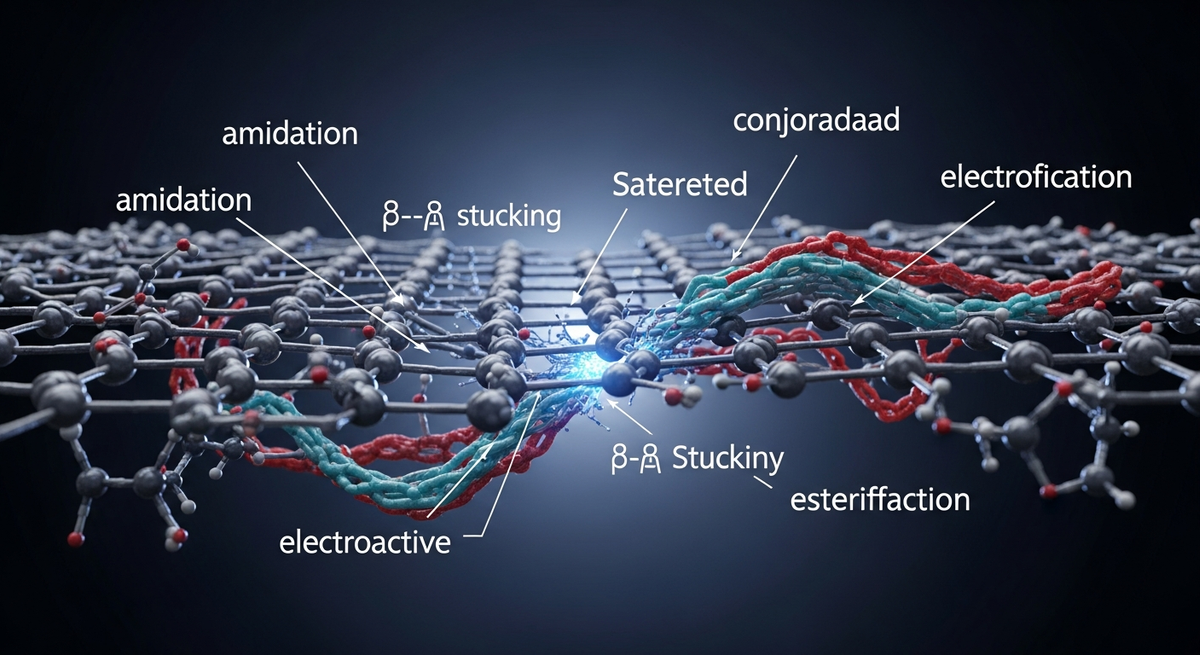
The dawn of two-dimensional (2D) materials heralded a new era in materials science, with graphene standing at the forefront. This extraordinary material, a monoatomic thick sheet of sp2-hybridized carbons, boasts unparalleled mechanical strength, thermal conductivity, and electrical properties. From its remarkable Young’s modulus of 1 TPa and ultimate tensile strength of 130 GPa (though the chapter excerpt cites 500 GPa and 63 GPa for GO, not pristine graphene, so I will be careful to attribute these correctly or use general terms for graphene's high values) to its exceptional electron mobility, graphene promises to redefine numerous technological landscapes. However, the intrinsic nature of pristine graphene, characterized by its large specific surface area and strong tendency for π–π stacking, leads to irreversible agglomeration in solvents, significantly limiting its practical utility and processability. This challenge underscores the critical need for effective functionalization strategies to harness graphene's full potential.
Addressing these limitations, the integration of graphene with various polymers to form graphene-polymer nanocomposites has emerged as a profoundly impactful strategy. By combining graphene's superlative properties with the processability, versatility, and tunable characteristics of polymers, researchers can engineer hybrid materials that overcome the aggregation issues while amplifying specific functionalities. These nanocomposites are not merely mixtures; they represent a synergistic fusion where the polymer acts as a dispersant, a matrix, or a functionalizing agent, enhancing the mechanical, electrical, and thermal attributes of the composite far beyond what either component could achieve alone. This sophisticated approach opens doors to a new generation of high-performance materials tailored for demanding applications across diverse industries.
This exploration delves into the intricate world of graphene-polymer nanocomposites, examining the sophisticated methodologies employed in their preparation, the unique characteristics they exhibit, and their burgeoning applications. From the foundational understanding of graphene and its derivatives—Graphene Oxide (GO) and Reduced Graphene Oxide (RGO)—to the nuanced strategies of covalent and noncovalent functionalization, we will uncover how these advanced materials are meticulously crafted. We will further differentiate between conjugated, saturated, and electroactive polymer nanocomposites, highlighting their distinct preparation techniques and performance enhancements, ultimately showcasing their transformative potential in areas ranging from advanced electronics and energy storage to sophisticated sensing and biomedical systems.
The Foundation: Understanding Graphene, GO, and RGO for Nanocomposites
At its core, graphene is a single layer of carbon atoms arranged in a hexagonal lattice, representing the fundamental building block of graphite. Its sp2-hybridized carbon atoms confer exceptional electron mobility and thermal conductivity, making it an ideal candidate for next-generation electronic and thermal management applications. However, the very properties that make graphene remarkable, such as its vast specific surface area and the strong van der Waals forces leading to π–π stacking, also cause it to agglomerate irreversibly in solvents. This inherent tendency significantly impedes its dispersion and integration into polymer matrices, limiting its widespread utility in composite materials.
To circumvent the challenges associated with pristine graphene, graphene oxide (GO) has garnered considerable attention as a versatile precursor. GO is synthesized predominantly by the modified Hummers method, involving the oxidation of graphite powder with strong oxidants and acids. This process introduces a multitude of hydrophilic oxygen functionalities, including epoxide and hydroxyl groups on the basal plane and carboxyl groups at the edges, consistent with the widely accepted Lerf–Klinowski model. These oxygen moieties render GO negatively charged in aqueous solutions, facilitating its easy exfoliation into stable colloidal dispersions under moderate ultrasonication in solvents such as N,N-dimethylformamide (DMF), 1-methyl-2-pyrrolidone (NMP), and tetrahydrofuran (THF).
While GO's dispersibility and abundant reactive sites make it an excellent platform for polymer functionalization, the sp2–sp3 hybrid structures introduced by the oxygen groups disrupt graphene's original conjugated structure. This disruption leads to a significant degradation of its intrinsic properties; for instance, GO exhibits a Young’s modulus of 500 GPa and an ultimate tensile strength of 63 GPa, which are orders of magnitude lower than pristine graphene, and it is also electrically insulating. Consequently, to restore the desirable properties of graphene, GO must undergo reduction to form reduced graphene oxide (RGO). Common reducing agents include hydrazine hydrate, dimethylhydrazine, and sodium borohydride, though greener alternatives like thermal, solvothermal, electrochemical, and photocatalytic reduction methods are gaining traction to mitigate the use of toxic chemicals. However, the reduction process often diminishes the hydrophilic character of RGO, leading to a renewed propensity for irreversible agglomeration, akin to pristine graphene, unless a dispersant—often a polymer—is introduced to prevent restacking via mechanisms like π–π stacking interaction.
Engineering Interfacial Bonds: Covalent and Noncovalent Strategies for Graphene-Polymer Composites
The successful integration of graphene or its derivatives into polymer matrices hinges on effective functionalization strategies that address the agglomeration issue and facilitate robust interfacial adhesion. Broadly, these strategies are categorized into covalent functionalization and noncovalent functionalization, each offering distinct advantages and tailoring the final composite's properties.
Covalent functionalization primarily leverages the abundant reactive oxygen functionalities present on graphene oxide (GO) nanosheets. The epoxide, hydroxyl, and carboxyl groups on GO serve as versatile sites for chemical grafting, allowing polymers to be chemically bonded to the graphene surface. This approach creates strong, stable interfaces, ensuring uniform dispersion and efficient load transfer between the graphene nanosheets and the polymer matrix. Key covalent modification reactions include esterification, where hydroxyl or carboxyl groups react with alcohols or carboxylic acids; amidation, involving the reaction of carboxyl groups with amines; and nitrene addition, which can functionalize the basal plane. More advanced techniques like "Click" chemistry and 1,3-dipolar cycloaddition reactions offer highly efficient and specific functionalization routes. Furthermore, surface-initiated polymerization methods, such as atom transfer radical polymerization (ATRP) or reversible addition-fragmentation chain transfer (RAFT) polymerization, can grow polymer chains directly from the GO surface, providing precise control over polymer architecture and grafting density.
In contrast, noncovalent functionalization is predominantly employed for reduced graphene oxide (RGO) and pristine graphene nanosheets, which possess fewer reactive sites. This method relies on weaker, reversible interactions that do not disrupt the sp2 conjugated structure of graphene, thereby preserving its exceptional electrical and thermal properties. The primary mechanisms for noncovalent functionalization include π–π stacking interactions, where the aromatic rings of polymers with conjugated structures (e.g., polyaromatic compounds) interact strongly with graphene's delocalized π-electron system. Additionally, van der Waals forces and electrostatic interactions (particularly when charged polymers or graphene derivatives are involved) play crucial roles. Polymers can physically adsorb onto the graphene surface, acting as steric stabilizers that prevent restacking and promote dispersion. While noncovalent bonds are weaker than covalent ones, their reversibility can be advantageous in certain applications, and the ability to preserve graphene's intrinsic electronic structure makes this approach vital for high-performance electronic and optoelectronic devices. The choice between covalent and noncovalent functionalization is dictated by the specific application requirements, balancing the need for mechanical robustness and dispersion stability against the preservation of graphene's inherent electronic properties.
Tailoring Performance: Conjugated and Saturated Polymer Nanocomposites
The selection of the polymer component in graphene-polymer nanocomposites is critical, as different polymer types impart distinct properties and necessitate specific functionalization strategies. Two broad categories, conjugated polymers and saturated polymers, are frequently employed, each contributing uniquely to the composite's overall performance.
Graphene–conjugated polymer nanocomposites capitalize on the inherent electrical conductivity and optoelectronic properties of conjugated polymers. These polymers possess alternating single and double bonds, creating a delocalized π-electron system that allows for electrical conduction. Examples include poly(3-hexylthiophene) (P3HT), poly(phenylene vinylene) (PPV), and polyaniline. When combined with graphene, these polymers can form highly conductive and synergistic materials. Grafting conjugated polymers onto graphene nanosheets is typically achieved through methods such as amidation, where the amine groups of the polymer react with carboxyl groups on GO; π–π stacking interaction, particularly effective with RGO or pristine graphene due to the strong aromatic interactions; and 1,3-dipolar cycloaddition, which can introduce conjugated polymer segments onto graphene surfaces. The resulting nanocomposites exhibit enhanced charge transport, improved stability, and tunable electronic properties, making them highly attractive for applications in organic solar cells, light-emitting diodes, and flexible electronics where efficient charge separation and transport are paramount.
In contrast, graphene–saturated polymer nanocomposites primarily focus on enhancing the mechanical, thermal, and barrier properties of conventional polymers. Saturated polymers, such as polyethylene, polypropylene, polystyrene, or epoxy resins, lack the extensive π-conjugation of their counterparts and are typically electrically insulating. Their integration with graphene aims to leverage graphene's exceptional strength, stiffness, and thermal conductivity to reinforce the polymer matrix. Functionalization of graphene nanosheets with saturated polymers often involves a combination of noncovalent and covalent approaches. Noncovalent strategies might include physical blending or adsorption, where polymer chains entangle with or encapsulate graphene flakes, preventing restacking. Covalent strategies, particularly with GO, utilize the oxygen functionalities for direct grafting through reactions like esterification or surface-initiated polymerization, creating robust chemical linkages between the polymer and the graphene surface. These nanocomposites find extensive use in structural materials, aerospace components, automotive parts, and high-performance coatings, where improved tensile strength, modulus, fracture toughness, and heat dissipation are critical requirements. The ability to significantly boost the mechanical integrity and thermal stability of everyday polymers with a small loading of graphene makes these composites economically viable and highly impactful across various industries.
Powering the Future: Graphene-Electroactive Polymer Nanocomposites
Electroactive polymers (EAPs), also known as conducting polymers, are a class of organic materials that exhibit significant changes in their electrical or mechanical properties in response to electrical stimulation. When combined with graphene, these polymers form graphene-electroactive polymer nanocomposites that leverage the high conductivity and surface area of graphene with the redox activity and processability of EAPs, leading to advanced materials for energy storage, sensing, and actuation. Prominent examples of EAPs include polyaniline (PANI), polypyrrole (PPy), and polythiophene (PTh).
The preparation of these advanced nanocomposites often employs several sophisticated techniques to ensure optimal interaction and performance. One widely used method is in situ oxidative polymerization. In this approach, graphene nanosheets (typically GO or RGO) are dispersed in a solution containing the EAP monomers (e.g., aniline, pyrrole, or thiophene) and an oxidant. The polymerization is initiated within this dispersion, allowing the growing polymer chains to encapsulate or graft onto the graphene surface directly. This simultaneous formation and deposition result in a highly uniform distribution of graphene within the polymer matrix, enhancing interfacial contact and maximizing the synergistic effects. For instance, the high surface area of graphene provides abundant sites for charge accumulation, while the conducting polymer facilitates rapid ion and electron transport, making them ideal for supercapacitors.
Another effective strategy is electrochemical polymerization. This method involves applying an electrical potential to a working electrode immersed in a solution containing EAP monomers and dispersed graphene. The polymerization occurs directly on the electrode surface, allowing for precise control over the thickness, morphology, and composition of the nanocomposite film. By carefully tuning the electrochemical parameters, researchers can create highly ordered and robust graphene-EAP coatings. This approach is particularly advantageous for fabricating electrodes for sensors, actuators, and energy storage devices, where direct deposition onto conductive substrates is desirable. The controlled deposition ensures excellent adhesion and minimizes the structural defects that can arise from bulk polymerization methods.
Finally, "grafting-to" approaches also find utility in forming graphene-EAP nanocomposites. In this method, pre-synthesized electroactive polymer chains, often functionalized with specific reactive end groups, are reacted with complementary functional groups on the graphene nanosheets (e.g., on GO). While potentially more complex due to steric hindrance, this method offers precise control over the polymer's molecular weight and architecture before attachment. Regardless of the preparation method, the resulting graphene-electroactive polymer nanocomposites exhibit significantly enhanced electrical conductivity, electrochemical stability, and charge storage capacity compared to the individual components, making them pivotal for next-generation energy devices like supercapacitors and batteries, high-sensitivity chemical sensors, and advanced electrochromic displays.
From Lab to Market: Diverse Applications of Graphene-Polymer Nanocomposites
The synergistic properties unlocked by combining graphene with polymers have propelled graphene-polymer nanocomposites from the research laboratory into a myriad of transformative applications across various sectors. The ability to tune mechanical strength, electrical conductivity, thermal performance, and chemical stability makes these materials exceptionally versatile and highly sought after for addressing complex technological challenges.
In the realm of energy, graphene-polymer nanocomposites are revolutionizing solar cells and supercapacitors. For solar cells, the enhanced charge transport properties and improved stability of these composites lead to higher power conversion efficiencies and longer device lifetimes. In supercapacitors, the combination of graphene's high surface area and electrical conductivity with the pseudocapacitive properties of certain polymers (especially electroactive ones) results in devices with superior energy density, power density, and cycling stability, outperforming traditional materials. These advancements are critical for portable electronics, electric vehicles, and grid-scale energy storage.
Beyond energy, these nanocomposites are making significant inroads into electronic memories and dielectric materials. Their tunable dielectric properties, often characterized by high permittivity and low dielectric loss, are crucial for miniaturizing electronic components and improving the performance of capacitors and transistors. The unique electrical switching behaviors observed in some graphene-polymer systems are also being explored for novel non-volatile memory devices. In the field of sensors, graphene-polymer nanocomposites offer unprecedented sensitivity and rapid response times. The large surface area of graphene provides abundant sites for analyte interaction, while the polymer matrix can be functionalized to provide specific recognition capabilities. This combination allows for highly selective and sensitive detection of gases, biomolecules, and environmental pollutants, enabling advancements in medical diagnostics, environmental monitoring, and safety systems.
Furthermore, the biomedical field is witnessing the profound impact of these materials, particularly in drug delivery systems. The high surface area and chemical versatility of graphene-polymer nanocomposites allow for efficient loading of therapeutic agents, while the polymer component can be engineered for biocompatibility, biodegradability, and controlled release kinetics. This enables targeted drug delivery, minimizing side effects and enhancing therapeutic efficacy. The mechanical reinforcement provided by graphene also makes these composites attractive for biomaterials and tissue engineering scaffolds. From strengthening lightweight aerospace components and enhancing thermal management in electronics to enabling smarter sensors and more effective medical treatments, graphene-polymer nanocomposites are truly at the forefront of materials innovation, poised to drive the next wave of technological progress across a broad spectrum of industries.
SEO FAQ Section
Q1: What are graphene-polymer nanocomposites and why are they important?
A1: Graphene-polymer nanocomposites are hybrid materials combining graphene (or its derivatives like GO/RGO) with various polymers. They are crucial because they leverage graphene's extraordinary properties while overcoming its tendency to agglomerate, enhancing the mechanical, electrical, and thermal characteristics of the polymer matrix for diverse high-performance applications.
Q2: How is Graphene Oxide (GO) prepared and why is it used as a precursor?
A2: GO is commonly prepared by the modified Hummers method, oxidizing graphite powder with strong oxidants and acids. It's used as a precursor because its hydrophilic oxygen functionalities (epoxide, hydroxyl, carboxyl groups) allow it to disperse stably in solvents and provide versatile reactive sites for chemical functionalization with polymers.
Q3: What are the main methods for functionalizing graphene with polymers?
A3: The two primary methods are covalent and noncovalent functionalization. Covalent functionalization (e.g., amidation, esterification, 1,3-dipolar cycloaddition) creates strong chemical bonds, typically with GO. Noncovalent functionalization (e.g., π–π stacking, van der Waals, electrostatic interactions) involves weaker physical adsorption, often used for RGO or pristine graphene to preserve its electronic structure.
Q4: What types of polymers are commonly used in graphene nanocomposites?
A4: Polymers are broadly classified into conjugated, saturated, and electroactive types. Conjugated polymers enhance electrical properties (e.g., for solar cells), saturated polymers improve mechanical and thermal properties (e.g., for structural materials), and electroactive polymers boost conductivity and redox activity (e.g., for supercapacitors and sensors).
Q5: What are some key applications of graphene-polymer nanocomposites?
A5: Graphene-polymer nanocomposites are applied in solar cells, electronic memories, supercapacitors, dielectric materials, sensors (gas, biosensors), and drug delivery systems. Their tunable properties allow for significant enhancements in energy storage, electronic performance, mechanical strength, and biomedical efficacy.
Conclusion
The journey through the intricate science of graphene-polymer nanocomposites reveals a landscape of extraordinary innovation and untapped potential. From overcoming the intrinsic agglomeration challenges of pristine graphene to meticulously engineering interfaces through covalent and noncovalent functionalization, these hybrid materials represent a pinnacle of modern materials science. We have seen how the judicious selection and integration of conjugated, saturated, and electroactive polymers can unlock a spectrum of enhanced properties, transforming everything from the mechanical robustness of structural components to the efficiency of energy storage devices and the sensitivity of advanced sensors.
The ability of graphene-polymer nanocomposites to deliver superior performance across such a diverse range of applications—from the high-power demands of supercapacitors and the intricate charge transport in solar cells to the precision required for drug delivery systems—underscores their critical role in shaping future technologies. As research continues to push the boundaries of preparation methodologies and characterization techniques, the versatility and impact of these materials are only set to grow. For engineers, materials scientists, and R&D professionals seeking to leverage the forefront of graphene technology, understanding and implementing these advanced composites is paramount. To explore high-quality graphene materials and unlock the full potential of your next-generation projects, we invite you to visit usa-graphene.com, your trusted partner in graphene innovation.