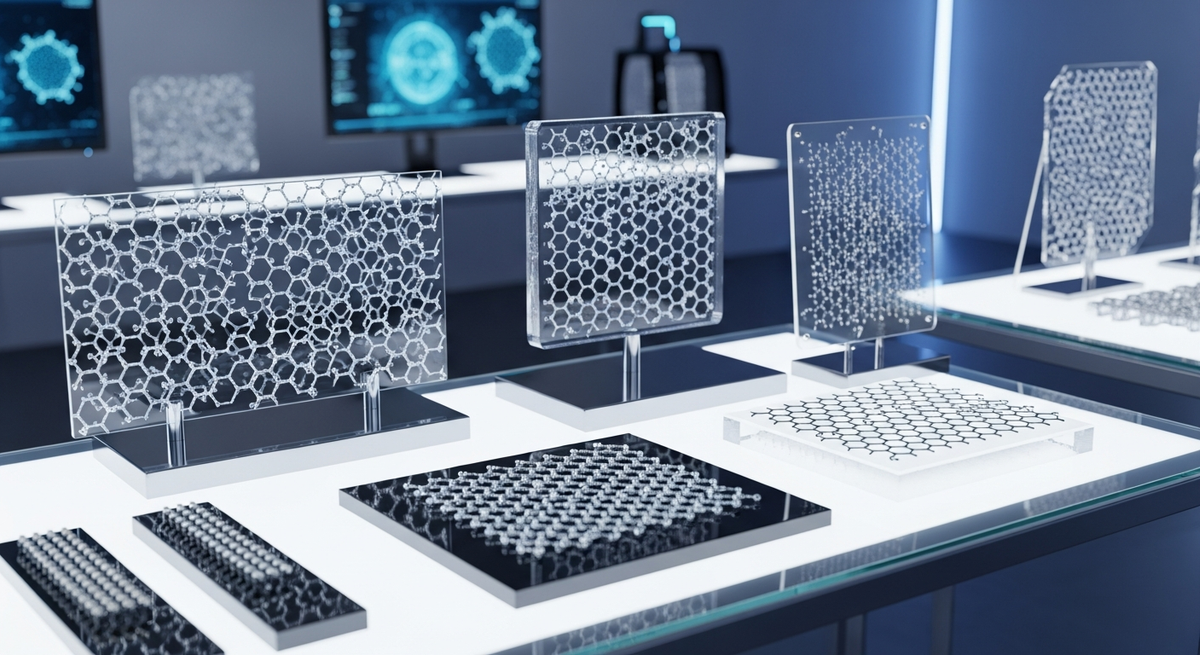
In the relentless pursuit of smaller, faster, and more efficient electronic devices, material innovation stands as a cornerstone of progress. Among the most promising advancements, Graphene/Polymer Nanocomposites have emerged as a transformative class of materials. These cutting-edge composites, seamlessly blending the unparalleled properties of graphene with the versatility of polymers, are poised to redefine the landscape of modern electronics. From enhancing electrical conductivity to boosting thermal dissipation and enabling novel sensing capabilities, graphene's integration into polymer matrices is unlocking unprecedented performance.
At usa-graphene.com, we understand the profound impact of these materials. This exploration delves into the fundamental science and groundbreaking applications of Graphene/Polymer Nanocomposites, drawing insights from leading research in the field. We will uncover how these remarkable materials are fabricated, the exceptional properties they inherit from their graphene filler, and their pivotal roles in the next generation of electronic devices, addressing critical challenges in areas like electrostatic discharge protection, electromagnetic interference shielding, and advanced sensor technologies.
The Unrivaled Potential of Graphene as a Polymer Filler
Graphene, a single, atomically thin layer of sp2-bonded carbon atoms, possesses a suite of extraordinary properties that make it an ideal filler for enhancing polymer performance. Its unique two-dimensional structure provides a vast surface area and exceptional mechanical, electrical, and thermal characteristics, far surpassing conventional materials. These intrinsic attributes are the foundation upon which the utility of Graphene/Polymer Nanocomposites is built, offering solutions to long-standing engineering challenges across various sectors.
One of graphene's most celebrated features is its outstanding electrical conductivity. Boasting a zero band gap and remarkably high carrier mobility, electrons in graphene can exhibit nearly ballistic transport even at room temperature. Electron mobility in graphene can reach an astounding 20,000 cm²/V s, an order of magnitude higher than that of silicon transistors, and has even been pushed beyond 25,000 cm²/V s with sample preparation improvements. This exceptional charge transport capability means that even a small amount of graphene within a polymer can significantly elevate its electrical conductivity, forming pathways for efficient electron flow at very low filler contents due to the large aspect ratio of graphene sheets.
Beyond electrical prowess, graphene exhibits a superior mechanical strength that is virtually unmatched. A single, defect-free graphene sheet boasts an exceptionally high Young’s modulus of approximately 1 TPa and an impressive tensile strength of 130 GPa. These figures underscore graphene's ability to impart significant toughness and durability to polymer matrices, creating composites that are both lightweight and incredibly resilient. This mechanical reinforcement opens doors for flexible and robust electronic components, enabling devices that can withstand greater physical stress and deformation.
Furthermore, graphene is an exceptional conductor of heat. Its thermal conductivity ranges from 4840 to 5300 W/m K, which is several times higher than that of copper, a material traditionally lauded for its thermal properties. This allows Graphene/Polymer Nanocomposites to efficiently dissipate heat, making them ideal candidates for thermal management solutions in microelectronic devices. As electronics become more compact and powerful, effective heat sinking is crucial to prevent overheating and ensure device longevity, a role graphene is perfectly suited to fulfill.
Lastly, graphene's very high specific surface area, measured at 2630 m²/g, is another critical asset. This is significantly greater than that of carbon nanotubes (1315 m²/g) and other traditional carbon fillers. This vast surface area facilitates strong interfacial interactions with polymer chains, improving dispersion and maximizing the transfer of graphene's properties to the composite. Such strong interactions are vital for achieving optimal mechanical reinforcement, electrical percolation, and thermal pathways, making graphene an incredibly effective and versatile additive for advanced polymer systems.
Crafting the Future: Fabrication of Graphene/Polymer Nanocomposites
The successful integration of graphene into polymer matrices is crucial for realizing the full potential of Graphene/Polymer Nanocomposites. Various fabrication techniques have been developed to ensure uniform dispersion and optimal interaction between graphene sheets and the polymer matrix, each offering distinct advantages for different applications and scales of production. These methods are designed to overcome the challenges associated with the inherent tendency of graphene sheets to aggregate due to van der Waals forces, which can hinder the composite's overall performance.
One widely adopted method for producing Graphene/Polymer Nanocomposites is solution mixing. In this technique, both graphene (or its derivatives, like graphene oxide) and the polymer are dispersed or dissolved in a common solvent. The mixture is then subjected to processes like sonication or vigorous stirring to achieve homogeneous dispersion of the graphene sheets within the polymer solution. Subsequently, the solvent is removed through evaporation or precipitation, leaving behind the nanocomposite. This method is advantageous for achieving excellent dispersion and is particularly suitable for preparing thin films and coatings, leveraging the high aspect ratio of graphene to create effective conductive networks.
In situ polymerization offers another powerful route, where graphene is dispersed directly into monomer solutions before polymerization is initiated. During the polymerization process, the polymer chains grow around and between the dispersed graphene sheets, effectively encapsulating them. This method often leads to strong interfacial bonding between the graphene and the polymer matrix, which can significantly enhance the mechanical and electrical properties of the resulting nanocomposite. The intimate contact between filler and matrix achieved through in situ polymerization is critical for maximizing the property transfer from graphene to the composite, facilitating robust and integrated material structures.
For large-scale industrial production, melt compounding is a highly attractive and economically viable method. This technique involves mixing graphene directly with the polymer in its molten state using standard polymer processing equipment such as twin-screw extruders. The high shear forces generated during melt compounding help to exfoliate and disperse graphene sheets within the polymer melt. While achieving optimal dispersion can be more challenging compared to solution-based methods, melt compounding is highly scalable and compatible with existing manufacturing infrastructure, making it a preferred choice for high-volume production of Graphene/Polymer Nanocomposites for various applications.
It is also pertinent to briefly consider the broader context of graphene preparation. While methods like chemical vapor deposition (CVD) on specific substrates (e.g., transition metals) and epitaxial growth on silicon carbide can yield high-quality graphene, these routes are generally not scalable for the large quantities required as filler materials in Graphene/Polymer Nanocomposites. Instead, scalable production often relies on the cleavage of graphite flakes. Techniques such as mechanical cleavage, while producing reliable, high-quality graphene, suffer from low throughput. Solution-phase exfoliation of graphite, typically using ultrasonication in solvents like N-methylpyrrolidone (NMP), offers scalability but often yields a small percentage of monolayer graphene. Therefore, chemical exfoliation of graphite oxide (GO) followed by reduction to reduced graphene oxide (rGO) remains a more viable path for preparing large amounts of graphene derivatives for composite applications, balancing quality with the demands of industrial volume.
Revolutionizing Electrical and Dielectric Performance with Graphene Nanocomposites
Graphene/Polymer Nanocomposites are fundamentally changing the landscape of electrical and dielectric materials, offering superior performance characteristics that were previously unattainable with traditional polymer systems. The integration of graphene, even at low concentrations, imparts remarkable electrical conductivity and enhanced dielectric properties, opening doors for advanced applications in various electronic domains. This unique capability stems from graphene's inherent conductivity and high aspect ratio, which facilitates the formation of conductive networks within the insulating polymer matrix.
A key aspect of the electrical enhancement in Graphene/Polymer Nanocomposites is the phenomenon of electrical percolation. Owing to the large aspect ratio of graphene sheets, they can form an interconnected conductive network within the polymer at a very low filler content, known as the percolation threshold. Below this threshold, the composite remains largely insulating, but once the graphene concentration surpasses this critical point, the composite's electrical conductivity dramatically increases. This allows for the creation of lightweight, flexible, and highly conductive materials with minimal graphene loading, making them cost-effective and structurally advantageous.
One crucial application benefiting from this enhanced conductivity is electrostatic discharge (ESD) protection. ESD events, caused by static electricity buildup, can severely damage sensitive electronic components during manufacturing, handling, or operation. Materials designed to dissipate these charges safely and quickly are essential. Graphene/Polymer Nanocomposites excel as ESD materials due to their ability to provide controlled electrical conductivity. Their conductive pathways allow static charges to flow away harmlessly, protecting delicate circuitry and ensuring the reliability of electronic devices. This is particularly vital in environments where static buildup is unavoidable, offering a robust shield against transient electrical phenomena.
Another significant application is electromagnetic interference (EMI) shielding. In our increasingly interconnected world, electronic devices are constantly exposed to and generate electromagnetic radiation, which can disrupt their functionality or interfere with other devices. EMI shielding materials are designed to block or absorb this radiation. Graphene/Polymer Nanocomposites provide excellent EMI shielding effectiveness, thanks to graphene's high electrical conductivity and large surface area. The conductive graphene network within the polymer can effectively reflect and absorb incident electromagnetic waves, protecting sensitive electronics from external interference and preventing unwanted emissions. This capability is critical for telecommunications equipment, medical devices, and high-performance computing systems, where signal integrity is paramount.
Beyond conductivity, Graphene/Polymer Nanocomposites also exhibit enhanced dielectric performance. Below the percolation threshold, where the graphene content is not sufficient to form a continuous conductive network, the composites can serve as advanced dielectric materials for electrical charge storage capacitors. The high dielectric permittivity, coupled with low dielectric loss, makes these materials suitable for developing high-energy density capacitors. These capacitors are vital for energy storage in portable electronics, electric vehicles, and renewable energy systems, offering improved charge storage capacity and operational efficiency. The ability to tailor the electrical and dielectric properties through precise control of graphene loading opens up a wide spectrum of design possibilities for future electronic components.
Advanced Electronic Applications: FETs, Sensors, and Thermal Management
The remarkable properties of Graphene/Polymer Nanocomposites extend far beyond basic conductivity and dielectric performance, enabling a new generation of advanced electronic device applications. Their unique combination of flexibility, responsiveness, and efficiency positions them as pivotal materials for innovation in various high-tech sectors. These applications capitalize on graphene's exceptional carrier mobility, sensitivity to external stimuli, and superior thermal characteristics, pushing the boundaries of what is possible in modern electronics.
In the realm of active electronic components, Graphene/Polymer Nanocomposite films are proving highly effective as electrical transport layers in Field-Effect Transistors (FETs). Traditional FETs often rely on rigid, silicon-based materials, limiting their flexibility and ease of processing. By utilizing graphene/polymer composites, researchers can fabricate FETs that offer significant advantages, including mechanical flexibility and simpler manufacturing processes. This development is crucial for the emergence of flexible electronics, wearable devices, and large-area displays, where conventional rigid substrates are impractical. The high carrier mobility of graphene translates directly into faster switching speeds and improved transistor performance, paving the way for advanced flexible logic circuits and high-frequency applications.
The exceptional sensitivity of the resistivity of Graphene/Polymer Nanocomposites to various external stimuli makes them outstanding candidates for a wide array of sensors. These composites can be engineered to detect changes in their environment with high precision and responsiveness. For instance, their resistivity is highly sensitive to gaseous environments, allowing them to function as highly effective gas sensors. They can detect trace amounts of specific gases, which is invaluable for environmental monitoring, industrial safety, and medical diagnostics. This sensitivity arises from the interaction of gas molecules with the graphene surface, altering its electrical properties.
Moreover, the resistivity of these nanocomposites is also sensitive to temperature fluctuations, enabling their use as accurate temperature sensors. As temperature changes, the mobility of charge carriers within the graphene network or the composite's physical dimensions can alter its electrical resistance, providing a reliable measure of ambient temperature. This characteristic makes them suitable for embedded temperature sensing in delicate electronic components or in applications requiring precise thermal monitoring. Their fast response times and robustness further enhance their utility in demanding environments.
Furthermore, the piezoresistive nature of Graphene/Polymer Nanocomposites allows them to act as highly responsive piezoresistive sensors. Their electrical resistance changes significantly under mechanical strain or pressure deformation. This property is exploited in applications such as pressure sensors, strain gauges, and electronic skin for robotics or prosthetics. The ability to detect subtle mechanical forces and convert them into electrical signals opens up possibilities for tactile feedback systems, structural health monitoring, and advanced human-machine interfaces, providing unprecedented levels of interaction and data acquisition.
Finally, the excellent thermal conductivity of graphene renders Graphene/Polymer Nanocomposites an ideal material for heat dissipating and thermal management solutions in electronics. With electronic devices becoming increasingly miniaturized and powerful, localized heat generation is a major concern, potentially leading to performance degradation and premature failure. Composites leveraging graphene's superior thermal conductivity can effectively channel heat away from critical components, acting as highly efficient heat sinks. This ensures optimal operating temperatures, enhances device reliability, and extends the lifespan of microelectronic systems, making them indispensable for high-performance processors, LEDs, and power electronics. The ability to tailor heat transfer properties through precise graphene loading offers engineers powerful new tools for thermal design.
The Future is Composite: Empowering Innovation with Graphene
Graphene/Polymer Nanocomposites represent a significant leap forward in materials science, offering a compelling blend of properties that are fundamentally reshaping the landscape of electrical and electronic applications. From their extraordinary electrical and thermal conductivity to their unmatched mechanical strength and exceptional sensitivity to environmental stimuli, graphene-infused polymers are proving to be indispensable for the next generation of technological innovation. These materials transcend the limitations of traditional options, enabling devices that are more efficient, robust, flexible, and intelligent.
Whether it's safeguarding sensitive electronics from electrostatic discharge and electromagnetic interference, serving as advanced dielectric layers in high-capacity capacitors, or forming the backbone of flexible field-effect transistors, advanced sensors, and superior thermal management systems, the versatility of Graphene/Polymer Nanocomposites is undeniable. Their ease of processing and the ability to finely tune their properties through various fabrication techniques underscore their vast potential for widespread adoption across industries.
At usa-graphene.com, we are at the forefront of this material revolution, providing high-quality graphene solutions that empower researchers and engineers to unlock the full capabilities of these advanced composites. Discover how our innovative graphene products can elevate your electronic device applications and drive the future of technology.
Explore the possibilities and propel your innovations forward by visiting usa-graphene.com today!