
AI-Powered Characterization of Twisted Bilayer Graphene and 2D Materials
Learn how deep learning is revolutionizing the structural characterization of twisted bilayer materials, accelerating the development of next-generation...
Organic photovoltaics (OPVs) and other organic optoelectronic devices hold immense promise for a sustainable future, offering low-cost manufacturing, potential for flexible designs, and easy scalability. Achieving power conversion efficiencies (PCEs) of up to approximately 10% with relatively simple device architectures underscores their potential. However, a persistent challenge has been the long-term reliability and operational stability of these devices. Traditional degradation pathways, such as ambient gas diffusion, have been extensively studied, yet performance issues persist even when devices are hermetically sealed or operated in vacuum environments. This points to internal factors inherent to the device architecture itself.
At the heart of many high-efficiency organic electronic devices lies Indium-Tin Oxide (ITO), a transparent conductive electrode. For decades, a standard practice in device fabrication has involved treating ITO substrates with ultraviolet (UV)–ozone to enhance their surface properties, seemingly optimizing them for subsequent organic film deposition. This UV-ozone treatment has been widely adopted due to its ability to clean surfaces and often improve initial device performance. However, mounting evidence suggests that this very treatment, once considered beneficial, poses a direct and significant threat to the long-term stability of organic optoelectronic devices. Our understanding now points to the generation of highly reactive oxygen species during UV-ozone treatment as the primary culprit, creating an “oxygen reservoir” on the ITO surface that interacts detrimentally with overlying organic layers. These interactions initiate a cascade of undesirable effects, including the formation of gap states within the organic materials’ original bandgap, leading to charge recombination and accelerated degradation. This article delves into this critical issue and introduces an elegant, highly effective solution: the integration of a Graphene Oxide (GO) anode buffer layer to mitigate these detrimental effects, thereby unlocking unprecedented stability and performance in organic optoelectronics.
Indium-Tin Oxide (ITO) has long been the gold standard for transparent conductive electrodes in organic optoelectronics due to its excellent electrical conductivity and optical transparency. To optimize ITO for device integration, surface modification techniques are routinely employed. Among these, UV-ozone treatment and oxygen plasma treatment have been particularly popular, primarily for their effectiveness in cleaning the ITO surface and modifying its work function. While these treatments are intended to improve the interface properties and thus the performance of organic electronic devices, our research reveals a significant and previously underestimated downside.
UV-ozone treatment, while seemingly benign, generates highly reactive oxygen species on the ITO surface. These active species do not simply dissipate; instead, they become chemically adsorbed, effectively creating an “oxygen reservoir” that is in direct contact with subsequently deposited organic active layers. Common organic films such as N,N′-di(1-naphthyl)-N,N′-diphenyl-benzidine (NPB), tris(8-hydroxyquinolinato)aluminium (Alq3), and rubrene, widely used in various optoelectronic applications, are particularly vulnerable to these reactive species. Upon direct contact, these organic materials exhibit rapid degradation, significantly curtailing device operational lifetimes.
This degradation manifests as a direct interaction between the active oxygen species and the organic molecules. The oxygen species behave as electron traps or recombination centers, forming gap states within the organic materials’ original bandgap. This phenomenon critically disrupts the delicate electronic structure of the organic semiconductors, facilitating non-radiative charge recombination pathways. Consequently, the efficiency of exciton dissociation and charge transport is severely compromised, leading to a precipitous decline in device performance. Understanding this fundamental chemical interaction is paramount to developing robust and stable organic optoelectronic devices.
Unraveling the Degradation Mechanism: Spectroscopic Insights
To precisely characterize the detrimental effects of UV-ozone treated ITO (UV-ITO) on organic thin films, a suite of advanced spectroscopic techniques was employed. Photoluminescence (PL) spectroscopy, X-ray Photoemission Spectroscopy (XPS), and Ultraviolet Photoemission Spectroscopy (UPS) collectively provided compelling evidence for the degradation mechanisms at play. These techniques allowed for a detailed examination of both the electronic structure changes and the chemical modifications occurring at the interface between the UV-ITO and the organic layers.
PL spectroscopy was instrumental in demonstrating the rapid quenching of photoluminescence in organic films when they were in direct contact with UV-ITO substrates. Organic materials like rubrene typically exhibit strong PL, indicating efficient radiative recombination of excitons. However, the presence of active oxygen species on the UV-ITO surface introduces efficient non-radiative pathways, leading to a significant reduction in PL intensity. This PL quenching serves as a clear indicator of the detrimental interaction, signifying a loss of excitonic energy that would otherwise contribute to device operation. It directly correlates with the formation of gap states that act as recombination centers, siphoning off useful energy.
Further insights were gained through XPS studies, which provided detailed information about the elemental composition and chemical states of the organic films after contact with UV-ITO. For instance, XPS analysis of rubrene films exposed to UV-ITO revealed distinct changes in the carbon and oxygen spectral regions, indicating chemical alteration of the rubrene molecules. These changes are consistent with the formation of new chemical bonds between the organic molecules and the active oxygen species from the ITO surface. Such modifications are direct evidence of the degradation process, showing that the organic material itself undergoes structural and chemical transformations rather than just a physical interaction.
UPS measurements offered crucial data on the valence band structures of the degraded organic films. These studies confirmed the formation of new energy states – the aforementioned gap states – within the original bandgap of the organic semiconductors. These gap states effectively bridge the highest occupied molecular orbital (HOMO) and lowest unoccupied molecular orbital (LUMO) levels, creating pathways for charge carriers to recombine non-radiatively. This fundamental change in electronic structure directly impairs the charge generation and transport capabilities of the device, leading to a reduction in open-circuit voltage and overall power conversion efficiency. The combined evidence from these spectroscopic techniques unequivocally attributes the degradation of organic thin films on UV-ITO substrates to the active oxygen species generated during the UV-ozone treatment, providing a robust scientific basis for addressing this challenge.
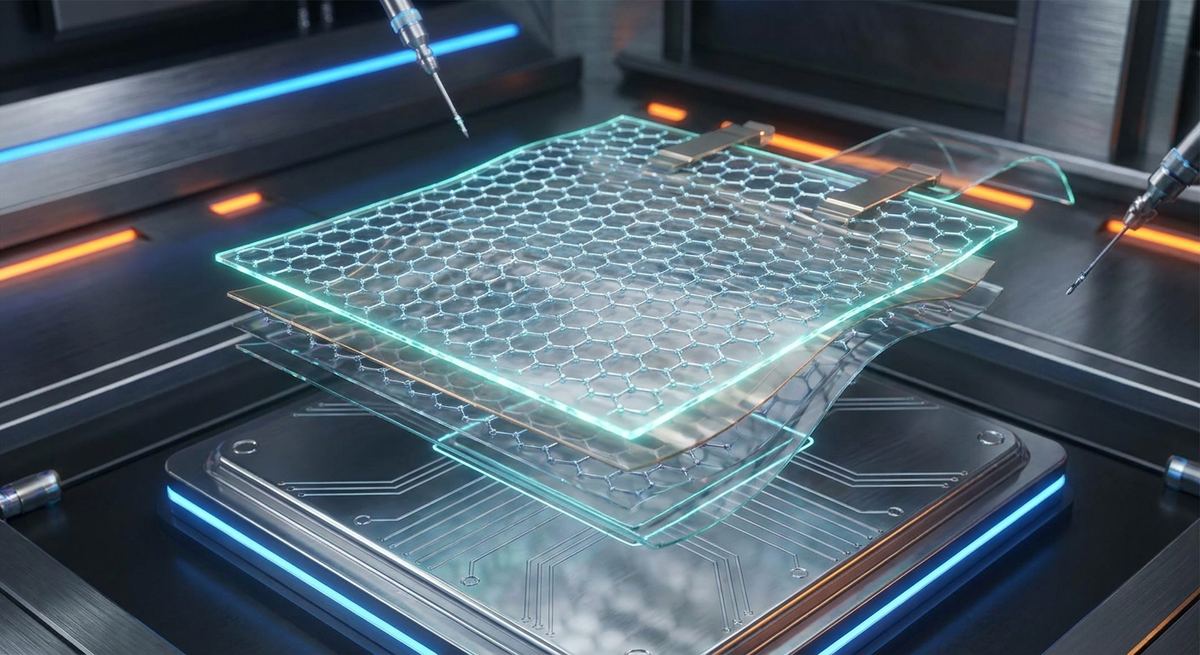
Recognizing the critical threat posed by active oxygen species on UV-ozone treated ITO (UV-ITO) surfaces, a robust solution was imperative to enhance the stability and performance of organic optoelectronic devices. Our research demonstrates the profound efficacy of utilizing a high work function Graphene Oxide (GO) film as an anode buffer layer. Graphene Oxide, with its unique structural and electronic properties, including its adjustable work function and excellent film-forming capabilities, emerges as an ideal candidate for this protective role.
When introduced as a thin interlayer between the UV-ITO anode and the organic active layers, the GO film acts as an effective physical and chemical barrier. Its primary function is to inhibit the surface-active oxygen species present on the UV-ITO substrate from directly interacting with the delicate organic molecules. The GO layer effectively passivates these reactive sites, preventing the formation of detrimental gap states and the subsequent charge recombination pathways that plague devices without this buffer. This protective action is crucial for maintaining the integrity and electronic properties of the organic films over extended operating periods.
Beyond merely blocking reactive species, Graphene Oxide also offers beneficial electronic characteristics. Its high work function is particularly advantageous for efficient hole extraction from the organic semiconductor to the anode. By creating a favorable energy level alignment, the GO buffer layer can optimize the charge injection and extraction processes, which are fundamental to high-performance organic photovoltaics (OPVs). This dual role—protecting against degradation and enhancing charge transport—makes GO an exceptionally versatile and powerful material in advanced optoelectronics.
The application of a GO anode buffer layer represents a remarkably simple yet highly effective approach to address a complex stability issue. Unlike more intricate surface modification techniques, depositing a GO film is a straightforward process, compatible with existing fabrication methods for organic electronic devices. This ease of integration significantly lowers the barrier to widespread adoption, making it an attractive solution for both research and industrial applications. The elegance of using a nanoscale material to solve a macroscopic device stability problem underscores the ingenuity of materials science in pushing the boundaries of technology.
The introduction of a Graphene Oxide (GO) anode buffer layer yields significant and measurable improvements in both the power conversion efficiency (PCE) and the operational stability of organic photovoltaic (OPV) devices. These enhancements are not merely incremental; they represent a substantial leap forward in addressing one of the most persistent hurdles for the commercial viability of OPV technology. The benefits of GO stem directly from its ability to mitigate the degradation caused by UV-ozone treated ITO (UV-ITO) while simultaneously optimizing the device’s electrical characteristics.
In OPV devices, the fundamental working mechanism involves several critical steps: photon absorption generates excitons, which then diffuse to a donor/acceptor interface for dissociation into free charge carriers (holes and electrons). These carriers are subsequently transported to and collected by the respective electrodes, namely the ITO anode and the Al cathode. Any factor that impedes these steps, particularly charge collection, directly compromises device efficiency. The active oxygen species on UV-ITO, without a GO buffer, create a charge recombination pathway at the anode interface, effectively reducing the number of charge carriers collected and thus diminishing the photocurrent and overall PCE.
With the incorporation of a GO buffer layer, this detrimental interaction is suppressed. The GO film acts as an interfacial passivation layer, preventing the active oxygen species from forming gap states that trap or recombine charges at the organic/anode interface. This allows for a more efficient collection of holes at the anode, leading to an increase in short-circuit current density and, consequently, higher PCE. Furthermore, the high work function of GO facilitates more efficient hole extraction, which can also contribute to an improved open-circuit voltage and fill factor, further boosting the device’s overall power output. The synergistic effect of surface passivation and optimized charge transport makes GO an invaluable component in high-performance OPVs.
Beyond immediate efficiency gains, the most compelling advantage of the GO buffer layer is the dramatic enhancement in device stability. Previous studies have shown that OPV devices suffer degradation even in controlled environments, indicating internal causes related to the ITO substrate. By shielding the organic layers from the reactive oxygen reservoir on UV-ITO, the GO layer significantly extends the operational lifetime of the device. This newfound stability is critical for transitioning OPVs from laboratory curiosities to robust, real-world energy solutions. The ability to maintain high performance over thousands of hours of operation is a testament to the transformative power of Graphene Oxide in device engineering.
The findings regarding Graphene Oxide’s effectiveness as an anode buffer layer extend far beyond the realm of organic photovoltaics. The problem of Indium-Tin Oxide (ITO) degradation, specifically when subjected to UV-ozone treatment, is a pervasive issue across a wide spectrum of organic optoelectronic devices. This includes organic light-emitting diodes (OLEDs), organic field-effect transistors (OFETs), and various other organic semiconductor-based devices that rely on ITO as a transparent electrode. In all these applications, the stability of the organic-ITO interface is paramount for device longevity and performance.
Just as organic active materials in OPVs suffer from the reactive oxygen species on UV-ITO, so too do the emissive layers in OLEDs or the active channels in OFETs. The formation of gap states and the promotion of charge recombination or trapping can lead to reduced luminescence efficiency, increased operating voltages, and accelerated lifetime degradation in OLEDs. Similarly, in OFETs, such interfacial instabilities can manifest as threshold voltage shifts, reduced mobility, and overall device unreliability. Therefore, the strategic placement of a Graphene Oxide (GO) buffer layer presents a universal solution for enhancing the interfacial stability in a broad array of organic electronic systems.
By ensuring a stable and passivated interface, GO enables device engineers to leverage the full potential of novel organic semiconductor materials without being limited by substrate-induced degradation. This opens up new avenues for material selection and device architecture design, fostering innovation across the organic optoelectronics landscape. The simplicity and effectiveness of integrating GO make it an attractive and scalable solution, capable of transforming not just solar cells, but the entire ecosystem of flexible, transparent, and high-performance organic electronics.
This research underscores the importance of meticulously understanding interface chemistry in complex device stacks. It also highlights how advanced materials like graphene oxide can serve as elegant, multi-functional solutions to long-standing engineering challenges. The ability of GO to concurrently address chemical degradation and optimize electrical properties positions it as a cornerstone material for the next generation of robust and efficient organic electronic devices, paving the way for wider commercial adoption and technological breakthroughs.
The journey of organic optoelectronics, particularly organic photovoltaics, has been marked by incredible progress in efficiency, yet persistently challenged by issues of device stability. Our detailed exploration into the effects of UV-ozone treated Indium-Tin Oxide (UV-ITO) reveals a critical, often overlooked, internal threat: the generation of active oxygen species that aggressively degrade adjacent organic active layers. Through rigorous spectroscopic analyses, we have illuminated the mechanisms behind this degradation, pinpointing charge recombination via induced gap states as a primary cause for diminished performance and rapid decay.
However, this challenge has also paved the way for a transformative solution. The strategic integration of a high work function Graphene Oxide (GO) film as an anode buffer layer stands out as an exceptionally effective approach. GO not only acts as a formidable shield, passivating the reactive oxygen species on the UV-ITO surface, but also harmonizes the electronic interface, optimizing charge extraction and transport. The result is a significant enhancement in both the power conversion efficiency and, crucially, the long-term operational stability of organic photovoltaic devices, extending their lifespan and reliability significantly. This simple yet profound modification addresses a fundamental weakness, unlocking the true potential of organic electronics.
The implications of this discovery are far-reaching, extending beyond OPVs to impact the broader field of organic optoelectronics, including OLEDs and OFETs. As the demand for flexible, transparent, and cost-effective electronic devices continues to grow, the stability provided by Graphene Oxide will be indispensable. This research underscores Graphene Oxide's role not just as a novel material, but as an essential enabler for the next generation of high-performance and durable organic electronic technologies. Explore how usa-graphene.com is driving these advancements and providing the cutting-edge graphene materials that empower scientific breakthroughs and industrial innovation. Visit us today to learn more about our commitment to excellence in graphene science and applications, and discover the future of stable optoelectronics.
Serious about B2B integration? Test our premium Pulsed Electrical Resistive Carbon Heating turbostratic graphene in your lab. 100g sample packs available now.
Explore More
Learn how deep learning is revolutionizing the structural characterization of twisted bilayer materials, accelerating the development of next-generation...

Learn to build a prototype graphene FET biosensor for sensitive DNA detection. This guide covers materials, fabrication, and testing for point-of-care...

Discover how hopping-mediated charge transport explains graphene's electrical behavior beyond the ideal ballistic regime, a key insight for creating...