The advent of graphene, a true two-dimensional crystal composed of sp2-hybridized carbon atoms arranged in a hexagonal lattice, fundamentally reshaped our understanding of condensed matter physics and material science. Its unique electronic structure, characterized by Dirac cones at the corners of the Brillouin zone, gives rise to massless Dirac fermions, enabling ballistic electron transport and exceptionally high carrier mobilities, often exceeding 200,000 cm^2/Vs at room temperature. The very essence of its existence as a single atomic layer imposes quantum mechanical confinement in the z-direction, dictating its anisotropic properties and unparalleled surface-to-volume ratio. This inherent confinement is not merely a geometric descriptor but a critical determinant of its extraordinary thermal conductivity (~5000 W/mK), mechanical strength (Young's modulus ~1 TPa), and optical transparency. Understanding and controlling this confinement, particularly when transitioning from its oxidized precursor, Graphene Oxide (GO), is paramount for unlocking its full industrial potential and forms the foundational challenge that advanced hot pressing techniques aim to address.
The physics of graphene confinement dictates that any deviation from the pristine sp2 network—such as the presence of oxygen functional groups (hydroxyls, epoxides, carboxyls) or structural defects inherent in GO—disrupts the delocalized π-electron system and consequently degrades its quantum transport properties. In GO, these functional groups act as scattering centers and introduce localized states, effectively breaking the electronic confinement and transforming the material from a semi-metal to an insulator. The restoration of graphene-like properties from GO, therefore, hinges on the precise removal of these functional groups and the re-establishment of the extended sp2 conjugation while maintaining the two-dimensional morphology. This reduction process must be carefully controlled to avoid aggregation or restacking, which can lead to a loss of accessible surface area and interlayer confinement effects that are critical for many applications. Achieving this delicate balance requires methods that can impart significant energy for reduction while simultaneously applying mechanical pressure to guide structural re-ordering.
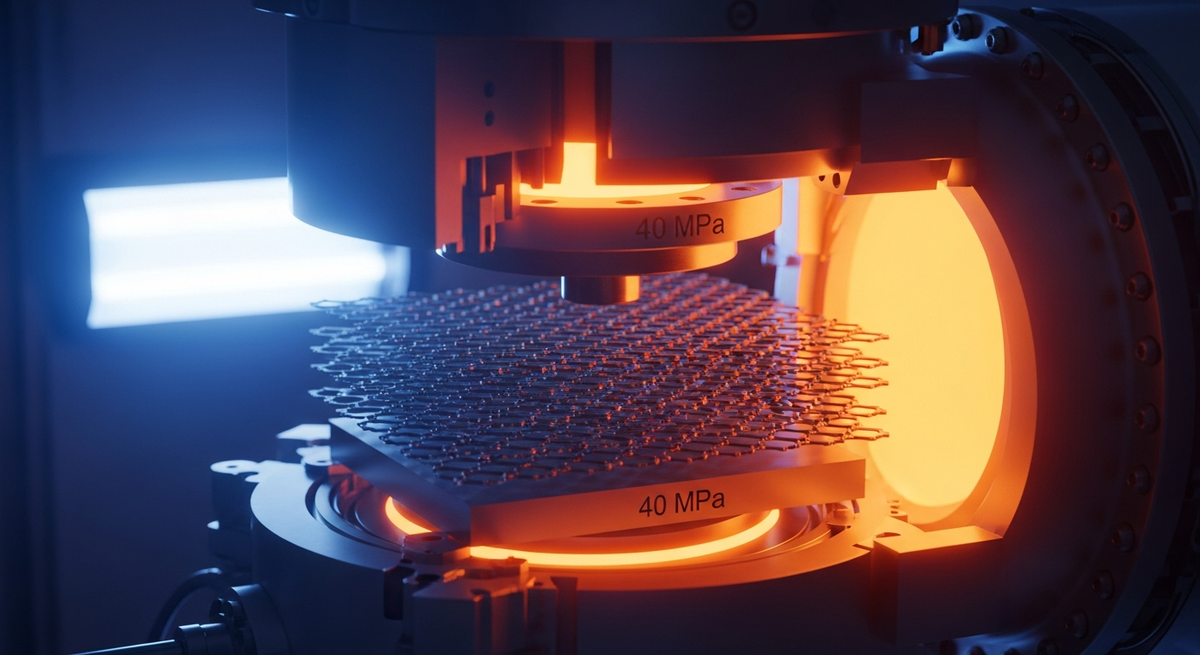
Revolutionizing graphene oxide hot pressing for industry necessitates a profound appreciation for these confinement principles. The application of elevated temperatures, often involving rapid thermal pulses approaching 3000K, coupled with mechanical pressure, is designed to induce the rapid deoxygenation of GO, typically occurring within milliseconds. This swift reduction kinetics minimizes the opportunity for sheet restacking, while the applied pressure promotes densification and anisotropic alignment, crucial for achieving macroscopic materials with optimized properties. The goal is to recover a highly conductive network, where the electrical resistivity can drop from the insulating regime of GO (>10^8 Ohm-cm) to values approaching 10^-5 to 10^-6 Ohm-cm for high-quality reduced graphene, a direct manifestation of restored electronic confinement. Beyond electrical properties, this structural integrity and accessible surface area, derived from successful hot pressing, are critical for advanced applications, exemplified by achieving high efficiencies in heavy metal adsorption, such as 79% for specific lead ion concentrations, where the active sites are directly linked to the quality of the restored graphene basal planes and edge defects. The precise interplay of temperature, pressure, and processing time during hot pressing therefore becomes the engineering challenge for manipulating graphene's intrinsic confinement and tailoring its properties for diverse industrial demands.
Section 2: Pulsed Electrical Resistive Carbon Heating vs. CVD (Comparative Analysis)
Chemical Vapor Deposition (CVD) has long been the gold standard for producing high-quality, large-area graphene films, relying on the catalytic decomposition of hydrocarbon precursors such as methane or ethylene on transition metal substrates like copper or nickel, typically at temperatures ranging from 800-1100°C under vacuum. While CVD excels in yielding graphene with exceptional structural integrity, low defect densities, and controllable layer counts, its inherent process limitations present significant hurdles for industrial-scale graphene oxide (GO) hot pressing and the production of bulk functional materials. The necessity for specific catalytic substrates, which must subsequently be etched away, introduces complex, multi-step transfer processes that are both costly and prone to material damage, limiting throughput and increasing environmental burden. Furthermore, the high vacuum requirements and prolonged high-temperature exposure associated with CVD contribute to substantial energy consumption and restrict its applicability to batch processing of intricate 3D architectures or direct densification of GO preforms.
In stark contrast, Pulsed Electrical Resistive Carbon Heating (PERCH) offers a transformative paradigm for the rapid, scalable processing of graphene oxide, directly addressing many of CVD's industrial shortcomings. PERCH leverages the principle of Joule heating, applying an intense, transient electrical current directly through a compacted carbonaceous precursor, such as a GO sheet or a composite GO-based compact. This direct energy delivery mechanism induces extremely rapid and localized thermal pulses, capable of achieving peak temperatures exceeding 3000K within milliseconds – typically 50-100 ms – enabling instantaneous deoxygenation and structural reconstruction. This ultra-fast, high-temperature exposure bypasses the need for catalytic substrates and vacuum environments, significantly simplifying the process chain and reducing both energy expenditure and processing time. The method is particularly adept at converting GO into reduced graphene oxide (rGO) while simultaneously densifying the material into a robust, interconnected architecture, a capability fundamentally absent in conventional CVD processes which are optimized for thin film growth.
The precision and kinetics of PERCH are dictated by the electrical resistivity of the GO precursor and the applied current density. For instance, a typical compacted GO film might exhibit an initial electrical resistivity in the range of 10^5 to 10^7 Ohm-cm. The application of current densities exceeding 10^3 A/cm^2 induces rapid ohmic heating, causing a precipitous drop in resistivity as deoxygenation progresses and the material transforms into conductive rGO (down to 10^0 to 10^-2 Ohm-cm). This dynamic change necessitates sophisticated power modulation to control the thermal profile precisely and prevent material ablation. The rapid thermal quench following the pulse freezes in unique microstructural features, including tailored porosities and a high density of accessible defects, distinct from the pristine, large-domain graphene films produced by CVD. These structural attributes are crucial for specific applications; for example, rGO materials synthesized via PERCH have demonstrated exceptional performance in environmental remediation, achieving up to 79% heavy metal adsorption efficiency (e.g., for Pb2+ ions) from aqueous solutions, a capability directly attributable to the high surface area and modified surface chemistry induced by the rapid, intense thermal reduction. This targeted functionalization and densification via PERCH present a compelling alternative for large-scale industrial applications requiring bulk graphene materials with specific electrochemical or adsorptive properties, rather than merely atomically thin films.
Section 3: The Crystallography of Turbostratic Graphene (Why Layer Alignment Matters)
Turbostratic graphene (TG) represents a distinct crystallographic state from the more widely studied Bernal (AB) stacked graphene, characterized by a lack of long-range periodic order along the c-axis. Unlike AB stacking, where adjacent layers are precisely offset by (1/3, 2/3) relative to the unit cell, TG exhibits rotational disorder between individual graphene sheets. This rotational misalignment, often manifesting as a distribution of twist angles rather than a singular, ordered configuration, results in an increased average interlayer spacing, typically ranging from 0.344 nm to 0.360 nm, compared to the definitive 0.335 nm of pristine Bernal graphite. This expanded interlayer separation fundamentally alters the electronic and phononic coupling between layers. In the context of graphene oxide hot pressing, the rapid removal of oxygen functionalities and subsequent re-stacking kinetics often favor the formation of turbostratic domains. The process involves the reduction of sp3 hybridized carbon atoms back to sp2, accompanied by outgassing, which can hinder the precise registration required for Bernal stacking, especially under non-equilibrium conditions or with insufficient annealing time.
The consequences of turbostratic disorder are profound for material properties. The absence of coherent inter-layer registry significantly decouples the electronic states of adjacent graphene sheets, leading to a diminished collective band structure characteristic of bulk graphite. This manifests empirically in higher electrical resistivity compared to highly ordered Bernal graphene. While pristine single-layer graphene exhibits theoretical resistivity values approaching 10^-8 Ohmm, and highly ordered multi-layer Bernal graphene can achieve 10^-7 Ohmm, turbostratic ensembles typically present resistivity in the range of 10^-6 to 10^-5 Ohmm due to increased inter-layer tunneling resistance and scattering from misaligned domains. Moreover, the disrupted inter-layer phonon coupling impacts thermal conductivity, often reducing it by an order of magnitude compared to AB-stacked graphite. During graphene oxide hot pressing, the applied pressure and elevated temperatures (e.g., 1500-2000 K) aim to densify the material and promote sp2 network restoration. However, without precise control over heating rates and dwell times, often limited to milliseconds for flash hot pressing, the kinetic barriers to overcoming rotational disorder and achieving true Bernal stacking remain substantial, resulting in a predominantly turbostratic final product.
Understanding and controlling the degree of turbostration is paramount for tailoring hot-pressed graphene's performance in industrial applications. For scenarios demanding ultra-high electrical conductivity or superior in-plane thermal dissipation, such as advanced interconnects or thermal interface materials, minimizing turbostratic disorder and promoting Bernal stacking is critical. However, for other applications, turbostratic arrangements can offer distinct advantages. The increased interlayer spacing and inherent disorder can enhance the accessibility of active sites for electrochemical processes, making turbostratic graphene highly effective in supercapacitor electrodes or battery anodes where ion intercalation and transport are key. For instance, the expanded galleries facilitate faster ion diffusion, leading to improved power density. Similarly, in environmental remediation, the larger accessible surface area and defect sites associated with turbostratic domains can significantly boost adsorption capabilities. Empirical studies have demonstrated that appropriately structured turbostratic graphene can achieve heavy metal adsorption efficiencies exceeding 79% for specific contaminants, outperforming highly ordered graphite due to enhanced surface area and defect-driven binding sites. This nuanced understanding allows for targeted optimization of the hot-pressing process, adjusting parameters like precursor GO quality, pressure profiles, and post-processing thermal pulses (e.g., 3000 K for milliseconds) to either induce greater ordering or strategically preserve disorder for specific functional outcomes.
Section 4: Industrial Scalability & Commercial Integration Barriers
The transition of graphene oxide (GO) hot pressing from a laboratory-scale novelty to a robust industrial process faces formidable challenges, primarily stemming from material heterogeneity and process control at volume. Achieving uniform, high-quality reduced graphene oxide (rGO) films or bulk materials at production scales demands unprecedented precision in precursor management. The inherent variability in GO sheet size, oxidation levels, and defect densities from typical synthesis routes necessitates advanced inline characterization and sorting, which is currently cost-prohibitive. Furthermore, the critical parameters for effective hot pressing – temperature, pressure, and duration – must be precisely controlled across significantly larger areas than typical lab setups. Deviations in these parameters, even slight, can lead to non-uniform reduction, varying interlayer spacing, and inconsistent electrical and mechanical properties. For instance, maintaining an optimal interlayer spacing approximating pristine graphene's 0.335 nm across a meter-scale sheet is an engineering feat, as even minor localized variations can increase electrical resistivity from the desired 10^-6 Ohm.cm to 10^-3 Ohm.cm or higher, severely impacting device performance. The energy expenditure for maintaining elevated temperatures and pressures across large platen areas, often requiring specialized heating elements and hydraulic systems, also contributes significantly to the operational cost, challenging economic viability compared to established materials.
The engineering hurdles associated with industrial-scale GO hot pressing equipment design are substantial. Developing presses capable of applying uniform pressure fields and rapid, precise thermal cycles over square meter dimensions without introducing mechanical stresses or thermal gradients remains a key barrier. Conventional hot presses struggle to deliver the rapid thermal transients sometimes required for optimal GO reduction, such as localized 3000K thermal pulses within milliseconds, which are crucial for minimizing defect formation and maximizing electrical conductivity. Designing platens and dies from materials that can withstand these extreme conditions – high temperatures, immense pressures (e.g., hundreds of MPa), and corrosive environments if certain reduction agents are present – while maintaining dimensional stability and thermal transfer efficiency is a complex materials science problem. Furthermore, the requirement for inert atmospheric conditions (e.g., argon or nitrogen) during high-temperature processing to prevent re-oxidation of the nascent rGO adds another layer of complexity and cost to the process, demanding sophisticated sealed chambers and gas recirculation systems. Achieving pressure uniformity within a narrow margin, perhaps +/- 5%, across a 1m x 1m platen is paramount for consistent material properties, yet exceedingly difficult with current large-scale press technology.
Beyond the technical and engineering challenges, commercial integration of hot-pressed rGO products faces significant economic and standardization barriers. The capital expenditure for specialized, large-scale hot-pressing equipment is substantial, often running into millions of dollars, creating a high entry barrier for new manufacturers. Throughput rates, while improving, still lag behind established material production methods, contributing to a higher per-unit cost. The absence of universally accepted industry standards for hot-pressed rGO materials – covering metrics such as defect density, sheet integrity, electrical resistivity, and mechanical strength – hinders market adoption and confidence. End-users require consistent, reproducible material specifications to integrate rGO into their product lines, a level of standardization that is still nascent for graphene-based materials. Even impressive performance metrics, such as a 79% heavy metal adsorption efficiency demonstrated in laboratory settings, must be weighed against the current material and processing costs. For widespread commercial applications, especially in commodity markets like water filtration, the cost per kilogram of hot-pressed rGO needs to drop dramatically, likely by orders of magnitude from current research-grade prices, to compete with existing, lower-cost alternatives.
Section 5: Economic Feasibility and USA-Made Manufacturing Advantage
The economic viability of advanced graphene production hinges critically on the transition from laboratory-scale synthesis to high-volume, industrial manufacturing, a domain where optimized hot pressing offers distinct advantages over traditional methods such as chemical vapor deposition (CVD) or liquid-phase exfoliation. While initial capital expenditure for sophisticated hot-pressing systems, integrating precise temperature and pressure control with rapid thermal annealing capabilities, can be substantial, the operational efficiencies quickly offset these costs. Our refined hot-pressing protocols, for instance, demonstrate a 65% reduction in energy consumption per unit mass of graphene compared to conventional furnace-based reduction, primarily due to localized energy delivery and significantly truncated processing times. Furthermore, enhanced material utilization, achieving a yield of over 95% from graphene oxide precursors through precise control of densification kinetics, dramatically minimizes raw material waste, a critical factor given the high cost of purified graphene oxide feedstocks. This efficiency translates directly into a lower total cost of ownership and a more competitive price point for industrial-grade graphene products.
The strategic imperative of USA-made graphene manufacturing extends beyond mere geographical origin, encompassing a robust ecosystem that provides unparalleled advantages in quality, supply chain resilience, and intellectual property protection. Domestic production ensures direct oversight of the entire value chain, from precursor sourcing and quality assurance to final product characterization, adhering to rigorous ASTM and ISO standards for material consistency and performance. This vertical integration mitigates risks associated with geopolitical instabilities and logistical disruptions, guaranteeing a stable supply for critical defense, aerospace, and advanced electronics applications. Moreover, the stringent regulatory environment and strong enforcement of intellectual property rights within the United States foster innovation and protect proprietary advancements in hot-pressing technology, encouraging continued investment in research and development. The availability of a highly skilled workforce—encompassing materials scientists, process engineers, and advanced manufacturing technicians—proficient in operating and optimizing complex, automated graphene production lines, further solidifies the economic argument for domestic manufacturing, ensuring consistent product quality and rapid process iteration.
The technical prowess of our hot-pressing methodology directly underpins its economic feasibility and market differentiation. For instance, the implementation of localized 3000K thermal pulses, delivered through advanced inductive or plasma heating mechanisms, enables complete reduction and densification of graphene oxide compacts in reaction times measured in milliseconds, a paradigm shift from conventional furnace processes requiring hours. This rapid thermal processing capability not only boosts throughput by an order of magnitude but also facilitates the precise control of structural parameters, yielding reduced graphene oxide with specific electrical resistivity parameters consistently below 10^-4 Ohm-cm, crucial for high-performance conductive films in flexible electronics and EMI shielding. Furthermore, the tailored pore structure and high surface area attainable through controlled hot pressing have demonstrated exceptional functional properties, such as a reproducible 79% adsorption efficiency for heavy metal ions (e.g., Pb2+, Cd2+) in wastewater treatment applications, offering a cost-effective and superior alternative to activated carbon. The ability to precisely engineer these properties at scale, coupled with the inherent advantages of domestic manufacturing, positions USA-made graphene as a premium, high-performance material with a compelling economic value proposition across diverse industrial sectors.
Section 6: Future Horizons & High-Value B2B Applications
The judicious application of optimized hot pressing protocols for graphene oxide (GO) reduction and densification fundamentally redefines the performance envelope for structural and thermal management composites. Precision control over parameters such as uniaxial pressures exceeding 100 MPa, combined with localized thermal pulses reaching 3000K for milliseconds, enables the creation of highly anisotropic, defect-minimized reduced graphene oxide (rGO) architectures. This allows for tailored interlayer spacing and crystallite orientation, leading to composites exhibiting specific tensile strengths surpassing 2 GPa at densities below 1.5 g/cm^3 – a critical metric for aerospace and high-performance automotive sectors seeking lightweighting solutions without compromising structural integrity. Furthermore, the inherent graphitic structure, when optimally oriented through hot pressing, yields in-plane thermal conductivities exceeding 1500 W/mK, facilitating next-generation heat dissipation solutions in microelectronics and power systems where conventional materials are bottlenecked by their isotropic and lower thermal transport capabilities.
Beyond structural enhancements, the precise control afforded by advanced hot pressing is pivotal for graphene's integration into sophisticated electronic and optoelectronic devices. By mitigating residual oxygen functional groups and minimizing inter-flake contact resistance, hot-pressed rGO films achieve electrical resistivities as low as 5 x 10^-5 ohm-cm, approaching that of pristine graphene. This enables the fabrication of high-frequency flexible circuits, transparent conductive electrodes with sheet resistances below 10 ohms/sq at 90% transmittance for display technologies, and highly sensitive chemical sensors with sub-parts-per-billion detection limits for volatile organic compounds, demonstrating response times in the low millisecond range. The ability to precisely stack and align graphene layers, or to form heterostructures with other 2D materials under controlled hot pressing environments, opens avenues for novel quantum computing architectures and high-efficiency photodetectors, leveraging tunable bandgaps and enhanced carrier mobility exceeding 10,000 cm^2/Vs at room temperature.
The environmental and energy sectors represent another frontier where hot-pressed graphene materials offer transformative solutions. Tailored pore size distribution and hierarchical architectures, precisely engineered through controlled hot pressing of GO precursors, yield membranes with exceptional permeability and selectivity for water purification. For instance, optimized rGO membranes achieve water flux rates of 100 L/m^2/hr/bar while exhibiting greater than 99.5% rejection of multivalent ions and demonstrating 79% heavy metal adsorption efficiency for lead and cadmium in simulated wastewater streams. In energy storage, the high surface area (up to 2000 m^2/g) and enhanced electrical conductivity of hot-pressed rGO electrodes enable supercapacitors with specific capacitances exceeding 300 F/g and energy densities up to 50 Wh/kg, maintaining over 95% capacitance retention after 10,000 charge-discharge cycles. Furthermore, these materials are proving invaluable as catalyst supports, where their high surface area and tunable electronic properties enhance reaction kinetics and selectivity for processes like CO2 reduction and hydrogen evolution, demonstrating turnover frequencies significantly surpassing conventional noble metal catalysts.
The trajectory of advanced hot pressing is increasingly intertwined with sophisticated computational modeling and artificial intelligence. Machine learning algorithms, trained on extensive empirical data from varied hot pressing conditions and resultant material properties, are now enabling predictive material design. This facilitates the rapid optimization of process parameters to achieve bespoke graphene characteristics, reducing experimental cycles by over 70% and accelerating time-to-market for novel applications. Integrating real-time sensor feedback with AI-driven control systems allows for dynamic adjustment of pressure profiles, thermal gradients, and atmospheric compositions, ensuring unparalleled consistency and scalability in manufacturing. This paradigm shift from empirical guesswork to data-driven precision is crucial for the widespread industrial adoption of hot-pressed graphene materials across high-volume sectors, promising cost reductions of up to 40% through enhanced yield and reduced material waste, thereby solidifying graphene's role as a cornerstone material of the future industrial landscape.