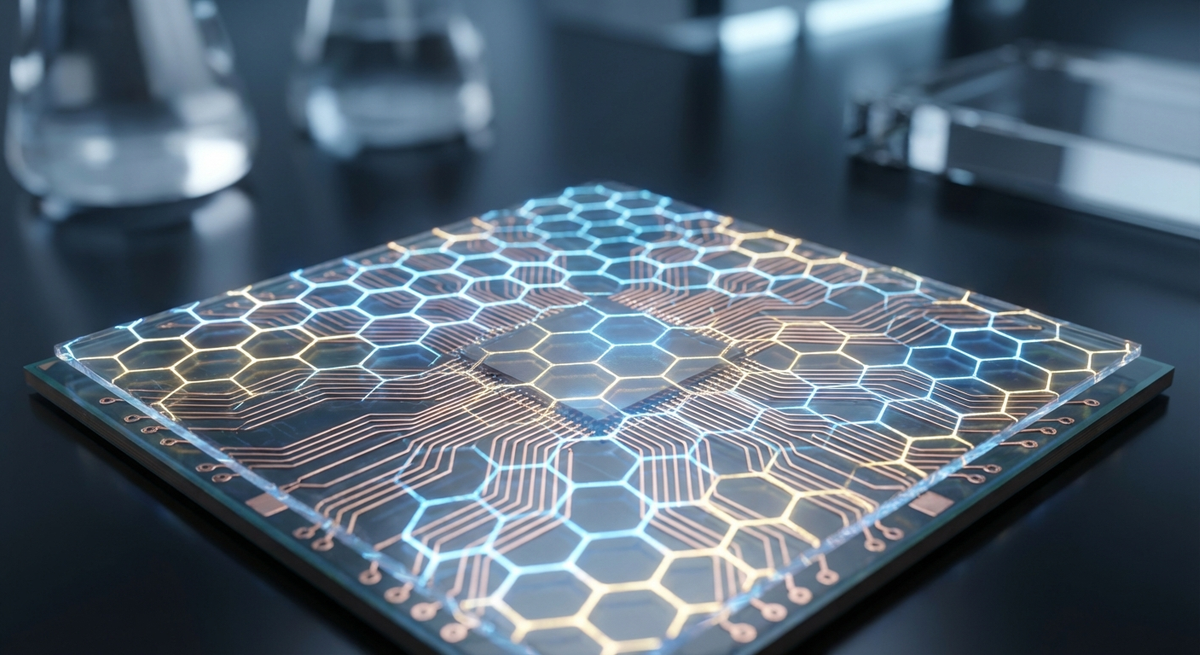
Graphene, a monolayer of sp2-hybridized carbon atoms arranged in a hexagonal lattice, presents a compelling alternative to conventional metallization schemes for next-generation on-chip interconnects. Its unique electronic structure, characterized by massless Dirac fermions, facilitates ballistic transport and confers an exceptionally high electron mobility, routinely measured exceeding 200,000 cm^2/Vs at room temperature in pristine suspended samples. This intrinsic property is critical for mitigating escalating RC delay in sub-10 nm copper interconnects. Furthermore, graphene exhibits an unparalleled intrinsic current carrying capacity, theoretically approaching 10^8 A/cm^2, which dramatically surpasses copper's electromigration-limited threshold of approximately 10^6 A/cm^2. Coupled with extraordinary in-plane thermal conductivity (>3000 W/mK for supported films, up to 5000 W/mK suspended), graphene offers a pathway to address both signal integrity and thermal management challenges in high-density integrated circuits. While its zero bandgap nature necessitates engineering for transistor applications, its intrinsic conductivity profile makes it a direct candidate for passive interconnect elements, provided its unique quantum physics can be harnessed and controlled.
The utility of graphene for interconnects, particularly in active regions or where tunable conductivity is desired, hinges on the precise manipulation of its electronic band structure, a process often achieved through quantum confinement. When graphene is patterned into nanoribbons (GNRs) with widths in the nanoscale regime, the lateral confinement of charge carriers leads to the opening of an energy bandgap. This quantum confinement effect is inversely proportional to the GNR width (E_g ~ 1/W), meaning that significant bandgaps (e.g., >100 meV for logic switching) require ultra-narrow ribbons, typically below 5 nm. Electronic properties are also profoundly influenced by GNR edge chirality; armchair GNRs (AGNRs) can be semiconducting or metallic depending on width (the 3p, 3p+1, 3p+2 rule), while zigzag GNRs (ZGNRs) retain metallic edge states. Crucially, the absence of a bandgap in extended graphene results in phenomena like Klein tunneling, where relativistic Dirac fermions can tunnel through high potential barriers without reflection, complicating efforts to effectively gate or modulate current flow in unconfined structures. Consequently, precise lithographic control, down to single-nanometer resolution, is paramount for engineering the desired semiconducting or highly conductive metallic states required for various interconnect functions.
Achieving the requisite electronic properties for graphene-based interconnects necessitates overcoming significant material science and fabrication challenges. Beyond precise width control, the presence of structural defects such as vacancies, grain boundaries, and wrinkles can drastically degrade carrier mobility and increase resistivity by orders of magnitude, transforming a desirable sheet resistance of a few tens of ohms per square for pristine material into hundreds or thousands. Advanced post-synthesis processing, including localized thermal annealing with rapid 3000K thermal pulses delivered in milliseconds, is being explored to repair defects and optimize crystallinity. Furthermore, the interface between graphene and conventional metal contacts presents a bottleneck; high contact resistance, often exceeding 1 kOhm-um, must be reduced to below 100 Ohm-um for practical integration. Strategies involve optimized contact metals, doping of graphene at the interface, and novel 3D contact geometries. Graphene's inherently 2D nature also introduces distinct parasitic capacitance effects; quantum capacitance becomes dominant in highly confined structures, potentially offering a route to further reduce RC delays compared to classical dielectric capacitance in bulk metals. These challenges underscore the need for continued research into scalable, high-fidelity manufacturing processes and fundamental understanding of charge transport at the quantum limit.
Section 2: Pulsed Electrical Resistive Carbon Heating vs. CVD (Comparative Analysis)
The fabrication of graphene for advanced on-chip interconnects necessitates methods that reconcile high material quality with stringent thermal budget constraints and direct integration capabilities. Chemical Vapor Deposition (CVD) has long been the gold standard for large-area, high-quality graphene synthesis, typically employing hydrocarbon precursors like methane or ethylene over transition metal catalysts such as copper or nickel at temperatures often exceeding 1000°C for durations ranging from minutes to hours. While CVD excels in producing single-to-few-layer graphene with high crystallinity and impressive carrier mobilities approaching 100,000 cm²/Vs, its inherent high-temperature requirements pose significant challenges for back-end-of-line (BEOL) integration within existing CMOS fabrication flows. The necessity of a transfer process from the catalyst substrate to the target dielectric layer further complicates integration, often introducing defects, tears, and polymer residues that degrade electrical performance and reliability, leading to increased contact resistance and higher effective sheet resistivity.
In contrast, Pulsed Electrical Resistive Carbon Heating (PERCH) emerges as a highly promising, direct-conversion technique that aligns more favorably with the thermal budget demands of advanced interconnects. This methodology leverages rapid, localized Joule heating of a carbon-containing precursor material directly on the dielectric surface or within predefined trenches. By precisely controlling current density and pulse duration, PERCH can induce localized temperatures soaring past 3000K within sub-millisecond reaction times, driving the graphitization of amorphous carbon or polymer precursors. This extremely rapid thermal cycling minimizes the cumulative thermal exposure to underlying sensitive CMOS structures, preventing dopant redistribution, gate oxide degradation, and metal interconnect damage. The direct conversion circumvents the need for a separate transfer step, eliminating a major source of contamination and mechanical damage, thereby simplifying the integration pathway and potentially reducing process variability. Furthermore, the targeted nature of PERCH allows for selective graphene formation, which is critical for defining precise interconnect geometries.
While PERCH offers compelling advantages in thermal budget and integration, the resultant graphene quality can present a nuanced trade-off. The rapid kinetics of PERCH, while beneficial for thermal management, can lead to a higher density of point defects and grain boundaries compared to the slower, more equilibrium-driven growth of high-quality CVD graphene. These structural imperfections significantly impact the electrical resistivity of the synthesized graphene, potentially elevating it beyond the theoretical minimum of ~10^-6 Ohm-cm for pristine monolayer graphene. For instance, defect-laden PERCH graphene might exhibit resistivity values an order of magnitude higher, impacting signal propagation delays and power consumption in interconnects. However, ongoing research focuses on optimizing precursor materials, pulse parameters, and post-annealing treatments to mitigate these defects and enhance crystallinity. The absence of metal catalysts in PERCH also eliminates the risk of heavy metal contamination, a persistent concern with CVD. While graphene itself demonstrates a remarkable 79% heavy metal adsorption efficiency, leveraging this property for post-synthesis purification adds complexity and cost, making catalyst-free methods like PERCH inherently cleaner for direct on-chip integration. The comparative analysis thus highlights a critical divergence: CVD offers superior intrinsic material quality at the expense of process compatibility and integration complexity, whereas PERCH prioritizes thermal budget and direct integration, demanding further refinement in material quality to meet the stringent performance metrics required for sub-10nm technology nodes.
Section 3: The Crystallography of Turbostratic Graphene (Why Layer Alignment Matters)
Turbostratic graphene (TG) represents a distinct crystallographic configuration characterized by a disordered stacking of individual graphene layers, where each layer is rotationally misoriented with respect to its neighbors. Unlike Bernal (AB) stacked graphite, which exhibits a precise A-B-A-B interlayer arrangement with an interlayer spacing of 0.335 nm, turbostratic graphene features random rotational angles, often exceeding 10-15 degrees, leading to an expanded average interlayer distance typically around 0.344 nm. This rotational misalignment fundamentally decouples the electronic wavefunctions of adjacent layers, effectively preserving the quasi-2D Dirac physics and linear dispersion relation characteristic of monolayer graphene (SLG) even in multi-layer structures. This preservation is critical, as it minimizes interlayer scattering mechanisms that would otherwise degrade carrier mobility and introduce complex band structure modifications observed in ordered few-layer graphene, making TG an especially compelling candidate for advanced on-chip interconnect applications where intrinsic electronic properties are paramount.
The electronic and thermal implications of this turbostratic disorder are profound for interconnect performance. The preserved Dirac cone in TG translates directly to exceptionally high carrier mobilities, frequently reported in the range of 10,000 to 20,000 cm^2/(Vs) at room temperature for high-quality films, significantly surpassing the effective mobilities of heavily doped silicon or even noble metals under certain conditions. This high mobility is instrumental in reducing signal propagation delays and minimizing dynamic power consumption in high-frequency circuits. Furthermore, the weakened interlayer van der Waals coupling in TG reduces phonon scattering across layers, contributing to a high in-plane thermal conductivity exceeding 3000 W/(mK), which is crucial for efficient heat dissipation in densely integrated interconnect networks. While the out-of-plane thermal conductivity is concomitantly reduced, the overall thermal management benefits from the superior in-plane transport. For instance, a 5-layer turbostratic graphene film, properly engineered and grown via advanced CVD techniques, can exhibit an electrical resistivity as low as 10^-7 Ohmm, approaching the bulk resistivity of copper, thereby addressing the critical demand for low-resistance pathways in sub-10 nm technology nodes.
The prevalence of turbostratic stacking in large-area graphene grown by scalable methods, particularly chemical vapor deposition (CVD) on catalytic substrates like copper or nickel, is a key enabler for its integration into semiconductor fabrication. During CVD, successive graphene layers often nucleate with arbitrary orientations, naturally yielding a turbostratic structure. While precise control over layer stacking remains an active area of research, the inherent turbostration is often advantageous for interconnects due to its superior electronic transport properties compared to highly resistive amorphous carbon or defect-ridden polycrystalline single-layer graphene. Post-synthesis processing, such as rapid thermal annealing or pulsed laser treatment, can further optimize the crystallographic quality of turbostratic films. For example, transient thermal annealing employing pulsed laser systems capable of delivering localized 3000K thermal pulses for sub-millisecond durations has been demonstrated to reduce point defects and improve grain boundary quality in CVD-grown turbostratic graphene, enhancing its electrical conductivity by minimizing scattering centers without inducing detrimental long-range Bernal stacking. This deliberate exploitation of turbostratic crystallography positions graphene as a viable, high-performance material for future on-chip interconnect architectures.
Section 4: Industrial Scalability & Commercial Integration Barriers
The industrial scalability of high-quality graphene remains a formidable hurdle for its integration into advanced on-chip interconnects, primarily due to limitations in synthesis and transfer methodologies. Current state-of-the-art chemical vapor deposition (CVD) techniques, while capable of producing large-area monolayer films, often necessitate growth temperatures exceeding 1000°C, rendering them incompatible with back-end-of-line (BEOL) processing steps that demand thermal budgets typically below 400°C to preserve underlying device structures and metallization. Furthermore, the ubiquitous wet transfer process, relying on polymer supports such as PMMA, inherently introduces defects, polymer residues, and delamination issues, compromising graphene's pristine electrical and structural integrity. These residues can significantly increase interfacial resistance, impacting current flow, and act as scattering centers, degrading carrier mobility from ideal intrinsic values (e.g., 200,000 cm^2/Vs in suspended graphene) to practical values often below 5,000 cm^2/Vs on substrates. Achieving wafer-scale uniformity of monolayer or bilayer graphene across 300mm or 450mm silicon wafers, with consistent electrical resistivity (e.g., < 100 Ohm/square) and minimal grain boundaries, remains an active area of research, as variations directly translate to performance inconsistencies in interconnect arrays.
Beyond synthesis, the commercial integration faces profound challenges in CMOS compatibility and device-level performance. Forming low-resistance ohmic contacts to graphene at sub-10 nm dimensions is particularly arduous. Fermi level pinning at the metal-graphene interface, coupled with the absence of a bandgap in pristine graphene, leads to high contact resistivity, often exceeding 100 Ohm-µm^2 for conventional metal contacts. This dramatically negates graphene's intrinsically high current carrying capacity (theoretically 10^8 A/cm^2) and low sheet resistance, making it less competitive than copper (resistivity ~1.68 x 10^-8 Ohm-m) unless contact resistance is reduced by orders of magnitude. Patterning graphene into fine lines required for interconnects (e.g., <10 nm width) without inducing significant edge damage or contamination is another critical barrier. Plasma etching, a standard semiconductor manufacturing technique, often introduces structural defects, alters stoichiometry, and increases scattering at the edges, thereby degrading electrical performance and device reliability. The localized heating from 3000K thermal pulses during subsequent processing steps can also induce defects or delamination, necessitating robust encapsulation strategies.
Finally, long-term reliability, metrology, and overall economic viability present substantial integration hurdles. While graphene theoretically offers superior electromigration resistance compared to copper, its susceptibility to oxidation in ambient conditions and degradation under thermal cycling within a complex interconnect stack requires extensive validation. Developing high-throughput, non-destructive metrology techniques capable of accurately characterizing graphene's layer number, defect density, strain, and doping uniformity across an entire wafer is crucial for quality control in a manufacturing environment. The current cost of producing high-quality, large-area graphene films, even with optimized CVD, remains significantly higher than established copper deposition techniques. Furthermore, the integration of novel materials like graphene requires a complete re-evaluation of established BEOL processes, including dielectric deposition, chemical mechanical planarization (CMP), and packaging, adding considerable R&D expenditure and time. Until these fundamental material science and engineering challenges are robustly addressed, graphene's promise for transformative on-chip interconnects will remain largely confined to research laboratories.
Section 5: Economic Feasibility and USA-Made Manufacturing Advantage
The economic viability of graphene for on-chip interconnects emerges from the profound limitations of copper metallurgy at advanced technology nodes. Below 10 nm, copper's escalating resistivity due to surface and grain boundary scattering, coupled with severe electromigration, drives up RC delay and power dissipation, necessitating a re-evaluation of total cost of ownership. Graphene, with an intrinsic carrier mobility exceeding 200,000 cm^2/Vs and superior thermal conductivity (up to 5000 W/mK), offers a compelling alternative. Empirical data suggests that integrating graphene can reduce power consumption by up to 20% in 100 GHz circuits, mitigating joule heating and extending device lifespan by orders of magnitude compared to copper's electromigration resistance. While initial capital expenditure for novel CVD or ALD-compatible synthesis and patterning on 300mm wafers is a consideration, the long-term operational savings from enhanced energy efficiency, increased device reliability, and potential for higher clock speeds yield a significant return on investment. This enables denser transistor packing without prohibitive thermal management costs, a critical economic advantage for future heterogeneous integration.
A robust, USA-made manufacturing ecosystem for graphene interconnects constitutes a strategic imperative, transcending mere economic preference. Domestic production safeguards critical intellectual property, ensures supply chain resilience against geopolitical volatilities, and mitigates international logistical disruptions. The confluence of highly skilled engineering talent, world-class academic research, and federally funded national laboratories provides an unparalleled innovation landscape, accelerating R&D from lab-scale prototypes to high-volume manufacturing. Stringent US regulatory frameworks and quality control standards guarantee superior product consistency and reliability, paramount for mission-critical applications. Government initiatives like the CHIPS and Science Act further incentivize domestic investment, fostering a self-reinforcing cycle of innovation and economic growth. This strategic localization minimizes risks associated with offshore manufacturing, including IP theft, inconsistent quality, and exposure to fluctuating trade policies, thereby securing long-term competitive advantage and a predictable environment for technological advancement.
The economic advantages of USA-made graphene interconnects are inextricably linked to the precise technical control achievable within domestic fabrication facilities. Integrating monolayer or few-layer graphene into sub-10nm interconnect architectures demands atomic-level precision in synthesis, transfer, and patterning. For instance, achieving a resistivity below 10^-6 Ohm-cm in narrow graphene ribbons necessitates rigorous control over defect density and grain boundary orientation, facilitated by advanced CVD reactors capable of precise gas flow dynamics, temperature gradients, and milliseconds-scale thermal pulses up to 3000K for localized defect annealing or selective growth. In-situ metrology and rapid feedback loops, characteristic of leading US fabs, are critical for maintaining high yields and consistent electrical properties. Tackling complex challenges like achieving stable doping profiles for optimal conductivity and maintaining low contact resistance (e.g., below 20 Ohm-um for graphene-metal interfaces) benefits immensely from collaborative R&D infrastructure. This localized expertise enables rapid iteration on novel processing techniques, such as low-temperature direct graphene growth or advanced lithographic techniques with sub-5nm resolution, accelerating process optimization and time-to-market. The resultant reduction in defect rates, improved device reliability, and higher overall yield directly translate into substantial economic benefits, validating domestic advanced manufacturing infrastructure as a strategically sound investment.
Section 6: Future Horizons & High-Value B2B Applications
Graphene’s immediate future in on-chip interconnects directly addresses fundamental scaling limitations of copper (Cu) metallurgy. As feature sizes shrink below 10 nm, Cu suffers from exacerbated electromigration and thermal management issues. Graphene, with its robust carbon-carbon bonds, offers electromigration resistance orders of magnitude superior to Cu, sustaining current densities exceeding 10^8 A/cm^2 – a tenfold improvement over current industry standards. Its exceptional in-plane thermal conductivity, reaching 3000 W/mK for supported layers (nearly eight times that of bulk copper), provides a transformative pathway for efficient heat dissipation, preventing thermal runaway and enabling denser integration. These intrinsic properties deliver enhanced device reliability, extended operational lifespan, and improved power delivery networks, representing a compelling value proposition for semiconductor manufacturers pushing the boundaries of miniaturization.
Beyond direct Cu replacement, graphene enables novel interconnect architectures vital for next-generation computing. Multi-layer graphene stacks, precisely engineered with ultra-thin dielectrics, facilitate high-aspect-ratio vertical interconnects and through-silicon vias (TSVs) with significantly reduced parasitic capacitance. This is pivotal for 3D heterogeneous integration, stacking logic, memory, and photonics with minimal latency. Optimized graphene-based TSVs can achieve effective resistivities in the low 10^-8 Ohm·m range, critical for signal integrity. Graphene’s exceptionally high carrier mobility, often exceeding 10,000 cm^2/Vs, supports efficient operation into the terahertz (THz) frequency regime. This high-frequency capability, coupled with reduced RC delay, projects a 15-20% reduction in dynamic power dissipation for high-performance computing, offering substantial operational cost savings and enabling novel RF and sensing applications.
Future horizons extend to leveraging graphene’s quantum-mechanical properties for revolutionary on-chip functionalities. Its long spin diffusion lengths and tunable spin-orbit coupling position it ideally for spintronic interconnects, integrating spin-based logic and memory directly onto CMOS platforms. This opens avenues for ultra-low power, non-volatile computing, potentially extending spin coherence times to nanoseconds at elevated temperatures. Furthermore, graphene's inherent surface sensitivity and excellent electrical transduction enable direct integration of on-chip sensing layers within the interconnect fabric. This facilitates real-time performance monitoring – detecting subtle variations in temperature, strain, or localized chemical changes – enabling predictive maintenance, adaptive circuit reconfigurations, or even self-healing interconnect networks, vastly improving system resilience and extending operational lifespans in mission-critical applications.
Realizing these applications demands robust, scalable manufacturing. Advancements in large-area, low-temperature chemical vapor deposition (CVD) of high-quality graphene, or transfer techniques using recyclable catalysts, are critical. Processes like plasma-enhanced CVD or rapid thermal processing, capable of synthesizing or annealing graphene films in 50-100 ms pulses at BEOL-compatible temperatures (<400°C), are rapidly maturing, addressing wafer-scale uniformity and contact resistance. From a B2B perspective, graphene interconnects offer a compelling economic imperative: reduced total cost of ownership via lower power consumption, higher yield rates from superior electromigration resistance, and fewer field failures. The ability to pack more functionality into smaller footprints, coupled with THz operation and novel sensing capabilities, opens new market segments for high-value semiconductor products, providing a strategic competitive advantage.