Graphene: Powering the Future of New Energy Materials
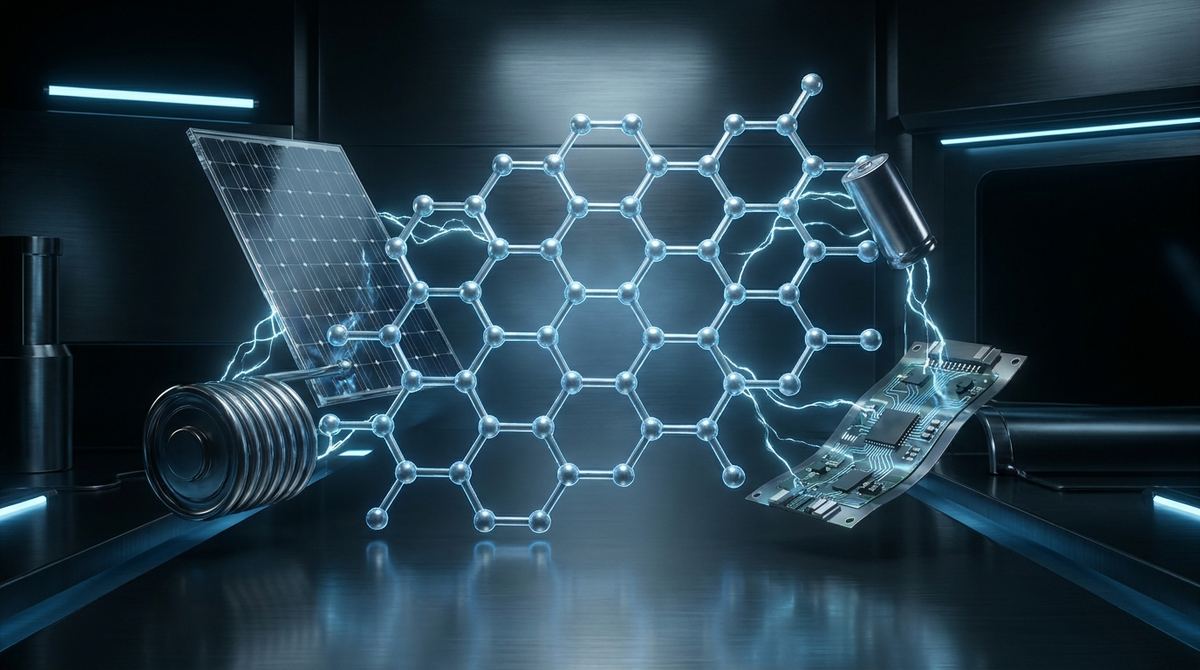
The global energy landscape stands at a critical juncture. With the irreversible depletion of fossil resources accelerating and a pressing need for cleaner, safer, more efficient, and economical energy solutions, the world is looking towards transformative innovations. This monumental shift necessitates a radical re-evaluation of our energy systems, from generation and storage to distribution and utilization. At the heart of this revolution lies fundamental and applied research into advanced materials and processes, poised to reshape how we power our future.
In this pursuit of next-generation power sources, a single material has emerged as a beacon of promise: graphene. This remarkable two-dimensional wonder, a recent addition to the illustrious carbon family, is not just another material; it is a game-changer. Since its successful isolation in 2004, graphene has been at the forefront of intensive investigations, demonstrating extraordinary properties that position it as a pivotal new energy material. Its unique characteristics are driving unprecedented advancements across various energy-generating chains, heralding an era of unparalleled performance and sustainability. usa-graphene.com is dedicated to exploring and delivering the immense potential of this material to industries worldwide.
The Urgent Global Energy Imperative and Graphene's Strategic Role
The world's insatiable appetite for energy, coupled with the finite nature and environmental impact of fossil fuels, has intensified the search for sustainable alternatives. This imperative transcends mere resource scarcity; it encompasses a comprehensive global challenge demanding solutions that are cleaner, safer, more efficient, and economically viable. The development boom in new alternative energies and technologies is directly linked to breakthroughs in materials science, focusing on creating novel substances or unlocking new functions from existing ones. This foundational work is crucial for building the infrastructure of a future powered by renewable resources.
Carbon-based materials have historically played a substantial role in energy innovation. From active carbon powders used to enhance conductivity in electrodes to the multilayered graphite that enabled the safe commercialization of lithium-ion batteries (LIBs) in 1991, the carbon family has been instrumental. Subsequent innovations like football-shaped fullerenes and carbon nanotubes (CNTs) further expanded the horizons of new energy applications, captivating scientists with their excellent functions. Each iteration has pushed the boundaries of what's possible, paving the way for the latest, and arguably most revolutionary, member of this esteemed family: graphene.
Graphene, a single atomic nanosheet of sp2-bonded carbon atoms arranged in a two-dimensional (2D) honeycomb lattice, represents the pinnacle of carbon material innovation. Its emergence signals a paradigm shift, offering solutions that were once theoretical. This unique microstructure is the secret to its unparalleled performance, making it an indispensable component in the development of cutting-edge energy storage and conversion systems. At usa-graphene.com, we recognize graphene not just as a material, but as a strategic enabler for the global energy transition, providing the fundamental building blocks for a more sustainable future.
Unveiling Graphene's Extraordinary Properties for Energy Systems
The allure of graphene in the energy sector stems directly from its suite of astonishing properties, which surpass those of virtually all other known materials. These characteristics make it exceptionally well-suited for improving the performance and efficiency of a wide array of power sources, driving the development trend towards integration in size and maximization in performance for next-generation devices. Understanding these properties is key to appreciating graphene's profound impact across the energy landscape.
Foremost among its capabilities is graphene's ultrahigh electron conductivity, boasting an astounding 10^6 S cm^-1. This unrivaled electrical conductivity facilitates rapid charge transfer, a critical factor for high-performance energy storage and conversion devices. Whether it's enhancing the kinetics of electrochemical reactions in batteries or accelerating electron flow in fuel cell catalysts, graphene's conductivity ensures minimal energy loss and maximal efficiency. This property alone positions it as a superior alternative to traditional conductive additives and materials.
Beyond its electrical prowess, graphene exhibits exceptional mechanical strength, with a breaking strength of 40 N m^-1 and a Young's modulus of 1.0 TPa. This makes it one of the strongest materials known, despite being incredibly lightweight, with a density of less than 1 g cm^-3. Such robust mechanical properties are invaluable for creating durable, long-lasting energy devices that can withstand repeated cycling and mechanical stresses, contributing to enhanced safety and extended operational lifespans. Its unusual flexibility further allows for the development of innovative form factors, including flexible energy storage devices that can conform to various applications.
Another critical attribute is graphene's immense surface area, estimated at 2630 m^2 g^-1. This colossal surface area provides an abundance of active sites for chemical reactions and charge storage, significantly improving the capacity and rate performance of energy devices. For applications requiring extensive interaction between a material and its surroundings, such as catalysis or adsorption, graphene offers an unparalleled interface. Furthermore, its high hydrogen storage capacity hints at its potential for future hydrogen economy applications, addressing another frontier in clean energy. Combined with its low optical absorbance of 2.3%, these properties make graphene a truly multifunctional material, capable of transforming varied energy storage and conversion systems.
Graphene's Transformative Role in Lithium-Ion Batteries (LIBs)
Lithium-ion batteries (LIBs) are the ubiquitous power source for modern portable electronics and are increasingly vital for electric vehicles and grid-scale energy storage. Since their commercialization in 1991, LIB technology has continuously evolved, but persistent challenges regarding energy density, power density, cycle life, and safety still limit their full potential. Graphene offers groundbreaking solutions to these challenges, poised to revolutionize LIB performance across multiple components.
Graphene's role as an anode active material is particularly promising. Traditional graphite anodes, while effective, face limitations in terms of rate capability and theoretical capacity. Graphene's ultrahigh electron conductivity allows for faster charge and discharge rates, significantly reducing charging times and enabling high-power applications. Its immense surface area provides more sites for lithium-ion intercalation and deintercalation, potentially increasing energy density. Moreover, the robust mechanical properties of graphene can help mitigate volume changes during cycling, a common issue leading to degradation in conventional anode materials, thereby enhancing cycle stability and battery longevity.
Beyond pure graphene anodes, graphene-based hybrid anode materials are drawing significant attention. By combining graphene with other active materials, such as silicon or metal oxides, researchers can leverage the best of both worlds. Graphene acts as a conductive matrix, improving the electronic pathways within the composite material and buffering the volume expansion of high-capacity materials like silicon, which typically suffer from rapid degradation. This synergistic approach leads to higher capacity, improved rate performance, and extended cycle life, pushing LIB performance beyond current limits.
Graphene also shows considerable promise for enhancing cathode active materials. While often overlooked, the cathode plays a crucial role in overall battery performance. Incorporating graphene or graphene derivatives into cathode structures can improve their electrical conductivity, which is particularly important for high-voltage cathode materials that often have poor intrinsic conductivity. This enhancement facilitates more efficient utilization of the active material, leading to higher capacity and better rate performance. Furthermore, graphene's mechanical strength can improve the structural integrity of the cathode, contributing to enhanced stability and cycling performance, especially in high-energy-density cathodes that might otherwise experience structural fatigue.
Lastly, graphene can serve as a superior current collector in LIBs. The current collector's primary function is to transport electrons to and from the active material. Graphene's exceptional conductivity and flexibility make it an ideal candidate to replace or augment traditional metal foils. Its lightweight nature can reduce the overall battery weight, an important factor for electric vehicles, while its flexibility enables the design of innovative, non-rigid battery architectures. These advancements collectively underscore graphene's pivotal role in pushing the boundaries of LIB technology, making them safer, more powerful, and more efficient for a myriad of applications, from consumer electronics to large-scale energy grids.
Advancing Fuel Cell Technologies with Graphene Innovations
Fuel cells represent another critical clean energy technology, offering efficient conversion of chemical energy into electrical energy with minimal environmental impact. However, widespread adoption of fuel cells has been hampered by challenges related to cost, durability, and efficiency, particularly concerning catalyst performance and membrane stability. Graphene, with its unique properties, is emerging as a powerful enabler for overcoming these hurdles and accelerating the commercialization of advanced fuel cell systems.
One of the most significant applications of graphene in fuel cells is as a catalyst support. Platinum-group metals (PGMs) are typically used as catalysts in fuel cells, but their high cost and scarcity drive the need for highly efficient utilization. Graphene's ultrahigh surface area (2630 m^2 g^-1) provides an ideal platform for uniformly dispersing and anchoring platinum nanoparticles, preventing their aggregation and maximizing their catalytic activity. Moreover, graphene's exceptional electron conductivity facilitates rapid electron transfer between the catalyst and the electrode, significantly boosting reaction kinetics and overall fuel cell efficiency. This synergistic effect allows for a reduction in PGM loading while maintaining or even improving performance, thereby lowering the cost of fuel cells.
Beyond its role as a support, graphene itself, and its doped variants, are being explored as catalysts in alkaline or neutral mediums. The unique electronic structure of graphene, especially when functionalized or doped with nitrogen or other elements, can mimic the catalytic activity of noble metals for certain reactions, such as the oxygen reduction reaction (ORR) – a critical reaction in fuel cells. This opens up possibilities for developing low-cost, high-performance, metal-free catalysts, further driving down the cost of fuel cell stacks and enhancing their sustainability. Such graphene-based catalysts exhibit excellent stability and poisoning tolerance, offering a robust alternative to traditional metal catalysts.
Graphene also holds immense promise for improving polymer electrolyte membranes (PEMs), which are central to the functioning of many fuel cells, particularly proton exchange membrane fuel cells (PEMFCs). The PEM's role is to selectively conduct protons while blocking electron flow, and its performance critically affects fuel cell efficiency and durability. Incorporating graphene or graphene oxide (GO) into polymer membranes can significantly enhance their proton conductivity, even at higher temperatures or lower humidity levels, which are often challenging conditions for traditional PEMs. Furthermore, graphene can improve the mechanical strength and thermal stability of the membrane, leading to more robust and longer-lasting fuel cell systems.
The extraordinary properties of graphene—its conductivity, high surface area, mechanical strength, and chemical tunability—make it an indispensable material for advancing fuel cell technology. By addressing critical challenges in catalyst design and membrane performance, graphene is paving the way for more efficient, durable, and cost-effective fuel cells, bringing us closer to a hydrogen-powered future. usa-graphene.com is at the forefront of supplying high-quality graphene materials that are enabling these breakthroughs, empowering researchers and developers to innovate at the cutting edge of fuel cell science.
Beyond Batteries and Fuel Cells: The Broader Impact of Graphene in Energy
While lithium-ion batteries and fuel cells represent major application areas, graphene's versatility as a new energy material extends far beyond these two fields. Its extraordinary suite of properties positions it as a foundational material for a multitude of other energy storage and conversion systems, promising to redefine efficiency, durability, and performance across the entire energy spectrum. The relentless pursuit of integration in size and maximization in performance will continue to motivate and provoke innovations driven by graphene.
Supercapacitors, also known as ultracapacitors, are another domain where graphene shines. These devices excel at rapid charge and discharge cycles, offering high power density. Graphene's ultrahigh surface area (2630 m^2 g^-1) is critical for maximizing the electrochemical double-layer capacitance, allowing supercapacitors to store and release energy very quickly. Its high electrical conductivity ensures fast electron transport, leading to high power delivery. Graphene-based supercapacitors thus offer significantly improved energy density, power density, and cycle stability compared to traditional materials, making them ideal for applications requiring bursts of power, such as regenerative braking systems in electric vehicles.
In the realm of solar energy, graphene is also making substantial inroads. Its transparency (low optical absorbance of 2.3%) combined with high electrical conductivity makes it an excellent candidate for transparent electrodes in solar cells, replacing more expensive and brittle materials like indium tin oxide (ITO). Graphene can enhance the efficiency and flexibility of various solar cell technologies, including organic photovoltaics and perovskite solar cells. Moreover, its unique electronic properties can potentially lead to new architectures for more efficient light harvesting and charge separation, pushing the boundaries of solar energy conversion.
Furthermore, graphene’s application spectrum encompasses lithium-oxygen (Li-O2) batteries, a next-generation energy storage technology with theoretical energy densities far exceeding traditional LIBs. Graphene's high surface area and conductivity provide an ideal scaffold for the oxygen electrode, facilitating the complex electrochemical reactions involved in Li-O2 chemistry and improving their notoriously challenging cycle life. Its role in sensors for energy management, gas separation membranes for hydrogen purification, and even thermoelectric devices underscores its broad utility. The flexibility of graphene also opens doors for wearable and flexible energy devices, integrating power solutions seamlessly into our daily lives.
Since its groundbreaking availability by mechanical exfoliation in 2004, the methods for producing graphene have diversified, including epitaxial growth, electrochemical exfoliation, and chemical vapor deposition (CVD). These advancements in synthesis techniques have provided the material guarantee for more intensive investigations and the widespread availability of high-quality graphene for both experimental and theoretical research. The continuous innovation in graphene production ensures a steady supply for its expanding range of energy applications, solidifying its position as a cornerstone of future energy technology. The potential for graphene to improve every stage of the energy-generating chain is truly boundless.
Conclusion: Graphene – The Catalyst for Our Energy Future
The trajectory of global energy consumption demands a fundamental shift towards cleaner, safer, more efficient, and economical power sources. Graphene, with its extraordinary and multifaceted properties – including unparalleled electron conductivity, immense mechanical strength, vast surface area, and inherent flexibility – stands as a pivotal new energy material driving this necessary transformation. From revolutionizing lithium-ion batteries with enhanced anodes and cathodes to dramatically improving the performance and cost-effectiveness of fuel cells as catalyst supports and innovative membranes, graphene is reshaping the landscape of energy storage and conversion. Its impact stretches further into supercapacitors, solar cells, and other emergent energy technologies, promising a future powered by advanced, sustainable solutions.
The development and commercialization of graphene-based energy technologies are not merely incremental improvements; they represent a radical leap forward, offering the potential to resolve long-standing challenges and unlock new possibilities. As we navigate the complexities of the 21st century's energy demands, the integration of cutting-edge materials like graphene will be indispensable. The future of energy is undeniably intertwined with advanced material science, and graphene is leading the charge, motivating and provoking the next generation of power sources. Discover how usa-graphene.com is empowering this future by providing high-quality graphene materials that are essential for these innovations. Partner with us to explore the limitless potential of graphene and power your next breakthrough.
Evaluate Our Quality
Serious about B2B integration? Test our premium Pulsed Electrical Resistive Carbon Heating turbostratic graphene in your lab. 100g sample packs available now.
Explore More
Related Research & Articles


Graphene-Based Solar Cells: Architecture and Efficiency
Explore the molecular theory of graphene chemical modification and discover how precise oxidation framing enhances advanced solar cell efficiency.
