
Graphene Skin Patch for Melanoma: What the New ACS Nano Study Shows
A new ACS Nano study reports a flexible laser-induced graphene and copper oxide skin patch that used mild heat to release copper ions into melanoma tumors in mice.
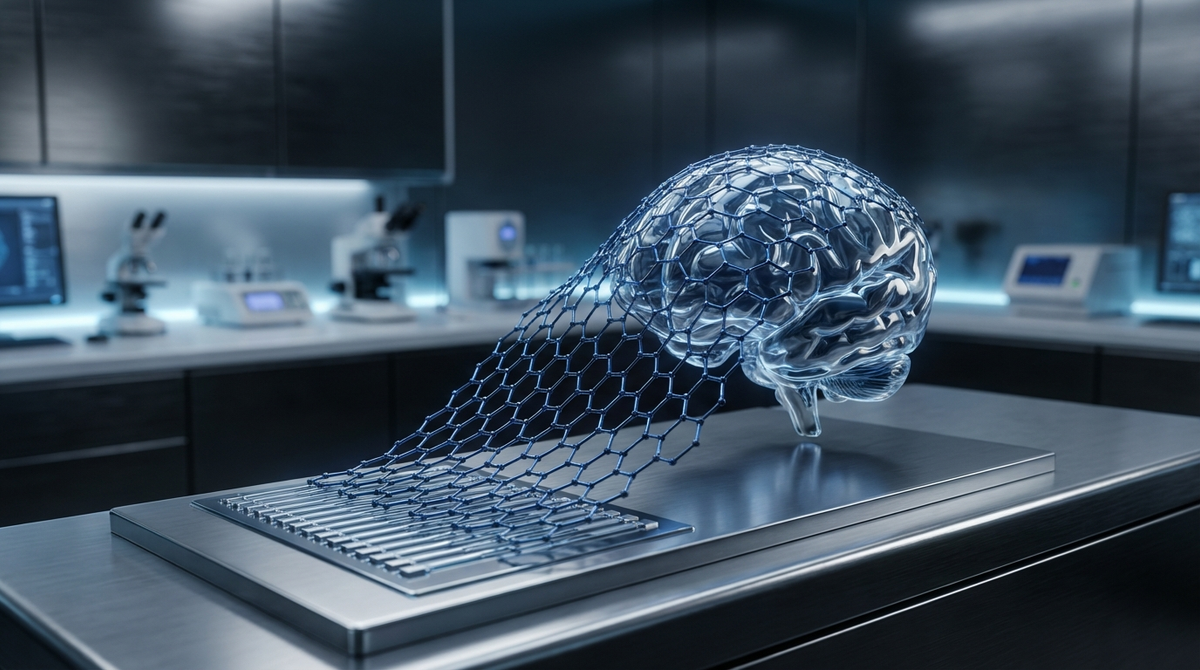
Brain-computer interfaces represent a frontier in biomedical engineering, promising to restore lost function, enhance human capabilities, and unlock new avenues for understanding neurological disorders. The ability to seamlessly and reliably interface with the intricate neural networks of the brain demands materials that transcend the limitations of conventional technology. Graphene, with its unparalleled properties, is emerging as a critical enabler for the next generation of neural electrodes and brain interfaces. This two-dimensional carbon material offers a transformative pathway to overcome the long-standing challenges in neurotechnology, driving advancements in both performance and longevity. The development of highly functional and biocompatible neural electrodes is paramount for realizing the full potential of these advanced systems. Graphene Neural Electrodes and Brain Interfaces stand out as a high-potential application for this material, primarily due to its capacity to significantly improve device performance, enhance durability, and optimize product economics. When integrated correctly, graphene formulations can deliver measurable improvements that justify the development effort and investment. This detailed exploration will outline the profound impact graphene is poised to have on neurotechnology, from fundamental material science to practical deployment strategies.
Current neural interface technologies, while groundbreaking, encounter inherent limitations that hinder their long-term efficacy and broad adoption. Traditional electrode materials, such as rigid silicon probes or noble metals like platinum and iridium, often present a significant mechanical mismatch with the soft, delicate tissue of the brain. This disparity can induce chronic inflammation, trigger glial scarring, and lead to the encapsulation of the electrode, progressively diminishing signal quality over time. The body’s immune response to foreign materials is a complex process designed to protect against pathogens and injury. When traditional neural electrodes are implanted, this response often manifests as chronic inflammation and the formation of a glial scar, primarily driven by astrocytes and microglia. This scar tissue acts as an insulating barrier, physically separating the electrode from the neurons it aims to interface with. Consequently, the electrical signal-to-noise ratio diminishes significantly, impairing the device's ability to accurately record or stimulate neural activity. This progressive degradation of performance necessitates frequent recalibration or, in severe cases, explantation and re-implantation, posing substantial risks and burdens to patients. The mechanical stiffness of these conventional materials also contributes to micromotion relative to the soft brain tissue, exacerbating the inflammatory response and physical damage over time.
Beyond biocompatibility issues, the electrical properties of conventional electrodes pose limitations. High impedance at the electrode-tissue interface can restrict the transfer of electrical signals, requiring higher stimulation voltages or leading to noisier recordings. This limits the precision and specificity with which neural circuits can be modulated or monitored. The bulkiness of traditional electrode arrays also impacts the density of recording sites, thereby limiting the spatial resolution achievable for mapping brain activity. Achieving a high-resolution, stable, and long-term neural interface demands a material solution that can address these multifaceted challenges comprehensively. The quest for such a material has driven extensive research into novel paradigms, where graphene has emerged as a frontrunner due to its unique combination of properties. Overcoming these fundamental material science hurdles is critical for unlocking the full potential of next-generation neurotechnologies, enabling truly seamless and robust communication with the brain.
Graphene, a single layer of carbon atoms arranged in a two-dimensional hexagonal lattice, possesses an extraordinary set of properties that make it uniquely suited for advanced neural interfaces. Its exceptional electrical conductivity, superior to copper, allows for highly efficient charge transfer and low impedance at the electrode-tissue interface. This translates directly into improved signal-to-noise ratios for neural recording and more precise, lower-power stimulation. The intrinsic atomic thinness of graphene also contributes to its high surface area-to-volume ratio, which is crucial for maximizing contact points with neuronal membranes and enhancing electrochemical performance. Furthermore, its mechanical flexibility and strength are unparalleled; graphene is one of the strongest materials known, yet it can be bent and stretched significantly without breaking. This allows for the fabrication of ultra-flexible electrodes that can conform intimately to the curvilinear surfaces of the brain, minimizing mechanical mismatch and associated tissue damage.
The biocompatibility of graphene is another paramount advantage. Studies have consistently shown that graphene and its derivatives exhibit excellent cytocompatibility, promoting neuronal adhesion and growth without eliciting significant inflammatory responses. Its chemical inertness ensures long-term stability within the physiological environment of the brain, resisting degradation and corrosion that can plague other materials. The optical transparency of graphene is also beneficial for specific applications, allowing for simultaneous optical imaging and electrical recording or stimulation in research settings. Moreover, the ability to functionalize graphene's surface with specific biomolecules opens avenues for targeted drug delivery or enhanced bio-integration, further tailoring its interaction with neural tissue. These combined attributes position graphene not merely as an incremental improvement but as a transformative material capable of fundamentally redefining the capabilities of neural interface devices, pushing beyond the physical and electrical limits of conventional materials.
The transition from theoretical promise to practical application necessitates sophisticated engineering strategies for fabricating graphene neural electrodes. Various forms of graphene, including single-layer films, multi-layer flakes, and graphene fibers, are being explored, each offering distinct advantages for specific electrode designs. Chemical Vapor Deposition (CVD) is a primary method for producing high-quality, large-area graphene films, which can then be patterned into intricate microelectrode arrays using standard photolithography techniques. These flexible arrays can be designed to conform to complex brain structures, providing unprecedented spatial resolution for recording and stimulation. Another approach involves the use of reduced graphene oxide (rGO) or graphene oxide (GO), which can be processed in solution and then deposited or printed into desired electrode geometries. These methods offer versatility in creating highly porous and textured surfaces, further enhancing the electrode-tissue interface.
Beyond planar arrays, researchers are developing three-dimensional graphene structures, such as graphene-coated neural probes or fibers, to penetrate deeper into brain tissue with minimal invasiveness. These designs leverage graphene's conductivity and flexibility to create probes that are significantly less stiff than traditional silicon-based counterparts, reducing chronic tissue damage and improving long-term stability. The ability to integrate graphene with other advanced materials, like polymers or hydrogels, allows for the creation of composite electrodes with tailored mechanical and electrical properties. For instance, graphene-polymer composites can offer enhanced flexibility and robustness, while graphene-hydrogel constructs can mimic the viscoelastic properties of brain tissue even more closely, reducing micromotion. The continuous innovation in fabrication techniques, from micro-scale patterning to advanced additive manufacturing, is enabling the creation of graphene electrodes with bespoke architectures optimized for various neurophysiological applications, from high-density intracranial recordings to ultra-sensitive epidermal interfaces.
The integration of graphene into neural electrodes is poised to revolutionize the field of Brain-Computer Interfaces (BCIs), expanding their capabilities and clinical utility. In the realm of motor prosthetics, graphene electrodes promise more stable and precise control over robotic limbs for individuals with paralysis or limb loss. The improved signal quality and long-term stability mean that patients could achieve more natural and intuitive control, significantly enhancing their quality of life. For patients suffering from 'locked-in syndrome' or severe communication impairments, graphene-enabled BCIs could provide robust and reliable communication pathways, translating thought into text or commands with unprecedented accuracy. The ability to sustain high-fidelity recordings over extended periods is critical for these life-changing applications.
Beyond motor and communication restoration, graphene neural interfaces hold immense potential for the treatment and understanding of neurological disorders. Enhanced recording capabilities could lead to more accurate seizure prediction and detection in epilepsy patients, allowing for timely intervention. In deep brain stimulation (DBS) therapies for Parkinson's disease or essential tremor, graphene electrodes with lower impedance and more precise current delivery could enable more targeted and energy-efficient stimulation, minimizing side effects. The high spatial resolution offered by graphene arrays could also facilitate the mapping of neural circuits with greater detail, unlocking new insights into the mechanisms underlying conditions like Alzheimer's disease, depression, and chronic pain. Furthermore, the development of retinal or cochlear implants utilizing graphene could restore sensory function with greater clarity and longevity than current devices. The impact extends to basic neuroscience research, where more stable and less invasive tools could accelerate our understanding of brain function and connectivity.
While the promise of graphene in neurotechnology is immense, several challenges must be addressed for widespread clinical translation. Scalability of high-quality graphene production remains a key factor. While CVD methods yield excellent material, scaling up production to meet potential commercial demand for complex, high-density arrays requires further refinement and cost reduction. Long-term stability of graphene electrodes in vivo, particularly regarding potential degradation mechanisms or chronic immune responses over decades, requires rigorous and extended preclinical and clinical studies. Although initial results are highly encouraging for biocompatibility, understanding the absolute limits of graphene's interaction with the biological environment over extreme durations is essential. The precise regulatory pathways for novel graphene-based medical devices are still evolving, necessitating close collaboration between researchers, industry, and regulatory bodies to establish clear guidelines for safety and efficacy.
Despite these challenges, the future outlook for graphene neural electrodes is exceptionally bright. Research is actively exploring novel functionalization strategies to further enhance graphene's interaction with specific neuronal populations, potentially enabling even more selective recording or stimulation. Advances in flexible electronics and wireless power transfer are converging with graphene neurotechnology, paving the way for fully implantable, minimally invasive devices that offer unprecedented patient comfort and freedom. The integration of artificial intelligence and machine learning with graphene-enabled BCIs will unlock sophisticated real-time data analysis and adaptive control, further enhancing device performance. As research progresses from laboratory prototypes to human clinical trials, graphene is set to transform neurotechnology, offering solutions that are not merely better, but fundamentally superior, ushering in an era of seamless, stable, and powerful brain interfaces that will redefine human health and capability.
Q1: What makes graphene superior to traditional materials for neural electrodes?
A1: Graphene offers unparalleled electrical conductivity, exceptional mechanical flexibility matching brain tissue, high surface area for better signal transfer, and superior biocompatibility. These properties minimize inflammation, improve signal quality, and enhance the longevity of implanted devices compared to rigid, less conductive materials like platinum or silicon.
Q2: How does graphene's flexibility help in brain implants?
A2: The human brain is soft and delicate. Graphene's extraordinary flexibility allows electrodes to conform intimately to the brain's complex, curvilinear surfaces. This reduces mechanical mismatch, which is a major cause of tissue damage, inflammation, and glial scarring around traditional, rigid implants, thereby improving long-term stability and signal integrity.
Q3: Is graphene safe for implantation in the brain?
A3: Extensive research indicates that graphene and its derivatives exhibit excellent biocompatibility, promoting neuronal growth and survival without significant immune rejection or cytotoxicity. While long-term human studies are ongoing, preclinical evidence strongly supports its safety profile within the physiological environment of the brain, making it a highly promising material.
Q4: What kind of brain-computer interface applications will benefit most from graphene electrodes?
A4: Graphene electrodes are expected to significantly advance applications requiring high-fidelity, long-term neural recording and stimulation. This includes advanced prosthetics control, reliable communication for locked-in patients, precise deep brain stimulation for neurological disorders, accurate seizure prediction, and detailed brain mapping for research.
Q5: What are the main challenges to bringing graphene neural electrodes to widespread use?
A5: Key challenges include scaling up the production of high-quality graphene economically, conducting comprehensive long-term in vivo stability studies, and navigating the complex regulatory approval process for novel medical devices. Continued research and collaboration are crucial to overcome these hurdles and transition graphene neurotechnology from laboratories to clinics.
Graphene stands at the forefront of a paradigm shift in neurotechnology, poised to redefine the capabilities and longevity of neural interfaces. Its unique confluence of electrical, mechanical, and biological properties directly addresses the critical limitations of conventional electrode materials, paving the way for more stable, precise, and biocompatible brain-computer interfaces. From enhancing prosthetics control and restoring communication to offering deeper insights into neurological disorders, the transformative potential of graphene is undeniable. While challenges in scalability, long-term validation, and regulatory navigation persist, the rapid advancements in graphene science and engineering, coupled with a growing understanding of brain-material interactions, paint a future where seamless and robust communication with the brain becomes a clinical reality. The journey toward fully realizing graphene's impact on neurotechnology represents not just a scientific endeavor, but a profound step forward in augmenting human capability and alleviating neurological suffering, truly marking a new era in biomedical innovation.
Serious about B2B integration? Test our premium Pulsed Electrical Resistive Carbon Heating turbostratic graphene in your lab. 100g sample packs available now.
Explore More
A new ACS Nano study reports a flexible laser-induced graphene and copper oxide skin patch that used mild heat to release copper ions into melanoma tumors in mice.

A new Science paper shows how phase-change memristor hardware can run neural dynamical systems in milliseconds. Here is why graphene and 2D materials matter for the future of physics-driven computing.
