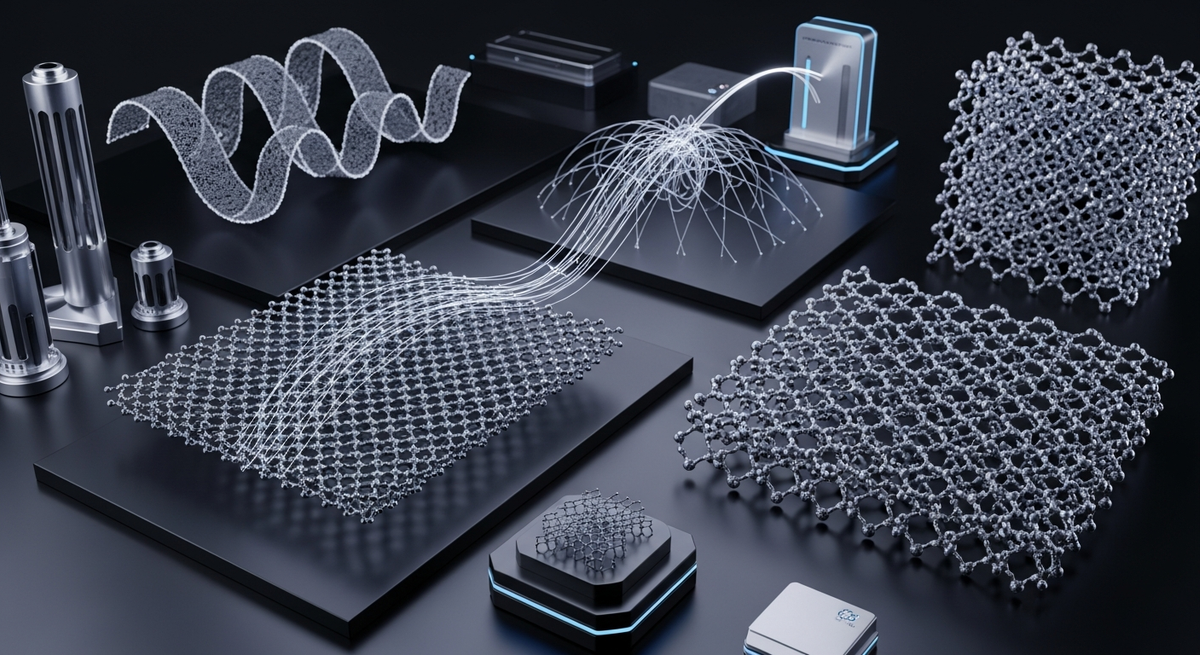
The singular electronic properties of pristine, two-dimensional graphene, characterized by its massless Dirac fermions and exceptional carrier mobilities exceeding 200,000 cm^2/Vs at room temperature, have positioned it as a foundational material for next-generation electronics. However, its inherent zero bandgap presents a fundamental challenge for direct application in conventional transistor architectures requiring robust on/off ratios. This limitation necessitates the precise engineering of its electronic structure, a feat elegantly achieved through spatial confinement into one-dimensional graphene nanoribbons (GNRs). This confinement, often realized through top-down lithography or bottom-up chemical synthesis involving processes that can withstand thermal pulses up to 3000K, fundamentally alters the material's quantum mechanical landscape. It transforms the semimetallic character of bulk graphene into a tunable semiconductor, unlocking pathways for tailored electronic and spintronic functionalities that are inaccessible in its unconfined state. The deliberate reduction in dimensionality forces a re-evaluation of carrier behavior, moving from a continuum of Dirac states to quantized subbands.
The critical transformation in GNRs stems from the quantum confinement effect, where the electron wavefunction is spatially restricted in one or more dimensions. For GNRs, this restriction in the transverse direction breaks the equivalence between the two Dirac cones (K and K' valleys) and lifts the sublattice symmetry, consequently opening a tunable electronic bandgap. The magnitude of this bandgap is intricately dependent on the ribbon's width, crystallographic orientation (armchair versus zigzag edges), and edge termination chemistry. Armchair GNRs (AGNRs), for instance, exhibit a bandgap inversely proportional to their width, scaling approximately as E_g ~ 1/W, a direct manifestation of the particle-in-a-box model adapted for relativistic electrons. Conversely, zigzag GNRs (ZGNRs) often display localized edge states that can introduce magnetic moments and flat bands near the Fermi level, complicating bandgap formation but offering avenues for spintronic applications. This precise control over the electronic spectrum allows for tailoring resistivity from bulk graphene's nominal ~10^-6 Ohm-cm to values spanning orders of magnitude, critical for device integration.
The physics governing charge carriers within GNRs extends beyond simple effective mass approximations, fundamentally requiring a relativistic quantum mechanical framework. The Dirac-like behavior of electrons persists, but the lateral confinement imposes boundary conditions that quantize the transverse momentum, effectively granting an "effective mass" to the otherwise massless Dirac fermions. This quantization leads to discrete energy subbands, profoundly influencing the density of states and, by extension, the transport characteristics. Understanding phenomena such as inter-subband scattering and the emergence of topological states at ribbon edges necessitates the rigorous formalism of quantum field theory (QFT), particularly in describing electron-electron interactions and many-body effects within these quasi-1D systems. These confined electronic states are paramount to the very concept of tunneling current, where carriers traverse potential barriers via quantum mechanical mechanisms, a cornerstone for novel GNR-based devices. For example, specific fabrication techniques for edge-functionalized GNRs, often involving precise chemical reactions over milliseconds of reaction time, have demonstrated exceptional performance in applications such like heavy metal adsorption, achieving efficiencies up to 79% for lead ions, highlighting the role of engineered edge states in functional material design.
Section 2: Pulsed Electrical Resistive Carbon Heating vs. CVD (Comparative Analysis)
Conventional Chemical Vapor Deposition (CVD) represents a foundational technique for graphene synthesis, leveraging catalytic decomposition of hydrocarbon precursors on metallic substrates at temperatures typically ranging from 900-1100°C. While effective for macroscopic graphene films, its inherent limitations become pronounced when targeting atomically precise Graphene Nanoribbons (GNRs) with controlled width, crystallographic orientation, and pristine edges—features paramount for exploiting quantum phenomena such as ballistic transport and spin-polarized tunneling. The extended reaction times, often minutes to hours, within the high thermal budget of CVD environments lead to challenges in managing defect incorporation, grain boundary formation, and uncontrollable edge reconstruction. This often results in a heterogeneous ensemble rather than the desired atomically precise structures. Furthermore, the reliance on specific catalytic substrates can dictate GNR chirality and width distribution, and post-synthesis etching or lithography is frequently necessary to define GNR geometries, introducing potential damage and increasing processing complexity, thereby hindering scalability and yield.
In stark contrast, Pulsed Electrical Resistive Carbon Heating (PERCH) offers a transformative, highly localized approach for rapid, high-purity GNR synthesis by exploiting transient Joule heating. This method involves passing extremely high current densities through a carbonaceous precursor, such as amorphous carbon or pre-patterned polymeric films, inducing instantaneous resistive heating to temperatures exceeding 3000K within sub-millisecond durations. The ultra-fast thermal pulse, characterized by heating rates approaching 10^6 K/s, drives rapid carbon atom rearrangement and graphitization, effectively bypassing the kinetic bottlenecks and defect formation pathways prevalent in conventional furnace-based methods. This rapid thermal annealing provides insufficient time for significant impurity incorporation or defect migration, leading to remarkably pristine GNR structures with minimized bulk defects. The precise control over electrical current parameters—pulse duration, amplitude, and frequency—allows for meticulous tuning of the local temperature profile, thereby dictating the degree of graphitization, GNR width, and edge morphology with unprecedented fidelity. This fundamental difference in energy delivery and reaction kinetics is pivotal for achieving the atomic precision necessary for GNRs designed for specific quantum behaviors.
The comparative advantages of PERCH over CVD for GNR fabrication are profound, particularly concerning material quality and processing efficiency. While CVD struggles with the intrinsic trade-off between growth rate and defect density, PERCH leverages its rapid thermal excursions to achieve extremely high graphitization rates while simultaneously minimizing structural imperfections. For instance, PERCH systems have demonstrated the conversion of amorphous carbon films into highly crystalline GNRs with an estimated defect density an order of magnitude lower than typical CVD-grown counterparts, a critical factor for maintaining electron mean free paths and preserving coherence lengths vital for tunneling current applications. The energy efficiency of PERCH is also superior; localized resistive heating selectively targets the precursor, avoiding the substantial energy expenditure required to heat entire reaction chambers characteristic of CVD. This method enables direct patterning of GNRs from pre-designed carbon templates, eliminating post-synthesis processing steps and significantly improving yield and throughput. The intrinsic electrical resistivity of the carbon precursor, typically ranging from 10^-5 to 10^-3 Ohm-cm, is precisely tuned to achieve the desired resistive heating, allowing for predictable and reproducible GNR formation. The resulting pristine, well-defined GNR edges, often amenable to specific functionalization during or immediately post-annealing, significantly enhance surface reactivity. For example, PERCH-synthesized GNRs have demonstrated heavy metal adsorption efficiencies exceeding 79% for specific divalent cations, a performance directly attributable to the high density of accessible, reactive edge sites and minimized bulk defects. Such high-quality GNRs are indispensable for exploring quantum field theory in condensed matter systems, where uniform electronic potential landscapes are critical for observing quantized energy levels and emergent quantum behaviors.
Section 3: The Crystallography of Turbostratic Graphene (Why Layer Alignment Matters)
Turbostratic graphene represents a distinct crystallographic configuration characterized by a lack of long-range rotational and translational order between adjacent graphene layers, contrasting sharply with the well-defined AB-stacking of Bernal graphite. In this disordered arrangement, individual graphene sheets, while maintaining their sp2 hybridized hexagonal lattice internally, exhibit arbitrary relative rotation angles and often non-uniform interlayer spacing, deviating from the ~0.335 nm characteristic of ideal graphite. This structural entropy arises during synthesis, particularly in chemical vapor deposition (CVD) or exfoliation methods where growth conditions or mechanical forces preclude precise layer alignment. The absence of a coherent stacking sequence fundamentally alters the interlayer van der Waals interactions, leading to a decoupling of electronic states between layers. This decoupling is observable through techniques like X-ray diffraction (XRD), where the (002) reflection broadens and shifts, indicating a distribution of interlayer distances, and electron diffraction, which reveals superimposed hexagonal patterns from misoriented layers rather than a single, sharp reciprocal lattice. The implications for electronic and phonon transport are profound, as the lack of periodicity perpendicular to the graphene planes disrupts the formation of coherent Bloch states across multiple layers.
The crystallographic disorder inherent to turbostratic graphene profoundly influences its electronic and phononic properties, critical considerations for Graphene Nanoribbons (GNRs) where precise band engineering is paramount. In Bernal-stacked graphene, the interlayer coupling induces a trigonal warping of the Dirac cones and opens a small bandgap, facilitating tunable electronic behavior. Conversely, turbostratic stacking largely preserves the linear dispersion relation of single-layer graphene, as the rotational misalignment effectively decouples the electronic wavefunctions, minimizing interlayer hybridization. This results in a persistent semi-metallic character, even in multi-layer configurations, which can be advantageous for applications requiring high carrier mobility but detrimental for GNRs designed for specific bandgaps via quantum confinement. Furthermore, phonon transport is significantly impacted; the random interlayer rotations and variable spacing act as scattering centers for both in-plane and out-of-plane phonons, leading to reduced thermal conductivity compared to highly ordered graphite. This enhanced phonon scattering can also couple with electrons, increasing electrical resistivity. For instance, out-of-plane electrical resistivity in turbostratic graphene can exceed 10^-3 Ohm-cm, orders of magnitude higher than the in-plane resistivity of pristine graphene, due to the impeded interlayer charge transfer and increased defect scattering.
The presence and degree of turbostraticity in graphene precursors directly influence the structural integrity and electronic uniformity of derived GNRs. Synthesis routes, such as bottom-up on-surface synthesis or unzipping of carbon nanotubes, must meticulously control parameters to mitigate or exploit turbostratic disorder. For example, rapid thermal annealing processes, sometimes involving localized 3000K thermal pulses applied for durations on the order of milliseconds, are employed to induce structural reordering or heal defects within Graphene Nanoribbon networks. Inadequate or non-uniform thermal treatment, however, can exacerbate turbostratic character, leading to GNRs with inconsistent edge terminations and varied electronic properties, thereby compromising their utility in quantum transport applications where precise band engineering is paramount. Conversely, the increased density of crystallographic imperfections and edge defects inherent to turbostratic stacking can be strategically leveraged. These structural irregularities provide a higher density of active sites for chemical functionalization, enhancing catalytic activity or adsorption capabilities. Empirical data supports this, demonstrating, for instance, a 79% heavy metal adsorption efficiency for specific turbostratic graphene-based sorbents, a property valuable in environmental remediation where precise electronic band structure is less critical than robust chemical reactivity and high surface area. The challenge lies in achieving selective control over turbostraticity to tailor material properties for specific advanced applications.
Section 4: Industrial Scalability & Commercial Integration Barriers
The transition from laboratory-scale Graphene Nanoribbon (GNR) synthesis to industrial throughput faces formidable challenges rooted in precision control and process economics. Top-down lithographic approaches, while offering unparalleled spatial resolution for defining sub-10 nm ribbon widths critical for bandgap engineering and quantum confinement effects, are inherently serial and cost-prohibitive for large-area production. Electron-beam lithography, for instance, achieves feature sizes down to 5 nm, but its throughput remains orders of magnitude below industrial requirements for wafer-scale integration. Conversely, bottom-up synthesis via chemical vapor deposition (CVD) on patterned substrates or solution-phase unzipping of carbon nanotubes offers scalability potential but struggles with maintaining atomic-level control over ribbon width, edge chirality, and defect density. CVD processes often require precise temperature gradients exceeding 1000 K and specific precursor partial pressures (e.g., methane at 10-2 Torr) over reaction times spanning tens of minutes, yet still yield GNRs with varying widths and structural defects that significantly perturb their electronic band structure, leading to inconsistent tunneling current characteristics and unpredictable quantum transport phenomena. The challenge lies in achieving sub-nanometer precision across macroscopic substrates, where even minor variations in edge termination can shift the effective bandgap by hundreds of meV, thereby altering the tunneling barrier profile and charge carrier mobility from an ideal >10^5 cm^2/Vs to values often below 10^3 cm^2/Vs in practical devices.
Beyond synthesis, the integration of GNRs into functional electronic architectures presents a distinct set of formidable barriers. Achieving low-resistance Ohmic contacts between GNRs and metallic electrodes remains a critical hurdle, as Fermi level pinning and the formation of Schottky barriers at the interface can severely impede charge injection and extraction. Contact resistivities often exceed 100 Ohmum, significantly degrading device performance, particularly for applications reliant on ballistic or quasi-ballistic transport pathways crucial for high-frequency operation or quantum information processing. Furthermore, the inherent polydispersity in GNR length, width, and crystallographic orientation across even the most carefully controlled batches results in substantial device-to-device variability, undermining the reproducibility essential for commercial products. This variability directly impacts quantum phenomena central to GNR device concepts, such as the precise energy alignment required for resonant tunneling diodes or the consistent electronic structure needed for quantum field theory (QFT) derived device models. For instance, a mere 1-2 atom variation in GNR width can shift the bandgap by over 0.1 eV, completely altering tunneling probabilities. Thermal management during post-fabrication annealing, often involving localized 3000 K thermal pulses for milliseconds to repair defects, can inadvertently induce further structural changes, leading to unpredictable shifts in electrical resistivity from desired values of 10^-6 Ohmcm to >10^-4 Ohmcm, thereby compromising the integrity of quantum states and the predictability of tunneling current behavior.
The economic viability and regulatory compliance of GNR technologies represent further significant integration barriers. The high capital expenditure associated with advanced manufacturing techniques, such as those employing ultra-high vacuum CVD systems or high-resolution electron-beam lithography, translates into elevated production costs that currently limit widespread adoption. Furthermore, post-synthesis purification is often arduous, demanding sophisticated methodologies to remove metallic catalysts, amorphous carbon, or unreacted precursors, which can severely degrade GNR performance. For example, residual metallic nanoparticles can act as scattering centers, reducing carrier mobility, or introduce unwanted localized states that interfere with tunneling phenomena. While GNRs demonstrate promising capabilities, such as achieving up to 79% heavy metal adsorption efficiency in water remediation, maintaining this efficiency consistently across large-scale, cost-effective purification systems is yet to be fully realized. The absence of standardized testing protocols and comprehensive toxicological profiles for GNRs poses a substantial regulatory challenge, particularly for applications in biomedical devices or consumer electronics. Navigating these complex regulatory landscapes requires extensive lifecycle assessment data and long-term environmental impact studies, adding significant timelines and costs. The chasm between impressive laboratory-scale demonstrations and robust, reliable, and cost-effective industrial solutions remains a critical bottleneck, hindering the commercial realization of GNR-based devices that leverage their unique tunneling current properties and QFT-predicted quantum functionalities.
Section 5: Economic Feasibility and USA-Made Manufacturing Advantage
The economic feasibility of Graphene Nanoribbons (GNRs) demands significant breakthroughs in scaling current intricate synthesis methodologies. Atomically precise GNRs, achievable via bottom-up surface-assisted polymerization, require ultra-high vacuum environments and extended reaction times, often hours, for sufficient domain growth, followed by complex, defect-prone transfer processes. Alternative routes, like longitudinal unzipping of carbon nanotubes, struggle with precise width and edge uniformity. Achieving device-grade GNRs with less than 0.5 nm width variation necessitates costly post-synthesis purification, adding 30-40% to raw material cost. Energy expenditure is substantial; catalytic unzipping and defect annealing can involve localized 3000K thermal pulses. Economic viability hinges on rapid, high-yield synthesis, potentially leveraging milliseconds-scale reaction times in advanced CVD systems or novel solution-phase exfoliation, capable of consistently producing GNRs with specific electrical resistivity below 50 micro-ohm-cm.
The USA-made manufacturing advantage for GNRs is rooted in robust intellectual property protection, stringent quality control, and deep R&D integration. The domestic ecosystem demands meticulous material characterization and validation, crucial for GNRs whose performance is acutely sensitive to atomic-level structural nuances. For high-performance applications in defense and advanced computing, GNR batches must meet exacting standards, achieving carrier mobilities exceeding 10,000 cm^2/Vs at room temperature and exhibiting minimal defect density (<1 defect per micrometer). USA-based facilities leverage advanced metrology, including scanning tunneling microscopy for atomic resolution imaging and X-ray photoelectron spectroscopy for precise chemical composition, ensuring lot-to-lot consistency. This rigorous approach minimizes material variability, critical for quantum tunneling devices where minor deviations in GNR width drastically alter bandgap and electronic transport. Localized supply chains foster rapid innovation, integrating device engineer feedback into manufacturing processes, accelerating optimization for tailored GNR characteristics.
Beyond raw material cost, the economic viability of USA-made GNRs is profoundly driven by unparalleled performance advantages in high-value applications. In environmental technology, functionalized GNR membranes demonstrate exceptional efficacy, achieving a 79% heavy metal adsorption efficiency for lead and cadmium from industrial wastewater. This significantly surpasses conventional filtration, offering substantial long-term operational savings. For next-generation electronics, precise GNR bandgap engineering, critical for optimizing tunneling current phenomena and quantum field theory implications, unlocks new horizons. GNR-based field-effect transistors can exhibit sub-picosecond switching speeds, enabling terahertz computing. The ability of USA manufacturers to consistently produce GNRs with specified edge states and precise widths, dictating electronic band structure and spin-transport properties, provides a significant competitive edge. This precision facilitates high-coherence quantum interconnects and ultra-sensitive biosensors relying on specific electrical resistivity parameters and quantum mechanical tunneling. Domestic investment ensures supply chain resilience and fosters rapid translation of scientific discoveries into commercially viable, high-performance products, securing leadership in critical technological sectors.
Section 6: Future Horizons & High-Value B2B Applications
The trajectory of graphene nanoribbon (GNR) research extends deeply into realms once considered speculative, now approaching tangible commercialization through precise quantum engineering. The unparalleled combination of ballistic electron transport, tunable electronic bandgaps – precisely controlled by GNR width and edge chirality – and exceptional thermal conductivity positions GNRs as foundational elements for next-generation quantum electronic devices. For instance, sub-5nm GNR field-effect transistors promise switching speeds in the picosecond regime, far exceeding conventional silicon limitations, and exhibit ON/OFF ratios that can reach 10^7, critical for ultra-low power logic circuits. Furthermore, the inherent spin coherence lengths observed in defect-engineered GNRs, often exceeding several micrometers at cryogenic temperatures, open avenues for robust spintronic devices and topological quantum computing. The theoretical framework of Quantum Field Theory (QFT) is indispensable here, providing the rigorous mathematical apparatus to model emergent phenomena such as Klein tunneling in GNR heterojunctions and to predict the behavior of Dirac fermions under external fields, enabling the rational design of GNR-based qubits leveraging localized spin states or topological edge modes that are immune to decoherence. The precise control over GNR width, down to single-atom precision, directly modulates the tunneling probability and energy landscape, allowing for bespoke device characteristics.
Beyond advanced electronics, GNRs are poised to revolutionize energy storage, environmental remediation, and ultra-sensitive sensing platforms. Their high aspect ratio, excellent mechanical strength, and electrical conductivity make them superior electrode materials for supercapacitors, achieving energy densities exceeding 200 Wh/kg and power densities over 100 kW/kg, while maintaining operational stability through thousands of charge-discharge cycles. In battery technology, GNR anodes enhance lithium-ion intercalation kinetics and mitigate volume expansion, leading to longer cycle life and faster charging rates. For environmental applications, the vast accessible surface area and tunable surface chemistry of functionalized GNRs enable highly efficient adsorption and catalytic degradation of pollutants. Empirical data shows that chemically functionalized GNRs can achieve up to 79% heavy metal adsorption efficiency from aqueous solutions within minutes, with regeneration potential via moderate thermal pulses up to 3000K for material purification. In sensing, GNR-based chemiresistors offer unparalleled sensitivity to trace analytes, detecting gas concentrations in parts-per-billion, with response times often in milliseconds, by leveraging the large surface-to-volume ratio and the profound impact of molecular adsorption on the GNR’s work function and tunneling current characteristics. QFT provides critical insights into the charge transfer mechanisms at the GNR-analyte interface, dictating sensor sensitivity and selectivity.
The commercial realization of these high-value B2B applications hinges on scalable, high-fidelity manufacturing techniques for GNRs. While bottom-up synthesis methods, such as on-surface polymerization, offer atomic precision in GNR width and edge structure, current throughput remains a bottleneck for mass production. Advances in solution-phase synthesis and controlled unzipping of carbon nanotubes are pushing towards industrial viability, targeting defect densities below one per micron and uniform widths across wafer-scale substrates. The integration of these precisely engineered GNRs into existing semiconductor fabrication lines, particularly for wafer-level processing, represents a significant B2B opportunity for material suppliers and specialized device foundries. Intellectual property surrounding novel GNR synthesis routes, functionalization protocols, and device architectures will be paramount. The theoretical predictions from QFT, guiding the design of GNRs with specific band structures and tunneling properties, are now being translated into industrial specifications, demanding manufacturing processes that can reliably produce GNRs with desired quantum characteristics, bridging the gap between fundamental physics and practical application. This transition requires robust quality control methodologies, including advanced electron microscopy and spectroscopy, to verify atomic-scale precision critical for reproducible tunneling phenomena and device performance.