Graphene Membranes, Graphene Sensors
Graphene Membranes and Sensors in 2026: Water Treatment, Biomarkers, Wearables, and Industrial Monitoring
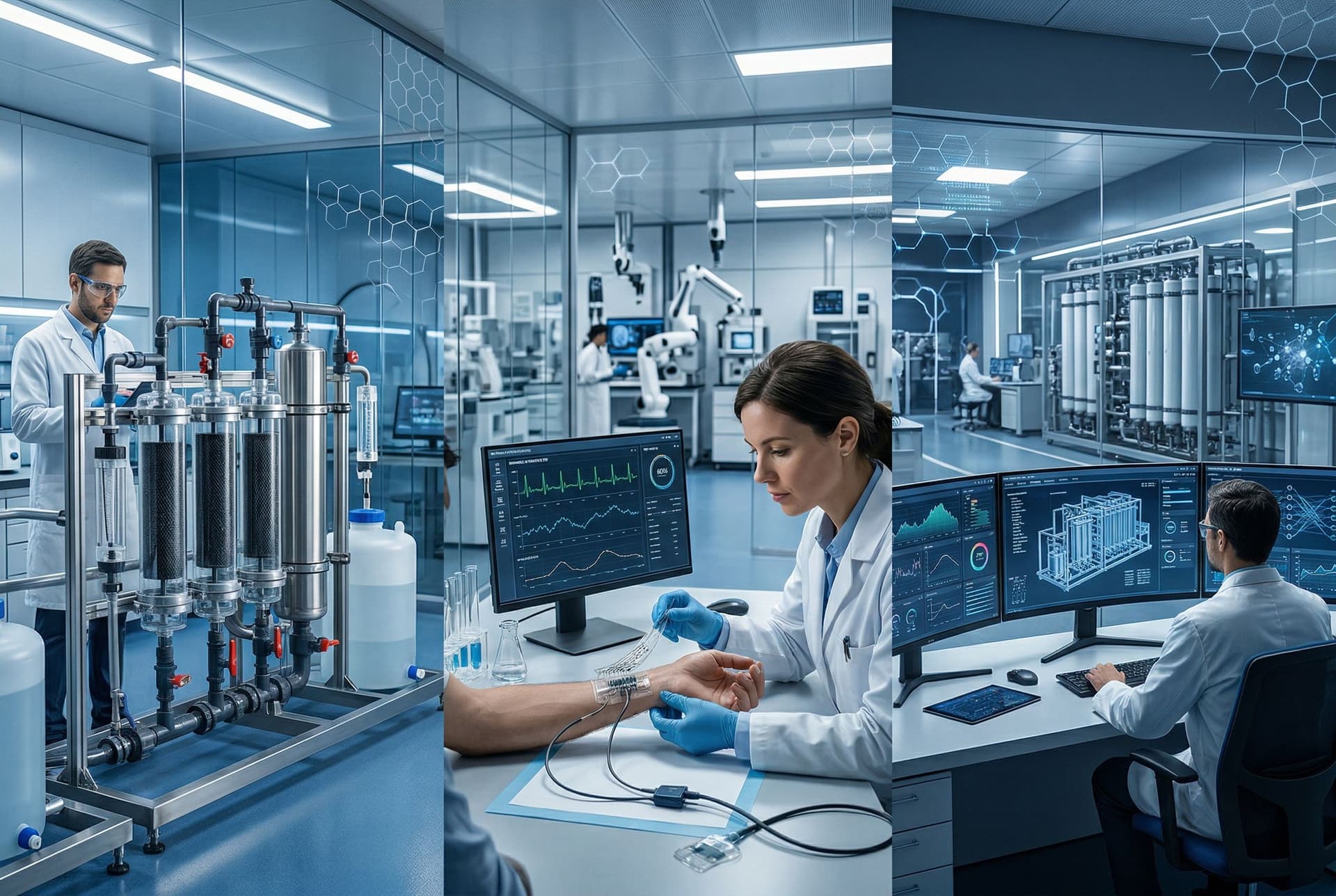
Graphene membranes and sensors are moving from research headlines into more practical engineering conversations in 2026. The reason is simple: graphene can do two things exceptionally well when used correctly. As a membrane material, it can help filter, separate, and selectively transport water or ions with extreme thinness. As a sensor platform, it can translate tiny changes in chemistry, strain, temperature, or biomolecule binding into measurable electrical signals. That combination makes graphene especially relevant for water treatment, biomarker sensing, wearable electronics, and industrial monitoring.
What matters in 2026 is not whether graphene is interesting in a lab. It is. The real question is where graphene offers enough performance, durability, and integration value to justify adoption. In membranes and sensors, that answer is becoming clearer. Engineers are not betting on graphene to replace every conventional material. They are using it where its low thickness, high surface area, conductivity, and tunable chemistry create a real advantage.
Why Graphene Is Still Getting Attention in 2026
Graphene remains compelling because it combines properties that are hard to find in one material. It is mechanically strong, electrically conductive, chemically adaptable, and atomically thin. In membranes, that thinness can reduce transport resistance and increase selectivity if the pore structure is controlled precisely. In sensors, the same thinness creates a huge surface-to-volume ratio, so small environmental changes can strongly affect the signal.
The 2026 market discussion is also more grounded than it was a few years ago. Buyers care about membrane lifetime, sensor calibration, packaging, fouling resistance, and manufacturing yield. That is healthy. It means graphene is being evaluated as an engineering material, not just a scientific curiosity.
Graphene Membranes for Water Treatment
Water treatment is one of the clearest application areas for graphene membranes. The appeal is straightforward: a membrane only works well if it allows desired molecules to pass quickly while blocking contaminants effectively. Graphene, especially in the form of graphene oxide or engineered nanoporous graphene, can support this balance because it can be built extremely thin while still offering control over transport pathways.
In desalination and purification, graphene-based membranes are being explored for several reasons:
- very high water permeability due to minimal transport thickness,
- tunable pore size and surface chemistry,
- potential for lower pressure requirements than some conventional membranes,
- compatibility with composite membrane architectures.
For municipal and industrial water systems, fouling remains the practical challenge. Organic buildup, scaling, and biofouling can reduce flux and increase maintenance costs. This is where graphene coatings and composite layers matter. A graphene-enhanced membrane does not only need high initial performance; it needs stable operation in real water, with cleaning cycles, variable feed quality, and long service intervals.
In 2026, that is pushing development toward hybrid designs rather than purely exotic standalone membranes. Graphene often works best as a selective layer, a reinforcing additive, or a functional coating on top of a proven support structure. This reduces risk and makes scaling more realistic.
Graphene Sensors for Biomarker Detection
Biomarker sensing is another high-value area. In diagnostics, the ability to detect small concentrations of proteins, nucleic acids, metabolites, or inflammatory markers can change how quickly clinicians identify disease and monitor treatment response. Graphene is attractive for biosensors because its electrical properties respond strongly to surface events. When a biomolecule binds to a graphene surface functionalized with the right receptor chemistry, the resulting change can be measured as a shift in resistance, conductivity, capacitance, or impedance.
That sensitivity is useful, but it must be managed carefully. The challenge with biomarker sensing is not only detection; it is selectivity, reproducibility, and calibration. A sensor that responds to everything is not useful. So practical graphene biomarker platforms in 2026 are focused on surface functionalization, microfluidic integration, and signal processing rather than bare graphene alone.
Likely use cases include:
- rapid point-of-care tests,
- inflammation and cardiac marker monitoring,
- saliva, sweat, and blood-adjacent sensing,
- multiplexed biosensor chips.
Graphene’s value here is strongest when paired with a well-designed assay architecture. It can provide the transducer layer, while chemistry and packaging do the hard work of specificity and sample handling.
Wearable Electronics Need Flexible, Sensitive Materials
Wearable electronics have unique constraints. A wearable sensor must be lightweight, flexible, low-power, and comfortable, while still delivering stable measurements on a moving human body. Graphene fits this environment unusually well because it can be integrated into thin films, inks, and flexible substrates.
In wearable devices, graphene sensors are being explored for:
- strain and motion tracking,
- temperature monitoring,
- sweat chemistry sensing,
- respiration and pulse detection,
- health and performance monitoring.
The biggest practical advantage is not novelty. It is form factor. A graphene sensor can often be built into a patch, textile, wristband, or soft electronics laminate without the rigidity penalties of many traditional components. That matters for continuous monitoring, where user comfort strongly affects adoption.
Wearables also need low power. Graphene’s electrical sensitivity can support small signal readout architectures, especially when combined with flexible conductors and compact wireless electronics. The harder part is robustness. Sweat, bending, wash cycles, adhesive wear, and environmental exposure all complicate the design. Commercial success will depend on packaging and signal stability as much as on the graphene itself.
Industrial Monitoring Is a Quiet but Powerful Opportunity
Industrial applications may not get as much attention as biomedical diagnostics, but they are often where materials adopt first. Graphene membranes and sensors are attractive in industrial settings because factories, plants, and processing lines value continuous data and predictive maintenance.
Possible applications include:
- process water monitoring,
- chemical leak detection,
- corrosion and strain sensing,
- gas and vapor detection,
- membrane health monitoring in filtration systems.
Industrial environments are unforgiving. Heat, vibration, contamination, and harsh chemicals punish weak materials quickly. That means graphene solutions need to be more than sensitive; they need to be rugged, reproducible, and easy to integrate into existing control systems.
Graphene is especially interesting in industrial monitoring when it can provide early warning of a change that would otherwise be expensive or dangerous. For example, a membrane that signals fouling before performance collapses can reduce downtime. A sensor that detects trace gases before they reach a critical threshold can improve safety. A strain monitor embedded in a composite structure can reveal fatigue before failure.
The Main Technical Barriers
Despite the promise, graphene membranes and sensors still face familiar bottlenecks.
First, manufacturing consistency matters. A great prototype is not enough if every device behaves differently.
Second, integration matters. Graphene must be attached to supports, electronics, or fluidic systems without losing its advantage.
Third, durability matters. Membranes must survive cleaning and pressure. Sensors must survive repeated cycling and environmental exposure.
Fourth, cost matters. Buyers will compare graphene solutions with mature alternatives such as polymer membranes, silicon sensors, carbon-based sensors, and metal-oxide systems.
In other words, graphene wins only when it is useful in the full system, not just impressive in isolation.
What to Expect From 2026 and Beyond
The most realistic near-term path is hybrid adoption. Graphene will not replace every filtration membrane or every sensor class. Instead, it will appear in high-value niches where performance gains justify complexity.
That likely means graphene membranes in water treatment pilots, industrial separation systems, and specialty purification. It also means graphene sensors in diagnostics, wearables, and process monitoring, especially where flexibility or ultra-high sensitivity matters.
The broader 2026 story is that graphene is becoming less of a promise and more of a platform. In membranes and sensors, the winners will be the designs that pair graphene’s surface physics with practical engineering discipline.
Final Takeaway
Graphene membranes and sensors are important in 2026 because they solve problems that conventional materials struggle with: atomic-scale transport control, highly sensitive surface detection, flexible integration, and compact industrial deployment. Water treatment, biomarker sensing, wearable electronics, and industrial monitoring each benefit from those strengths in different ways.
The commercial message is clear. Graphene is most valuable where it improves selectivity, sensitivity, or integration enough to change the economics of the system. That is why it continues to earn attention in 2026, and why its most important applications are likely to be the ones closest to real-world infrastructure and real-world data.