
A New Era of Graphene Engineering: Pre-Designing Twist Angles on Demand
Researchers have developed a breakthrough method for growing twisted bilayer graphene with pre-designed angles, a key step toward manufacturable quantum...
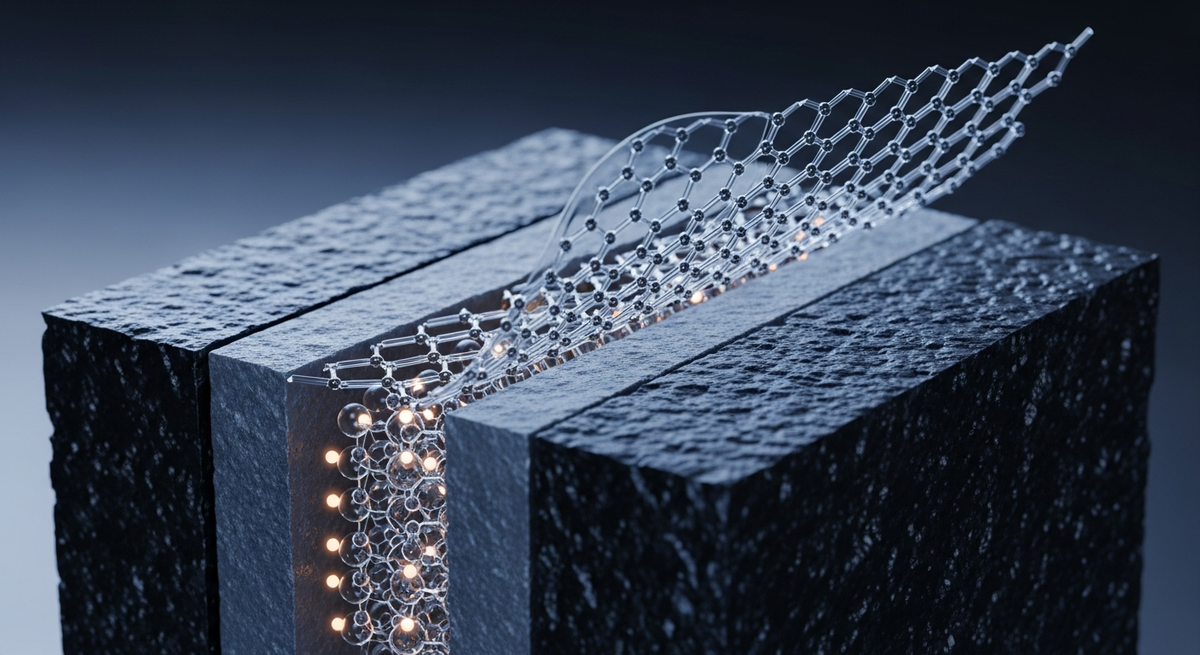
The advent of graphene, a single atomic layer of carbon atoms arranged in a hexagonal lattice, has heralded a new era in materials science. Its extraordinary properties—unrivaled electrical conductivity, exceptional strength, and remarkable transparency—position it as a transformative material for applications ranging from high-speed electronics and energy storage to advanced composites and biomedical devices. However, unlocking graphene's full potential hinges critically on the ability to produce it reliably, consistently, and at scale. Among the myriad fabrication techniques, graphene mechanical cleavage stands out as a foundational method, historically significant for its role in graphene's discovery and continuing relevance for producing high-quality material. While seemingly straightforward, the process involves intricate manipulation of atomic forces and advanced chemical strategies. This exploration delves into the evolution of mechanical cleavage, from the serendipitous laboratory discovery to sophisticated approaches leveraging Graphite Intercalation Compounds (GICs), offering a comprehensive look at how we isolate this two-dimensional marvel from its bulk graphite precursor. Understanding these methods is crucial for engineers, materials scientists, and R&D professionals seeking to harness graphene's capabilities. The journey from a block of graphite to a pristine monolayer of graphene highlights both the elegant simplicity and the complex challenges inherent in manipulating materials at the atomic scale, driving continuous innovation in the quest for industrial-scale, high-quality graphene production.
The story of graphene's isolation often begins in 2004 with the pioneering work of Andre Geim and Konstantin Novoselov at the University of Manchester. Their groundbreaking method, which earned them the Nobel Prize in Physics in 2010, was remarkably simple, relying on an everyday office supply: Scotch tape. They began by taking a piece of highly oriented pyrolytic graphite (HOPG), a form of graphite with highly aligned layers, and repeatedly peeling off layers using adhesive tape. This process, akin to peeling layers from an onion, aimed to thin down the graphite until individual atomic layers could be isolated.
The critical step involved transferring these progressively thinner flakes onto a silicon wafer with a specific silicon dioxide (SiO2) layer. The precise thickness of the SiO2 layer created an optical interference effect, making the otherwise invisible graphene flakes detectable under an optical microscope. This ingenious technique allowed researchers to visually identify areas that were just one atom thick. While the yield of monolayer graphene was exceedingly low and the process laborious, involving painstaking "flake hunting," it unequivocally demonstrated that two-dimensional materials could exist stably at room temperature. This initial breakthrough not only provided the first samples for studying graphene's extraordinary properties but also ignited a global race to develop more efficient production methods.
Following the initial discovery, researchers sought to refine and improve the basic Scotch tape method, aiming for higher yields and more controlled exfoliation. While the fundamental principle of using adhesive forces to overcome van der Waals interactions remained, innovations focused on optimizing the process and materials. Thermal release tapes, for instance, were introduced, allowing for easier detachment of exfoliated flakes from the adhesive surface by simply applying heat, reducing damage and contamination. Substrate engineering also played a significant role, with various dielectric layers and surface treatments explored to enhance flake adhesion and visibility, streamlining the identification process.
Beyond adhesive tape, other forms of direct mechanical exfoliation emerged, albeit still largely confined to laboratory settings for high-quality, small-scale production. Micromechanical exfoliation techniques, involving the use of atomic force microscope (AFM) tips or micro-blades, offered more precise control over the peeling process. These methods allowed for the selective removal of graphite layers, potentially yielding flakes of desired dimensions and thicknesses with greater accuracy. While these advanced mechanical approaches still struggle with scalability and high throughput, they continue to be invaluable for fundamental research, providing pristine graphene samples necessary for probing its intrinsic electronic and mechanical properties without the influence of chemical residues or defects introduced by other synthesis methods.
Understanding the fundamental physics behind mechanical cleavage is crucial for appreciating its potential and limitations. Graphite consists of individual graphene layers held together by relatively weak van der Waals forces, which are long-range attractive forces arising from temporary fluctuations in electron distribution. These forces are significantly weaker than the covalent bonds that form the hexagonal lattice within each graphene layer, creating an anisotropic material where strength within the plane far exceeds strength perpendicular to it. The energy required to separate these layers, known as the exfoliation energy, is directly related to these interlayer forces.
When mechanical force is applied, such as during tape exfoliation, energy is expended to overcome these van der Waals attractions and create new surfaces. The concept of surface energy is central here; every new surface created increases the total surface energy of the system. For exfoliation to occur, the energy gained from the interaction of the new graphene surface with a substrate or the adhesive of the tape must be sufficient to compensate for the energy expended in breaking the interlayer bonds. The successful isolation of monolayer graphene therefore depends on a delicate balance of these forces, where the adhesive or substrate interaction provides the necessary energetic driving force to stabilize the separated layers against re-stacking, leading to the formation of a stable, free-standing two-dimensional material.
While direct mechanical exfoliation produces pristine graphene, its scalability is inherently limited. A major leap towards higher yield and larger-scale production involves the use of Graphite Intercalation Compounds (GICs). GICs are formed when foreign atoms or molecules, known as intercalants, are inserted between the layers of a graphite crystal. This process is driven by chemical interactions between the intercalant species and the graphene layers, which overcome the van der Waals forces to some extent, forcing the layers apart. The choice of intercalant depends on the desired properties and subsequent exfoliation method.
Common intercalants include strong acids (like sulfuric acid or nitric acid), alkali metals (such as potassium or lithium), or halogens (like bromine). During intercalation, these species populate the interlayer spaces, causing the graphite structure to swell and significantly increase its interlayer spacing. This expansion dramatically weakens the van der Waals forces holding the graphene layers together, making them much easier to separate. The formation of GICs is a critical pre-treatment step, chemically priming the graphite for more efficient and less energetically intensive exfoliation processes, paving the way for methods that can yield larger quantities of graphene compared to simple tape-based techniques.
The weakened interlayer forces in GICs open the door to more scalable exfoliation methods. One of the most common and effective techniques involves thermal shock. When a GIC, particularly one formed with acids or certain salts, is rapidly heated to high temperatures (often above 800°C), the intercalated species decompose or volatilize. The rapid expansion of these gases within the confined interlayer spaces generates immense pressure, causing the graphite layers to forcefully separate, resulting in the rapid exfoliation of the GIC into expanded graphite. This expanded graphite consists of loosely stacked graphene sheets, often called vermicular graphite, which can then be further processed.
Further processing typically involves mild sonication in a suitable solvent, such as N-methyl-2-pyrrolidone (NMP) or water with surfactants. The ultrasonic energy helps to overcome any remaining weak attractions between the partially exfoliated layers and disperses individual graphene flakes into a stable suspension. This solvent-assisted exfoliation of thermally expanded GICs offers significant advantages in terms of yield and throughput compared to direct mechanical exfoliation. It allows for the production of large quantities of graphene flakes, albeit often with a broader distribution of thicknesses and potentially some residual intercalant species. Nonetheless, it represents a crucial bridge between laboratory-scale discovery and the industrial production of graphene.
Mechanically cleaved graphene, particularly that obtained via direct exfoliation from HOPG, stands out for its exceptionally high quality. These flakes typically exhibit very low defect densities, pristine crystal structures, and high carrier mobilities, often approaching theoretical limits. This superior intrinsic quality makes mechanically exfoliated graphene the benchmark material for fundamental scientific research and for applications where performance is critically dependent on structural integrity and electronic purity. Researchers rely on these samples to accurately measure intrinsic properties, develop novel devices, and validate theoretical models of two-dimensional materials.
Characterization of these high-quality samples typically involves a suite of advanced techniques. Raman spectroscopy is invaluable for identifying the number of graphene layers, assessing crystal quality, and detecting strain or defects. Atomic Force Microscopy (AFM) provides precise topographical information, revealing flake thickness and surface roughness. Scanning Electron Microscopy (SEM) and Transmission Electron Microscopy (TEM) offer high-resolution imaging to scrutinize morphology and atomic structure. Due to its exceptional properties, mechanically cleaved graphene is highly sought after for specialized applications such as quantum computing research, metrology standards, ultra-high-frequency electronics, and highly sensitive sensors where minor defects would significantly degrade performance. While not yet scalable for mass production, its role in advancing our understanding and demonstrating the ultimate potential of graphene remains unparalleled.
Q: What is mechanical cleavage of graphene?
A: Mechanical cleavage of graphene is a physical method of isolating individual or few-layer graphene sheets from bulk graphite. It involves applying mechanical force, such as peeling with adhesive tape or using an AFM tip, to overcome the weak van der Waals forces holding the graphite layers together, thereby separating them into thinner flakes.
Q: Why is mechanically exfoliated graphene considered high quality?
A: Mechanically exfoliated graphene, especially from highly oriented pyrolytic graphite (HOPG), is considered high quality because it typically exhibits very low defect densities, pristine crystal structures, and high carrier mobilities. This method avoids the chemical treatments that can introduce defects or residues common in other graphene production techniques, preserving the intrinsic properties of the material.
Q: How do Graphite Intercalation Compounds (GICs) aid graphene exfoliation?
A: Graphite Intercalation Compounds (GICs) are formed by inserting foreign atoms or molecules between graphite layers, which causes the layers to swell and significantly weakens the van der Waals forces holding them together. This pre-treatment makes the graphite much easier to exfoliate, often through rapid heating (thermal shock) or sonication, leading to higher yields and larger quantities of graphene flakes.
Q: What are the main challenges in scaling up mechanical cleavage methods?
A: The main challenges in scaling up direct mechanical cleavage methods like the Scotch tape technique include very low yield, laborious manual processing, and difficulty in controlling flake size and thickness. While GIC-based exfoliation offers higher yields, it still faces challenges related to controlling flake quality, potential residual intercalants, and environmental considerations for industrial application.
Q: For what applications is mechanically cleaved graphene most suitable?
A: Mechanically cleaved graphene is most suitable for fundamental scientific research, metrology standards, quantum computing research, and ultra-high-frequency electronic devices. Its high quality, low defect count, and pristine electronic properties make it ideal for applications where ultimate performance and accurate characterization of intrinsic graphene properties are paramount.
The journey of graphene mechanical cleavage, from an ingenious laboratory discovery with humble Scotch tape to advanced techniques leveraging Graphite Intercalation Compounds, underscores a relentless pursuit of both fundamental understanding and practical scalability. This foundational method not only provided the world with its first samples of stable, two-dimensional carbon but continues to serve as a benchmark for pristine material quality, driving advancements in characterization and device prototyping. While direct mechanical exfoliation excels in producing samples of unparalleled purity for cutting-edge research, the evolution towards GIC-assisted exfoliation represents a critical step in bridging the gap between laboratory curiosities and industrial viability. The intricate interplay of atomic forces, surface chemistry, and engineering ingenuity inherent in these processes exemplifies the continuous innovation defining the field of graphene production. As we push towards harnessing graphene's full potential, the lessons learned and the techniques developed through mechanical cleavage remain indispensable, guiding the development of future high-throughput, high-quality manufacturing pathways for this transformative material.
Serious about B2B integration? Test our premium Pulsed Electrical Resistive Carbon Heating turbostratic graphene in your lab. 100g sample packs available now.
Explore More
Researchers have developed a breakthrough method for growing twisted bilayer graphene with pre-designed angles, a key step toward manufacturable quantum...

Learn how deep learning is revolutionizing the structural characterization of twisted bilayer materials, accelerating the development of next-generation...

Learn to build a prototype graphene FET biosensor for sensitive DNA detection. This guide covers materials, fabrication, and testing for point-of-care...