General & Market
Graphene Manufacturers in the USA: Who Is Building Real Production Capacity?
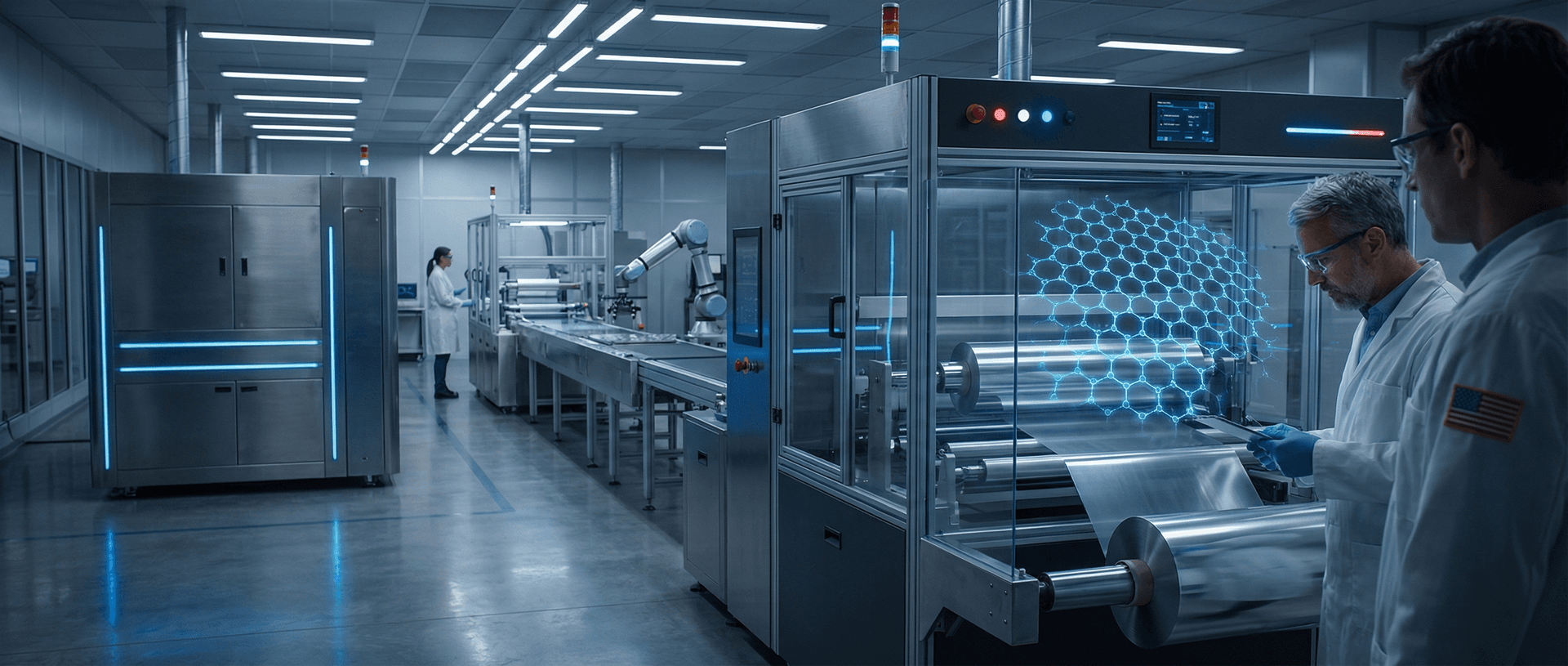
The American graphene sector is still young compared with legacy materials industries, but it is no longer just a science-fair story about a wonder material. In the United States, graphene production is gradually taking shape across several distinct business models: bulk powder and platelet suppliers, chemical vapor deposition (CVD) film manufacturers, foundry-style device producers, and scale-up companies targeting composites, coatings, energy storage, sensing, and advanced electronics.
That distinction matters. When people search for “graphene manufacturers in the USA,” they often imagine a single category of company. In practice, the U.S. market includes businesses making very different graphene forms, each suited to different applications. A buyer looking for graphene nanoplatelets for thermally conductive polymer compounds is not really shopping for the same thing as a research group needing wafer-scale CVD graphene for biosensors. Likewise, a coatings formulator evaluating dispersion-ready additives has a different shortlist than a team designing a transparent conductive film stack.
So the better question is not merely “who manufactures graphene in the United States?” It is “what kind of graphene do they make, and how close are they to real, repeatable commercial supply?”
The Main Types of Graphene Manufacturing in the U.S.
Before naming companies, it helps to separate the market by production style.
First, there are **graphene nanoplatelet and powder producers**. These companies typically focus on bulk additives for composites, coatings, cement, polymers, elastomers, lubricants, and battery-related formulations. Their value proposition is usually cost, consistency, loading efficiency, and compatibility with existing industrial compounding processes.
Second, there are **CVD graphene manufacturers**. These companies grow graphene films on metal substrates such as copper and then supply the material for transfer, device fabrication, sensors, membranes, flexible electronics, and other advanced applications where film quality and continuity matter more than bulk tonnage.
Third, there are **device-oriented or foundry-oriented graphene companies**. Rather than selling raw graphene alone, they build chips, sensor platforms, or custom wafer services that integrate graphene into an application-ready stack.
Fourth, there are **scale-up innovators** working on lower-energy, more scalable, or more controllable production routes. These companies matter because the long-term winner in graphene may not be the one with the flashiest laboratory data, but the one that can deliver repeatable product at industrial cost.
Notable Graphene Manufacturers and Producers with U.S. Footprint
1. NeoGraf Solutions
NeoGraf is one of the more serious names in the broader North American carbon-materials landscape. The company is well known for graphite-based engineered materials and has expanded its graphene portfolio through graphene nanoplatelets and related additives. That makes NeoGraf particularly relevant for industrial buyers interested in conductive, barrier, thermal, or mechanical performance improvements in established material systems rather than exotic one-off lab demonstrations.
From a market perspective, NeoGraf stands out because it sits closer to real industrial materials commercialization than many graphene startups. Companies with deep experience in graphite processing, formulation support, and downstream customer qualification often have an advantage in actually getting graphene into products. If you care about scale-up credibility, NeoGraf deserves attention.
2. General Graphene
General Graphene, based in Tennessee, focuses on industrial-scale CVD graphene and related carbon materials. That specialization is important. CVD graphene is not the same business as selling graphene powders or graphene oxide. It targets applications where large-area films, reproducibility, and integration quality matter, including sensors, electronics, membranes, heating films, and research-grade device development.
According to its public positioning, General Graphene emphasizes roll-to-roll CVD systems and scalable supply of reproducible graphene films. For U.S. customers who want domestic access to CVD material without relying entirely on imported film supply, this is meaningful. It suggests a manufacturing orientation that is closer to process engineering than to simple resale.
3. Grolltex
Grolltex is another U.S. company strongly associated with CVD graphene, as well as hBN single-atom films. Its messaging highlights very thin films for transparent conductive electrodes, sensors, membranes, and flexible electronics. That places Grolltex in the segment of the market where graphene is treated less as a filler and more as a functional atomic-scale interface.
This distinction matters commercially. Many people talk about graphene as though all value comes from adding a black powder into a formulation. But for advanced electronics, biosensing, gas sensing, barrier layers, and transparent conductive systems, the film side of the industry may be strategically more important. Grolltex is notable because it participates in that thinner, higher-value slice of the market.
4. HydroGraph
HydroGraph is one of the more interesting modern entrants because it frames its value around purity, consistency, scalability, and process efficiency. The company also publicly highlights its modular Hyperion process and its Graphene Council Verified Graphene Producer certification, noting that it is the only company in the Americas with that certification at the time of its site messaging.
For buyers, that kind of claim matters because graphene is plagued by a chronic market problem: inconsistent terminology. One supplier’s “graphene” may be another supplier’s graphite nanopowder, few-layer platelet, oxidized carbon, or highly defective carbon black-adjacent material. Any company emphasizing classification, verification, and repeatability is responding to a real pain point in the industry. HydroGraph is worth watching for exactly that reason.
5. Graphenea’s U.S. Presence
Graphenea is an internationally known graphene company with a U.S. presence and a strong reputation in CVD films, graphene oxide, graphene devices, and foundry services. While not purely a U.S.-born manufacturing story in the same way as some domestic firms, it remains relevant to the American market because many U.S. R&D and device-development programs source from suppliers like Graphenea when they need higher-spec graphene platforms, test structures, or foundry support.
For website readers trying to understand the competitive landscape, Graphenea is useful as a benchmark. It represents the part of the graphene market that is device-facing, process-aware, and tightly connected to sensor and semiconductor-style development workflows.
6. Vorbeck and Application-Driven Graphene Commercialization
Vorbeck is better known in many circles for graphene-enabled materials and products in demanding environments than for generic commodity graphene sales. That still makes it relevant to any discussion of U.S. graphene manufacturing. The company represents a key truth about this industry: some of the most commercially meaningful graphene businesses may not lead with raw-material tonnage at all. Instead, they may capture value by embedding graphene into conductors, wearable systems, sensing platforms, or ruggedized electronics.
In other words, if you are evaluating “manufacturers” only by who sells jars of powder online, you can miss where real commercial traction is occurring.
What Buyers Should Actually Compare
If you are evaluating graphene manufacturers in the USA, the company name is only the beginning. The harder and more useful questions are technical.
- What graphene form is actually being sold: monolayer film, few-layer film, graphene oxide, reduced graphene oxide, nanoplatelets, dispersion, masterbatch, or custom device?
- What is the realistic production volume?
- How consistent are layer number, defect density, oxygen content, lateral size, and impurity profile?
- Is the supplier optimized for research samples or repeat industrial shipments?
- Does the company support formulation, transfer, integration, or application engineering?
- Can the material be qualified with the user’s manufacturing process rather than only with brochure-level performance claims?
These questions sound basic, but they are where most graphene sourcing programs either become real or quietly die.
The Core Challenge in the U.S. Graphene Market
The biggest challenge for graphene manufacturing in America is not simply making graphene. It is making the right graphene, repeatedly, at an acceptable cost, with a specification that means something to the customer.
That sounds obvious, but the field still suffers from mismatch between material identity and application need. A company may honestly produce a good graphene-related material and still be the wrong choice for a given program. Bulk composites need cost-effective and dispersible platelet products. Flexible electronics may require continuous, high-quality CVD films. Sensor developers may need transfer support, patterning compatibility, and low-noise device architecture. Energy-storage developers may prioritize surface chemistry and defect engineering over pristine film quality.
The U.S. market is gradually improving because more companies are moving away from generic “graphene is amazing” language and toward application-specific manufacturing. That is a healthy sign. It means the sector is evolving from material hype toward product discipline.
Final Perspective
There is no single best graphene manufacturer in the USA for every use case. But there are several serious players worth understanding, especially if you separate the market into bulk materials, CVD films, foundry/device services, and application-driven commercialization.
NeoGraf is notable for industrial materials credibility. General Graphene and Grolltex are notable for U.S.-based CVD capabilities. HydroGraph is notable for process and verification positioning. Graphenea remains a strong benchmark for advanced device-oriented supply into the U.S. market. Vorbeck highlights the importance of downstream application value, not just raw material sales.
The real takeaway is simple: in graphene, manufacturing quality is not just about whether a company can make carbon sheets. It is about whether the company can deliver a form of graphene that is useful, consistent, economically credible, and compatible with a real product roadmap. The American graphene sector is still maturing, but the companies building genuine process discipline today are the ones most likely to define the market tomorrow.
Sources
- General Graphene website
- Grolltex website
- HydroGraph website
- Graphenea website
- NeoGraf public company materials and industry references
- Additional industry listings used only for market cross-checking, not for ranking