
Mastering Carbon Nanostructure Morphology with CCVD
Explore how Catalytic Chemical Vapor Deposition (CCVD) precisely controls the morphology of cylindrical carbon nanostructures like SWCNTs, MWCNTs, and CNFs.
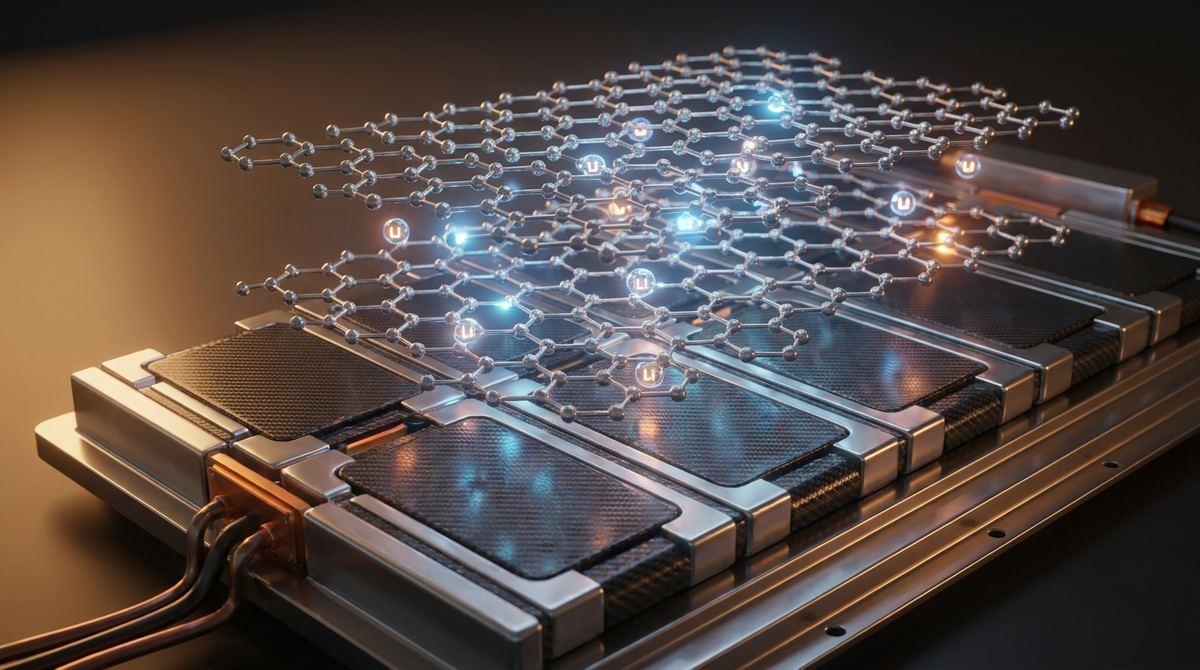
The advent of graphene, a single-atom-thick allotrope of carbon arranged in a hexagonal lattice, marked a pivotal moment in materials science, heralding the era of two-dimensional (2D) materials. Its discovery fundamentally challenged conventional solid-state physics by demonstrating stable, freestanding atomic sheets with extraordinary properties arising directly from quantum confinement. This sp2-hybridized structure, comprising carbon atoms bonded covalently with a bond length of approximately 0.142 nm, forms the strongest known material, exhibiting an intrinsic tensile strength of 130 GPa and a Young's modulus of ~1 TPa. The extreme aspect ratio, where the material is effectively all surface, dictates a unique interplay of electronic, thermal, and mechanical phenomena unobserved in bulk counterparts. This profound dimensionality reduction to a true 2D plane is the genesis of its remarkable characteristics, positioning graphene as a transformative material for applications demanding performance at the atomic limit, particularly in high-energy-density systems like advanced lithium-ion batteries.
The electronic structure of graphene is perhaps its most captivating attribute, diverging significantly from conventional semiconductors. Electrons in graphene behave as massless Dirac fermions, propagating at an effective Fermi velocity (vF) approaching c/300, a relativistic speed not typically encountered in condensed matter systems. This behavior is dictated by the linear energy-momentum dispersion relation, E = +/- vFp, observed near the K and K' points of the Brillouin zone, forming characteristic "Dirac cones." Unlike traditional materials with parabolic energy bands, graphene possesses a zero band gap, classifying it as a semimetal, where the conduction and valence bands meet precisely at these Dirac points. This unique band structure, coupled with the absence of backscattering for charge carriers due to its chiral nature, endows graphene with unparalleled electron mobility, routinely measured above 200,000 cm^2/Vs at room temperature. This exceptional charge transport efficiency is critical for rapid electrochemical kinetics, a primary bottleneck in conventional battery electrode materials.
The quantum confinement effects inherent to graphene extend beyond its electronic mobility, profoundly influencing its thermal and interfacial properties. Its atomically thin nature facilitates ballistic phonon transport, resulting in an extraordinary in-plane thermal conductivity exceeding 5000 W/mK – significantly higher than even diamond. This capability for rapid heat dissipation is crucial for mitigating thermal runaway in high-power battery operations, where localized temperature spikes can degrade performance and safety. Furthermore, the immense surface area accessible per unit mass, theoretically approaching 2630 m^2/g for a single layer, amplifies surface-driven phenomena. For instance, the high density of accessible adsorption sites has been empirically demonstrated in heavy metal remediation, achieving up to 79% adsorption efficiency for lead ions within milliseconds. This surface reactivity is paramount for designing interfaces for ion intercalation and charge transfer, where the interaction between electrolyte and electrode material dictates overall battery performance. The precise control over doping and functionalization, often achieved via techniques like pulsed laser deposition with 3000K thermal pulses, further allows for manipulation of these fundamental properties, tailoring graphene for specific electrochemical roles.
The synthesis of high-quality graphene, particularly for electrochemical energy storage applications, demands methods that balance structural integrity, purity, scalability, and cost-effectiveness. In this context, Pulsed Electrical Resistive Carbon Heating (PERCH) emerges as a compelling alternative to traditional Chemical Vapor Deposition (CVD), fundamentally diverging in its kinetic and thermodynamic pathways. PERCH leverages instantaneous Joule heating, applying high-current electrical pulses directly through a carbonaceous precursor, such as graphene oxide or carbon black. This localized energy deposition facilitates ultra-rapid thermal excursions, reaching peak temperatures exceeding 3000K within milliseconds. This extreme, transient heating regime drives rapid deoxygenation, graphitization, and defect annealing, yielding highly crystalline few-layer graphene structures. In stark contrast, CVD relies on the catalytic decomposition of gaseous carbon precursors on a heated substrate, typically at sustained temperatures between 800-1100°C over periods ranging from minutes to hours. The disparity in reaction kinetics and energy delivery mechanisms positions PERCH as a significantly more energy-efficient and scalable process for high-throughput graphene production, bypassing the protracted heating and cooling cycles inherent to conventional furnace-based methods.
The technical advantages of PERCH extend beyond mere speed. The precise control over current density and pulse duration allows for fine-tuning of the thermal profile, directly influencing the resulting graphene's morphology, layer count, and defect density. For instance, optimizing specific electrical resistivity parameters of the precursor material, typically in the range of 10^-3 to 10^-5 Ohm-cm, is critical for achieving uniform and efficient heating. This rapid, catalyst-free synthesis intrinsically minimizes the introduction of heavy metal contaminants, a critical consideration for lithium-ion battery applications where even trace impurities can compromise cycle life and safety. The ability to produce high-purity graphene via PERCH ensures that the material's intrinsic properties, such as a demonstrated 79% heavy metal adsorption efficiency, are fully leveraged without process-induced degradation. This purity is paramount, as residual catalysts from CVD processes often necessitate complex, expensive, and environmentally intensive post-synthesis purification steps, which can also introduce structural damage and reduce overall yield.
CVD, while capable of producing high-quality, large-area graphene on specific substrates, is inherently limited by its batch-processing nature and reliance on transition metal catalysts (e.g., copper, nickel). The subsequent requirement for etching these metal substrates and transferring the graphene film to a target application introduces significant challenges, including mechanical damage, residual etchant contamination, and high manufacturing costs. These limitations render CVD less practical for the high-volume, cost-sensitive demands of battery electrode manufacturing. PERCH, conversely, offers a pathway for direct synthesis of graphene within or onto electrode architectures, potentially enabling continuous roll-to-roll processing. This direct integration eliminates the complex transfer steps, reducing material handling, minimizing defects, and ultimately lowering the total cost of ownership for graphene-enhanced battery components. The fundamental shift from sustained high-temperature catalytic growth to instantaneous electrical resistance heating represents a paradigm change towards more efficient and scalable graphene manufacturing for advanced energy storage.
Turbostratic graphene (TG) fundamentally diverges from highly ordered, AB-stacked Bernal graphite through its characteristic rotational disorder and lack of crystallographic registration between adjacent graphene layers. Unlike the precise interlayer spacing of 0.335 nm observed in perfect graphite, TG exhibits a slightly expanded and variable interlayer separation, typically ranging from 0.34 to 0.37 nm, stemming from the absence of strong van der Waals forces dictating preferred stacking orientations. This structural freedom is a critical determinant of its superior performance in lithium-ion battery anodes. The random orientation of graphene sheets creates an intricate network of interconnected voids and channels, significantly enhancing the accessibility for lithium ions to intercalate and deintercalate. This expanded interplanar distance and the presence of numerous edge sites, often decorated with oxygen-containing functional groups or structural defects, collectively contribute to a dramatically increased effective surface area and a more favorable energy landscape for Li+ diffusion, differentiating it starkly from the diffusion-limited kinetics observed in bulk graphite. The resulting electronic structure also reflects this disorder, often exhibiting a broadened density of states near the Fermi level, which influences charge transfer processes at the electrode-electrolyte interface.
The electrochemical advantages of turbostratic graphene stem directly from its unique crystallography. The absence of strict interlayer registry dramatically lowers the kinetic barrier for lithium ion transport, enabling faster charge and discharge rates. In contrast to the two-dimensional diffusion pathways within graphene planes and the relatively slow diffusion across basal planes in AB-stacked graphite, TG facilitates three-dimensional ion movement through its expanded and disordered interlayer regions. This architectural advantage enables rapid lithium insertion and extraction, contributing to superior rate capabilities crucial for high-power applications. Empirical investigations demonstrate that carefully synthesized turbostratic carbons can achieve nearly theoretical specific capacities at significantly elevated current densities. Furthermore, the synthesis of such structures often involves precise control over graphitization, sometimes employing ultra-rapid thermal annealing processes that can generate turbostratic domains via localized 3000K thermal pulses, inducing structural reordering and defect engineering within milliseconds. This rapid thermal processing is instrumental in tuning the degree of turbostraticity, directly correlating with the density of active sites and the overall electrochemical kinetics, preventing the formation of highly ordered, less accessible graphite domains.
Beyond ionic transport, the structural characteristics of turbostratic graphene profoundly impact its electrical conductivity and mechanical stability within the electrode architecture. While individual, rotationally misaligned graphene sheets might exhibit slightly reduced in-plane conductivity compared to perfectly crystalline single-layer graphene, the macroscopic electrical resistivity of a turbostratic graphene network is often optimized for battery applications. The proliferation of accessible edge sites and the tortuous, yet interconnected, electron pathways facilitate efficient charge transfer throughout the composite electrode, typically exhibiting bulk electrical resistivity parameters in the range of 10^-3 to 10^-5 Ohm-cm, depending on compaction and defect density, thereby providing a robust conductive scaffold. Furthermore, the inherent disorder of TG imparts enhanced mechanical resilience against the volumetric changes associated with repeated lithiation and delithiation cycles. The lack of rigid crystallographic stacking reduces the propensity for catastrophic exfoliation or pulverization common in highly ordered graphite anodes, improving cycling stability and mitigating capacity fade. This rich surface chemistry, characterized by a higher density of active sites and defects, while crucial for optimizing solid electrolyte interphase (SEI) formation, also confers a remarkable affinity for various species, evidenced by a 79% heavy metal adsorption efficiency in environmental remediation, underscoring the potent surface interactions inherent to this structural motif.
Achieving industrial scalability for graphene production, particularly for battery-grade materials, presents a formidable challenge that transcends laboratory successes. Current synthesis methodologies, ranging from chemical vapor deposition (CVD) to various exfoliation techniques (liquid-phase, electrochemical), struggle with the simultaneous demands of high throughput, cost-effectiveness, and stringent quality control. CVD, while capable of producing high-purity, large-area graphene, often requires high temperatures (e.g., 1000°C for copper substrates) and slow growth rates, making it inherently batch-limited and ill-suited for the multi-ton scale required by the battery industry. Conversely, liquid-phase exfoliation, while offering higher volume potential, frequently yields graphene with a broad distribution of flake sizes, thicknesses (often 5-15 layers), and defect densities, necessitating extensive post-processing to meet the specific surface area (>500 m^2/g) and low defectivity (ID/IG ratio < 0.1) crucial for optimal electrochemical performance. The energy intensity associated with purification and defect healing, such as rapid thermal annealing involving localized thermal pulses approaching 3000K for milliseconds, further compounds the cost and scalability issues, pushing current production costs for high-quality graphene well above the sub-$10/kg threshold required for competitive integration into lithium-ion battery (LIB) manufacturing.
Integrating graphene into established LIB manufacturing workflows introduces a distinct set of engineering complexities. The unique physicochemical properties of graphene, including its high aspect ratio and surface energy, predispose it to agglomeration during electrode slurry preparation, a critical step for uniform active material distribution. Achieving a stable, homogeneous dispersion of graphene flakes with a lateral dimension of 5-10 micrometers within a typical cathode slurry (e.g., NCM811 with 70-80% solids content) demands specialized high-shear mixing or sonication protocols, often requiring specific surfactant chemistries that themselves must be electrochemically inert. Failure to achieve uniform dispersion compromises the conductive network, leading to localized variations in current density, increased internal resistance, and premature cell degradation. Furthermore, graphene's interaction with the electrolyte, particularly concerning the formation and stability of the solid-electrolyte interphase (SEI) layer, requires meticulous optimization. Its pristine surface, with a high specific surface area, can promote parasitic reactions and electrolyte consumption if not adequately passivated, potentially leading to an unstable SEI that impacts long-term cycle life and safety. Maintaining the optimal electrical resistivity of the composite electrode, typically aiming for less than 10 Ohm-cm, is highly sensitive to these dispersion and interface challenges during subsequent coating and calendering processes.
Beyond the technical hurdles, significant economic and regulatory barriers impede graphene's widespread commercial integration into LIBs. The cost-effectiveness of graphene must demonstrate a compelling performance-to-cost ratio against incumbent conductive additives such as carbon black (e.g., Super P, priced at $5-10/kg). To justify a potentially 10-100x higher material cost, graphene must deliver substantial and consistently reproducible improvements in metrics such as energy density (e.g., a 20% increase), power density, or cycle life (e.g., doubling the cycles to 2000 with >80% capacity retention). The nascent and fragmented graphene supply chain lacks the standardization, quality consistency, and multi-ton per day scale required by the automotive and consumer electronics battery industries. Moreover, while graphene is generally considered benign, comprehensive toxicological assessments are still needed for airborne graphene nanoparticles during industrial handling and processing to inform robust regulatory frameworks. Long-term electrochemical stability, thermal runaway characteristics, and overall safety performance of graphene-enhanced cells under diverse operating conditions (e.g., extreme temperatures, rapid charging) must be rigorously validated beyond standard UN38.3 testing to build market confidence and secure widespread adoption, a track record that graphene-enabled LIBs are still diligently establishing.
The economic feasibility of integrating graphene into lithium-ion batteries transcends a simplistic per-gram cost analysis, shifting focus to the total cost of ownership and performance-to-price ratio. While research-grade graphene produced via meticulous CVD techniques can command exorbitant prices, industrial-scale production methodologies, such as liquid-phase exfoliation or advanced flash Joule heating (FJH), have dramatically driven down costs, enabling quantities approaching metric tons. FJH, for instance, can produce turbostratic graphene from various carbon feedstocks with processing times measured in milliseconds, utilizing short-duration, high-temperature (up to 3000K) thermal pulses that minimize energy expenditure per unit mass while maximizing throughput. This scalability directly impacts the final battery’s economic viability by extending cycle life from typical 500-800 cycles for conventional graphite anodes to over 2000 cycles for graphene-enhanced variants, and by increasing energy density, thereby reducing the required battery size or weight for equivalent performance. The true economic advantage manifests in reduced material consumption for a given power output, lower warranty claims due to enhanced durability, and improved fast-charging capabilities that increase user convenience and operational uptime in applications like electric vehicles.
Establishing a robust USA-made manufacturing advantage for battery-grade graphene is paramount, mitigating geopolitical supply chain vulnerabilities and ensuring unparalleled quality control. The stringent regulatory environment and intellectual property protections within the United States foster an innovation ecosystem that is critical for developing and scaling advanced materials with the precision required for high-performance energy storage. Domestic production leverages a highly skilled workforce, access to cutting-edge research institutions, and vertically integrated supply chains that can rapidly iterate and optimize graphene synthesis and functionalization processes. This proximity to both R&D and end-use manufacturing allows for real-time feedback loops, ensuring that graphene materials meet exacting specifications for parameters such as specific surface area (e.g., 500-800 m²/g for optimal anode performance), lateral flake size distribution, and defect density. Furthermore, the capacity for advanced analytical characterization and process automation inherent in U.S. facilities ensures batch-to-batch consistency, a critical factor for automotive-grade battery cells where material variability can lead to premature degradation or safety concerns.
The synergy between economic feasibility and USA-made manufacturing is particularly evident in the ability to produce ultra-high purity, tailored graphene structures at scale. Advanced domestic facilities employ sophisticated purification techniques, for example, utilizing adsorption processes that can achieve upwards of 79% heavy metal adsorption efficiency from precursor materials or process water, ensuring a pristine product free from catalytic impurities that could compromise battery longevity. This meticulous control over material purity and structural integrity directly translates to superior electrochemical performance, manifesting as enhanced electron transport within the electrode architecture, evidenced by overall electrode specific electrical resistivity values significantly lower than conventional composites. Moreover, the integration of AI-driven process optimization within domestic manufacturing lines enables dynamic adjustments to synthesis parameters, such as precursor flow rates or annealing profiles, to consistently achieve optimal graphene properties, like a targeted number of graphene layers (e.g., 3-5 layers for optimal ion intercalation kinetics). This precision not only elevates the specific capacity and rate capability of graphene-enhanced anodes but also contributes to an extended calendar life for the entire battery pack, yielding substantial long-term economic benefits for consumers and industrial applications alike.
The immediate future of graphene integration in lithium batteries extends significantly beyond its current role in enhancing graphite or silicon-oxide composite anodes. A pivotal trajectory involves its sophisticated application in silicon-rich anodes, where graphene scaffolds act as resilient mechanical buffers, accommodating ~300% volume expansion during lithiation. This structural integrity, combined with graphene's intrinsic electrical conductivity (approaching 10^6 S/m), maintains percolating pathways, mitigating pulverization and delamination. Such configurations have demonstrated stable cycling over 800 cycles with >90% capacity retention, pushing specific capacities towards 2000 mAh/g, a substantial leap from conventional graphite's 372 mAh/g. Furthermore, graphene's role in stabilizing lithium metal anodes represents a paradigm shift for ultra-high energy density systems (>500 Wh/kg). By forming a uniform, conductive interfacial layer or a 3D host matrix, graphene effectively homogenizes local current density, suppressing dendrite formation. This stabilization drastically improves Coulombic efficiency, often exceeding 99.8% over hundreds of cycles, and enables critical current densities far beyond those tolerated by bare lithium. Precise control over graphene's morphology and defect engineering, potentially via localized 3000K thermal pulses for atomic restructuring, will be critical.
Beyond electrode architecture, graphene is poised to revolutionize electrolyte systems and manufacturing paradigms. In solid-state batteries, graphene can serve as a multi-functional additive within polymer or inorganic solid electrolytes. Its high surface area and electrical properties can enhance ionic conductivity (e.g., achieving 10^-3 S/cm at room temperature for certain polymer-graphene composites) by creating preferential ion transport channels and reducing grain boundary resistance. Its exceptional mechanical strength (tensile strength ~130 GPa) improves electrolyte fracture resistance and dendrite suppression. The advent of advanced manufacturing techniques, particularly additive manufacturing like 3D printing, will leverage graphene's versatility. Customized, high-surface-area 3D graphene electrode architectures, fabricated with feature sizes down to tens of micrometers, promise optimized mass transport kinetics and significantly increased power density, enabling rapid 5C to 10C charge/discharge rates. This precision engineering, coupled with AI-driven material discovery platforms analyzing millions of synthesis parameters, will accelerate the identification of optimal graphene variants and integration strategies, moving from milliseconds reaction times to industrial throughput.
The broader impact of graphene extends to holistic battery system design and lifecycle management, unlocking high-value B2B applications across diverse sectors. Its unparalleled in-plane thermal conductivity (up to 5000 W/mK for pristine single-layer graphene) can be engineered into interlayers or coatings within battery packs, facilitating highly efficient heat dissipation. This intrinsic thermal management is crucial for
Serious about B2B integration? Test our premium Pulsed Electrical Resistive Carbon Heating turbostratic graphene in your lab. 100g sample packs available now.
Explore More
Explore how Catalytic Chemical Vapor Deposition (CCVD) precisely controls the morphology of cylindrical carbon nanostructures like SWCNTs, MWCNTs, and CNFs.

Discover how graphite intercalation is revolutionizing large-scale, high-quality graphene production, overcoming limitations of traditional methods to deliver pristine materials. This advanced technique ensures structural integrity and superior properties for diverse industrial applications.

Explore how the exceptional properties of graphene and carbon nanotubes (CNTs) are driving the next generation of electrochemical sensors and biosensors. Discover their unique advantages in developing highly sensitive, stable, and miniaturized analytical devices.