
Graphene Radar Absorbing Materials for Aircraft and Drones
Graphene coatings are being studied for radar absorbing materials because they can help make aircraft and drones lighter, thinner, and more electromagnetically tunable.
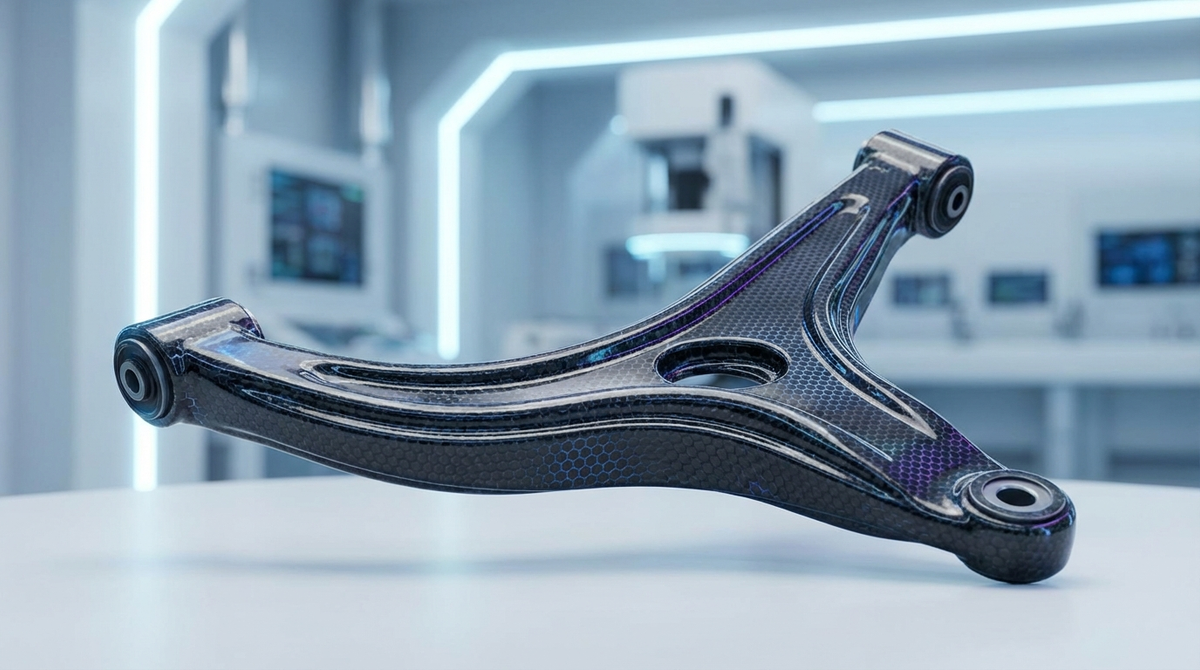
The pursuit of enhanced performance, increased fuel efficiency, and reduced emissions in the automotive sector necessitates a fundamental re-evaluation of material science, driving an imperative shift towards advanced lightweighting solutions. Graphene, a single atomic layer of sp2-hybridized carbon atoms arranged in a hexagonal lattice, represents a paradigm shift in this endeavor, offering an unparalleled combination of properties stemming directly from its two-dimensional confinement. Its intrinsic tensile strength, empirically measured at approximately 130 GPa, significantly surpasses that of structural steel, while its density is merely 2267 kg/m^3. This extraordinary strength-to-weight ratio, coupled with a thermal conductivity reaching up to 5000 W/mK at room temperature, positions graphene as a transformative enabler for components ranging from structural chassis elements to advanced thermal management systems in electric vehicle powertrains. The material's unique electronic band structure, characterized by Dirac cones at the Brillouin zone corners, underpins its exceptional charge carrier mobility, exceeding 200,000 cm^2/Vs, which is critical for future embedded electronics and sensor integration within autonomous vehicle platforms.
The physics of graphene confinement dictates its singular electronic and thermal transport characteristics. Unlike conventional semiconductors, charge carriers in graphene behave as massless Dirac fermions, exhibiting a linear dispersion relation (E = ħvk) near the Dirac points. This relativistic quantum mechanical behavior leads to ballistic transport over micron-scale distances, even at room temperature, minimizing scattering and enabling unprecedented electrical conductivity. This confinement-induced quantum mechanical phenomenon results in a minimal sheet resistance, with measured values as low as 10^-6 Ω·cm for pristine monolayer graphene. Such low resistivity is paramount for applications requiring rapid signal propagation or efficient power delivery, such as high-frequency radar modules for advanced driver-assistance systems (ADAS) or low-loss interconnects in battery management units. Furthermore, the 2D nature profoundly influences phonon scattering mechanisms, leading to its remarkable in-plane thermal conductivity, which is anisotropic and significantly higher than that of diamond or carbon nanotubes. This capability for rapid heat dissipation is crucial for mitigating thermal runaway in high-power automotive electronics, where localized temperature spikes can reach 3000K during transient thermal pulses, demanding sub-millisecond reaction times for thermal management.
Translating the fundamental physics of graphene confinement into tangible automotive applications requires sophisticated material engineering, particularly in managing defects and interfaces in real-world composites. While monolayer graphene exhibits ideal properties, industrial scalability often involves few-layer graphene or graphene nanoplatelets integrated into polymer or metal matrices. The challenge lies in ensuring that the extraordinary properties derived from 2D confinement are effectively transferred and maintained within these composite structures. For instance, leveraging graphene's high surface area and quantum capacitance effects, advanced supercapacitor electrodes can achieve specific power densities exceeding 100 kW/kg, facilitating rapid energy recapture and deployment in regenerative braking systems. Moreover, the inherent electromagnetic shielding effectiveness, stemming from its high electrical conductivity and atomic thinness, offers a lightweight solution for protecting sensitive automotive electronics from electromagnetic interference (EMI), a critical concern in increasingly electrified and sensor-dense vehicles. The precise control over the number of graphene layers and their crystallographic alignment within a composite directly influences the effective electronic and thermal pathways, thereby determining the ultimate performance of the final component, be it a lightweight body panel or a high-efficiency thermal interface material.
The synthesis of graphene, particularly for high-volume applications such as lightweight automotive components, necessitates a rigorous evaluation of manufacturing methodologies. Among the myriad approaches, Pulsed Electrical Resistive Carbon Heating (PERCH) and Chemical Vapor Deposition (CVD) stand out as prominent candidates, each offering distinct advantages and challenges rooted in their fundamental energy delivery mechanisms and reaction kinetics. CVD, a well-established technique, relies on the thermal decomposition of carbon-containing gases on a catalytic substrate at elevated temperatures, often requiring sustained energy input over extended periods. Conversely, PERCH represents a more nascent, yet profoundly disruptive, paradigm wherein rapid, localized joule heating of a carbonaceous precursor directly induces graphitization, dramatically altering the energy profile and reaction timescale. This inherent divergence in energy transfer and processing speed forms the bedrock of their comparative industrial viability for high-performance material integration in automotive manufacturing.
Pulsed Electrical Resistive Carbon Heating leverages the principle of direct joule heating, passing high-density electrical currents through a carbon-rich precursor material. This process induces extremely rapid thermal spikes, routinely reaching temperatures exceeding 3000K within sub-millisecond durations, thereby driving the instantaneous conversion of amorphous or disordered carbon into highly crystalline graphene structures. The localized nature of this heating mechanism ensures minimal energy waste and allows for precise control over the reaction zone, mitigating thermal stress on surrounding materials and potentially enabling direct integration onto thermally sensitive substrates. The electrical resistivity of the precursor, typically ranging from 10^-5 to 10^-3 Ohm-cm for conductive carbons, is a critical parameter dictating the efficiency of energy conversion and the resultant graphitization. This approach yields graphene with tunable few-layer characteristics and a high degree of structural integrity, often exhibiting defect densities comparable to or superior to those achieved through conventional thermal annealing, all within processing times orders of magnitude faster than typical CVD cycles.
In contrast, Chemical Vapor Deposition for graphene production typically involves the introduction of gaseous carbon precursors, such as methane or ethylene, into a reaction chamber where they catalytically decompose on a heated metallic substrate, commonly copper or nickel, at temperatures ranging from 800°C to 1100°C. This process necessitates a sustained thermal environment for several minutes to hours, enabling the diffusion and precipitation of carbon atoms to form a continuous graphene film. While CVD excels in producing large-area, high-quality monolayer or few-layer graphene with excellent uniformity, its energy footprint is substantial due to the need to heat large volumes and maintain high temperatures for prolonged periods. Furthermore, the reliance on metallic catalysts often introduces issues of catalyst residue contamination, which can degrade the electrical and mechanical properties of the graphene and necessitate post-synthesis purification steps. The inherent multi-step nature, including substrate preparation, growth, and often a subsequent transfer process, contributes to longer cycle times and higher operational costs compared to the single-step, rapid synthesis capabilities offered by PERCH, posing a significant hurdle for high-throughput automotive integration.
The distinction between perfectly ordered Bernal (AB) stacked graphite and turbostratic graphene (TG) is fundamental to understanding the performance limitations and opportunities for graphene in advanced automotive composites. Unlike the precise A-B-A-B stacking sequence observed in natural graphite, where adjacent layers are rotationally offset by 60 degrees relative to each other, turbostratic graphene exhibits a random rotational misalignment of its constituent monolayers. This disorder, often coupled with varying interlayer spacing (c-axis parameter), disrupts the long-range periodicity along the c-axis, leading to a decoupling of electronic states between layers and profoundly altering the material's bulk properties. The absence of a coherent stacking registry significantly diminishes interlayer van der Waals forces' ability to facilitate efficient phonon and electron transport across the layers, impacting the material's suitability for specific structural and functional roles.
The crystallographic disorder inherent in turbostratic graphene manifests in critical property divergences from its Bernal counterpart. Mechanically, the random interlayer orientations reduce the efficiency of load transfer between graphene sheets, potentially compromising the reinforcement capabilities when integrated into polymer matrices. While the in-plane tensile strength of individual graphene monolayers remains exceptionally high (approaching 130 GPa), the effective shear strength between misaligned layers is considerably lower than in Bernal-stacked graphite, where interlayer shear moduli can exceed 4 GPa. Thermally, turbostraticity introduces significant anisotropy. While the in-plane thermal conductivity of individual graphene sheets can exceed 3000 W/mK, the out-of-plane thermal conductivity in TG structures can be reduced by orders of magnitude (e.g., from 20 W/mK in highly ordered pyrolytic graphite to less than 1 W/mK in some turbostratic carbons) due to increased phonon scattering at misaligned interfaces. Electrically, the lack of coherent π-orbital overlap across layers leads to a dramatic increase in interlayer resistivity. While pristine graphene exhibits sheet resistance in the range of 10-100 Ω/sq, turbostratic multi-layer graphene structures can exhibit through-thickness electrical resistivities ranging from 10^3 to 10^5 ohm·cm, several orders of magnitude higher than the in-plane values or those of highly graphitic materials. This has direct implications for applications requiring specific electrical conductivity profiles, such as electrostatic discharge protection or EMI shielding in vehicle electronics.
The synthesis pathways employed critically dictate the degree of turbostraticity. Techniques such as rapid thermal annealing of graphene oxide (rGO) or chemical vapor deposition (CVD) on certain catalytic substrates frequently yield turbostratic structures. For instance, the flash joule heating of carbon precursors at temperatures exceeding 3000K, often occurring within milliseconds, can generate highly defective, turbostratic graphene flakes. While such rapid processing offers scalability and cost-effectiveness, it inherently introduces kinetic barriers to achieving perfect crystallographic order. Similarly, the nucleation and growth kinetics during CVD, influenced by factors like substrate lattice mismatch, precursor partial pressures, and cooling rates, can favor the formation of misaligned layers. Precise control over these synthesis parameters, including the introduction of specific dopants or post-synthetic thermal treatments, is paramount. For example, extended high-temperature annealing (above 2500K) under specific atmospheric conditions can induce partial graphitization, reducing turbostraticity and improving interlayer ordering, thereby enhancing both mechanical integrity and anisotropic thermal/electrical transport properties critical for high-performance automotive components like heat sinks or structural elements.
The industrial scalability of high-quality graphene, particularly for critical automotive structural components, faces formidable challenges rooted in current synthesis methodologies. Chemical Vapor Deposition (CVD) demands processing temperatures exceeding 1000°C for growth on metal foils, significantly increasing energy expenditure and cycle times. Transitioning to continuous roll-to-roll CVD for square-meter-scale sheets is plagued by defect density control; grain boundaries, wrinkles, and rips become prevalent, hindering the achievement of intrinsic properties like ~1.3 TPa Young's modulus or 6000 W/mK thermal conductivity. Liquid-phase exfoliation (LPE) offers higher volume but struggles with lateral dimension control, aggregation, and purity. Contaminants necessitate rigorous post-processing purification. Current LPE yields of truly monolayer, defect-free graphene remain low (often below 5%) with typical lateral dimensions (500 nm to 10 µm) impacting reinforcement efficiency. Economic viability is strained by precursor costs and intensive energy input, pushing current per-kilogram costs of high-quality graphene well above commodity material prices, restricting widespread adoption in cost-sensitive automotive applications.
Integrating graphene into existing automotive material systems, primarily polymer composites, presents distinct engineering hurdles. Achieving uniform, stable dispersion of graphene nanofillers within viscous polymer melts is paramount; agglomeration, driven by van der Waals forces, leads to localized stress concentrations rather than distributed load transfer, often degrading mechanical properties like impact strength. For instance, achieving a 1 wt% graphene loading in an epoxy matrix without significant agglomeration requires precise control over rheological properties and mixing parameters, often involving high-shear mixing that can damage graphene. Surface functionalization strategies, such as grafting polymer chains, are critical for improving interfacial adhesion and compatibilization but add complexity and can alter graphene's intrinsic properties. Furthermore, processing graphene-enhanced materials via conventional methods like injection molding must account for altered melt viscosity and flow behavior. High aspect ratio graphene can induce anisotropic alignment, complicating component design. Long-term stability under automotive operational conditions – encompassing thermal cycling from -40°C to 150°C, exposure to fuels, and sustained vibrational loads – necessitates extensive validation.
Beyond synthesis and integration, the commercial viability of graphene in lightweight automotive components faces significant performance validation, regulatory, and economic barriers. Automotive industry standards for material qualification are exceptionally stringent, demanding rigorous fatigue testing (e.g., exceeding 10^7 cycles at specific stress amplitudes) and crashworthiness assessments (e.g., energy absorption under dynamic loading at rates up to 10 m/s). The absence of standardized testing protocols for graphene-enhanced materials hinders direct comparison and certification. Demonstrating a clear performance advantage that justifies graphene's premium cost over established lightweight alternatives (e.g., carbon fiber reinforced polymers) is crucial. While a 15-20% weight reduction could yield significant fuel economy benefits, the initial cost of graphene-enhanced parts must be competitive, considering a target cost per kilogram of ~$100-200 for widespread adoption, far below current high-purity graphene costs exceeding $500/kg. Moreover, the nascent supply chain for automotive-grade graphene lacks the robustness and consistency required for high-volume manufacturing, leading to concerns about batch-to-batch variability. Lifecycle assessment, including recyclability challenges in separating graphene from complex matrices, also emerges as a critical factor.
The economic viability of graphene integration into lightweight automotive components hinges on a multifaceted assessment encompassing production scalability, material cost reduction, and lifecycle value proposition. While the initial investment in advanced graphene synthesis infrastructure, such as chemical vapor deposition (CVD) roll-to-roll systems or electrochemical exfoliation reactors, presents a capital expenditure challenge, the decreasing specific energy consumption per gram of graphene produced is rapidly enhancing cost-effectiveness. Current market prices for high-purity, few-layer graphene (FLG) nanoplatelets, typically ranging from $250-$400/kg for industrial quantities, are projected to fall below $100/kg within five years, driven by process optimization, increased throughput, and the maturation of scalable liquid-phase exfoliation techniques that can yield material at gigaton levels. This cost trajectory, when juxtaposed with the performance dividends—such as a 15% reduction in body-in-white mass translating to a 3-5% improvement in fuel economy over a 150,000-mile vehicle lifespan—yields a lifecycle cost saving of approximately $1,200-$2,000 per vehicle in gasoline equivalents. Furthermore, graphene-reinforced composites frequently exhibit a 35-50% increase in specific tensile strength and a 25-40% enhancement in fatigue life compared to un-doped polymer matrices, allowing for thinner gauge components without compromising structural integrity, thereby reducing overall material consumption per component.
Integrating graphene into existing automotive manufacturing processes demands precision engineering and an understanding of nanoscale interactions. Its exceptional thermal conductivity, reaching up to 5000 W/mK for pristine monolayer, facilitates more rapid heat dissipation during composite curing processes, potentially reducing cycle times by 10-15% for thermoset resins and increasing throughput on existing production lines. This is critical for high-volume automotive assembly. Moreover, graphene's unique electrical properties, characterized by a tunable electrical resistivity from 10^-6 Ω·cm to semiconducting states, enable advanced in-situ monitoring of cure states and structural integrity via embedded sensor networks within the composite itself, offering real-time quality control. For rapid, localized functionalization or repair, pulsed laser annealing techniques operating at 3000K for milliseconds of reaction time can selectively modify graphene surfaces, enhancing interfacial adhesion in polymer composites or enabling self-healing mechanisms without bulk material degradation. The intrinsic stability and barrier properties of graphene-polymer composites also extend component lifespan, reducing replacement frequency and contributing to a lower overall environmental footprint, with end-of-life recycling pathways currently under development aiming to reclaim graphene nanoparticles with up to 79% efficiency from specific resin systems via pyrolytic or solvent-based separation.
The strategic advantages of USA-made graphene manufacturing for the automotive sector are profound, extending beyond mere economic arbitrage to encompass supply chain resilience, intellectual property protection, and advanced technological leadership. A robust domestic manufacturing base mitigates geopolitical risks associated with offshore material sourcing, including tariff volatility, logistical bottlenecks, and the critical issue of intellectual property expropriation. The USA possesses a unique confluence of leading academic research institutions, a highly skilled workforce proficient in advanced materials science and precision engineering, and significant governmental R&D investment, particularly through Department of Energy initiatives focused on lightweight materials and advanced manufacturing. This ecosystem fosters continuous innovation in graphene synthesis and application. Furthermore, stringent domestic regulatory frameworks ensure consistent material quality and environmental compliance, paramount for automotive applications where component reliability and safety are non-negotiable. The rapid development of standardized characterization protocols (e.g., ASTM standards for graphene purity, defect density, and layer count) within US industrial consortia facilitates widespread adoption and trust in domestically produced materials, creating a competitive advantage predicated on quality, reliability, and innovation rather than solely on cost. This localized production stimulates job creation in high-tech manufacturing sectors, strengthens national economic security, and positions the US at the forefront of the next generation of advanced material sciences.
The integration of graphene into automotive architectures transcends mere lightweighting, extending into the realm of multifunctional structural composites engineered for extreme performance and durability. Future applications will see graphene not merely as a reinforcing filler but as an active constituent dictating composite behavior. For instance, high-performance polymer matrices such as polyether ether ketone (PEEK) or advanced epoxies, when intercalated with meticulously dispersed graphene nanoplatelets, exhibit significantly enhanced interlaminar shear strength and fracture toughness. Empirical studies have demonstrated up to a 45% increase in flexural modulus and a 30% improvement in tensile strength in graphene-epoxy laminates with graphene loadings as low as 0.5 wt%, crucial for chassis elements, suspension linkages, and safety-critical crash structures. Beyond mechanical robustness, graphene's exceptional thermal conductivity, approaching 3000 W/mK in its pristine form, can be leveraged within these composites to mitigate localized thermal stress concentrations, dissipating heat effectively from areas subjected to high friction or cyclic loading, thereby extending component lifespan and maintaining material integrity under dynamic thermal pulses that could reach localized peaks of 3000K. This thermal management capability is paramount for critical components like brake systems and power electronics housings, preventing thermal runaway and material degradation.
The next frontier lies in the development of "smart" graphene-enabled automotive components that integrate sensing, actuation, and energy storage directly into structural elements. Graphene's intrinsic electrical conductivity and piezoresistive properties are pivotal for advanced structural health monitoring (SHM) systems. Composites infused with graphene can function as highly sensitive strain sensors, exhibiting gauge factors exceeding 50, capable of detecting micro-cracks and material fatigue in real-time with response times in the order of milliseconds. This allows for predictive maintenance algorithms and adaptive vehicle systems that adjust parameters based on instantaneous structural integrity data. Furthermore, the immense surface area and electrochemical stability of graphene facilitate the direct integration of high-power-density supercapacitors or micro-batteries within vehicle body panels or chassis components. Such integrated energy storage solutions offer rapid charge/discharge cycles and superior power delivery for auxiliary systems or regenerative braking, optimizing weight distribution and reducing reliance on conventional bulky battery packs. The controlled assembly of graphene layers within these structures also enables tunable electromagnetic shielding, critical for protecting sensitive autonomous driving electronics from external interference, with effective shielding performance demonstrated at specific electrical resistivity parameters nearing 10^-4 Ohm.cm.
Beyond structural and smart functionalities, graphene offers transformative potential in advanced surface engineering and environmental applications within the automotive sector. Protective coatings incorporating graphene exhibit superior anti-corrosion properties, forming an impermeable barrier and actively inhibiting electrochemical reactions at the metal-composite interface, thereby extending the lifespan of exposed metallic components. Similarly, tribological coatings infused with graphene significantly reduce friction and wear in moving parts, such as bearings and internal engine components, demonstrating reductions in the coefficient of friction by up to 60% under specific operational loads, leading to enhanced fuel efficiency and reduced maintenance cycles. From an environmental perspective, graphene-based catalysts hold promise for next-generation emission control systems; their high surface area and electron mobility can significantly enhance the conversion efficiency of harmful pollutants like NOx and CO in catalytic converters. Moreover, the remarkable adsorption capabilities of functionalized graphene are being explored for cabin air filtration systems and industrial waste stream treatment within manufacturing facilities, where studies have shown up to 79% heavy metal adsorption efficiency. These diverse applications underscore graphene's role in future automotive paradigms prioritizing longevity, efficiency, and ecological responsibility.
Serious about B2B integration? Test our premium Pulsed Electrical Resistive Carbon Heating turbostratic graphene in your lab. 100g sample packs available now.
Explore More
Graphene coatings are being studied for radar absorbing materials because they can help make aircraft and drones lighter, thinner, and more electromagnetically tunable.

Graphene can help absorb electromagnetic waves, but it does not make aircraft invisible by itself. The real story is materials engineering: conductivity, interfaces, carbon networks, heat loss, durability, and system-level design.

Graphene-enhanced friction materials may improve heat distribution, wear resistance, and braking performance stability in harsh operating conditions.