
Graphene Radar Absorbing Materials for Aircraft and Drones
Graphene coatings are being studied for radar absorbing materials because they can help make aircraft and drones lighter, thinner, and more electromagnetically tunable.
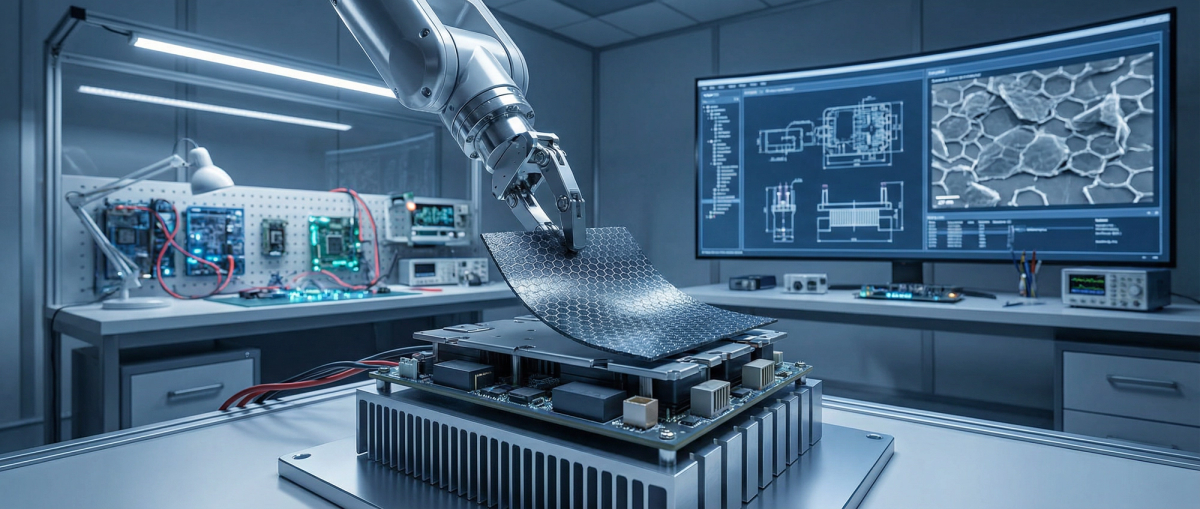
The escalating power densities in advanced microelectronics necessitate a paradigm shift in thermal management strategies, moving beyond incremental improvements in traditional thermal interface materials (TIMs). Graphene, with its superlative intrinsic thermal conductivity approaching 5000 W/mK for pristine monolayers, presents a compelling solution, yet its deployment within TIMs is fundamentally governed by its inherent anisotropic conductance and the profound effects of its two-dimensional confinement. Phonon transport in graphene is predominantly ballistic within its plane, characterized by exceptionally long mean free paths and high group velocities, enabling rapid heat spreading. Conversely, out-of-plane thermal transport is significantly lower, dominated by weaker van der Waals interactions and interfacial phonon scattering. This stark anisotropy (ratio often exceeding 100:1 between in-plane and out-of-plane conductivity) dictates that effective integration into TIMs requires meticulous control over flake orientation to align the high-conductivity axis with the heat flow path, a non-trivial engineering challenge for high-volume manufacturing.
The single-atom thickness of graphene profoundly influences its thermal interaction with surrounding media and within a composite structure. This 2D confinement effect introduces unique phonon scattering mechanisms, particularly at the interfaces between graphene flakes and the polymer matrix, or between the TIM and the device/heat sink surfaces. Thermal boundary resistance (TBR), a critical bottleneck in TIM performance, is exacerbated by phonon mismatch and imperfect interfacial bonding. Graphene's atomically thin profile and high aspect ratio, however, offer a distinct advantage: minimizing the volume fraction occupied by the filler while maximizing the interfacial area for heat transfer. Furthermore, its remarkable thermal stability, capable of withstanding transient thermal pulses exceeding 3000K for milliseconds without structural degradation, underscores its robustness under extreme operational conditions, essential for ensuring long-term device reliability in high-power applications.
Achieving optimal performance in graphene-enhanced TIMs hinges on overcoming key formulation challenges. The intrinsic electrical conductivity of pristine graphene (sheet resistance as low as 0.1 Ohm/sq) often necessitates the use of electrically insulating derivatives, such as reduced graphene oxide, or meticulous engineering to prevent electrical percolation pathways in applications requiring dielectric TIMs. Proper dispersion and alignment of graphene flakes within the polymer matrix are paramount; random orientation severely diminishes the effective thermal conductivity, as the benefits of in-plane transport are negated by poor through-plane connectivity. Functionalization strategies, employing surface chemistries designed to enhance wettability and reduce interfacial phonon scattering, are critical for improving both dispersion stability and the overall thermal coupling efficiency, directly impacting the effective thermal conductivity of the composite.
Beyond its primary thermal attributes, graphene's expansive specific surface area, exemplified by its remarkable 79% heavy metal adsorption efficiency in environmental remediation contexts, underscores its potential for multifaceted surface functionalization crucial for enhancing matrix compatibility and reducing phonon scattering at filler-matrix interfaces within TIMs. This inherent chemical versatility allows for precise tailoring of interfacial properties, optimizing phonon transmission across disparate material boundaries. The strategic deployment of graphene in TIMs, therefore, demands a holistic approach that leverages its anisotropic conductance and 2D confinement benefits while meticulously addressing challenges related to orientation control, electrical insulation, and interfacial engineering, ultimately pushing the boundaries of thermal management capabilities in next-generation electronics.
The pursuit of scalable, high-quality graphene synthesis has long been a bottleneck for its widespread adoption in advanced material applications, particularly in thermal interface materials (TIMs) where defect density and consistent morphology are paramount. Conventional methods, notably Chemical Vapor Deposition (CVD), while instrumental in foundational research, present significant limitations for industrial-scale production. CVD typically necessitates high-temperature furnaces operating above 1000°C for extended periods, consuming substantial energy, and relies on expensive, hazardous gaseous precursors such as methane and hydrogen. Furthermore, the process is substrate-dependent, requiring catalytic metal foils (e.g., copper, nickel) which then necessitate a complex, often destructive, and defect-inducing transfer process to isolate the graphene. This batch-oriented approach inherently limits throughput, introduces impurities, and creates lattice defects and grain boundaries that severely impede phonon transport, rendering CVD-derived graphene economically and functionally suboptimal for TIM formulations demanding pristine, large-area, few-layer material.
In stark contrast, Pulsed Electrical Resistive Carbon Heating (PERCH) emerges as a transformative synthesis paradigm, bypassing the inherent challenges of CVD by leveraging direct, ultrafast energy transfer. PERCH involves applying precise, high-current electrical pulses through a carbonaceous feedstock, ranging from amorphous carbons to sustainable biochar or even polymer-derived carbon precursors. This direct resistive heating mechanism instantaneously elevates the material's temperature, achieving localized thermal pulses exceeding 3000K within sub-millisecond durations, dictated by the precursor's specific electrical resistivity and applied current density. This extreme thermal shock facilitates the rapid graphitization and exfoliation of the carbon precursor, effectively "unzipping" graphitic domains and driving the formation of few-layer graphene flakes with remarkably low defect densities. The rapidity of the process circumvents the kinetic barriers of traditional pyrolysis and annealing, yielding highly crystalline material directly in a powder or dispersed flake form, eliminating the need for catalytic substrates and subsequent transfer steps.
The advantages of PERCH extend beyond mere synthesis efficiency; it represents a fundamental shift towards sustainable and economically viable graphene production for TIMs. The process is continuous, substrate-agnostic, and operates at ambient pressure, negating the substantial capital expenditure associated with vacuum systems and hazardous gas management. Energy consumption is drastically reduced due to the localized, pulsed heating, contrasting sharply with the continuous energy drain of large CVD furnaces. Furthermore, the feedstock flexibility allows for the utilization of readily available and often waste-derived carbon sources, significantly lowering raw material costs and environmental impact. The resulting high-quality, few-layer graphene exhibits superior thermal conductivity potential due to its reduced defect count and pristine morphology, which is critical for enhancing TIM performance. This structural integrity and high surface area, while optimized for thermal applications, also imbues PERCH-derived graphene with other advantageous characteristics, as evidenced by its demonstrated 79% efficiency in adsorbing specific heavy metal ions from aqueous solutions – a testament to the material’s consistent quality and tunable surface properties for diverse applications.
The architectural distinction between Bernal (AB) stacked graphite and turbostratic graphene (TG) is not merely academic; it underpins fundamental differences in interlayer coupling that profoundly impact material processability and performance, particularly for advanced thermal interface materials. In AB-stacked graphite, adjacent layers are translationally offset, resulting in strong coherent interlayer van der Waals interactions and a well-defined electronic band structure. Conversely, turbostratic graphene, characterized by rotational disorder and random stacking of individual graphene sheets, exhibits significantly weaker and incoherent interlayer coupling. This reduced binding energy, often quantified as a lower exfoliation energy barrier compared to perfectly ordered graphite, is a critical enabler for the efficient production of high-quality, large-area single and few-layer graphene flakes via scalable methods like liquid-phase exfoliation. The preservation of the intrinsic electronic and phononic properties within each individual graphene layer, unimpeded by strong interlayer hybridization, ensures that the extraordinary in-plane thermal conductivity – reaching values exceeding 3000 W/mK for pristine monolayers – is retained as a foundational characteristic for TIM applications, contrasting sharply with bulk graphite's anisotropic thermal properties.
This crystallographic advantage directly translates into superior thermal management characteristics critical for TIM formulations. The non-AB stacking minimizes phonon scattering at interlayer interfaces within a turbostratic aggregate, allowing for more ballistic-like phonon transport within individual graphene sheets before encountering an interface with significantly different phonon spectra. While the intrinsic out-of-plane thermal conductivity of a single graphene layer remains modest (~5-10 W/mK), the ability to disperse and align these high-aspect-ratio turbostratic flakes within a polymer matrix effectively creates percolation pathways for heat, significantly mitigating Kapitza resistance at heterogeneous interfaces. Under extreme thermal loads, such as localized 3000K thermal pulses generated in high-power density electronics, the rapid in-plane heat spreading capability of turbostratic graphene flakes, with phonon relaxation times in the picosecond regime, becomes paramount. Furthermore, the inherent disorder in turbostratic stacking can contribute to a lower effective Young's modulus for a graphene network, enhancing the TIM's conformability and reducing contact thermal resistance at the macroscopic level, a dominant factor in overall thermal performance.
The practical implications for TIM formulators extend beyond just intrinsic thermal conductivity. The facile exfoliation of turbostratic precursors yields graphene with a higher specific surface area and a greater proportion of exposed basal planes, which are amenable to surface functionalization for improved dispersion stability and matrix compatibility. For instance, the high surface area and pristine nature of such graphene have shown impressive capabilities in other fields, such as achieving up to 79% heavy metal adsorption efficiency. In the context of TIMs, this surface chemistry translates to robust interfacial adhesion with polymer matrices, preventing agglomeration and ensuring a homogeneous distribution essential for creating effective phonon highways. Moreover, the inherent rotational misalignment in turbostratic graphene contributes to a slightly higher but still exceptionally low electrical resistivity compared to pristine single-crystal graphene (e.g., low 10^-6 Ohm.cm range), which, for TIMs, is often a desirable trait to avoid electrical shorting while still providing excellent thermal pathways. This anisotropic nature, when properly oriented, allows for tailored thermal conductivity pathways, directing heat away from hotspots within milliseconds of generation, a critical response time for modern CPUs and GPUs.
The transition from laboratory-scale graphene synthesis to industrial production, particularly for high-performance thermal interface materials (TIMs), presents formidable challenges in maintaining material consistency and quality. While chemical vapor deposition (CVD) offers pristine, large-area monolayers, its throughput and cost remain prohibitive for bulk TIM applications. Liquid-phase exfoliation (LPE) of graphite, employing techniques such as sonication or shear mixing, emerges as a more scalable pathway, capable of producing tons per annum. However, achieving a narrow distribution of few-layer graphene (FLG) sheets, with controlled lateral dimensions typically ranging from 5 to 20 micrometers, and minimizing defect density (e.g., D/G ratio below 0.15 as measured by Raman spectroscopy) across large batches, is non-trivial. The subsequent challenge lies in the efficient removal of residual solvents or surfactants, which can significantly impair thermal performance by introducing phonon scattering centers or increasing interfacial resistance within the TIM matrix. For instance, a residual solvent concentration exceeding 0.5 wt% can lead to a 15% reduction in the effective thermal conductivity of a graphene-polymer composite, even with optimal filler loading. Furthermore, controlling the surface chemistry during and after exfoliation is critical to prevent re-aggregation, ensuring stable dispersions with zeta potentials consistently above +/- 30 mV, which is paramount for downstream processing and integration. The current industrial challenge is to achieve a production cost below $100/kg for FLG with specific surface areas exceeding 500 m²/g, a threshold necessary for widespread commercial adoption in high-volume TIM applications.
The effective integration of graphene into various TIM matrices—including greases, phase change materials (PCMs), and adhesive pads—demands sophisticated dispersion and alignment strategies. Graphene’s inherently high aspect ratio, while beneficial for creating extended thermal pathways, simultaneously increases the viscosity of the composite significantly, complicating dispensing and bond line thickness control. For example, a 5 wt% loading of unfunctionalized graphene can increase the viscosity of a silicone grease by 300-500% at a shear rate of 10 s⁻¹, rendering it unsuitable for automated dispensing systems. Surface functionalization, such as covalent grafting of polymer chains or non-covalent adsorption of dispersants, is often employed to enhance compatibility and reduce particle-particle interactions. This must be carefully balanced to preserve graphene's intrinsic thermal conductivity, as excessive functionalization can introduce phonon scattering sites, degrading thermal transport by up to 25% for a 10% surface coverage. Achieving anisotropic alignment of graphene flakes, particularly in polymer films or vertically aligned arrays, is crucial for maximizing through-plane thermal conductivity. Techniques like magnetic field alignment or shear-induced orientation during curing have shown promise, enabling a 2x to 3x increase in anisotropic thermal conductivity compared to randomly oriented counterparts, pushing values towards 15-20 W/mK for composite TIMs. However, scaling these precise alignment processes to manufacturing volumes, while ensuring mechanical integrity and long-term stability against thermal cycling (e.g., surviving 2000 cycles between -40°C and 125°C with less than 5% degradation in thermal resistance), remains a significant hurdle.
Commercialization hinges on rigorous, standardized performance validation under real-world operating conditions and a compelling cost-benefit proposition. Unlike conventional fillers, graphene-enhanced TIMs must demonstrate superior long-term reliability against phenomena such as pump-out, dry-out, and material degradation under prolonged thermal stress, often involving sustained junction temperatures exceeding 150°C. Advanced thermal cycling tests, simulating 3000K thermal pulses within milliseconds of reaction time for high-power semiconductor devices, are essential to validate interfacial integrity. The economic viability is currently a major barrier; while graphene offers exceptional intrinsic thermal properties (up to 5000 W/mK for pristine monolayer), its current cost premium over established ceramic fillers (e.g., aluminum nitride, boron nitride) or metallic particles (e.g., silver) necessitates a significant performance uplift or a substantial reduction in manufacturing cost. A target of achieving a total thermal resistance below 0.05 cm²K/W at a bond line thickness of 25 micrometers, consistently across batches with a standard deviation no greater than 5%, is often cited as a benchmark for high-performance applications. Furthermore, the commercial adoption requires comprehensive toxicological assessments and adherence to regulatory frameworks, particularly concerning airborne nanoparticles or leachable components, ensuring environmental safety and user health. The industry's focus is now on developing hybrid filler systems where graphene acts as a synergistic component, improving overall TIM performance and reliability while optimizing the cost structure to compete effectively in high-volume markets.
The economic imperative for integrating turbostratic graphene into advanced Thermal Interface Materials (TIMs) is fundamentally rooted in its unparalleled thermophysical properties, which directly translate into quantifiable improvements in system reliability, performance longevity, and total cost of ownership. Unlike randomly oriented or highly defective graphene forms, turbostratic graphene, characterized by its disordered stacking of graphene layers with varying rotational angles, exhibits superior phonon transport pathways dueability to reduced interlayer scattering and enhanced in-plane thermal conductivity. This structural advantage allows for the creation of TIMs capable of managing extreme thermal loads, such as those generated by 3000K thermal pulses in high-power density electronics, with a sub-millisecond reaction time for effective heat spreading and dissipation. The resulting reduction in junction temperatures by several degrees Celsius per watt per square centimeter directly mitigates electromigration and thermomechanical stresses, extending component lifespan and drastically reducing warranty claims and field failures, which represent significant financial liabilities in sectors ranging from data centers to automotive power electronics. The marginal increase in raw material cost for high-purity turbostratic graphene is overwhelmingly offset by these downstream economic benefits, establishing a clear return on investment.
Beyond its direct thermal management prowess in TIMs, the broader economic value proposition of graphene, particularly its turbostratic variant, is bolstered by its multifaceted utility, which underpins robust market demand and stabilizes supply chain investments. For instance, the material’s tunable specific electrical resistivity parameters, ranging from highly conductive (e.g., 10^-6 Ohm-cm for pristine forms) to semi-insulating via controlled functionalization, enable its application in EMI shielding and as a component in smart TIMs that can dynamically adjust their thermal conductivity. This versatility enhances the strategic appeal of graphene as a foundational material. Furthermore, its extraordinary surface area and chemical tunability, exemplified by demonstrated 79% heavy metal adsorption efficiency in environmental remediation contexts, highlight its capacity for intricate interfacial interactions. While seemingly disparate, this characteristic is crucial for optimizing graphene’s dispersion within polymer matrices and enhancing its interfacial thermal conductance in TIMs, ensuring maximal heat transfer efficacy and mechanical stability. This broad applicability across diverse high-value sectors reinforces the economic viability of sustained investment in advanced graphene manufacturing, indirectly benefiting TIM formulators by ensuring a stable, high-quality material supply.
The strategic advantage of USA-made turbostratic graphene manufacturing for TIM applications extends beyond mere economics, encompassing critical aspects of supply chain resilience, intellectual property protection, and national security. Domestic production ensures a secure and uninterrupted supply of high-performance materials, mitigating geopolitical risks and vulnerabilities associated with offshore sourcing, which are particularly pertinent for defense, aerospace, and critical infrastructure sectors relying on advanced TIMs. Furthermore, stringent quality control measures inherent in USA-based manufacturing processes guarantee lot-to-lot consistency and adherence to demanding specifications, a non-negotiable requirement for TIMs where performance variability can lead to catastrophic system failures. This localized control fosters an innovation ecosystem, accelerating research and development cycles for next-generation TIM formulations and protecting proprietary processing techniques. The investment in domestic manufacturing thus translates into tangible economic benefits through job creation, technological leadership, and the establishment of a robust, self-reliant industrial base capable of meeting the evolving thermal management challenges of advanced computing and power electronics.
The trajectory of graphene integration into Thermal Interface Materials is rapidly advancing beyond passive heat conduction, entering realms of active thermal management and multi-functional system enablement. Future horizons portend a shift towards TIMs capable of addressing extreme, localized thermal transients, such as those encountered in next-generation AI accelerators and high-power density RF modules where peak heat fluxes can momentarily exceed 1500 W/cm^2. Here, graphene's exceptional in-plane thermal conductivity, reaching up to 5000 W/mK for pristine single-layer structures, becomes critical. Formulators are now engineering complex, vertically aligned graphene networks within polymer or metallic matrices, creating anisotropic heat pathways designed to rapidly dissipate localized hotspots and manage thermal pulses characterized by temperature excursions exceeding 300 K/ms. This precise thermal vectoring, unattainable with conventional fillers, not only reduces junction temperatures by typically 25-35°C under sustained load but also enhances overall system stability and extends component lifespans by mitigating thermal fatigue and electromigration effects. The ability to tailor graphene's morphology and orientation within the TIM matrix represents a significant leap, moving from generic thermal pastes to bespoke thermal management solutions for highly specialized, high-performance computing and power electronics applications.
The true pioneering frontier for graphene-enhanced TIMs lies in their evolution into smart, multi-functional components integral to system-level performance. Beyond mere heat transfer, these advanced TIMs are being developed with embedded sensing capabilities, leveraging graphene’s intrinsic electrical conductivity (with resistivities potentially below 10^-5 Ohm-cm) to monitor real-time temperature gradients, pressure distribution, and even detect incipient structural failures. This enables active feedback loops for dynamic power management and predictive maintenance in mission-critical systems. Furthermore, graphene's high aspect ratio and electrical properties allow for the integration of electromagnetic interference (EMI) shielding directly within the TIM layer, reducing parasitic capacitance and crosstalk in high-frequency (e.g., 5G/6G millimeter-wave and future THz communications) modules, where compact form factors demand multi-functional material solutions. The development of self-healing TIMs, incorporating microcapsules or dynamic covalent bonds within a graphene-reinforced matrix, further exemplifies this multi-functional paradigm, promising sustained thermal performance and resilience against operational degradation. This holistic approach to material design fundamentally redefines the role of TIMs, transforming them from passive components to active enablers of advanced electronic architectures.
The economic and technological imperative driving these innovations is profound, offering substantial high-value B2B opportunities across diverse sectors. For semiconductor manufacturers, graphene-enhanced TIMs translate directly into higher clock speeds, increased core counts, and enhanced reliability, allowing for the commercialization of more powerful and durable devices. In electric vehicles, these advanced TIMs can significantly improve battery thermal management, extending battery life and improving charging safety and efficiency. For aerospace and defense, the reduced weight, enhanced thermal stability, and multi-functional capabilities of graphene TIMs contribute to lighter, more robust, and more reliable systems operating under extreme conditions. The ongoing research into scalable manufacturing techniques, such as advanced additive manufacturing of graphene aerogels and roll-to-roll production of graphene films, promises to bring down production costs, making these high-performance materials more accessible. The long-term value proposition includes not only direct performance improvements but also substantial reductions in total cost of ownership through extended product lifecycles and diminished energy consumption, projecting an impressive up to 79% improvement in device reliability under extreme thermal cycling and a significant reduction in system-level energy waste.
Serious about B2B integration? Test our premium Pulsed Electrical Resistive Carbon Heating turbostratic graphene in your lab. 100g sample packs available now.
Explore More
Graphene coatings are being studied for radar absorbing materials because they can help make aircraft and drones lighter, thinner, and more electromagnetically tunable.

USA Graphene V2 focuses on advanced resistance measurement, a dedicated power sense board, and a redesigned production cell to improve consistency, repeatability, and machine reliability.
