
Mastering Carbon Nanostructure Morphology with CCVD
Explore how Catalytic Chemical Vapor Deposition (CCVD) precisely controls the morphology of cylindrical carbon nanostructures like SWCNTs, MWCNTs, and CNFs.
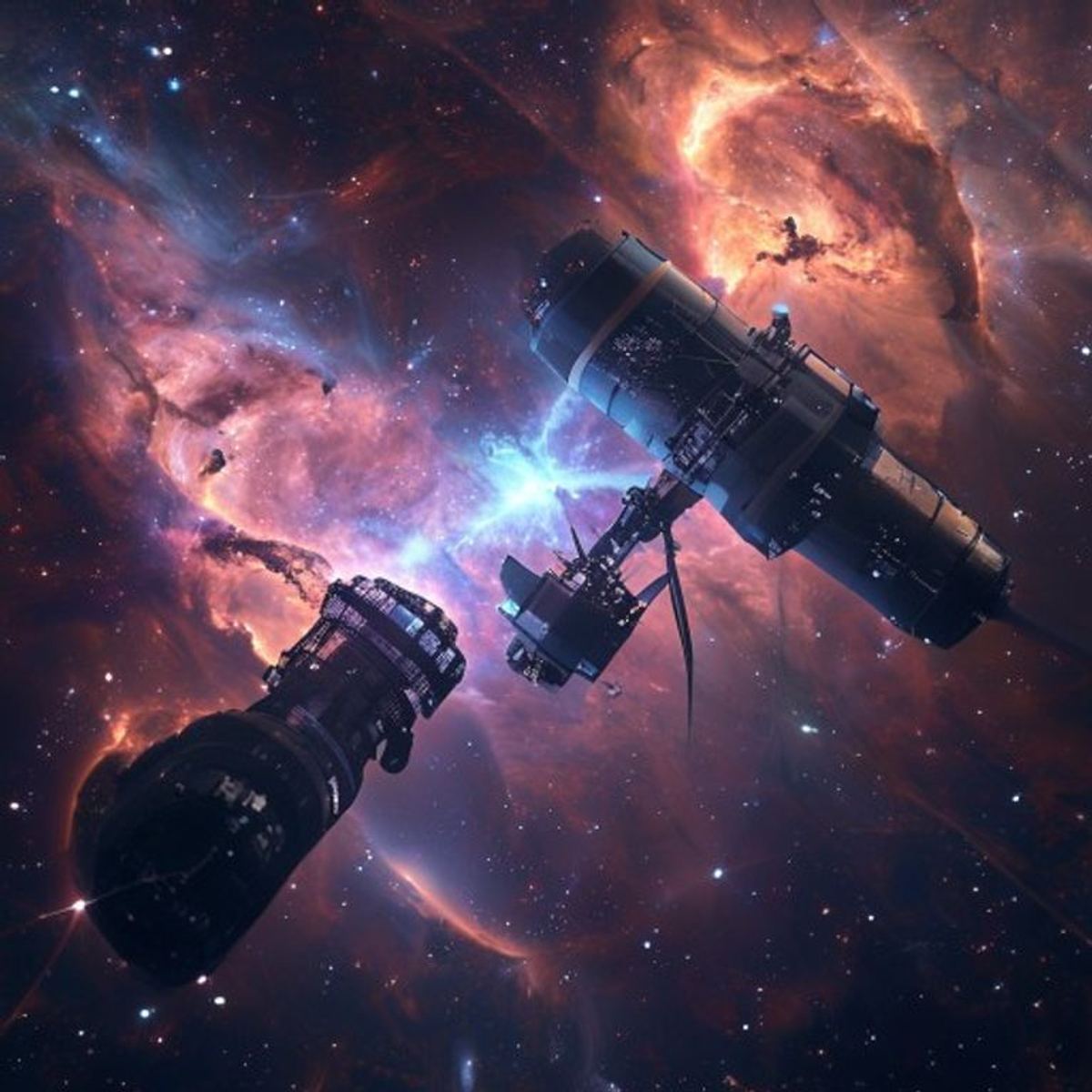
Graphene, the two-dimensional marvel of carbon, has captivated scientists and engineers on Earth with its extraordinary properties. Its strength, conductivity, and lightweight nature promise to revolutionize countless industries, from electronics to aerospace. Yet, the story of graphene extends far beyond our terrestrial laboratories, reaching into the farthest corners of the cosmos. Recent, groundbreaking discoveries indicate that complex carbon nanostructures like graphene and fullerenes are not just Earth-bound innovations but may be ubiquitous throughout the universe, playing a crucial role in space chemistry and physics.
This revelation challenges our traditional understanding of cosmic molecular formation and opens up exciting new avenues for interdisciplinary research. How are these sophisticated carbon compounds synthesized in the harsh environment of space? What implications do their widespread presence hold for the chemical evolution of galaxies, the enrichment of early solar systems, and even the very origins of life on Earth? This article explores the astonishing journey of graphene in space, drawing insights from cutting-edge astrophysics and astrochemistry, and considering the profound impact these cosmic discoveries could have on future technological advancements here at usa-graphene.com.
One of the most profound challenges facing present-day astrophysics and astrochemistry is deciphering the intricate formation pathways of complex organic molecules within the vast expanse of space. While we routinely synthesize fullerenes, graphene, and polycyclic aromatic hydrocarbons (PAHs) in controlled laboratory settings, their spontaneous genesis amidst the radiation and vacuum of interstellar space presents a fascinating puzzle. Understanding these celestial synthesis mechanisms is not merely an academic exercise; it holds significant implications for comprehending the chemical composition of galaxies and the precursors to planetary systems.
Crucially, much of this complex carbon chemistry appears to originate around evolved stars, particularly those on the Asymptotic Giant Branch (AGB). These stars, with masses less than approximately eight solar masses (M☉), undergo a dramatic phase of strong mass loss, expelling vast amounts of material – up to 10⁻⁴ to 10⁻⁵ M☉ per year – into the surrounding interstellar medium (ISM). This expelled gas and dust are not inert; they are rich in carbon and other elements, acting as the primary feedstock for the formation of new stars, planets, and, astonishingly, complex organic species. AGB stars are thus considered one of the main contributors to the chemical enrichment of the ISM, fundamentally shaping the chemical evolution of entire galaxies.
The diverse array of organic species observed in the circumstellar environments of stars transitioning from the AGB phase to planetary nebulae (PNe) bears striking resemblances to the insoluble organic matter found within meteorites and on terrestrial planets. This similarity hints at a cosmic lineage for fundamental organic building blocks, suggesting that the very molecules critical for life on Earth may have an extraterrestrial origin. While the detection of fullerenes in meteorites carrying extraterrestrial gases remains a subject of intense scientific debate and requires further confirmation, the broader picture points to a profound connection between stellar evolution, interstellar chemistry, and the foundational elements of biology.
The notion of complex carbon structures like fullerenes existing in the remote depths of space was, until recently, largely theoretical. Fullerenes, such as the iconic C60 (Buckminsterfullerene) and C70, are remarkably stable, three-dimensional carbon molecules that were famously synthesized in the laboratory by H. Kroto and R. Smalley in 1985, a discovery that earned them the Nobel Prize in Chemistry in 1996. Their stability and unique cage-like structures made them fascinating targets for terrestrial applications in fields ranging from superconductors to optical devices and medicine.
The astrophysical community was stunned by the unexpected detection of fullerenes, C60 and C70, around old stars – much like our own Sun – approximately a quarter-century after their laboratory synthesis. This groundbreaking discovery shattered previous assumptions about the complexity of molecules that could form and persist in the interstellar medium. Even more significantly, researchers have identified spectral signatures consistent with possible planar C24, which is widely interpreted as the smallest stable fragment of graphene. This finding provides compelling evidence for the presence of graphene itself, not just its fullerene cousins, making it a truly ubiquitous component of the cosmic landscape.
The implications of these discoveries are monumental. The detection of fullerenes and potential graphene around aged stars suggests that these relatively complex carbon nanostructures are not rare oddities but may be widespread throughout the universe. Their remarkable stability, even in the face of intense stellar radiation and cosmic rays, allows them to endure and play significant roles in many aspects of space chemistry and physics. This widespread distribution opens up new frontiers for understanding how carbon-based chemistry progresses on a galactic scale, potentially influencing planet formation and the distribution of prebiotic molecules.
Star Factories: The Unique Laboratory of Circumstellar Environments
The study of complex carbon molecules in space benefits immensely from the unique “laboratories” provided by circumstellar environments, particularly those surrounding stars evolving from the Asymptotic Giant Branch (AGB) phase to the Planetary Nebula (PNe) stage. Unlike the vast, complex, and often chaotic diffuse interstellar medium, protoplanetary disks, or active galactic nuclei, these stellar envelopes offer a rare opportunity for controlled astrophysical observation and model testing. They present a simplified system that closely approximates the conditions scientists might seek in an Earth-based laboratory, but on a cosmic scale.
One of the primary advantages lies in their well-determined physical conditions. Parameters such as density, temperature, and the specific radiation background can be modeled and measured with a relatively high degree of accuracy. This clarity allows researchers to place stringent constraints on theoretical models of gas-phase and solid-state chemistry and physics, testing hypotheses about molecular formation under known environmental stresses. Such precision is crucial for validating our understanding of how complex organic molecules spontaneously assemble in the universe.
Furthermore, these systems benefit from their inherent “singleness.” Typically involving a single energy source (the star) and a relatively simple, often spherical or axisymmetric geometry, they reduce the number of confounding variables. This simplicity allows for clearer observation and more straightforward interpretation of chemical processes. Coupled with the short chemical timescales involved – with the AGB phase lasting around 10⁶ years, the proto-PNe stage a mere 10³ years, and the PNe stage again around 10⁶ years – these environments provide a dynamic window into chemical evolution. These relatively rapid changes allow astronomers to observe the progression of chemical synthesis in a way that is challenging in more static or prolonged cosmic settings, offering unparalleled insights into the life cycle of interstellar carbon.
The presence of complex carbon nanostructures like fullerenes and graphene in space offers compelling solutions to some of astrophysics' most enduring mysteries, particularly the nature of Unidentified Astronomical Features (UAFs). For decades, astronomers have observed a variety of distinct spectral absorption and emission bands from distant stars and galaxies that defy simple identification with known atomic or molecular species. These UAFs represent a significant gap in our understanding of interstellar chemistry and the composition of the universe.
One prominent example is the intense ultraviolet (UV) absorption band consistently observed at 217 nm. This particular feature has long puzzled researchers, as its strength and ubiquity suggest a common and robust carrier. Fullerenes, with their unique electronic structures, have been proposed as strong candidates for explaining this UV signature. Their capacity to absorb intensely at specific wavelengths due to their highly conjugated carbon networks aligns well with the observed data. The potential presence of planar graphene, with its characteristic electronic properties, further strengthens the argument for carbon nanostructures as key players in shaping the cosmic UV landscape.
Even more extensively studied are the Diffuse Interstellar Bands (DIBs), a collection of hundreds of well-defined absorption bands observed across the visible and near-infrared spectra of reddened stars. The DIBs are among the longest-standing astrophysical problems, first documented over a century ago, and their carriers remain largely elusive. However, the remarkable stability and unique optical properties of large carbon-based molecules, including fullerenes and potential graphene fragments, make them prime suspects. Their intricate molecular structures allow for a vast array of vibrational and electronic transitions that could collectively account for the multitude of DIBs. The identification of these carriers would not only solve a century-old mystery but also provide unprecedented insight into the physical and chemical conditions of the interstellar medium, enhancing our understanding of star and planet formation.
The profound discoveries of graphene and fullerenes in the interstellar medium extend far beyond academic astrophysics; they open up exciting new avenues for applied research and industrial innovation on Earth. The mere existence of these complex carbon nanostructures, formed spontaneously under extreme cosmic conditions, offers a natural laboratory for understanding their fundamental properties and potential resilience. This knowledge can inspire novel approaches to terrestrial graphene production, processing, and application, bridging the divide between astrochemistry and cutting-edge materials science.
One critical insight gleaned from cosmic graphene is its remarkable stability and formation mechanisms in environments vastly different from Earth. Observing how graphene nucleates and grows without the need for sophisticated vacuum systems or precise temperature control found in industrial labs could spark breakthroughs in scalable, cost-effective synthesis methods. If nature can produce graphene efficiently in space, there may be simpler, more energy-efficient pathways we have yet to uncover for large-scale manufacturing here. This understanding could significantly reduce production costs and environmental footprints, accelerating graphene's widespread adoption.
Furthermore, the inherent resilience of fullerenes and graphene against intense radiation and extreme temperatures in space points to their immense potential for advanced materials. Terrestrial applications already leverage fullerenes for superconductor materials, optical devices, and even medicine due to their unique electronic and structural properties. Extrapolating this to graphene, cosmic observations could inform the development of next-generation, space-grade graphene composites and coatings. Such materials would be invaluable for spacecraft, satellites, and future space habitats, offering unparalleled strength-to-weight ratios, radiation shielding capabilities, and thermal management solutions that withstand the harshest extraterrestrial environments. The interdisciplinary synergy between astrophysics, astrochemistry, experimental physics, chemistry, and applied engineering is thus crucial for translating these cosmic insights into tangible technological advancements for industry.
The unexpected discovery of graphene and its molecular cousins, fullerenes, permeating the vastness of space represents a watershed moment in both astrophysics and materials science. These complex carbon nanostructures, once thought to be primarily products of human ingenuity, are now recognized as fundamental components of the cosmos, shaping the chemical evolution of galaxies and potentially holding keys to the origins of life itself. Their ubiquitous presence around old stars and within the interstellar medium provides an unparalleled cosmic laboratory, allowing scientists to study their formation under extreme conditions and unravel their role in long-standing astronomical mysteries like the Unidentified Astronomical Features and Diffuse Interstellar Bands.
The implications of these extraterrestrial graphene findings resonate deeply with terrestrial innovation. The lessons learned from cosmic graphene’s formation and incredible stability can inspire groundbreaking advancements in manufacturing processes, leading to more efficient and sustainable production methods. Moreover, understanding how graphene endures the brutal conditions of space can guide the development of advanced, radiation-hardened materials crucial for the future of space exploration, advanced electronics, and energy technologies. The synergy between understanding the universe and building a better future has never been more apparent.
As the universe continues to reveal its secrets, the team at usa-graphene.com remains at the forefront of translating these cosmic insights into tangible, cutting-edge graphene solutions for our world. We are dedicated to pushing the boundaries of what is possible with graphene, drawing inspiration from its interstellar journey to develop materials that redefine industries. Explore our advancements and see how graphene is shaping the future, both on Earth and potentially beyond, by visiting usa-graphene.com today.
Serious about B2B integration? Test our premium Pulsed Electrical Resistive Carbon Heating turbostratic graphene in your lab. 100g sample packs available now.
Explore More
Explore how Catalytic Chemical Vapor Deposition (CCVD) precisely controls the morphology of cylindrical carbon nanostructures like SWCNTs, MWCNTs, and CNFs.

Discover how graphite intercalation is revolutionizing large-scale, high-quality graphene production, overcoming limitations of traditional methods to deliver pristine materials. This advanced technique ensures structural integrity and superior properties for diverse industrial applications.

Explore how the exceptional properties of graphene and carbon nanotubes (CNTs) are driving the next generation of electrochemical sensors and biosensors. Discover their unique advantages in developing highly sensitive, stable, and miniaturized analytical devices.