
Graphene Radar Absorbing Materials for Aircraft and Drones
Graphene coatings are being studied for radar absorbing materials because they can help make aircraft and drones lighter, thinner, and more electromagnetically tunable.
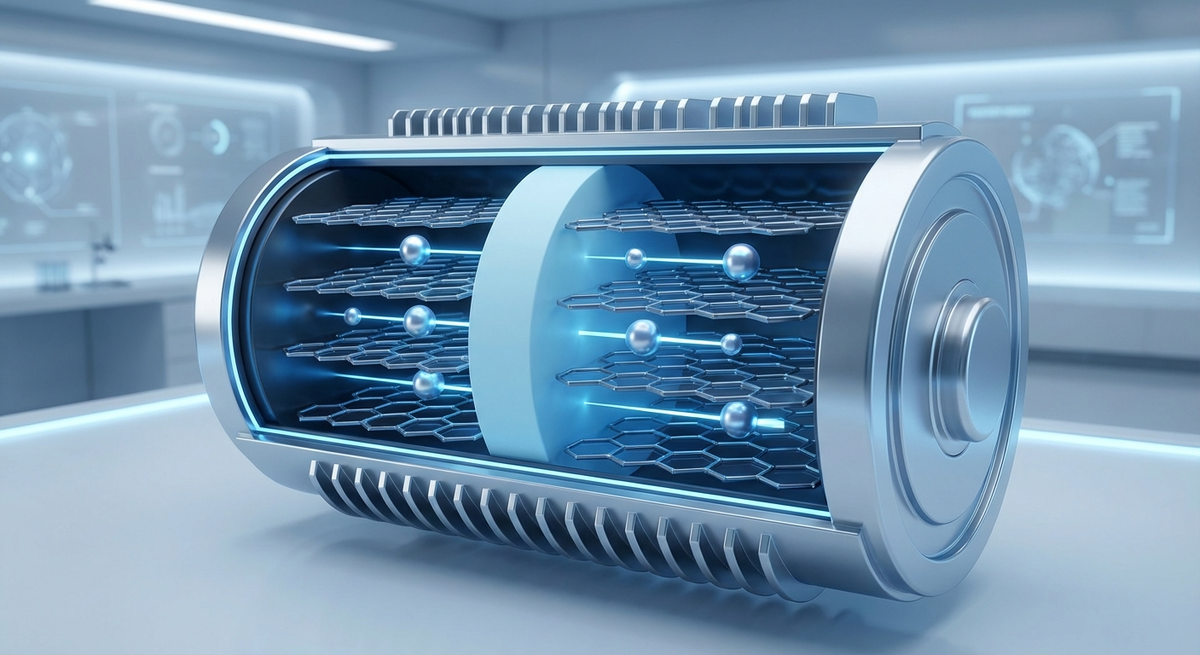
The battery industry is entering a period where chemistry diversification is no longer optional. Lithium-ion remains dominant, but supply risk, cost volatility, and strategic demand growth are pushing the market toward alternatives that can be manufactured at scale with stable raw-material access. Sodium is one of the most credible candidates because it is abundant, geographically distributed, and compatible with many existing electrochemical manufacturing concepts. At the same time, conventional liquid-electrolyte sodium-ion cells still face limitations in safety, cycle life, and high-voltage stability for demanding use cases. This is why solid-state sodium batteries are receiving rising attention. Solid-state sodium batteries replace flammable liquid electrolytes with solid ionic conductors, opening the door to safer operation, improved thermal robustness, and potentially higher energy density depending on architecture. But moving from concept to real product requires solving difficult interfacial and transport challenges. This is where graphene and graphene-derived materials can provide practical value. Graphene is not a miracle additive that solves every battery problem. Its real strength is as a tunable engineering tool: a highly conductive, high-surface-area, mechanically robust 2D material that can improve interfaces, stabilize microstructures, and enable faster electron and ion pathways when integrated correctly. Why sodium and why solid state now Sodium-based systems offer a strategic advantage in raw material economics and supply resilience. Sodium salts are less constrained than lithium resources, which makes them attractive for stationary storage, grid balancing, and eventually broader mobility segments where cost-per-kWh and durability are critical. However, sodium ions are larger than lithium ions, which can penalize diffusion kinetics in some host structures. Solid-state systems must therefore be engineered with careful attention to interfacial impedance, structural integrity, and ion transport pathways, all areas where advanced materials like graphene can provide decisive advantages.
The drive towards solid-state sodium batteries is fundamentally about addressing the intrinsic limitations of their liquid-electrolyte predecessors while leveraging sodium's inherent advantages. A primary hurdle for all solid-state battery chemistries is the high interfacial impedance that forms between the solid electrolyte and the solid electrodes. Unlike liquid electrolytes that can intimately wet electrode surfaces, solid-solid interfaces are prone to poor contact, leading to localized charge transfer bottlenecks and reduced power density. This challenge is compounded by the larger ionic radius of sodium compared to lithium, which necessitates more open host structures and efficient pathways to maintain acceptable diffusion kinetics.
The safety implications of liquid electrolytes, particularly flammability and thermal runaway, are also a major concern that solid-state designs directly mitigate. Replacing these with non-flammable solid ionic conductors inherently improves thermal robustness and operational safety, making these batteries suitable for applications where reliability is paramount. However, achieving high performance and long cycle life in solid-state sodium systems requires meticulous engineering of every component. This includes optimizing the ionic conductivity of the solid electrolyte, ensuring mechanical compatibility at interfaces to prevent delamination or cracking, and stabilizing electrode materials against repeated sodiation/desodiation cycles. Graphene’s unique properties position it as a critical enabler in overcoming these sophisticated materials science and engineering challenges.
The interface between the solid electrolyte and electrode materials is the Achilles' heel of many solid-state battery designs, and it is precisely here that graphene offers transformative solutions. High interfacial resistance arises from poor physical contact, chemical incompatibility, and the formation of resistive interlayers. Graphene’s high electrical conductivity and mechanical flexibility make it an ideal interfacial layer. When integrated as a thin film or coating, it can significantly reduce charge transfer resistance by providing a highly conductive electronic pathway across the interface, ensuring uniform current distribution.
Furthermore, graphene’s exceptional mechanical strength and flexibility allow it to conform to irregular electrode surfaces, improving physical contact and mitigating the effects of volume changes during cycling. This acts as a protective buffer, preventing the formation of voids or cracks that would otherwise disrupt ion flow and increase impedance. Researchers are exploring various graphene forms, from pristine graphene sheets to functionalized graphene oxide (GO) interlayers, which can be reduced in situ to highly conductive reduced graphene oxide (rGO). These graphene-based interlayers can also possess specific surface functionalities that enhance compatibility with both the solid electrolyte and electrode materials, forming a stable, low-resistance bridge for efficient ion and electron transport.
Beyond the critical interfacial layer, graphene plays a profound role in enhancing the performance and stability of both anode and cathode materials within solid-state sodium batteries. For the anode, especially when considering a sodium metal anode for maximum energy density, dendrite formation is a persistent safety and cycle life concern. Graphene can act as a uniform current collector and a stable host for sodium deposition. By engineering 3D graphene scaffolds or incorporating graphene sheets into the anode, researchers can guide the uniform plating of sodium ions, suppressing dendrite growth and ensuring a stable, long-lasting anode. This improved stability directly translates to safer operation and extended battery lifespan, unlocking the potential of high-energy-density sodium metal anodes.
On the cathode side, active materials such as Prussian blue analogs, layered transition metal oxides, or polyanionic compounds often suffer from poor electronic conductivity and structural degradation during repeated sodiation and desodiation. Graphene's high electrical conductivity can be leveraged to create conductive networks throughout the cathode composite, dramatically improving electron transport to the active material particles. This is crucial for maximizing material utilization and power capability. Additionally, graphene's mechanical robustness helps to buffer the volume changes experienced by cathode materials, preventing pulverization and maintaining structural integrity over many cycles. By encapsulating or integrating active materials within graphene frameworks, it is possible to create high-performance, stable cathodes that can withstand the demands of solid-state operation.
The unique properties of graphene not only improve individual battery components but also enable entirely new approaches to cell architecture in solid-state sodium batteries. Its two-dimensional nature and high aspect ratio make it an ideal candidate for creating thin, flexible, and high-performance cells. For example, solid-state flexible batteries can be realized by incorporating graphene into polymer electrolytes or as current collectors, allowing for novel form factors suitable for wearables and implantable devices. This flexibility extends to manufacturing, where graphene can be processed into films or coatings compatible with roll-to-roll production.
Furthermore, graphene can facilitate the development of advanced three-dimensional (3D) electrode architectures. Graphene foams or aerogels provide highly porous, interconnected conductive frameworks that can be infiltrated with solid electrolytes and active materials. This significantly increases the active surface area for electrochemical reactions while minimizing diffusion distances for sodium ions in the solid state. Such 3D structures can lead to higher power densities and improved rate capabilities compared to conventional planar designs. For microbatteries, graphene’s ability to create ultra-thin, highly conductive layers is essential for miniaturization and integration into complex electronic systems, paving the way for compact, high-performance solid-state sodium power sources.
The transition of graphene-enabled solid-state sodium batteries from laboratory success to commercial reality hinges on scalable manufacturing and economic viability. Significant advancements in graphene production techniques, such as chemical vapor deposition (CVD) for high-quality films and liquid-phase exfoliation for bulk powders, are steadily reducing costs and improving consistency. Integrating graphene into existing battery manufacturing processes, like slurry mixing, coating, and pressing, is increasingly feasible. The performance enhancements provided by graphene – including improved safety, longer cycle life, and potentially higher energy density – offer a strong value proposition that can offset its cost.
From an economic perspective, sodium's abundance and low cost compared to lithium provide a fundamental advantage. By extending battery lifespan and enhancing safety, graphene contributes to a lower total cost of ownership for solid-state sodium batteries, making them more attractive for large-scale applications like grid storage. The ability to utilize widely available raw materials and leverage scalable graphene production methods positions this technology for broad market adoption. As the demand for sustainable and cost-effective energy storage grows, the economic argument for graphene-enabled solid-state sodium batteries becomes increasingly compelling, supporting pathways for widespread implementation across various sectors, from stationary storage to electric mobility.
While graphene offers compelling solutions for many challenges in solid-state sodium batteries, the journey from advanced material to ubiquitous product still involves significant research and development. One primary hurdle remains the consistent and cost-effective production of high-quality graphene materials tailored for specific battery applications at industrial scales. Ensuring the long-term stability of graphene-integrated interfaces, especially under extreme temperatures or high current densities, requires further investigation. The manufacturing complexity of all-solid-state cells, which demands precise control over interface formation and material deposition, also presents an ongoing engineering challenge.
Future research will likely focus on developing novel functionalized graphene derivatives that offer even greater compatibility with diverse solid electrolyte and electrode chemistries. Advancements in in-situ characterization techniques will be crucial for understanding the complex interfacial phenomena and optimizing graphene's role in real-time. The integration of artificial intelligence and machine learning in materials design and process optimization could accelerate the discovery of new graphene-based architectures. The outlook for graphene in solid-state sodium batteries is exceedingly positive; as these challenges are systematically addressed, graphene will solidify its position as an indispensable enabling technology, driving the next generation of safe, high-performance, and sustainable energy storage solutions.
Q1: Why is graphene particularly important for solid-state sodium batteries compared to liquid-electrolyte ones?
A1: Graphene's importance is amplified in solid-state systems because it directly addresses the critical challenge of high interfacial impedance between solid components. Liquid electrolytes naturally provide intimate contact, but solid-solid interfaces require advanced materials like graphene to create highly conductive, mechanically stable, and compatible pathways for efficient ion and electron transfer, which is not as critical in liquid systems.
Q2: What are the main challenges graphene helps solve in solid-state sodium cells?
A2: Graphene helps solve several core challenges. It reduces interfacial resistance, improves mechanical contact between solid electrolytes and electrodes, suppresses sodium dendrite formation on anodes, enhances electronic conductivity within electrode active materials, and provides structural stability to mitigate volume changes during cycling.
Q3: Is graphene expensive to integrate into batteries, potentially hindering commercialization?
A3: The cost of graphene production has significantly decreased with advancements in manufacturing techniques. While high-quality graphene still adds to the overall cost, the performance benefits it provides—such as enhanced safety, longer cycle life, and improved energy/power density—can justify the investment, leading to a lower total cost of ownership. Furthermore, graphene integration can be compatible with existing battery manufacturing processes, aiding scale-up.
Q4: Can graphene truly prevent dendrites in sodium metal anodes?
A4: Graphene shows significant promise in mitigating sodium dendrite formation. By acting as a stable, highly conductive scaffold or coating layer, graphene can guide the uniform deposition of sodium ions, preventing localized growth that leads to dendrites. This improves both the safety and cycle life of sodium metal anodes, which are crucial for high-energy-density solid-state sodium batteries.
Q5: What types of graphene materials are most relevant for this application?
A5: Various forms of graphene are relevant. Pristine graphene sheets offer high conductivity and mechanical strength, suitable for interlayers or current collectors. Reduced graphene oxide (rGO) is widely used due to its scalable production from graphene oxide (GO) and its tunable surface chemistry. Three-dimensional graphene structures like foams or aerogels are also critical for creating high-surface-area, conductive frameworks within electrodes.
The strategic shift to sodium-based battery chemistries is a critical development for a sustainable energy future, driven by resource availability and cost stability. Solid-state technology further refines this pathway by addressing inherent safety and performance limitations of liquid electrolytes. At the heart of unlocking the full potential of solid-state sodium batteries lies advanced materials engineering, and here, graphene emerges as an indispensable enabling technology. Its unique combination of exceptional electrical conductivity, mechanical robustness, and high surface area allows it to serve as a multifaceted tool, improving critical interfaces, stabilizing electrode microstructures, and enabling novel cell architectures. As research and manufacturing scale, graphene-enabled solid-state sodium batteries are poised to deliver a new generation of safe, durable, and cost-effective energy storage solutions, fundamentally transforming how we power our world.
Serious about B2B integration? Test our premium Pulsed Electrical Resistive Carbon Heating turbostratic graphene in your lab. 100g sample packs available now.
Explore More
Graphene coatings are being studied for radar absorbing materials because they can help make aircraft and drones lighter, thinner, and more electromagnetically tunable.

USA Graphene V2 focuses on advanced resistance measurement, a dedicated power sense board, and a redesigned production cell to improve consistency, repeatability, and machine reliability.

A new Science paper shows how phase-change memristor hardware can run neural dynamical systems in milliseconds. Here is why graphene and 2D materials matter for the future of physics-driven computing.