applications
Graphene in Solid-State Sodium Batteries: Materials Engineering, Cell Architecture, and Scale-Up Pathways
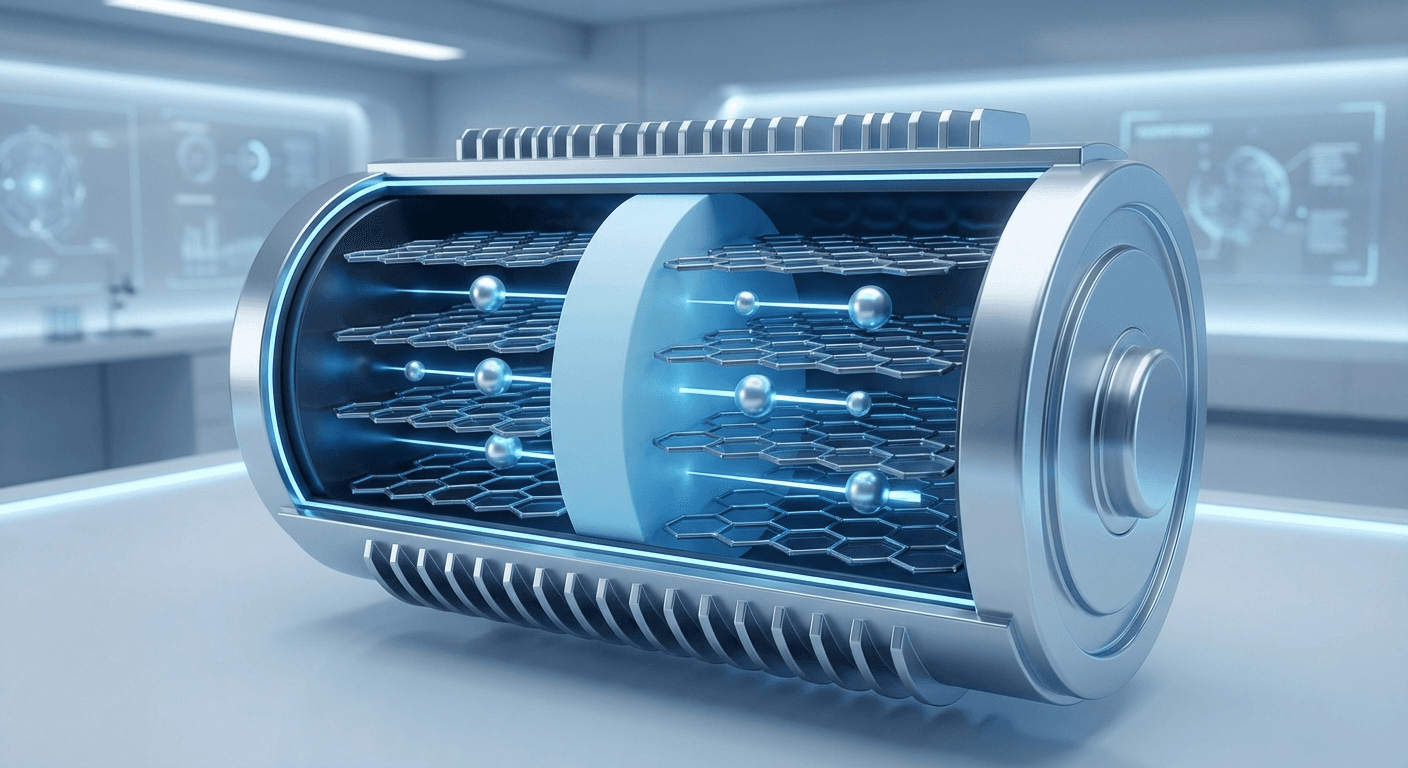
The battery industry is entering a period where chemistry diversification is no longer optional. Lithium-ion remains dominant, but supply risk, cost volatility, and strategic demand growth are pushing the market toward alternatives that can be manufactured at scale with stable raw-material access. Sodium is one of the most credible candidates because it is abundant, geographically distributed, and compatible with many existing electrochemical manufacturing concepts. At the same time, conventional liquid-electrolyte sodium-ion cells still face limitations in safety, cycle life, and high-voltage stability for demanding use cases. This is why solid-state sodium batteries are receiving rising attention.
Solid-state sodium batteries replace flammable liquid electrolytes with solid ionic conductors, opening the door to safer operation, improved thermal robustness, and potentially higher energy density depending on architecture. But moving from concept to real product requires solving difficult interfacial and transport challenges. This is where graphene and graphene-derived materials can provide practical value. Graphene is not a miracle additive that solves every battery problem. Its real strength is as a tunable engineering tool: a highly conductive, high-surface-area, mechanically robust 2D material that can improve interfaces, stabilize microstructures, and enable faster electron and ion pathways when integrated correctly.
Why sodium and why solid state now
Sodium-based systems offer a strategic advantage in raw material economics and supply resilience. Sodium salts are less constrained than lithium resources, which makes them attractive for stationary storage, grid balancing, and eventually broader mobility segments where cost-per-kWh and durability are critical. However, sodium ions are larger than lithium ions, which can penalize diffusion kinetics in some host structures. Solid-state systems must therefore be engineered with careful attention to interfacial impedance and transport pathways.
In practice, the biggest barriers in solid-state sodium batteries are rarely single-material limitations. They are system-level bottlenecks: poor contact between solid electrolyte and electrodes, interfacial side reactions, mechanical cracking during cycling, and local current concentration that drives degradation. If these are not managed, even materials with excellent standalone properties underperform at cell level.
Graphene’s role in the architecture
Graphene contributes most effectively at interfaces and conductive networks. In cathodes, graphene can form percolating electron-conduction pathways that reduce polarization and improve active-material utilization, especially in systems where intrinsic electronic conductivity is limited. In solid electrolytes or composite interlayers, graphene derivatives can support mechanical reinforcement and crack-bridging behavior, helping preserve contact during repeated charge-discharge cycles.
At anode-side interfaces, graphene-based interlayers can moderate local current distribution and reduce interfacial resistance when designed with controlled chemistry and porosity. For sodium metal or hard-carbon-adjacent architectures, this matters because local inhomogeneity quickly amplifies degradation. A well-designed graphene-containing interphase does not just lower initial impedance; it stabilizes the evolution of impedance over long cycling.
Critical materials science mechanisms
Several mechanisms explain why graphene can improve solid-state sodium systems when used correctly:
1) Electronic percolation enhancement
Graphene sheets establish conductive bridges between active particles, lowering electron-transport losses in thick or dense electrodes.
2) Interfacial contact retention
Graphene’s flexibility helps maintain physical contact between solids during volume change and thermal stress, reducing contact-loss-driven resistance growth.
3) Mechanical reinforcement
Graphene and reduced graphene oxide can increase fracture resistance in brittle composite layers when loading and dispersion are controlled.
4) Microstructure control
Graphene additives can influence particle packing, pore topology, and tortuosity, improving manufacturability and transport balance.
5) Surface chemistry tuning
Functionalized graphene can anchor or passivate interfaces depending on chosen chemistry, suppressing parasitic reactions.
These benefits are real but conditional. Poor dispersion, uncontrolled agglomeration, or excessive loading can increase impedance and create processing defects.
Electrolyte classes and where graphene fits
Solid-state sodium research commonly explores sulfide, oxide, and polymer-based electrolytes, each with tradeoffs.
Sulfide electrolytes often provide high ionic conductivity but can be chemically sensitive and mechanically soft. Graphene-containing interlayers can help reduce local stress and improve composite stability.
Oxide electrolytes are generally more stable but often harder to process into low-resistance interfaces due to rigidity and sintering requirements. Here, graphene-derived conductive frameworks can improve electrode-side utilization and reduce contact losses.
Polymer and polymer-ceramic hybrid electrolytes are attractive for processability, yet room-temperature transport and mechanical durability are frequent constraints. Graphene-based fillers can reinforce matrix integrity and improve mixed transport behavior when interfaces are engineered correctly.
Cell design strategy for real deployment
For commercial relevance, graphene in solid-state sodium batteries should be approached through architecture-first design rather than additive-first experimentation. The right workflow is:
• define target application (stationary, low-cost mobility, high-cycle industrial);
• choose electrolyte platform based on safety, conductivity, and processing;
• engineer electrode/electrolyte interfaces with controlled composite design;
• use graphene only where it directly improves bottleneck metrics.
Key validation metrics should include areal capacity retention, interfacial resistance growth over time, stack-pressure sensitivity, rate capability under realistic loading, and thermal abuse behavior. Small-coin-cell headline data alone is insufficient for scale decisions.
Manufacturing and scale-up realities
Scale-up success will depend on process compatibility as much as electrochemistry. Graphene integration must align with slurry rheology, coating uniformity, calendaring behavior, and dry-room process control. Batch-to-batch consistency of graphene feedstock is especially important; variation in sheet size, defect density, and functional groups can cause large performance spread.
Production teams should establish strict incoming-material specifications and statistical process controls for dispersion quality. In-line diagnostics for coating homogeneity and resistance mapping can catch failures early. Without this discipline, promising lab results are hard to reproduce in pilot lines.
Safety and reliability perspective
Solid-state sodium systems are often promoted for safety, and rightly so, but reliability engineering still matters. Thermal stability, shock resistance, and long-term interfacial integrity must be demonstrated under practical duty cycles. Graphene can support reliability through crack mitigation and conductivity retention, but only if it is integrated with balanced mechanics and electrochemistry. Over-engineering for conductivity at the expense of ionic pathways, for example, can backfire.
Economic outlook and market positioning
The strongest near-term market for graphene-enabled solid-state sodium batteries is likely stationary storage where safety, cost stability, and long cycle life are prioritized over maximum gravimetric energy density. As manufacturing matures, expanded use in specialized mobility and industrial power systems becomes plausible. The winning solutions will be those that combine materials performance with manufacturability and predictable quality.
For decision-makers, the right KPI set includes total delivered energy over life, installed safety overhead, maintenance profile, and supply-chain resilience. Graphene’s value should be measured in these system-level terms rather than isolated conductivity metrics.
Conclusion
Graphene can play a meaningful role in advancing solid-state sodium batteries, not as hype but as targeted engineering infrastructure for interfaces, conduction networks, and mechanical stability. The chemistry platform has strategic relevance because sodium offers resource abundance and supply resilience, while solid-state design offers a pathway to safer and more durable cells. The challenge is to convert promising material behavior into repeatable manufacturing outcomes.
A realistic path forward is disciplined and sequential: optimize composite interfaces, validate under practical conditions, lock process windows, and scale with strict quality control. If executed that way, graphene-enhanced solid-state sodium batteries can become a competitive and commercially credible part of next-generation energy storage.