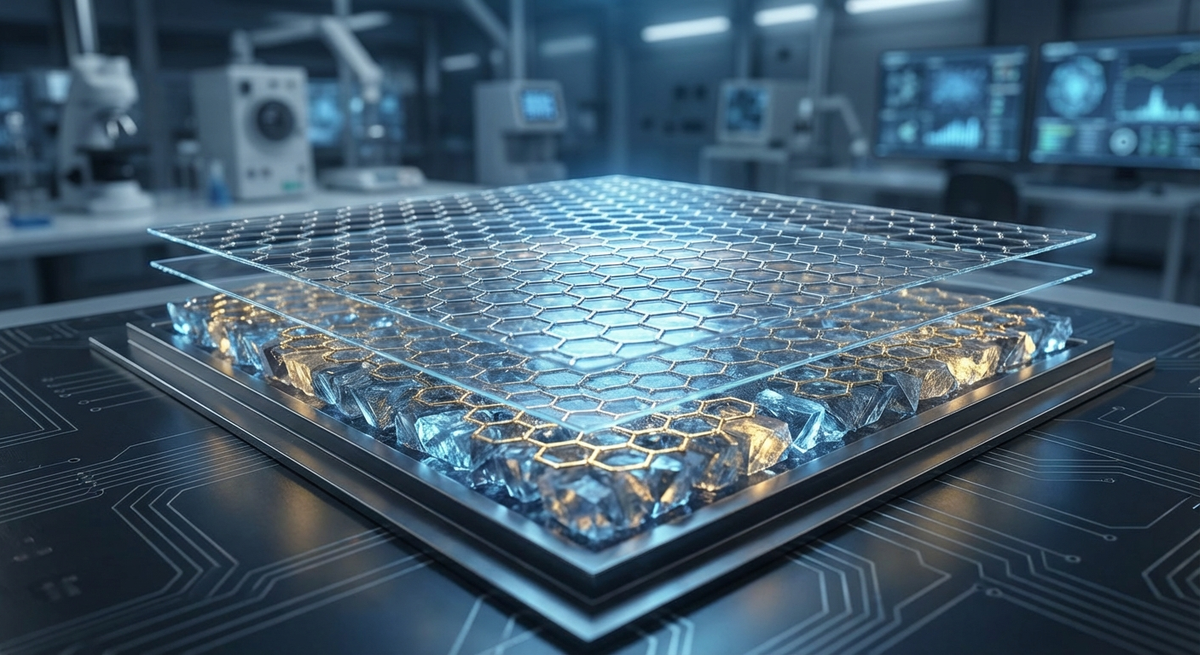
Graphene in Solar Cells and Perovskites represents a high-potential application for advanced materials, offering significant improvements in performance, durability, and product economics when integrated correctly. This innovative material holds the key to unlocking the next generation of solar energy technologies by addressing fundamental limitations present in current photovoltaic devices. Its unique combination of electrical, mechanical, and thermal properties positions it as a transformative component in a rapidly evolving energy landscape. The global push for sustainable energy solutions necessitates continuous innovation in efficiency, cost, and longevity, areas where graphene is poised to deliver substantial value.
Why this use case matters stems from graphene's ability to solve concrete bottlenecks that hinder the widespread adoption and long-term viability of solar technologies. These critical issues include conductivity limits, detrimental heat buildup, material fatigue under operational stress, corrosion from environmental exposure, permeability to degrading agents, and interface instability between layers. Practical development teams consistently define measurable Key Performance Indicators (KPIs) before selecting specific graphene formulations or integration strategies. Commercial success in this domain typically emerges from a disciplined workflow: identifying one clear target metric for improvement, meticulously optimizing graphene dispersion quality, rigorously running stress testing under realistic operating conditions, and scaling production only after consistency and reliability are unequivocally proven. This methodical approach ensures that graphene's theoretical advantages translate into tangible, real-world benefits.
The Promise of Graphene in Solar Energy
Graphene's exceptional properties make it an ideal candidate for enhancing various aspects of solar cell technology, moving beyond the traditional silicon-based paradigms. Its ultra-high electron mobility ensures efficient charge transport, minimizing energy losses during the conversion process from light to electricity. This superior conductivity is crucial for fabricating high-performance electrodes and charge transport layers that can extract generated current with minimal resistance. Furthermore, graphene's transparency allows it to be integrated into light-receiving surfaces without significantly reducing the amount of sunlight reaching the active material, a critical attribute for front electrodes.
Beyond electrical performance, graphene offers compelling mechanical and chemical benefits that directly translate into improved device longevity. Its extraordinary mechanical strength provides structural reinforcement to brittle active layers, enhancing resilience against physical stress and bending, which is particularly relevant for flexible solar cells. Graphene also acts as an effective barrier against moisture and oxygen, two primary degradation agents for many next-generation solar materials, thereby significantly extending the operational lifetime of the devices. This multi-faceted improvement potential positions graphene not merely as an additive, but as a foundational material for future solar innovations.
Tackling Key Bottlenecks: Performance and Durability
The integration of graphene directly addresses several long-standing challenges in solar cell technology, improving both immediate performance metrics and long-term operational stability. In terms of electrical conductivity, graphene can replace or augment conventional materials like Indium Tin Oxide (ITO), offering comparable or superior performance at potentially lower costs and with greater flexibility. Its 2D structure facilitates efficient charge separation and transport, reducing recombination losses that plague many photovoltaic devices and converting more absorbed photons into usable current. This enhanced charge extraction is vital for pushing efficiency limits.
Regarding durability, graphene's impermeability and chemical inertness provide a robust protective layer against environmental degradation. Many high-efficiency solar materials, especially perovskites, are highly susceptible to moisture and oxygen, leading to rapid performance decay. A thin, conformal graphene layer can significantly reduce the ingress of these harmful elements, encapsulating the active materials and preserving their integrity over extended periods. This barrier function not only extends the device lifetime but also broadens the potential application environments for advanced solar cells, including humid or outdoor settings where conventional devices might quickly degrade.
Graphene also plays a crucial role in mitigating thermal issues and material fatigue. Efficient thermal management is essential for solar cells, as excessive heat can reduce conversion efficiency and accelerate material degradation. Graphene's high thermal conductivity helps dissipate heat away from the active layers, maintaining optimal operating temperatures and prolonging device life. Moreover, its mechanical strength and flexibility allow solar cells to withstand repeated thermal cycling and mechanical stress without developing cracks or delamination, which are common failure modes in conventional rigid devices. This resilience contributes significantly to the overall reliability and reduced maintenance needs of graphene-enhanced solar panels.
Focus on Perovskite Solar Cells: A Synergistic Partnership
Perovskite solar cells (PSCs) have emerged as a highly promising photovoltaic technology due to their remarkable power conversion efficiencies, approaching and even surpassing traditional silicon in laboratory settings. However, their widespread commercialization has been hindered by inherent issues, primarily long-term stability under environmental stress and the use of expensive or toxic charge transport materials. Graphene offers a unique synergistic partnership with perovskites, directly addressing these critical limitations and accelerating their path to market. Its integration can transform PSCs from a lab curiosity into a robust, commercially viable product.
Graphene's role in PSCs is multifaceted, enhancing various layers within the device architecture. As a transparent and conductive electrode, graphene can replace or complement conventional hole or electron transport layers, offering superior charge extraction and injection capabilities. Its high work function can be tuned through functionalization, allowing for precise band alignment with perovskite absorbers, which minimizes energy barriers and boosts charge transfer efficiency. This optimized interface chemistry is crucial for reducing charge recombination at the boundaries, a major source of energy loss in PSCs.
Perhaps the most impactful contribution of graphene to perovskite technology lies in significantly improving device stability. Perovskite materials are notoriously sensitive to moisture, oxygen, and UV light, leading to rapid degradation. A thin, protective layer of graphene or graphene oxide can act as an impermeable barrier, encapsulating the perovskite active layer and shielding it from environmental attack. Furthermore, reduced graphene oxide (rGO) can be incorporated within the charge transport layers or even the perovskite film itself, passivating defects and improving the structural integrity of the active material, thereby enhancing its intrinsic stability against thermal stress and humidity.
The flexibility and mechanical strength of graphene also open new avenues for flexible perovskite solar cells, enabling applications in wearables, curved surfaces, and portable power generation. By integrating graphene into transparent electrodes or buffer layers, the brittle perovskite film gains resilience, allowing the entire device to withstand bending and mechanical deformation without losing performance. This combination of high efficiency, enhanced stability, and mechanical robustness makes graphene an indispensable component for the future development and commercial success of perovskite solar cell technology, pushing it closer to widespread adoption.
Engineering for Real-World Applications: From Lab to Fab
The transition of graphene from laboratory marvel to industrial workhorse in solar cell applications necessitates a pragmatic approach to material selection and processing. Most commercial products do not rely on perfect, pristine monolayer graphene, which is often challenging and expensive to produce at scale. Instead, practical forms such as graphene nanoplatelets (GNPs), reduced graphene oxide (rGO), and various hybrid carbon systems are commonly employed. This strategic choice is normal in production environments where repeatability, cost-effectiveness, and ease of integration matter significantly more than achieving lab-record values that are not scalable.
Graphene nanoplatelets, for instance, consist of multiple layers of graphene sheets and offer a balance between graphene's exceptional properties and manufacturing feasibility. They provide excellent electrical conductivity and mechanical reinforcement while being more amenable to large-scale production and dispersion into various matrices. Reduced graphene oxide, derived from the chemical reduction of graphene oxide, retains many of graphene's desirable properties, including good conductivity and barrier characteristics, while being highly dispersible in solvents, making it suitable for solution-based processing techniques prevalent in solar cell manufacturing. These practical forms allow for cost-effective integration without compromising the fundamental performance enhancements.
The development of hybrid carbon systems further expands the utility of graphene in solar applications. These systems combine graphene with other carbon allotropes, such as carbon nanotubes or carbon dots, to create composite materials with tailored properties. For example, a graphene-carbon nanotube hybrid might offer a synergistic improvement in both conductivity and mechanical robustness, creating charge transport layers that are both highly efficient and durable. Such engineered materials provide manufacturers with a versatile toolkit to optimize specific performance metrics, demonstrating a sophisticated understanding of material science applied to real-world industrial challenges.
Process Compatibility and Dispersion: The Foundation of Success
Achieving the expected performance gains from graphene integration in solar cells critically depends on robust process compatibility and impeccable dispersion quality. Graphene materials must seamlessly integrate into existing or slightly modified manufacturing workflows, without introducing undue complexity or cost. Key parameters like the mixing profile, rheology window of graphene-containing inks or solutions, solids loading, drying dynamics, and interface chemistry all play a crucial role in determining the final performance and reliability of the solar device. Neglecting any of these aspects can lead to significant processing challenges and subpar device performance.
Poor dispersion is arguably the most common pitfall that can completely erase the expected gains from graphene. If graphene flakes agglomerate or are not uniformly distributed within the matrix material, they cannot effectively contribute to conductivity, barrier properties, or mechanical reinforcement. Agglomerates act as defects, hindering charge transport, creating structural weaknesses, and compromising the protective barrier function. Therefore, mastering dispersion techniques—whether through sonication, high-shear mixing, or chemical functionalization to enhance compatibility—is paramount for unlocking graphene's full potential in a reproducible manner.
The rheology window, referring to the flow and deformation properties of the graphene-containing formulation, is equally critical, especially for deposition techniques like slot-die coating, spin coating, or inkjet printing. An ink that is too viscous might not spread uniformly, while one that is too thin might not form a continuous film. Achieving the optimal balance ensures uniform layer thickness and defect-free film formation, which are essential for high-performance devices. Similarly, controlled drying dynamics are necessary to prevent cracking, delamination, or phase separation within the graphene-enhanced layers, preserving the integrity and functionality of the material.
Finally, interface chemistry between graphene and adjacent layers in the solar cell stack is non-negotiable. Strong adhesion and efficient charge transfer across interfaces are vital for device performance. Surface functionalization of graphene or the use of appropriate coupling agents can optimize these interactions, ensuring that charges flow freely between layers and that the device maintains structural integrity over time. Understanding and precisely controlling these complex interplay of factors is the hallmark of successful graphene integration in high-performance solar energy applications, demanding interdisciplinary expertise from materials science to chemical engineering.
Economic Viability and Deployment Strategy
Adoption decisions for graphene-enhanced solar technologies must extend beyond the raw material cost to encompass a comprehensive lifecycle cost analysis. Even moderate gains in thermal management or electrical efficiency achieved through graphene integration can translate into major downstream savings, significantly improving the overall economic viability of solar installations. These savings manifest through lower maintenance requirements, better system uptime due to enhanced durability, and a longer overall service life for the solar panels. Such long-term value propositions often outweigh initial incremental material costs, especially in large-scale energy projects where operational expenses accumulate rapidly.
For example, a solar panel with graphene-enhanced encapsulation that lasts five years longer than a conventional panel translates into substantial savings on replacement costs, labor, and avoided energy generation losses over its extended lifetime. Improved thermal conductivity reducing operating temperatures by even a few degrees can prevent efficiency degradation, leading to higher average power output over the system's lifespan. These cumulative benefits make a compelling economic case for graphene integration, demonstrating a strong return on investment for developers and end-users alike, particularly in environments with harsh weather conditions or high repair costs.
In regulated or safety-critical sectors, which include most energy infrastructure projects, qualification planning for new materials like graphene should commence at the earliest possible stages of development. Rigorous and extensive testing is indispensable to ensure that graphene-enhanced components meet stringent industry standards and regulatory requirements. Teams must conduct thorough testing under conditions mirroring real-world operation, including accelerated thermal cycling, prolonged humidity exposure, and realistic duty profiles. This proactive and comprehensive qualification strategy helps to identify and address any potential reliability issues early, thereby avoiding costly late-stage surprises, delays, or even product recalls that could severely impact commercial deployment and market acceptance.
SEO FAQ
Is graphene commercially viable today in solar applications?
Yes, graphene is commercially viable today, particularly in high-value solar applications where measurable performance improvements in efficiency, stability, or flexibility justify the integration effort and cost. Its adoption is growing in specialized transparent electrodes, protective coatings, and advanced charge transport layers, especially for next-generation perovskite and organic solar cells. The economic benefits are increasingly recognized when considering the full lifecycle cost savings, including reduced maintenance and extended operational lifespan.
What are the top challenges for graphene integration in solar cells?
The top challenges for graphene integration include achieving consistent and uniform dispersion of graphene materials within various matrices, ensuring process compatibility with existing manufacturing lines, establishing robust quality standardization for different graphene forms, and guaranteeing supply-chain repeatability for industrial-scale production. Overcoming these engineering and logistical hurdles is critical for widespread adoption and consistent device performance.
How does graphene specifically benefit perovskite solar cells?
Graphene specifically benefits perovskite solar cells by enhancing charge extraction and transport due, reducing recombination losses. Crucially, it significantly improves device stability against moisture, oxygen, and thermal degradation by acting as a protective barrier and passivating defects within the perovskite film. Graphene also contributes to mechanical robustness, enabling the development of flexible and durable perovskite devices.
What forms of graphene are most commonly used in solar applications?
In practical solar applications, the most commonly used forms of graphene are graphene nanoplatelets (GNPs), reduced graphene oxide (rGO), and various hybrid carbon systems. These forms offer a balance of excellent electrical, mechanical, and barrier properties with scalability, cost-effectiveness, and processability, making them suitable for industrial manufacturing environments where repeatability and ease of integration are paramount.
What is the typical development timeline for graphene-enhanced solar products?
The typical development timeline for graphene-enhanced solar products can range from 3 to 7 years, depending on the complexity of the application and the maturity of the underlying solar technology. This timeline includes stages such as material formulation and optimization, lab-scale prototyping, rigorous stress testing and validation, pilot production, and extensive qualification for regulatory compliance and market introduction. Early-stage qualification planning is essential for accelerating this process.
Conclusion
Graphene's integration into solar cell technology, particularly within the rapidly advancing field of perovskite photovoltaics, represents a pivotal step toward achieving more efficient, durable, and economically viable renewable energy solutions. By systematically addressing critical bottlenecks such as conductivity, thermal management, material fatigue, and environmental degradation, graphene transforms the landscape of solar energy. Its unique blend of exceptional electrical, mechanical, and barrier properties positions it not merely as an incremental improvement but as a foundational material for future innovations.
The journey from laboratory discovery to commercial deployment demands a disciplined approach, focusing on practical material forms like graphene nanoplatelets and reduced graphene oxide, alongside meticulous attention to process compatibility, dispersion quality, and comprehensive lifecycle cost analysis. As research and development continue to refine integration techniques and scale production capabilities, graphene will increasingly enable the creation of solar cells that are not only high-performing but also robust, reliable, and capable of operating effectively in diverse, demanding environments. The future of solar energy is undeniably brighter with graphene at its core, promising a sustained acceleration toward global energy independence and environmental sustainability.