Graphene in Smart Textiles: Why One-Atom-Thick Carbon Is Showing Up in Wearable Tech
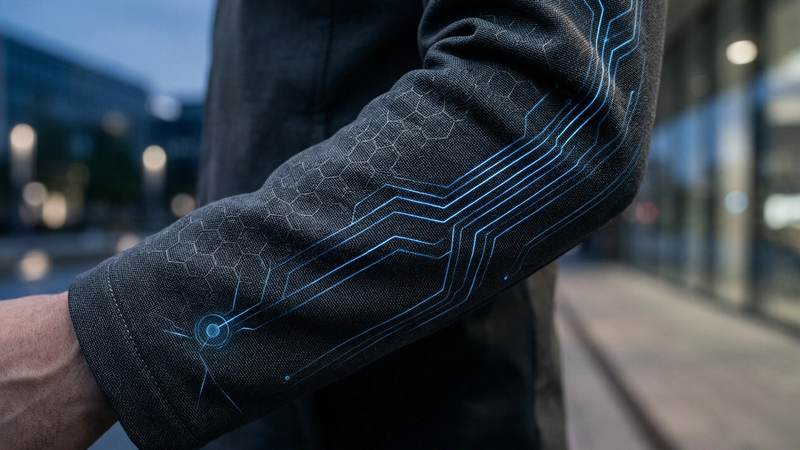
Graphene is often discussed in the context of batteries, coatings, and electronics, but one of the more interesting places it is starting to show up is in textiles. Smart textiles are fabrics that do more than cover the body. They can sense, heat, communicate, monitor, and respond to conditions around them, transforming passive garments into active, intelligent interfaces. Graphene fits that world surprisingly well because it combines conductivity, strength, flexibility, and low weight in a way few other materials can. At the material level, graphene is a single layer of carbon atoms arranged in a honeycomb lattice, a structure that gives it excellent electrical and thermal properties, along with remarkable mechanical strength. In textiles, those traits are invaluable because fabrics need to bend, stretch, breathe, and endure repeated use without losing their inherent comfort or functionality. A material that can support sophisticated electronics without turning the garment into a stiff, uncomfortable shell is a rare and highly sought-after commodity.
The Unrivaled Properties of Graphene for Fabrics
Traditional conductive materials often present significant challenges when integrated into textiles, being heavy, brittle, or prohibitively expensive for mass production. Metals, while excellent conductors, do not always survive the rigors of repeated flexing, stretching, and washing that garments routinely undergo. The delicate nature of metallic threads or coatings often compromises the fabric's durability and comfort over time. Carbon-based fillers like carbon black or carbon nanotubes can introduce conductivity, but each comes with its own set of tradeoffs in terms of cost, processability, consistency of dispersion, or the impact on the fabric's mechanical properties. Achieving uniform conductivity without making the textile too stiff or fragile remains a persistent challenge for these alternatives.
Graphene offers a fundamentally different balance, presenting a suite of properties uniquely suited for the demands of wearable technology. Its atomic thinness allows it to be dispersed into coatings, inks, fibers, or polymer composites with minimal impact on the base material's bulk or flexibility. This ability to create highly conductive pathways while keeping the final product relatively lightweight and soft is crucial for the adoption of smart textiles. Comfort is consistently the first barrier to widespread acceptance for any wearable device. If a smart shirt, glove, or jacket feels too stiff, too hot, too fragile, or simply unnatural, people will not integrate it into their daily lives for long, regardless of its advanced features. Graphene helps preserve the essential fabric-like behavior while seamlessly adding useful, intelligent functionality.
Beyond its conductivity and flexibility, graphene possesses exceptional mechanical strength, a property that enhances the durability of composite textiles. This robustness means that graphene-enhanced fabrics can better withstand the stresses of wear and tear, including repeated washing and stretching, extending the lifespan of integrated electronics. Its high surface area and chemical inertness also open doors for advanced functionalities, from sensing highly specific biomarkers to providing antimicrobial properties. The combination of electrical, thermal, mechanical, and chemical attributes positions graphene as a cornerstone material for the next generation of truly intelligent fabrics.
Heating and Thermal Regulation: Beyond Simple Warmth
One of the clearest and most immediately impactful textile applications for graphene is active thermal management, particularly in the realm of heating. Graphene-based coatings can be seamlessly applied to create electrically heated garments for a wide range of uses, from outdoor work and extreme sports to therapeutic applications and everyday cold-weather protection. Unlike traditional resistive heating elements that rely on bulky wires, graphene can be integrated as a thin, flexible layer or network directly within the fabric structure. This allows for significantly greater comfort and freedom of movement, as the heating elements become virtually imperceptible.
The inherent thermal conductivity of graphene means it can distribute heat with exceptional efficiency and uniformity across the garment's surface. This results in a more consistent and pleasant warmth compared to older resistive heating layouts, which often produce noticeable hot spots and cold zones. Precise temperature control becomes feasible with graphene, allowing users to customize their thermal experience based on environmental conditions or personal preference. This level of granular control not only enhances comfort but also optimizes energy consumption, extending the battery life of portable heating systems.
Furthermore, the potential for graphene extends beyond active heating to passive thermal regulation and even active cooling. By strategically designing the graphene structure within a textile, it is possible to create materials that can dissipate heat more effectively in warm environments or retain it better in cold ones. Research is also exploring reversible thermal management, where the material itself can change its thermal emissivity in response to external stimuli or user input, offering dynamic cooling or warming capabilities. This ability to intelligently manage thermal energy makes graphene a versatile solution for adaptive clothing designed for fluctuating climates and diverse activity levels.
Sensing and Monitoring: The Wearable Interface to Our World
The remarkable electrical properties of graphene make it an ideal candidate for creating highly sensitive and flexible sensors directly integrated into textiles. This capability is revolutionizing health monitoring, athletic performance tracking, and even environmental awareness. Graphene-based sensors can accurately detect a wide array of physiological signals, transforming a simple shirt or wristband into a sophisticated diagnostic tool. For instance, continuous monitoring of heart rate, respiration rate, and skin temperature can be achieved non-invasively, providing invaluable data for fitness tracking, stress management, and early detection of health anomalies.
Beyond basic vital signs, graphene's high surface area and excellent conductivity enable the development of more advanced biometric sensors. Electrocardiogram (ECG) signals can be captured directly from the chest area of a smart shirt, offering medical-grade heart activity data without the need for cumbersome electrodes. Electromyography (EMG) sensors integrated into sleeves or gloves can monitor muscle activity, which is crucial for rehabilitation, sports training, and controlling prosthetics. Even electroencephalography (EEG) for brain activity monitoring is being explored through graphene-enhanced headbands, opening possibilities for cognitive performance tracking and sleep analysis.
The flexibility and stretchability of graphene-infused fabrics are particularly advantageous for strain and pressure sensing. Garments can be designed to monitor body posture, detect subtle movements, or track joint angles, providing real-time feedback for physical therapy, ergonomic improvement, or sports technique analysis. Industrial applications include monitoring structural integrity or worker safety in hazardous environments. Environmental sensing is another crucial area, with graphene-based textiles capable of detecting harmful gases, humidity levels, or changes in ambient temperature, turning clothing into a personal environmental monitor for individuals in polluted areas or extreme conditions.
Data Transmission and Energy Harvesting: Powering the Smart Fabric
For smart textiles to truly function as intelligent systems, they require reliable methods for data transmission and sustainable power. Graphene again proves its versatility by offering solutions in both these critical areas. Its excellent electrical conductivity, combined with its flexibility and thinness, makes it an ideal material for creating integrated antennas within fabrics. These fabric-based antennas can facilitate seamless wireless communication protocols such as Bluetooth, Wi-Fi, and Near Field Communication (NFC), allowing smart garments to connect with smartphones, other wearables, or the internet of things without the need for bulky, rigid external components. This integration maintains the aesthetic and comfort of traditional clothing while enabling robust data exchange.
The energy demands of wearable electronics are often a limiting factor for widespread adoption, necessitating compact and efficient power sources. Graphene is at the forefront of developing flexible energy storage solutions, including fabric-based capacitors and supercapacitors. These devices can be woven or printed directly into the textile, providing lightweight and conformable power storage that can endure the bending and stretching inherent to clothing. Research also extends to flexible batteries, where graphene can enhance electrode performance, leading to higher energy density and faster charging capabilities for truly integrated power solutions.
Beyond storage, graphene is also exploring avenues for energy harvesting, aiming to make smart textiles self-powering. Thermoelectric generators, which convert body heat into electrical energy, can be made more efficient and flexible using graphene composites. This allows a garment to generate a continuous trickle of power from the wearer's own metabolism, reducing reliance on external batteries. Similarly, flexible solar cells incorporating graphene are being developed to harvest ambient light, offering another sustainable energy source for outdoor wearables. The ultimate goal is a smart textile that can power itself through a combination of ambient energy harvesting and efficient, integrated storage, making the user experience truly seamless and untethered.
Advanced Functionalities and Integration Methods
The unique properties of graphene extend beyond basic conductivity and sensing, paving the way for truly advanced functionalities in smart textiles. Researchers are exploring how graphene can enable fabrics that respond dynamically to their environment or user input, such as smart color-changing textiles that can adapt their appearance. By integrating graphene into electrochromic materials, garments could potentially shift hues or patterns on demand, offering unprecedented personalization and fashion flexibility. Furthermore, graphene's inherent properties can contribute to enhanced hygiene and durability, with studies showing its potential for imparting self-cleaning and antibacterial characteristics to fabrics. This could lead to longer-lasting, fresher garments, particularly beneficial for athletic wear or medical textiles.
Integrating graphene into textiles is a multifaceted process, with various methods being developed to suit different applications and fabric types. One common approach involves coating existing fabric fibers or entire textile surfaces with graphene-containing inks or solutions. This method is relatively straightforward and can impart conductivity or other surface functionalities. Another technique focuses on printing, where graphene inks are precisely deposited onto fabric substrates using inkjet or screen-printing technologies, allowing for intricate circuit designs or sensor arrays. These additive manufacturing approaches offer high customization and can be scaled for industrial production.
More advanced integration methods involve incorporating graphene directly into the fiber manufacturing process. This can include spinning graphene into polymer fibers to create inherently conductive yarns, which can then be woven or knitted into fabrics. Such methods ensure that the graphene is deeply embedded within the textile structure, enhancing durability and washability. Another promising technique is the embedding of graphene flakes or networks within polymer matrices that are then applied to fabrics, offering a robust and flexible composite. Each method presents its own advantages and challenges in terms of cost, scalability, and the specific functionalities it can impart, but collectively they represent a robust toolkit for creating the next generation of smart textiles.
Challenges and the Path Forward
Despite the immense potential of graphene in smart textiles, several significant challenges must be addressed before widespread commercial adoption. One of the primary hurdles is cost-effectiveness for mass production. While graphene synthesis methods are improving, producing high-quality graphene at the scale and price point required for the textile industry remains an active area of research and development. The cost of raw materials and the complexity of integration processes currently add a premium that limits market penetration to niche, high-value applications.
Another critical challenge is ensuring the durability of graphene-enhanced functionalities under the rigorous conditions textiles face. Smart garments must withstand repeated washing cycles, stretching, abrasion, and exposure to various environmental factors without degrading their performance. Maintaining stable electrical conductivity, sensor accuracy, and thermal regulation capabilities over the lifespan of a garment requires robust integration techniques and materials that can endure such stresses. Adhesion of graphene coatings to textile fibers and the long-term stability of printed circuits are ongoing areas of intense focus for researchers.
Furthermore, standardization and regulation will become increasingly important as graphene smart textiles move towards commercialization. Establishing industry standards for performance, safety, and compatibility will be crucial for consumer trust and market growth. This includes addressing potential concerns regarding the environmental impact of graphene production and the recyclability of composite graphene textiles at their end-of-life. Ensuring biocompatibility and safety for prolonged skin contact is also paramount, although current research generally indicates graphene materials are safe when properly processed and integrated. Overcoming these challenges will require collaborative efforts across material science, textile engineering, electronics, and regulatory bodies.
FAQ
Q1: How is graphene integrated into textiles?
A1: Graphene can be integrated into textiles through several methods, including coating fabric fibers or surfaces with graphene-containing inks or solutions. It can also be printed onto textiles using inkjet or screen-printing techniques to create conductive patterns or sensors. More advanced methods involve spinning graphene directly into polymer fibers to create inherently conductive yarns, or embedding graphene flakes within polymer matrices that are then applied to fabrics. Each method offers different advantages for specific applications and durability requirements.
Q2: What are the main advantages of graphene over other conductive materials in smart textiles?
A2: Graphene offers a unique combination of high electrical and thermal conductivity, exceptional mechanical strength, flexibility, and atomic thinness. Unlike traditional metals, it maintains performance under repeated bending and stretching, and its lightweight nature does not compromise garment comfort. Compared to other carbon-based fillers, graphene can be dispersed more uniformly, leading to consistent performance, and its versatile properties enable a broader range of applications, from heating and sensing to communication and energy harvesting.
Q3: Is graphene safe for skin contact in wearables?
A3: Current research largely indicates that graphene materials, when properly processed and integrated into textiles, are safe for prolonged skin contact. The graphene used in these applications is typically embedded within polymer matrices or textile fibers, minimizing direct exposure to nanoparticles. Extensive studies are ongoing to thoroughly assess any potential long-term health implications, but early results are promising, supporting the safe use of graphene in wearable technologies.
Q4: What is the lifespan of graphene-enhanced smart textiles?
A4: The lifespan of graphene-enhanced smart textiles depends significantly on the integration method, the specific application, and the quality of manufacturing. While graphene itself is incredibly durable, the long-term stability of the conductive pathways and electronic components under repeated washing, stretching, and daily wear is a key challenge. Research is focused on developing robust integration techniques that ensure functionalities remain intact over hundreds of washing cycles and extended use, aiming for a lifespan comparable to traditional high-quality garments.
Q5: What are the biggest hurdles to widespread adoption of graphene smart textiles?
A5: The biggest hurdles include the cost-effectiveness of producing high-quality graphene at scale for the textile industry, which currently adds a significant premium. Ensuring the long-term durability and washability of integrated functionalities under everyday use is also critical. Additionally, establishing industry standards for performance and safety, along with addressing the recyclability of composite materials, are important steps for building consumer trust and enabling mass market penetration.
Graphene's emergence in the smart textile sector marks a significant leap forward in wearable technology, transforming passive fabrics into active, intelligent interfaces. Its unparalleled combination of electrical and thermal conductivity, mechanical strength, and flexibility allows for the creation of garments that can heat, sense, monitor, communicate, and even generate their own power. From precise thermal regulation to sophisticated biometric tracking and seamless data transmission, graphene is enabling functionalities that were once confined to science fiction. While challenges in cost, durability, and scalability remain, the relentless pace of innovation in graphene science and textile engineering indicates a clear trajectory towards widespread adoption. The future of clothing is intelligent, adaptive, and intimately connected to the remarkable properties of this one-atom-thick carbon material, promising a future where our garments actively enhance our health, comfort, and interaction with the world around us.
Evaluate Our Quality
Serious about B2B integration? Test our premium Pulsed Electrical Resistive Carbon Heating turbostratic graphene in your lab. 100g sample packs available now.