Graphene Applications, Textiles & Consumer, General & Market
Graphene in Smart Textiles: Why One-Atom-Thick Carbon Is Showing Up in Wearable Tech
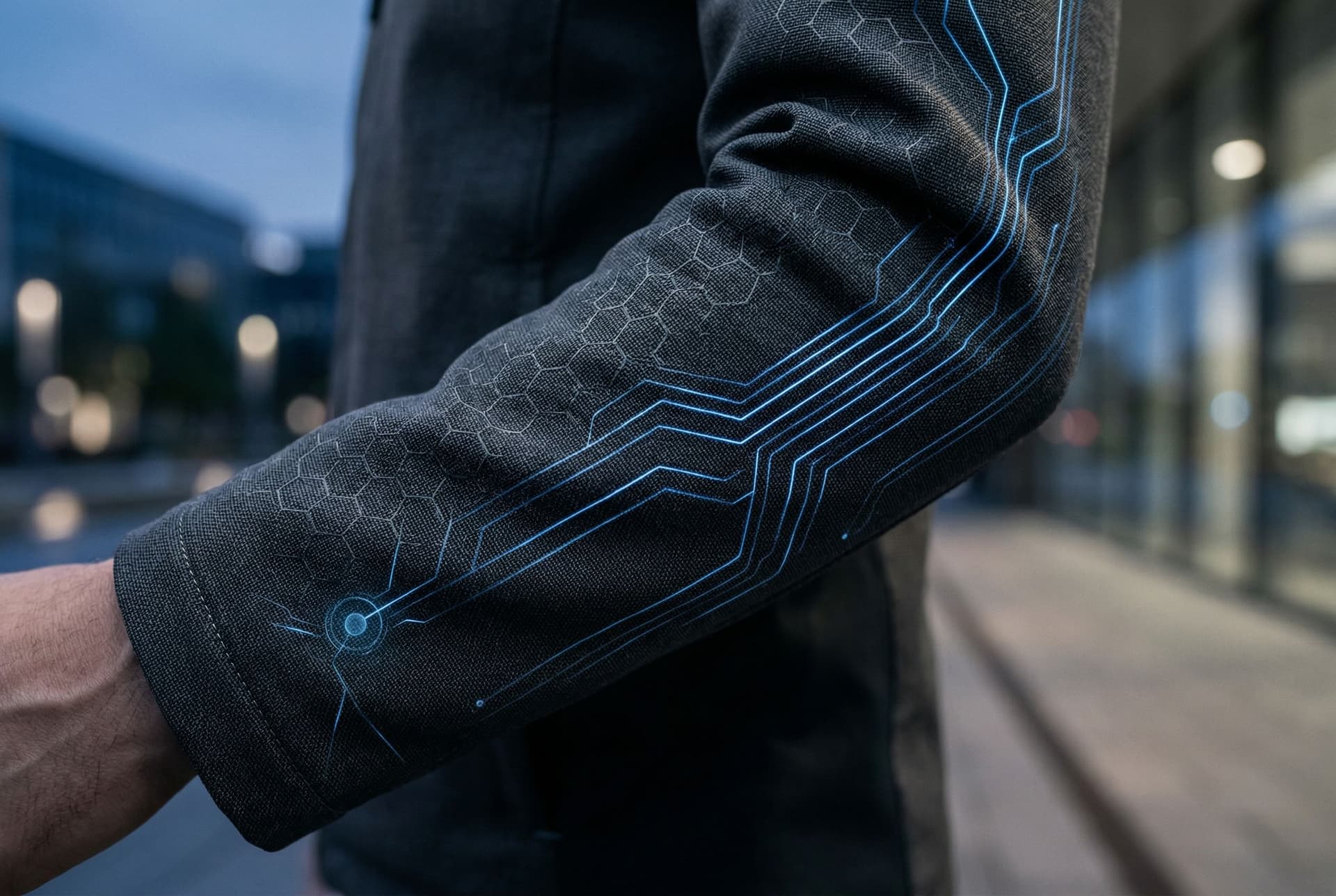
Graphene is often discussed in the context of batteries, coatings, and electronics, but one of the more interesting places it is starting to show up is in textiles. Smart textiles are fabrics that do more than cover the body. They can sense, heat, communicate, monitor, and respond to conditions around them. Graphene fits that world surprisingly well because it combines conductivity, strength, flexibility, and low weight.
At the material level, graphene is a single layer of carbon atoms arranged in a honeycomb lattice. That structure gives it excellent electrical and thermal properties, along with remarkable mechanical strength. In textiles, those traits are valuable because fabrics need to bend, stretch, breathe, and endure repeated use. A material that can support electronics without turning the garment into a stiff shell is a rare thing.
### Why graphene is attractive for fabrics
Traditional conductive materials can be heavy, brittle, or expensive. Metals conduct well, but they do not always survive flexing and washing. Carbon-based fillers like carbon black or carbon nanotubes can work, but each has tradeoffs in cost, processability, or consistency. Graphene offers a different balance. It can be dispersed into coatings, inks, fibers, or polymer composites to create conductive pathways while keeping the final product relatively lightweight.
That matters for wearables because comfort is usually the first barrier to adoption. If a smart shirt, glove, or jacket feels too stiff, too hot, or too fragile, people will not use it for long. Graphene can help preserve fabric-like behavior while adding useful functionality.
### Heating and thermal regulation
One of the clearest textile applications for graphene is heating. Graphene-based coatings can be used to create electrically heated garments for outdoor work, sports, and cold-weather protection. Because graphene can distribute heat efficiently, the warm areas may feel more uniform than with older resistive heating layouts.
Thermal management also works in the other direction. Graphene can help fabrics spread heat away from localized hot spots, which may improve comfort for users in demanding environments. Industrial workers, athletes, and first responders all benefit from clothing that can adapt to temperature challenges without becoming bulky.
### Sensing and monitoring
Another major advantage is sensing. Smart textiles are especially interesting when they can detect strain, motion, pressure, or physiological signals. Graphene-based conductive networks can be tuned to respond to deformation or environmental changes, which makes them useful for monitoring posture, movement, or even breathing patterns.
This is one reason graphene has drawn attention in health and performance wear. A shirt that detects muscle movement, a glove that measures grip pressure, or a bandage that monitors healing conditions all become more realistic when the sensing layer is thin, flexible, and durable.
### Durability and wash resistance
Textiles are hard on materials. They bend, stretch, rub, get wet, and are washed repeatedly. That is a brutal environment for delicate electronics. Graphene can improve durability when used correctly in coatings or composite fibers, helping conductive pathways survive mechanical stress better than some alternative materials.
Of course, durability depends heavily on formulation and manufacturing quality. Graphene by itself does not magically solve wash resistance. The full system — binder, substrate, coating thickness, adhesion, and encapsulation — matters just as much. But graphene can be a useful part of a more resilient design.
### Industrial and safety applications
Smart textiles are not only for consumer wearables. Industrial use cases may be even more compelling. Protective clothing for workers could include thermal monitoring, communication features, or embedded sensing for safety. Graphene may help such garments remain lightweight and flexible while still supporting electronics.
In hazardous environments, fabrics that can monitor heat exposure, detect strain, or provide active warming could improve safety and performance. The same idea extends to military gear, cold-storage workwear, and emergency response equipment.
### Manufacturing challenges
Even though the idea sounds appealing, graphene textiles face real engineering challenges. Getting the material to disperse evenly is not trivial. If graphene clumps together, conductivity becomes inconsistent and the fabric performance suffers. Scalability is another concern. It is one thing to make a lab sample with excellent properties; it is another to produce thousands of meters of fabric with consistent quality.
There are also tradeoffs between conductivity and feel. A textile coating that performs well electrically may still change the drape, softness, or breathability of the fabric. Designers have to balance functionality with comfort, and that often means carefully controlling loading levels and coating methods.
### Where graphene textiles are heading
The near-term future probably looks less like fully autonomous clothing and more like targeted features: heated panels, flexible sensors, durable conductive traces, and specialized industrial garments. That is a sensible path. It lets graphene solve specific problems instead of trying to replace everything at once.
As manufacturing improves, graphene may become a standard additive in some textile products the same way conductive inks, elastic fibers, or moisture-wicking treatments became common in their own categories. The best technologies often spread that way: first as a niche enhancer, then as an expected feature.
### Conclusion
Graphene in smart textiles is interesting because it combines science-fiction appeal with practical engineering logic. Fabrics need to be flexible, durable, and comfortable. Electronics need conductivity, sensing, and thermal control. Graphene helps bridge those two worlds.
It is not perfect, and it is not a universal solution. But it is one of the more promising materials for wearable tech because it offers multiple functions without forcing the fabric to stop behaving like fabric. That balance is what makes graphene textiles worth watching.
---
Author: Raimundas Juodvalkis