
Graphene in Polyurethane Foams: Better Insulation, Cushioning, and Smart Structural Materials
Graphene-filled polyurethane foams can improve lightweight structural behavior, thermal performance, cushioning, and multifunctional material design.
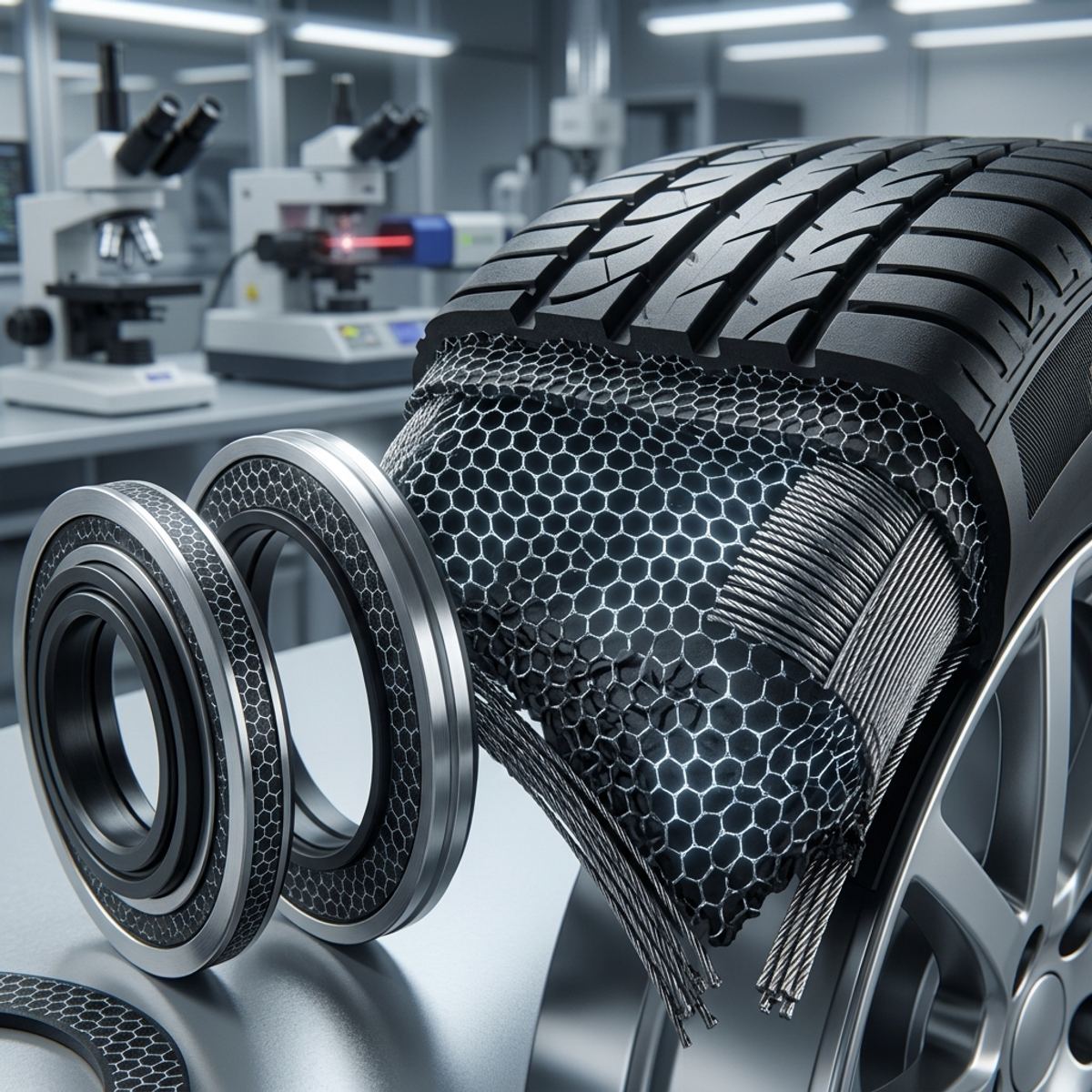
Rubber compounds are everywhere in engineering, even when they are easy to overlook. Tires, seals, gaskets, hoses, vibration dampers, industrial rollers, and protective components all rely on elastomer systems with the right balance of flexibility, wear resistance, and durability. Graphene is attracting attention in rubber because it can improve those properties without forcing elastomers to stop behaving like elastomers. One of the strongest arguments for graphene in rubber compounds is wear resistance. Rubber parts often fail gradually rather than suddenly. Abrasion, repeated flexing, heat buildup, and fatigue slowly reduce performance. Graphene can reinforce the compound matrix and improve how stress is distributed, which may increase durability and slow material degradation. In practical terms, this matters for tires, seals, and industrial parts exposed to repeated mechanical demand. Tire technology is one of the most visible areas. Tire compounds need rolling efficiency, grip, durability, heat management, and predictable wear. Graphene offers a possible route toward balancing some of those competing properties. While it is not a stand-alone solution, it can act as a performance-enhancing additive alongside established fillers and elastomer systems. Seals and gaskets are another logical application. These components need to stay flexible while resisting compression set, wear, and environmental exposure. Graphene reinforcement may help improve service life and reduce failure in demanding conditions. In automotive, industrial, and energy systems, even a modest improvement in seal reliability can matter a lot. Thermal behavior is another reason graphene matters in rubber. Heat buildup is a problem in many elastomer systems because it accelerates degradation and affects performance. Graphene can help improve thermal conductivity and support more stable operating behavior in selected compounds. That is particularly useful in applications involving repeated deformation and high dynamic stress.
Graphene's exceptional properties stem from its unique two-dimensional atomic structure, which grants it unparalleled strength, thermal conductivity, and barrier properties. When introduced into an elastomer matrix, graphene acts as a nanofiller, fundamentally altering the compound's mechanical and thermal characteristics. Unlike traditional fillers such as carbon black or silica, graphene offers an extremely high aspect ratio and surface area, allowing it to interact extensively with the polymer chains. This interaction creates a vast network within the rubber, distributing stress more effectively and hindering crack propagation. The result is a composite material that retains the characteristic elasticity of rubber while gaining significant enhancements in stiffness, tensile strength, and resistance to various forms of degradation.
The reinforcement mechanism of graphene in rubber involves several key factors that contribute to its efficacy. Graphene sheets, when properly dispersed, can act as physical barriers that impede the movement of polymer chains, thereby increasing the material's resistance to deformation. Their high Young's modulus, exceeding 1 TPa, translates directly into a significant stiffening effect on the rubber compound, even at low loading percentages. Furthermore, the strong interfacial adhesion between graphene and the polymer matrix is critical for efficient load transfer from the polymer to the high-strength graphene sheets. This ensures that the reinforcement is effectively utilized throughout the material, contributing to superior overall performance.
Graphene's influence extends beyond mere mechanical reinforcement; it also modifies the viscoelastic behavior of the elastomer. By increasing the energy dissipation capacity of the material, graphene can improve damping properties, which is valuable in applications like vibration isolation. The ability of graphene to create a tortuous path for gases and liquids also enhances barrier properties, making rubber compounds more resistant to permeation. These multifaceted contributions underscore why graphene is not just another additive but a transformative component in advanced elastomer design. Its integration allows for the fine-tuning of rubber characteristics to meet the increasingly stringent demands of modern engineering applications across numerous sectors.
Wear resistance is a critical performance metric for a vast array of rubber components, from vehicle tires to industrial conveyor belts and protective linings. The gradual material loss due to abrasion, friction, and repeated mechanical stress directly impacts the operational lifespan and economic viability of these parts. Graphene provides a significant leap forward in addressing these challenges by fundamentally altering the rubber's response to abrasive forces and fatigue. Its integration creates a more resilient and cohesive matrix, which is less susceptible to the initiation and propagation of micro-cracks that are precursors to macroscopic wear.
The mechanism by which graphene enhances wear resistance is multifaceted, involving both macroscopic and microscopic improvements. At a microstructural level, the high aspect ratio graphene flakes act as robust barriers within the polymer network, preventing the tearing and plucking of individual polymer segments under shear stress. This creates a denser, more interlocking structure that resists material removal more effectively than unreinforced rubber or rubber with traditional fillers. The improved interfacial adhesion between graphene and the elastomer matrix ensures that these reinforcing elements are firmly anchored, allowing for efficient load transfer and stress distribution throughout the material.
Furthermore, graphene's ability to dissipate energy and improve the rubber's fatigue resistance plays a crucial role in extending durability under dynamic loading conditions. Repeated deformation cycles, such as those experienced by tires or flexible seals, can lead to the accumulation of micro-damage and eventual material fatigue. Graphene helps to mitigate this by providing additional pathways for energy absorption, reducing localized stress concentrations that would otherwise lead to crack initiation. This enhanced fatigue life translates directly into a longer service life for components, reducing maintenance costs and improving reliability in demanding operational environments.
The impact on specific wear types is also noteworthy. For abrasive wear, graphene increases the hardness and tear strength of the rubber surface, making it more resistant to scratching and cutting by external particles. In erosive wear, where high-velocity particles impact the surface, graphene-reinforced compounds show improved resilience, maintaining structural integrity for longer periods. This comprehensive enhancement of wear characteristics across different mechanisms solidifies graphene's position as a game-changer for high-performance rubber applications where longevity and robust performance are paramount. Its contribution extends the operational window of rubber components, pushing the boundaries of what is possible in demanding industrial and consumer applications.
Tire technology represents one of the most visible and economically significant applications for graphene in rubber compounds. The modern tire is a complex engineering marvel, requiring a delicate balance of often-competing properties: low rolling resistance for fuel efficiency, high wet and dry grip for safety, and excellent wear resistance for longevity. Graphene offers a promising avenue to optimize these characteristics simultaneously, a challenge that traditional fillers have struggled to overcome without significant trade-offs. Its unique properties allow for innovative approaches to tire compound design, leading to a new generation of high-performance tires.
Graphene's ability to reduce rolling resistance is particularly compelling for the automotive industry, especially with the rise of electric vehicles. Lower rolling resistance translates directly into improved fuel economy for internal combustion engine vehicles and extended range for EVs, which is a major selling point. Graphene achieves this by modifying the viscoelastic properties of the rubber, reducing hysteresis – the energy loss during deformation cycles. By minimizing the heat generated within the tire during rolling, graphene allows more energy to be translated into forward motion rather than being dissipated as heat. This contributes to better efficiency without compromising other critical performance parameters.
Simultaneously, graphene can enhance the tire's grip capabilities, particularly on wet surfaces, by increasing the compound's stiffness and improving its interaction with the road surface. The high surface area of graphene provides more contact points at the micro-level, leading to superior adhesion and reduced skidding risk. This dual benefit of improved grip and reduced rolling resistance is a significant advantage over conventional tire materials, which typically see these properties as inversely related. Achieving gains in both areas without substantial compromises represents a paradigm shift in tire development, offering both enhanced safety and environmental benefits.
Moreover, graphene significantly contributes to the wear resistance and overall durability of tire treads, extending their lifespan and reducing the frequency of replacement. The strong reinforcing effect of graphene strengthens the rubber matrix, making it more resistant to abrasion, cutting, and chipping that occur during regular use. This improved durability is crucial for both consumer and commercial tires, leading to cost savings and reduced waste. The ability to manage heat buildup, another critical graphene attribute, further supports tire longevity by preventing thermal degradation of the rubber, especially under high-speed or heavy-load conditions. The comprehensive enhancements provided by graphene position it as a key material for future tire innovations, shaping safer, more efficient, and longer-lasting automotive experiences.
Seals, gaskets, and hoses are ubiquitous in countless industrial and consumer applications, often operating in demanding environments where failure can lead to significant operational disruptions, safety hazards, or environmental damage. These components require a precise balance of flexibility, robust sealing capability, resistance to compression set, and durability against chemical exposure, temperature extremes, and mechanical wear. Graphene offers a powerful solution for elevating the performance benchmarks of these critical elastomer parts, enhancing their reliability and extending their service life.
One of the primary benefits graphene imparts to seals and gaskets is improved compression set resistance. Compression set refers to the permanent deformation of an elastomer after being subjected to a compressive force over time, often at elevated temperatures. A high compression set can lead to seal leakage and failure. Graphene reinforcement strengthens the elastomer matrix, making it more resilient to permanent deformation and ensuring that seals maintain their integrity and sealing force over prolonged periods of compression. This is critical for reliable long-term performance in applications ranging from automotive engines to pipeline connectors.
Beyond mechanical resilience, graphene significantly enhances the barrier properties of rubber compounds, which is vital for effective sealing and fluid containment. The impermeable nature of individual graphene sheets, when properly dispersed within the elastomer, creates a tortuous path for gases and liquids. This reduces the permeation rate of various substances through the material, which is particularly beneficial in applications involving aggressive chemicals, fuels, or gases. For hoses, this means improved chemical resistance and reduced effusion, ensuring safer and more efficient fluid transfer in chemical processing, oil and gas, and automotive systems.
Furthermore, the enhanced wear resistance imparted by graphene is highly advantageous for dynamic seals and components that experience friction. In applications where seals must move or slide against another surface, traditional elastomers can degrade over time due to abrasive wear. Graphene-enhanced rubber exhibits superior resistance to this type of degradation, prolonging the effective sealing life and reducing the likelihood of premature failure. This combination of improved compression set, barrier properties, and wear resistance makes graphene an indispensable additive for developing next-generation seals, gaskets, and hoses that perform reliably under the most challenging operational conditions.
Heat management is a critical factor in the performance and longevity of many rubber components, particularly those subjected to dynamic stress or elevated ambient temperatures. High operational temperatures can accelerate the degradation of elastomers, leading to a loss of mechanical properties, increased compression set, and premature failure. Graphene's exceptional intrinsic thermal conductivity, which can be several orders of magnitude higher than that of traditional rubber fillers, provides a transformative solution for improving thermal management in elastomer systems. This capability allows for more efficient heat dissipation, leading to more stable operating behavior and extended service life.
In applications involving repeated deformation, such as tires, vibration dampers, or industrial rollers, internal heat buildup due to hysteresis can be a significant problem. Graphene, by forming a conductive network within the rubber matrix, can effectively draw heat away from hot spots and distribute it more evenly throughout the material. This prevents localized thermal degradation and maintains the compound's mechanical integrity under continuous operation. The ability to dissipate heat more efficiently directly translates into reduced thermal fatigue and enhanced durability for components operating in high-stress, dynamic environments.
Beyond passive heat dissipation, graphene can also enable the development of rubber compounds with tailored thermal conductivity for specific active thermal management solutions. For instance, in sensitive electronic components or electric vehicle battery packs, where precise temperature control is paramount, graphene-enhanced rubber gaskets or thermal interface materials can play a crucial role. These materials can efficiently transfer heat generated by electronic devices to cooling systems, ensuring optimal operating temperatures and preventing performance degradation or failure due to overheating.
The integration of graphene also contributes to improved thermal stability of the overall elastomer system. By reducing the peak temperatures experienced within the material, graphene helps to slow down the chemical degradation processes that are accelerated by heat. This means that graphene-reinforced rubber components can maintain their critical properties, such as flexibility and strength, over a wider temperature range and for longer durations. Ultimately, graphene's role in thermal management enhances the reliability, safety, and operational efficiency of rubber products in diverse applications, from automotive systems to industrial machinery and energy infrastructure.
While the potential benefits of graphene in rubber compounds are profound, achieving these advantages consistently and cost-effectively at scale presents several processing challenges. The primary hurdle lies in the effective dispersion of graphene within the elastomer matrix. Graphene flakes, due to their high surface area and strong van der Waals forces, tend to re-agglomerate, forming clumps that can act as defects rather than reinforcements. Poor dispersion diminishes graphene's reinforcing capabilities and can even negatively impact the rubber's properties, making consistent quality crucial for commercial viability.
Researchers and manufacturers are actively developing advanced dispersion techniques to overcome these challenges. Methods such as melt mixing, solution mixing, and latex compounding are being optimized, often involving shear forces or solvent-assisted processes to separate the graphene layers and distribute them uniformly. Surface functionalization of graphene is another promising approach, where chemical groups are attached to the graphene surface to improve its compatibility and interfacial adhesion with specific polymer matrices. These advancements are critical for ensuring that the full potential of graphene reinforcement is realized in industrial applications.
The scalability and cost-effectiveness of graphene production and integration are also key factors influencing its widespread adoption. As graphene production technologies mature, the cost per unit of high-quality graphene is steadily decreasing, making it more economically viable as an additive. Furthermore, the development of masterbatches – concentrated graphene-rubber compounds – simplifies the integration process for rubber manufacturers, allowing them to incorporate graphene into existing production lines with minimal modifications. This ease of use and reduced processing complexity are essential for accelerating market penetration.
Collaboration between graphene producers, elastomer suppliers, and end-product manufacturers is vital for navigating the path to commercialization. Pilot projects and rigorous testing are necessary to validate graphene-enhanced rubber products under real-world conditions, providing the data needed for widespread industry acceptance. Addressing regulatory considerations, such as material safety and environmental impact, also forms an important part of the commercialization journey. By systematically tackling these processing challenges, the industry is paving the way for graphene to become a standard high-performance additive in a new generation of rubber compounds.
What types of graphene are used in rubber compounds?
Typically, graphene nanoplatelets (GNPs) and graphene oxide (GO) or reduced graphene oxide (rGO) are used. GNPs are few-layer graphene sheets that provide mechanical reinforcement and thermal conductivity. GO and rGO are often used for their ease of dispersion in polar solvents and their functional groups, which can interact chemically with rubber polymers, though they may require reduction to restore full graphene properties. The choice depends on the specific desired properties and the type of elastomer.
Is graphene a replacement for traditional rubber fillers like carbon black or silica?
Graphene is generally not a direct replacement but rather a complementary additive that can enhance the performance of rubber compounds alongside established fillers. While it provides superior mechanical and thermal properties, graphene is often used in lower loading percentages compared to carbon black or silica. It can work synergistically with these traditional fillers to create hybrid systems with optimized performance, allowing for tailored properties that were previously difficult to achieve.
What are the main benefits of using graphene in tires?
For tires, graphene primarily offers improvements in three critical areas: reduced rolling resistance for better fuel efficiency or EV range, enhanced wet and dry grip for improved safety, and increased wear resistance for extended tire lifespan. It also helps manage heat buildup within the tire, which contributes to overall durability and performance stability under various operating conditions. Graphene enables a better balance of these often-competing properties.
How does graphene improve the performance of seals and gaskets?
Graphene enhances seals and gaskets by significantly improving their compression set resistance, meaning they maintain their shape and sealing force better over time. It also boosts their barrier properties, making them more resistant to permeation by gases and liquids, crucial for preventing leaks. Additionally, graphene increases the wear resistance of these components, extending their service life in dynamic or chemically aggressive environments.
Is graphene-enhanced rubber commercially available today?
Yes, graphene-enhanced rubber products are beginning to enter the market. While not yet ubiquitous, specific products like bicycle tires, some automotive components, and industrial seals incorporating graphene are commercially available from pioneering manufacturers. As dispersion techniques improve and graphene production scales, its presence in a wider range of rubber products is expected to grow significantly in the coming years, moving from niche to mainstream applications.
The integration of graphene into rubber compounds marks a significant advancement in material science, poised to redefine performance standards across numerous industries. From enhancing the durability and efficiency of automotive tires to improving the reliability of critical seals and gaskets, graphene offers a suite of properties that address long-standing challenges in elastomer engineering. Its ability to impart superior mechanical strength, wear resistance, and thermal management capabilities, without compromising the inherent flexibility of rubber, positions it as a highly valuable additive. As research continues to refine dispersion techniques and production costs decrease, the widespread adoption of graphene-enhanced rubber is inevitable. This innovative material promises to drive the next generation of high-performance rubber products, delivering greater longevity, efficiency, and safety in countless applications that are fundamental to modern life.
Serious about B2B integration? Test our premium Pulsed Electrical Resistive Carbon Heating turbostratic graphene in your lab. 100g sample packs available now.
Explore More
Graphene-filled polyurethane foams can improve lightweight structural behavior, thermal performance, cushioning, and multifunctional material design.

Graphene-filled polypropylene can improve stiffness, conductivity, barrier behavior, and lightweight part performance in large-volume applications.

Scientific studies show that graphene can improve adhesives through better toughness, conductivity, thermal behavior, and barrier performance when formulations are engineered properly.