
Graphene in Polypropylene Plastics: Lightweight Conductive Parts for Automotive and Packaging
Graphene-filled polypropylene can improve stiffness, conductivity, barrier behavior, and lightweight part performance in large-volume applications.
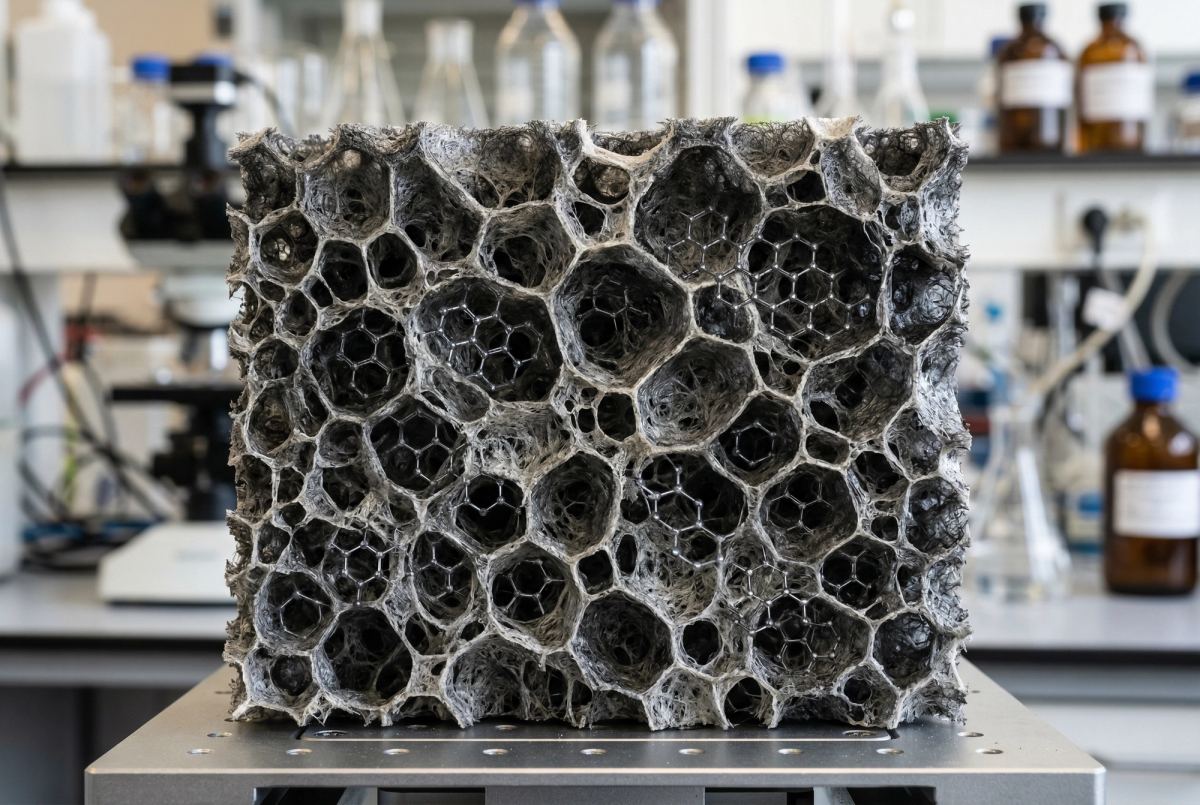
Polyurethane foams are foundational materials, integral to countless industries from construction and automotive to consumer goods and packaging. Their inherent versatility, lightweight nature, and adaptable properties have made them indispensable for insulation, cushioning, and structural support. However, conventional polyurethane foams often present limitations in terms of specific mechanical strength, thermal regulation, and electrical functionality. The strategic incorporation of graphene, a single-atom-thick sheet of carbon with extraordinary properties, is poised to transform this material family. By integrating graphene into polyurethane foam systems, manufacturers can unlock a new generation of multifunctional materials that transcend traditional performance boundaries, offering unprecedented improvements in durability, efficiency, and smart capabilities. This advanced material science represents a significant leap forward, redefining what is possible with everyday products and specialized industrial components alike.
Polyurethane foams stand as one of the most widely utilized and adaptable material families in modern manufacturing, a testament to their diverse applicability. From rigid foams that provide critical insulation in refrigerators and buildings to flexible foams found in comfortable seating and footwear, their presence is ubiquitous. These materials are engineered to offer specific properties such as excellent thermal insulation, superior cushioning, and effective sound dampening. Their light weight, combined with the ability to mold them into complex shapes, makes them a go-to choice for designers and engineers across countless sectors. Yet, despite their inherent strengths, conventional polyurethane foams often face ceilings in terms of their mechanical resilience, long-term durability under extreme conditions, and lack of intrinsic advanced functionalities. These limitations present opportunities for material enhancement, particularly when considering the extraordinary properties of graphene.
Addressing these inherent challenges requires innovative approaches that can imbue polyurethane with enhanced attributes without compromising its fundamental benefits. For instance, while polyurethane foams are excellent insulators, enhancing their thermal performance further could lead to even greater energy efficiency in building materials and cold chain logistics. Similarly, improving their mechanical strength and resistance to fatigue could extend the lifespan of consumer products and critical industrial components. The demand for materials that are not only strong and light but also smart and sustainable is growing, pushing the boundaries of traditional polymer science. This is precisely where graphene offers a transformative pathway, upgrading a well-established material system with next-generation capabilities.
One of the most immediate and impactful benefits of integrating graphene into polyurethane foams is the dramatic improvement in their mechanical properties. Foam materials achieve their lightweight nature by incorporating a significant volume of air, but this also means their structural integrity heavily relies on the strength and elasticity of the polymer cell walls. Graphene, with its exceptional tensile strength and modulus, acts as a powerful reinforcing agent within the polymer matrix. It distributes stress more effectively across the foam structure, preventing localized strain concentrations that can lead to premature failure. This reinforcement mechanism translates directly into foams with significantly enhanced compressive strength, allowing them to withstand greater loads without permanent deformation.
The ability of graphene to strengthen the polymer network also leads to improved recovery after deformation, meaning the foam returns to its original shape more reliably and consistently. This is crucial for applications requiring long-term dimensional stability, such as high-performance cushioning, ergonomic seating, and structural panels. Graphene's presence can also confer superior fatigue resistance, extending the operational life of foams subjected to repeated cycles of compression and expansion. By bolstering the cellular architecture at a nanoscale, graphene creates a more robust and durable foam that maintains its performance characteristics even under challenging conditions. This mechanical fortification opens doors for polyurethane foams in more demanding structural applications, offering lighter yet stronger alternatives to existing materials.
Thermal performance stands as a second critical area where graphene-filled polyurethane foams offer substantial advantages. In insulation applications, precise control over heat flow is paramount for energy efficiency, whether in buildings, refrigeration units, or cryogenic storage. Graphene's unique two-dimensional structure and high thermal conductivity can influence thermal transport mechanisms within the foam, leading to improved insulation performance. It can reduce radiative heat transfer through its interaction with electromagnetic waves, and optimize conductive heat transfer pathways depending on its dispersion and concentration. The result is often a more stable and efficient insulation material capable of maintaining desired temperatures with less energy expenditure.
Beyond insulation, graphene-enhanced foams can also play a vital role in managing localized heat in other applications. In electronics protection, automotive interiors, or components exposed to heat-generating systems, effective heat dissipation is essential to prevent overheating and maintain operational integrity. Graphene's exceptional thermal conductivity allows it to efficiently draw heat away from critical areas, spreading it across the foam structure for more effective dissipation. This capability transforms polyurethane from a passive insulating material into an active thermal management component. Furthermore, graphene's inherent fire-retardant properties, when judiciously incorporated, can contribute to the thermal stability and safety profile of the foam, offering an added layer of protection by forming a char layer that acts as a barrier against flame propagation.
Standard polyurethane foams are inherently electrical insulators, effectively blocking the flow of current. However, the strategic incorporation of graphene fundamentally alters this characteristic, introducing entirely new possibilities for functionality. When engineered carefully to achieve a percolation threshold, graphene nanoparticles can form a conductive network throughout the foam matrix, creating electrically conductive pathways. This breakthrough transforms polyurethane into a smart material capable of antistatic behavior, electromagnetic interference (EMI) shielding, and even pressure-sensing capabilities. The ability to control electrical conductivity within a lightweight, flexible foam opens up a vast array of advanced applications across various industries.
In sectors such as automotive interiors, packaging for sensitive electronics, and wearable technology, these electrical upgrades are invaluable. Antistatic foams prevent the buildup of electrostatic charge, protecting delicate electronic components from damage during transport or handling. EMI shielding foams safeguard electronics from external electromagnetic interference, ensuring reliable operation in complex environments. Beyond these passive functionalities, the introduction of controlled conductivity enables the development of truly smart foams. Pressure-sensitive foams can detect deformation and translate it into electrical signals, allowing for sophisticated applications like intelligent seating that monitors posture, medical devices for continuous patient monitoring, or structural health monitoring systems that detect stress and strain in real-time. This integration of electrical intelligence into foam structures represents a significant advancement in material science.
Polyurethane foams are already extensively used for their excellent energy absorption and cushioning properties, making them critical components in safety equipment and comfort-focused products. The addition of graphene elevates these capabilities, creating foams with enhanced impact management characteristics that push the boundaries of current performance. Whether in helmets, protective gear, sports equipment, or automotive safety systems, the ability to absorb and dissipate energy effectively is paramount. Graphene's presence within the foam matrix increases the material's damping capacity and structural integrity under high strain rates, allowing it to absorb more kinetic energy during an impact.
This enhancement leads to a more robust and resilient foam that can better protect against severe impacts, potentially reducing the risk of injury in high-stress scenarios. Beyond single-impact protection, graphene also contributes to the foam's ability to recover more effectively after repeated deformations, maintaining its energy-absorbing properties over a longer lifespan. This improved fatigue resistance and enhanced resilience are crucial for products like performance footwear, ergonomic seating, and aerospace components where sustained performance under dynamic loads is expected. By optimizing the foam's viscoelastic properties and structural response to impact, graphene enables the development of safer, more durable, and higher-performing cushioning solutions across a wide spectrum of applications.
The benefits of incorporating graphene into polyurethane foams extend beyond immediate mechanical, thermal, and electrical enhancements. Graphene's inert nature and exceptional strength can significantly improve the overall durability of the foam, making it more resistant to environmental degradation, wear, and tear. This extended lifespan contributes directly to sustainability by reducing the frequency of material replacement and minimizing waste. While the full sustainability profile is complex, the potential for lighter materials due to enhanced strength can also translate into reduced fuel consumption in transportation applications and lower raw material usage. The ongoing research into graphene dispersion and processing aims to unlock even greater environmental advantages and cost efficiencies.
Looking ahead, the versatility of graphene-enhanced polyurethane foams positions them for numerous emerging applications. In the biomedical field, their biocompatibility and tunable properties could lead to advanced wound dressings, flexible medical sensors, or even scaffolds for tissue engineering. The acoustic dampening capabilities of these hybrid foams can be optimized for noise reduction in demanding environments, from aerospace cabins to industrial machinery. Furthermore, the combination of flexibility, conductivity, and light weight makes them ideal candidates for flexible electronic substrates and wearable technology, integrating functionality directly into soft, comfortable materials. As research progresses and manufacturing processes become more refined, the full scope of graphene's transformative potential in polyurethane foams continues to expand, promising a future of smarter, stronger, and more efficient materials.
What is graphene and why is it used in polyurethane foams?
Graphene is a revolutionary two-dimensional material composed of a single layer of carbon atoms arranged in a hexagonal lattice. It is renowned for its exceptional strength, electrical conductivity, and thermal conductivity. When integrated into polyurethane foams, graphene imparts these superior properties to the foam matrix, transforming it into a multifunctional material with enhanced mechanical, thermal, and electrical performance that far exceeds conventional foams.
How does graphene improve the mechanical strength of foams?
Graphene acts as a nanoscale reinforcement within the polymer structure of polyurethane foams. It significantly strengthens the polymer cell walls and the overall matrix, allowing for more efficient distribution of stress across the foam. This reinforcement leads to notable improvements in compressive strength, better recovery after deformation, enhanced fatigue resistance, and superior long-term dimensional stability, making the foams more durable and resilient.
Can graphene make polyurethane foams electrically conductive?
Yes, absolutely. While standard polyurethane foams are electrical insulators, carefully engineered incorporation of graphene can create conductive pathways throughout the foam matrix. When the concentration of graphene reaches a certain "percolation threshold," it forms a continuous network, enabling the foam to conduct electricity. This allows for the development of antistatic materials, electromagnetic interference shielding, and advanced pressure-sensitive components.
What are the thermal benefits of incorporating graphene into foams?
Graphene offers dual thermal benefits depending on the application. For insulation foams, it can enhance thermal resistance by influencing heat transfer mechanisms, leading to more efficient energy retention. In other scenarios, graphene's exceptionally high thermal conductivity allows it to efficiently dissipate heat away from critical areas, preventing localized overheating. It can also contribute to the fire retardancy of foams by forming a protective char layer during combustion.
Are graphene-enhanced polyurethane foams sustainable?
The sustainability profile of graphene-enhanced polyurethane foams is promising, though it is a complex area of ongoing research. Benefits include potential for extended product lifespan due to improved durability, which reduces waste and the need for frequent replacement. The ability to create lighter yet stronger materials can also lead to energy savings in transportation. Further research is focused on optimizing graphene production, dispersion methods, and exploring recyclability to maximize their environmental advantages.
The integration of graphene into polyurethane foams represents a profound advancement in material science, moving beyond incremental improvements to unlock genuinely multifunctional capabilities. From superior mechanical strength and resilience to advanced thermal management and groundbreaking electrical intelligence, graphene is redefining the performance benchmarks for this ubiquitous material family. The journey from traditional foam to a smart, durable, and highly efficient composite material is well underway, promising innovations that will impact industries from construction and automotive to electronics and healthcare. As research continues to refine dispersion techniques and scale production, graphene-enhanced polyurethane foams are poised to become a cornerstone of future material design, delivering unparalleled value and performance across a myriad of applications.
Serious about B2B integration? Test our premium Pulsed Electrical Resistive Carbon Heating turbostratic graphene in your lab. 100g sample packs available now.
Explore More
Graphene-filled polypropylene can improve stiffness, conductivity, barrier behavior, and lightweight part performance in large-volume applications.

Scientific studies show that graphene can improve adhesives through better toughness, conductivity, thermal behavior, and barrier performance when formulations are engineered properly.

Graphene-filled nylon elastomer can improve flexible 3D printed parts with better durability, reinforcement, thermal behavior, and multifunctional performance.