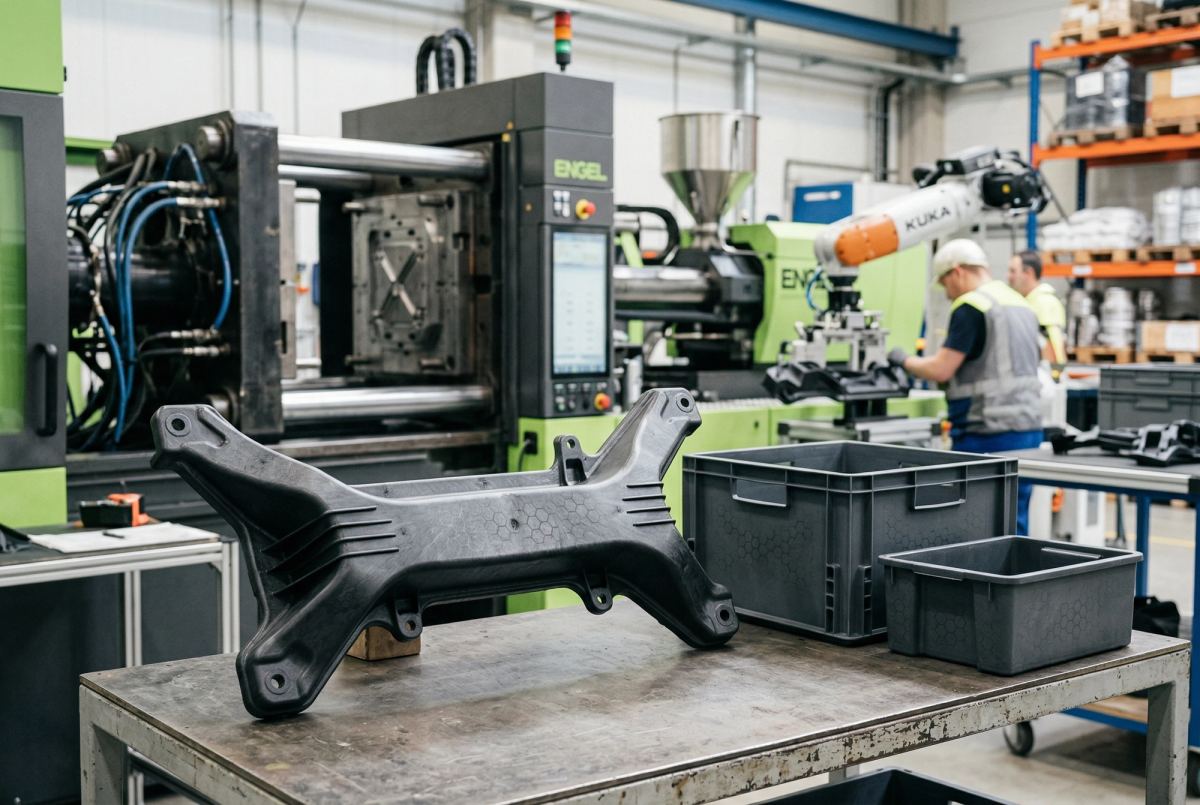
Polypropylene is one of the most widely used plastics in the world, but it is not always the first material people think about in advanced graphene discussions. That is a mistake. PP is lightweight, chemically resistant, inexpensive, and already used in automotive components, packaging, appliances, consumer goods, and industrial systems. When graphene is added to polypropylene, it becomes far more interesting. The combination can improve stiffness, conductivity, thermal behavior, and long-term durability while preserving the practical economics that make PP attractive in the first place. One of the biggest reasons graphene matters in polypropylene is that PP is already everywhere. A performance improvement in a niche polymer is useful, but an improvement in a mass-market polymer can be transformational. Engineers are interested in graphene-filled PP because even modest gains in strength, heat resistance, electrical behavior, or barrier performance can affect very large production volumes and many practical product lines. Graphene acts as a nanoscale reinforcing additive inside the polymer matrix. It can help distribute stress more effectively, improve stiffness, and in some cases support better dimensional stability. That matters because PP is valued for lightweight applications, but it is often limited by its mechanical performance in more demanding uses. Graphene offers a path toward stronger and more functional PP parts without giving up the basic low-density advantage of the material. Automotive applications are especially promising. Polypropylene is already used in interior trim, battery surrounds, under-hood covers, packaging structures, and lightweight molded parts. Adding graphene can improve the stiffness-to-weight balance and potentially support antistatic, conductive, or thermal management functions in selected applications. For vehicle systems where lower weight is directly tied to efficiency, graphene-filled PP may offer a useful material upgrade.
The Ubiquity and Limitations of Polypropylene
Polypropylene, a thermoplastic polymer, holds a dominant position in the global plastics market due to its exceptional balance of properties and cost-effectiveness. Its low density makes it ideal for lightweight applications, contributing to reduced material consumption and lower transportation costs. Chemically, PP exhibits excellent resistance to a wide range of acids, bases, and organic solvents, which ensures durability in harsh environments. Furthermore, its ease of processing through injection molding, extrusion, and blow molding allows for the efficient production of complex shapes and high-volume parts. These inherent advantages have cemented polypropylene's role across numerous industries, from consumer goods to industrial equipment.
Despite its widespread use, traditional polypropylene has certain limitations that restrict its application in high-performance sectors. Its mechanical properties, particularly stiffness and tensile strength, can be insufficient for structural components requiring high load-bearing capabilities. The material also suffers from a relatively low heat deflection temperature, making it unsuitable for applications exposed to elevated temperatures or requiring high thermal stability. Furthermore, as an inherently insulative polymer, PP lacks electrical conductivity, which precludes its use in antistatic or EMI shielding applications. Addressing these shortcomings traditionally involves blending with other polymers or incorporating conventional fillers, often at the expense of lightweighting or processability.
Graphene: The Nanoscale Game-Changer
Graphene, a single layer of carbon atoms arranged in a two-dimensional hexagonal lattice, possesses an extraordinary set of properties that make it an unparalleled additive for polymers. It is the strongest material ever tested, exhibiting tensile strength hundreds of times greater than steel, combined with remarkable flexibility. Electrically, graphene is an exceptional conductor, surpassing copper in electron mobility. Its thermal conductivity is also outstanding, making it highly efficient at dissipating heat. These properties, coupled with its extremely high surface area and low density, enable graphene to impart significant improvements to host materials even at very low loading levels.
When integrated into a polymer matrix like polypropylene, graphene acts as a multi-functional additive, enhancing mechanical, thermal, and electrical performance simultaneously. The atomic-scale interaction between graphene sheets and the polymer chains creates a highly efficient load transfer mechanism, distributing stress more effectively throughout the material. For electrical conductivity, graphene forms a percolation network within the insulating polymer, creating pathways for electron flow. Optimizing the dispersion of graphene within the polypropylene matrix is crucial; a well-exfoliated and uniformly distributed network ensures that the exceptional properties of individual graphene flakes translate into macroscopic improvements in the composite material. This nanoscale engineering transforms the fundamental characteristics of polypropylene.
Elevating Mechanical Strength and Thermal Resilience
The primary benefit of incorporating graphene into polypropylene is the profound enhancement of its mechanical properties. Graphene's exceptional strength and stiffness translate directly into a stiffer and more robust PP composite. Even at low graphene loadings, improvements in tensile strength, flexural modulus, and impact resistance have been consistently demonstrated. This means parts can be designed with thinner walls to achieve the same performance, leading to significant weight reductions, or existing part designs can be made far more durable without increasing material volume. The nanoscale reinforcement provided by graphene helps to effectively arrest crack propagation, increasing the material's toughness and overall longevity in demanding applications.
Beyond mechanical reinforcement, graphene significantly improves the thermal performance of polypropylene. Traditional PP has a relatively low heat deflection temperature, which limits its use in environments where heat buildup is a concern. Graphene, with its excellent thermal conductivity, can help to dissipate heat more efficiently throughout the composite, thus increasing its thermal stability. This allows graphene-filled PP components to withstand higher operating temperatures for longer durations without deforming or degrading. This thermal upgrade is particularly valuable in automotive under-hood components, where sustained exposure to elevated temperatures is common, and in industrial applications requiring enhanced heat resistance. The ability to manage heat extends the lifespan and reliability of the end product.
Unlocking Electrical Conductivity and Barrier Properties
One of the most transformative contributions of graphene to polypropylene is the impartation of electrical conductivity to an otherwise insulative polymer. By forming a percolating network throughout the PP matrix, graphene enables electrons to flow, rendering the composite electrically conductive or antistatic. This is achieved at significantly lower loading levels compared to traditional conductive fillers like carbon black, maintaining the lightweight advantage of PP. Antistatic properties are crucial for preventing electrostatic discharge (ESD) in sensitive electronic components and for reducing dust accumulation in consumer goods. For more robust conductivity, graphene-filled PP can be used in electromagnetic interference (EMI) shielding applications, protecting electronic devices from external interference and preventing their own emissions from disrupting other systems.
In addition to electrical conductivity, graphene also dramatically improves the barrier properties of polypropylene. The two-dimensional structure of graphene flakes creates a tortuous path for gas molecules and moisture, significantly reducing their permeation through the polymer matrix. This enhanced barrier performance is critical for packaging applications, particularly for food, pharmaceuticals, and sensitive chemicals, where extended shelf life and protection from environmental degradation are paramount. By slowing down the ingress of oxygen and moisture, graphene-filled PP packaging can help preserve product quality, reduce waste, and potentially decrease reliance on multi-layer or more expensive barrier materials. The ability to imbue PP with these advanced functional properties opens up entirely new design possibilities.
Advanced Applications: Automotive and Packaging Innovations
The automotive industry stands as a prime beneficiary of graphene-enhanced polypropylene, driven by the relentless demand for lightweighting and improved performance. Polypropylene is already ubiquitous in vehicles, from interior trim panels and door modules to under-hood covers and battery casings. By incorporating graphene, these components can achieve higher stiffness-to-weight ratios, directly contributing to fuel efficiency in internal combustion engine vehicles and extending range in electric vehicles. Graphene-filled PP can also provide essential antistatic properties for sensitive electronic systems, thermal management for battery enclosures, and potentially even structural reinforcement for improved crashworthiness. The ability to create lighter, stronger, and more functional parts with PP directly aligns with future automotive design imperatives.
Packaging represents another enormous market poised for significant transformation through graphene-PP composites. The existing widespread use of polypropylene in food containers, flexible packaging, and rigid industrial containers creates a vast opportunity. Graphene's ability to enhance barrier properties means longer shelf life for perishable goods, reducing food waste and the need for preservatives. Antistatic packaging for electronics components can prevent damage during transport and storage. Furthermore, the potential for lightweighting in packaging reduces material consumption and lowers shipping costs, contributing to more sustainable supply chains. The integration of graphene allows packaging to move beyond mere containment, offering active protection and potentially enabling smart packaging functionalities.
Challenges and Future Trajectories
While the potential of graphene in polypropylene is immense, widespread commercial adoption requires overcoming several key challenges. The most critical factor is achieving uniform and effective dispersion of graphene within the polypropylene matrix. Graphene flakes have a strong tendency to re-aggregate due to van der Waals forces, which can negate their reinforcing and conductive benefits. Advanced compounding techniques, such as melt blending with optimized shear forces and the use of masterbatches, are continuously being developed to address this. Additionally, the cost-effectiveness of graphene production and the scalability of graphene-PP composite manufacturing need to align with the high-volume, cost-sensitive nature of the PP market. Ensuring consistent quality and performance across large production batches remains a focus for material scientists and engineers.
Looking ahead, the trajectory for graphene-filled polypropylene is one of continuous innovation and market penetration. As graphene production scales and costs decrease, the economic viability of these advanced composites will improve significantly. Research efforts are focused on functionalizing graphene surfaces to enhance compatibility with the PP matrix, further improving dispersion and interfacial adhesion. The development of application-specific graphene grades, tailored for specific property enhancements, will also accelerate adoption. We can expect to see graphene-PP composites not only replacing traditional PP in existing applications but also enabling entirely new product categories that leverage their unique combination of lightweight, strength, conductivity, and barrier properties, driving progress across multiple industrial sectors.
Frequently Asked Questions
What are the primary benefits of adding graphene to polypropylene?
Graphene significantly enhances polypropylene's mechanical properties, making it stronger, stiffer, and more durable. It also improves thermal stability, allowing PP parts to withstand higher temperatures, and imparts electrical conductivity, making the composite antistatic or conductive for specialized applications. Furthermore, graphene can improve the barrier properties against gases and moisture.
How does graphene make polypropylene electrically conductive?
Graphene's highly conductive nature allows it to form a percolating network within the insulating polypropylene matrix. When enough graphene flakes are present and properly dispersed, they create continuous pathways for electrons to flow, transforming the composite into an electrical conductor or an antistatic material.
What are some key automotive applications for graphene-filled polypropylene?
In the automotive sector, graphene-PP can be used for lighter interior trim, structural components, under-hood covers, and battery enclosures. Its benefits include improved stiffness-to-weight ratio for fuel efficiency, antistatic properties for electronics, and enhanced thermal management for critical components like EV batteries.
How does graphene improve packaging with polypropylene?
For packaging, graphene primarily enhances barrier properties, making PP more resistant to the permeation of oxygen and moisture. This extends the shelf life of food and pharmaceuticals. It can also provide antistatic properties for electronic packaging and contribute to overall lightweighting for reduced shipping costs and material usage.
Is graphene-filled polypropylene more expensive than traditional PP?
Currently, graphene-filled polypropylene composites are generally more expensive than pure polypropylene due to the cost of graphene production and specialized compounding processes. However, as graphene manufacturing scales and becomes more efficient, and as the performance benefits are valued in high-demand applications, the cost-effectiveness is continuously improving, making it a viable material upgrade for many industries.
The integration of graphene into polypropylene marks a significant advancement in materials science, transforming a ubiquitous commodity plastic into a high-performance engineering material. By addressing the inherent limitations of conventional PP, graphene enables the creation of lighter, stronger, more thermally stable, and electrically functional components. The impact on industries like automotive and packaging is profound, driving innovation in lightweighting, extending product life, and enabling entirely new functionalities. As the science of graphene dispersion and composite manufacturing continues to mature, we anticipate graphene-filled polypropylene will become a cornerstone material for a new generation of advanced products, delivering unparalleled performance and economic value across global markets.