Coatings & Materials, General & Market
Graphene in Polypropylene Plastics: Lightweight Conductive Parts for Automotive and Packaging
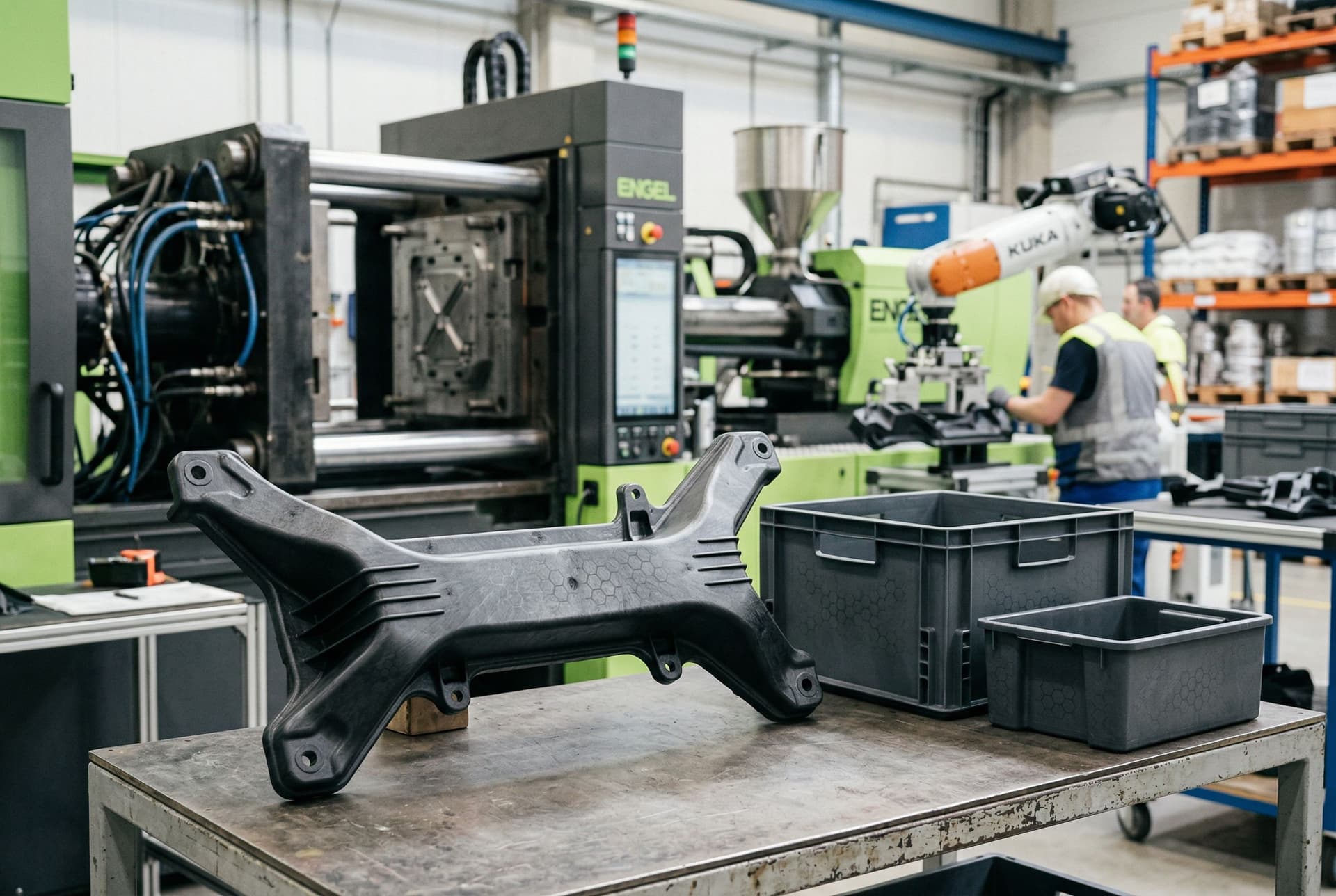
Polypropylene is one of the most widely used plastics in the world, but it is not always the first material people think about in advanced graphene discussions. That is a mistake. PP is lightweight, chemically resistant, inexpensive, and already used in automotive components, packaging, appliances, consumer goods, and industrial systems. When graphene is added to polypropylene, it becomes far more interesting. The combination can improve stiffness, conductivity, thermal behavior, and long-term durability while preserving the practical economics that make PP attractive in the first place.
One of the biggest reasons graphene matters in polypropylene is that PP is already everywhere. A performance improvement in a niche polymer is useful, but an improvement in a mass-market polymer can be transformational. Engineers are interested in graphene-filled PP because even modest gains in strength, heat resistance, electrical behavior, or barrier performance can affect very large production volumes and many practical product lines.
Graphene acts as a nanoscale reinforcing additive inside the polymer matrix. It can help distribute stress more effectively, improve stiffness, and in some cases support better dimensional stability. That matters because PP is valued for lightweight applications, but it is often limited by its mechanical performance in more demanding uses. Graphene offers a path toward stronger and more functional PP parts without giving up the basic low-density advantage of the material.
Automotive applications are especially promising. Polypropylene is already used in interior trim, battery surrounds, under-hood covers, packaging structures, and lightweight molded parts. Adding graphene can improve the stiffness-to-weight balance and potentially support antistatic, conductive, or thermal management functions in selected applications. For vehicle systems where lower weight is directly tied to efficiency, graphene-filled PP may offer a useful material upgrade.
Packaging is another important opportunity. PP is used in rigid containers, films, closures, and industrial packaging systems. Graphene can improve barrier properties in some polymer systems, making it harder for gases or moisture to move through the material. For specialized packaging, this may extend shelf life, improve environmental resistance, or support more durable transport solutions. It is not a universal answer for every package, but it can be a high-value additive where performance matters.
Electrical functionality is another reason graphene-filled PP gets attention. Standard PP is an insulator. Graphene can create conductive or antistatic pathways when loading and dispersion are tuned properly. That makes graphene-PP relevant for electronics packaging, industrial trays, battery-adjacent parts, and lightweight EMI-conscious housings where polymer weight and processability still matter.
Thermal behavior also becomes more useful. Graphene can improve thermal conductivity compared with neat PP, which may help spread heat more evenly in applications near electronics, batteries, or warm operating environments. While PP will not become a metal heat sink, it can become more capable in lightweight technical roles when its heat-handling properties improve.
As with any graphene composite, dispersion quality is critical. Poorly dispersed graphene behaves more like a defect than a reinforcement. The best performance comes from controlled compounding, realistic loading levels, and application-specific design. But when those are done well, graphene in polypropylene can deliver practical gains in one of the world’s most commercially important plastics.
Graphene in polypropylene matters because it combines advanced material science with mass-market relevance. Instead of improving an exotic polymer with limited volume, it upgrades a plastic that already plays a major role in modern manufacturing. That makes graphene-filled PP one of the most commercially interesting composite directions for automotive, packaging, and industrial products.