applications
Graphene in Plant Growth: Can Advanced Carbon Materials Improve Yield, Root Health, and Stress Tolerance?
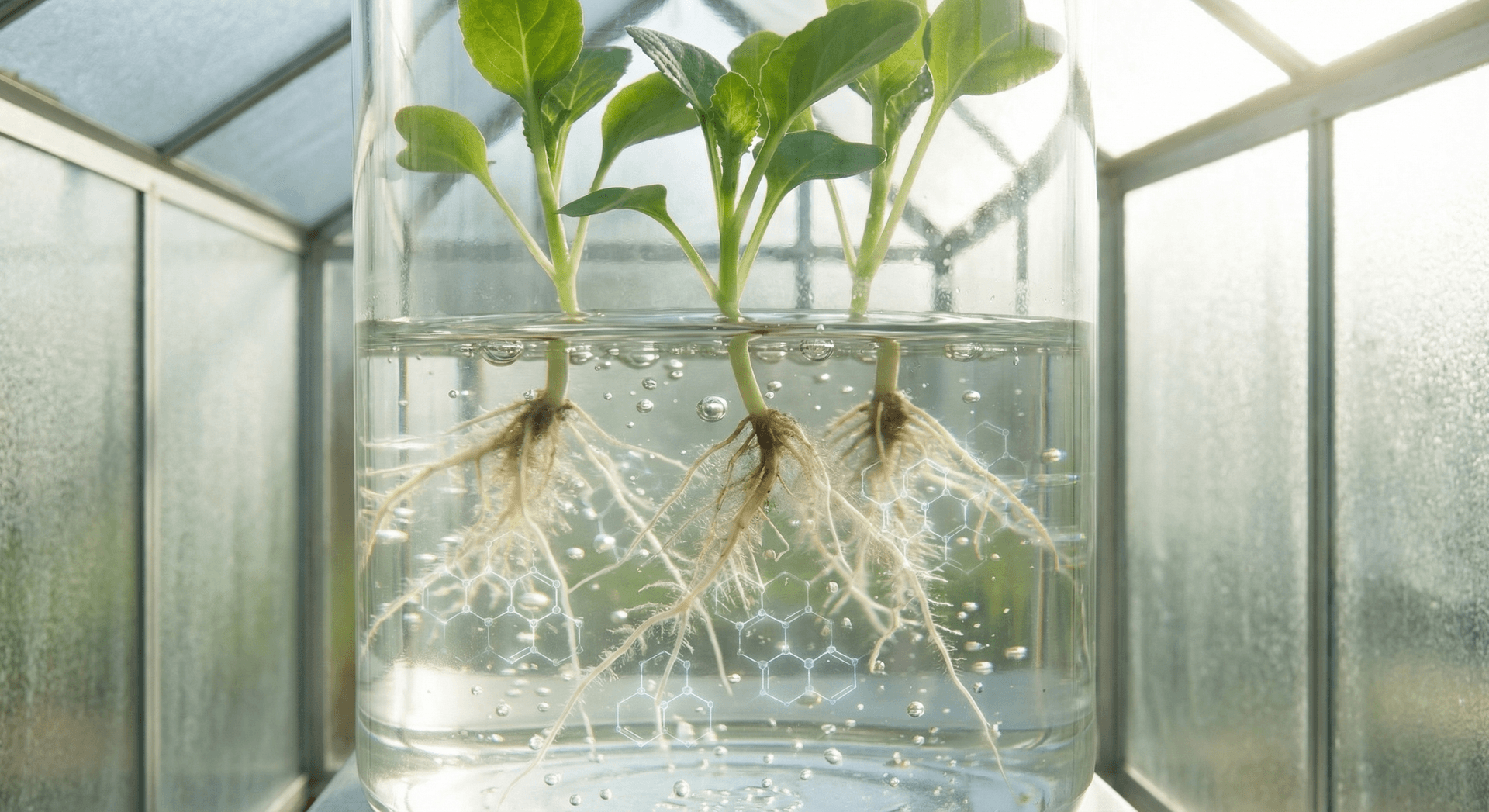
Graphene in Plant Growth: Can Advanced Carbon Materials Improve Yield, Root Health, and Stress Tolerance?
Agriculture is entering an era where productivity gains must come from smarter inputs, not just higher input volume. Farmers are being asked to produce more food with less water, less fertilizer loss, and greater climate resilience. At the same time, crops are increasingly exposed to heat stress, salinity, soil degradation, and unpredictable weather cycles. In this context, researchers are exploring whether advanced materials can complement traditional agronomy. One of the most discussed materials in this space is graphene and its derivatives.
Graphene is a carbon-based nanomaterial with exceptional surface area, tunable chemistry, and unique physical properties. In plant science, graphene is not treated as a magic fertilizer. Instead, it is investigated as a potential enhancer in specific delivery systems and growth environments: seed treatments, nutrient carriers, soil amendments, hydroponic systems, and stress-protection formulations. The key question is practical: can graphene-based materials improve plant performance safely, consistently, and economically?
Why plant growth systems need innovation
Conventional agriculture relies heavily on broad application of fertilizers and crop protection products. This approach can be effective but often inefficient. Nutrients may leach before uptake, applied compounds can degrade quickly, and stress events can reduce plant utilization efficiency. The result is a gap between what is applied and what the plant actually uses.
Future growth strategies increasingly focus on precision input management: delivering nutrients and protective compounds at the right dose, in the right place, at the right time. Materials that can improve retention, controlled release, and root-zone interaction are highly valuable. This is where graphene-based carriers and composites are being tested.
Potential mechanisms in plant systems
Graphene and graphene oxide may influence plant growth through several pathways when used at appropriate concentrations:
1. Improved seed vigor and germination support
In some studies, low-dose graphene derivatives have been linked to faster or more uniform germination, potentially through improved water interaction and seed-surface dynamics.
2. Root-zone interaction enhancement
Graphene-based materials may alter microenvironment behavior near roots, affecting moisture retention and nutrient availability patterns.
3. Nutrient delivery and controlled release
Graphene’s large surface area enables it to serve as a carrier scaffold in composite fertilizers, potentially reducing rapid nutrient loss.
4. Stress tolerance support
Under certain conditions, graphene-based formulations have been associated with improved plant responses to salinity, drought pressure, or oxidative stress.
5. Antimicrobial and protective interfaces
In controlled settings, graphene-derived systems are being explored for suppression of selected pathogens or biofilm dynamics near roots.
These effects are highly context-dependent. Species, dose, particle chemistry, soil type, and application method all matter.
Dose is critical: more is not better
One of the most important lessons from nanomaterial agronomy is that dose windows can be narrow. Low concentrations may be beneficial in some conditions, while excessive concentrations can inhibit growth or disturb physiological balance. This is why graphene for plant growth must be developed as a calibrated agronomic tool, not a generic additive.
Practical development requires:
• concentration-response mapping by crop,
• morphology and physiology monitoring,
• root and leaf tissue analysis,
• long-duration growth and yield validation.
Without careful dose optimization, results become inconsistent and difficult to scale.
Applications in hydroponics and controlled environments
Controlled-environment agriculture provides a useful testing ground for graphene-enabled approaches because variables can be measured precisely. In hydroponic and greenhouse systems, graphene composites may be used in filtration, nutrient stabilization, or targeted delivery matrices.
Potential benefits include more stable nutrient dynamics, reduced waste, and improved root interface conditions. However, any operational benefit must be verified against system-level KPIs: growth rate, biomass, nutrient use efficiency, and final yield quality.
Open-field agriculture: opportunities and constraints
Field deployment is more complex than lab or greenhouse trials. Soil heterogeneity, microbial ecology, rain cycles, and seasonal variability can change outcomes significantly. For graphene-based growth enhancers to succeed in open-field agriculture, formulations must be robust under real farm conditions and compatible with existing equipment and workflows.
The strongest route to adoption is likely through integration with familiar products: coated fertilizers, seed priming systems, or irrigation-compatible suspensions with proven stability.
Safety and environmental responsibility
Any nanomaterial used in agriculture must meet high safety standards. Beyond crop response, developers must evaluate soil health, microbial community impact, runoff behavior, and food-chain safety. Responsible deployment requires transparent testing and long-term monitoring.
Key assessment areas include:
• persistence in soil and water systems,
• interaction with beneficial microbes,
• uptake and translocation in edible tissues,
• ecotoxicology in non-target organisms,
• residue and regulatory compliance.
If these are not addressed rigorously, promising growth gains will not translate into acceptable commercial products.
Economic feasibility and farmer adoption
For farmers, performance claims are only meaningful if economics work. Any graphene-enabled plant-growth solution must show clear value versus current practice: higher yield stability, reduced input waste, improved quality, or better stress resilience.
Adoption criteria typically include:
• cost per acre versus baseline,
• consistency across seasons,
• compatibility with existing operations,
• measurable return on investment.
Pilot programs should therefore be designed around real farm constraints, not only controlled trials.
Where near-term impact is most likely
Near-term practical impact is most likely in high-value cropping systems and controlled environments where precision management already exists. Candidate segments include:
• greenhouse vegetables,
• specialty horticulture,
• seed treatment programs,
• hydroponic and vertical farming operations,
• stress-prone regions needing input efficiency.
As data quality improves, broader field-crop adoption may follow for validated use cases.
Research quality matters more than hype
Graphene in agriculture attracts attention quickly, but results can be overgeneralized. A positive result in one species or setup does not guarantee universal benefit. The field needs standardized protocols, reproducible material characterization, and side-by-side comparisons against conventional agronomic tools.
The most credible studies are those that report full context: graphene type, concentration, application method, growth medium, climate conditions, and statistical replication. Without this, it is difficult to distinguish real agronomic signal from experimental noise.
A practical roadmap for development
A disciplined product roadmap for graphene in plant growth should include:
1. Crop-specific dose optimization,
2. Multi-environment validation (lab, greenhouse, field),
3. Soil and microbiome safety assessment,
4. Formulation stabilization for storage and application,
5. Economic benchmarking against existing inputs,
6. Regulatory pathway alignment by region.
This sequence reduces risk and improves the chance of meaningful, scalable outcomes.
Conclusion
Graphene has realistic potential to support plant growth, but only when treated as a precision agronomic material rather than a universal cure. Its strongest opportunities lie in controlled delivery, root-zone optimization, and stress-management strategies that improve input efficiency and crop resilience.
The path forward is evidence-driven: calibrated dosing, robust safety testing, reproducible field validation, and clear economic value for growers. If these conditions are met, graphene-based plant-growth technologies could become a useful layer in the next generation of sustainable agriculture.