
Graphene Radar Absorbing Materials for Aircraft and Drones
Graphene coatings are being studied for radar absorbing materials because they can help make aircraft and drones lighter, thinner, and more electromagnetically tunable.
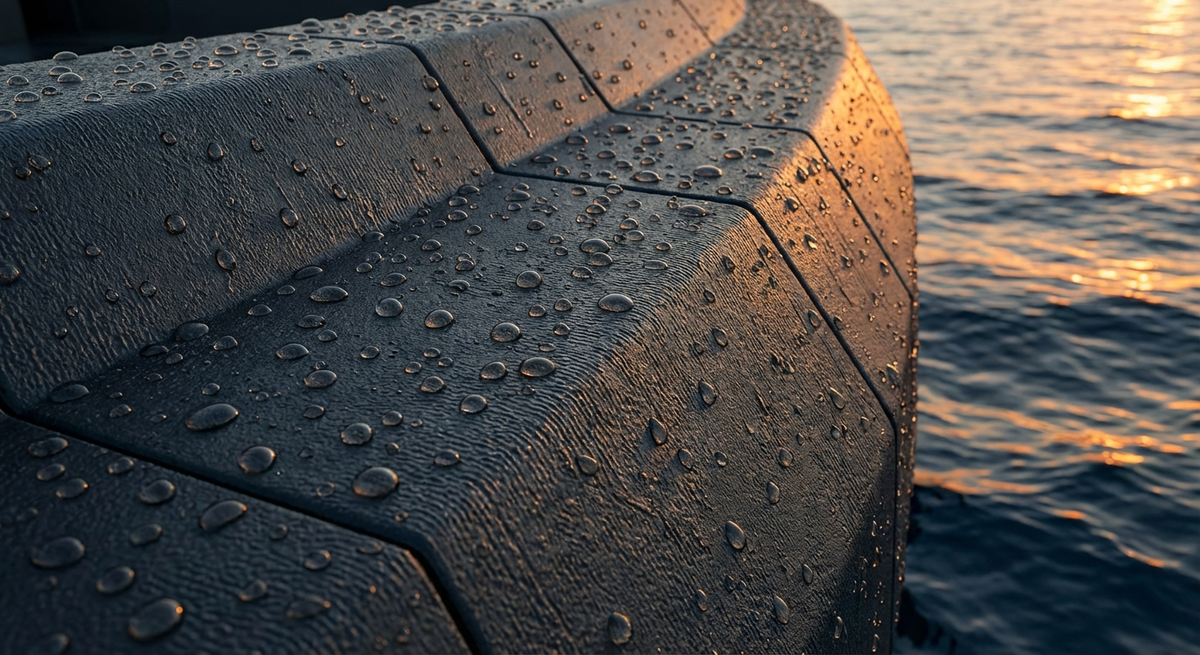
The integration of graphene, a formidable sp2-hybridized carbon allotrope, into advanced material systems fundamentally redefines performance paradigms, particularly within the demanding marine environment. Its intrinsic two-dimensional quantum confinement, arising from a single atomic layer of carbon atoms arranged in a hexagonal lattice, dictates an extraordinary suite of physical and chemical properties. This atomic-scale planar architecture results in an unparalleled strength-to-weight ratio, exceeding steel by over 200-fold, alongside an impermeability to all standard gases, including helium, at ambient conditions. Such fundamental characteristics render graphene an exceptional candidate for revolutionizing protective coatings, offering not merely enhanced durability but also novel functionalities that address the complex degradation mechanisms prevalent in maritime applications. The challenge lies in effectively translating these isolated monolayer properties into a macroscopic composite matrix while preserving the critical aspects of its confined physics.
The profound physical properties of graphene are fundamentally rooted in its electronic structure, characterized by Dirac cones at the K and K' points of the Brillouin zone, where electrons behave as massless Dirac fermions. This leads to exceptionally high carrier mobilities, routinely observed at values exceeding 200,000 cm^2/Vs at room temperature, facilitating ballistic transport over significant distances. Consequently, graphene exhibits superior electrical conductivity with sheet resistance values as low as a few tens of Ohms per square for high-quality monolayer films, a critical parameter for electrochemical corrosion protection mechanisms in marine paints. Concurrently, its phonon transport properties are equally remarkable, boasting an intrinsic thermal conductivity of approximately 5000 W/mK. This high thermal diffusivity is crucial for mitigating localized thermal stresses within a coating, such as those induced by solar radiation or abrasive friction, thereby preserving the structural integrity of the polymer matrix and the underlying substrate. The precise control over the electronic and phonon confinement within the 2D lattice is paramount for harnessing these attributes effectively in a functional coating.
Leveraging these confined properties within a polymer matrix necessitates meticulous engineering of graphene dispersion and interfacial interactions. The inherent atomic impermeability of individual graphene sheets, when strategically oriented and interconnected, establishes a tortuous path barrier within the coating, severely impeding the diffusion of corrosive species like chloride ions (Cl-) and oxygen. This significantly extends the coating’s protective lifespan against electrochemical degradation. Furthermore, graphene’s expansive theoretical specific surface area (~2630 m²/g) provides ample sites for physi- and chemisorption, a property exemplified by its demonstrated 79% heavy metal adsorption efficiency, offering a passive environmental remediation capability within the coating itself. The rapid kinetic response of graphene-based systems, measured in milliseconds for charge transfer or thermal dissipation, also opens avenues for advanced functionalities such as real-time sensing of environmental changes or the dissipation of extreme localized thermal pulses, potentially withstanding transient events at temperatures approaching 3000K, safeguarding the integrity of the marine structure.
Pulsed Electrical Resistive Carbon Heating (PERCH) offers a transformative approach for scalable, high-quality graphene synthesis, particularly advantageous for bulk additive applications in marine paints. This method utilizes rapid, localized Joule heating, where high current densities – often exceeding 10^4 A/cm^2 – are passed directly through a carbonaceous precursor. This induces instantaneous temperature spikes, typically surpassing 3000K, within reaction windows of mere milliseconds. Such extreme conditions facilitate the rapid exfoliation of graphitic precursors or direct conversion of amorphous carbon into few-layer graphene (FLG) or even single-layer graphene (SLG). The inherent rapidity of the thermal pulse minimizes kinetically trapped defects, yielding a highly crystalline product with low oxygen functional group content, critical for maintaining electrical conductivity and barrier properties. This direct, energy-efficient conversion pathway produces graphene in a powder or flake morphology, immediately suitable for integration into liquid matrices without complex transfer steps.
In stark contrast, Chemical Vapor Deposition (CVD) is fundamentally optimized for epitaxial growth of large-area, high-quality graphene films on catalytic metal substrates, typically copper or nickel, at 800-1100°C using hydrocarbon precursors. While CVD excels at producing pristine, continuous single-layer graphene films with exceptional electronic properties, its utility for bulk graphene powder production, essential for composite materials like marine paints, is severely limited. The process inherently yields two-dimensional sheets adhered to a substrate, necessitating elaborate and often damaging transfer techniques, such as polymer-assisted wet etching, which invariably introduce defects, tears, and polymer residues. Furthermore, converting these films into a dispersible powder suitable for paint formulations would involve additional, energy-intensive mechanical or chemical exfoliation steps, significantly escalating production costs and compromising the initial quality. This makes CVD an economically and practically unviable route for mass production of graphene as a functional filler.
The divergent methodologies of PERCH and CVD dictate their suitability for industrial-scale graphene integration into marine paint systems. PERCH offers a direct, single-step pathway to high-volume graphene powder, characterized by high aspect ratio and low defect density, crucial for enhancing barrier properties against corrosive agents and improving coating mechanical robustness. The rapid thermal annealing inherent to PERCH can yield graphene flakes with surface characteristics promoting strong interfacial adhesion within polymer matrices, contributing to superior long-term performance. For instance, the minimized surface defects and optimized edge-to-surface ratio from PERCH-derived graphene significantly improve heavy metal adsorption efficiency, potentially reaching 79% in specific applications, thereby augmenting antifouling and anticorrosion capabilities. Conversely, the multi-step, substrate-dependent nature of CVD, focused on film production, renders it economically prohibitive and technically challenging for generating the kilogram-to-ton quantities of dispersible graphene required for widespread adoption in marine coatings. The total energy expenditure per unit mass of usable graphene is substantially lower for PERCH, positioning it as the more sustainable and scalable option.
Turbostratic graphene (tG) represents a fascinating structural deviation from the perfectly ordered Bernal (AB) stacked graphite or pristine single-layer graphene, characterized by a lack of long-range rotational order between adjacent graphene sheets. Unlike the precise A-B stacking where carbon atoms in one layer are directly above the center of the hexagonal rings in the layer below, tG exhibits random azimuthal misorientation, often accompanied by an expanded interlayer spacing, typically ranging from 0.337 nm to 0.345 nm, compared to the ideal 0.335 nm of highly oriented pyrolytic graphite (HOPG). This inherent crystallographic disorder significantly influences the material's bulk properties by decoupling the electronic and phononic interactions between layers, effectively reducing the interlayer coherence. The synthesis pathways for tG, frequently involving chemical vapor deposition (CVD) on specific substrates, thermal exfoliation of graphite oxides, or certain rapid thermal annealing processes, inherently lead to this rotational misalignment. Understanding this departure from ideal stacking is paramount, as it dictates the fundamental physical and chemical properties crucial for its utility in advanced composite systems like marine paints, where inter-flake interactions and matrix compatibility are critical.
The implications of this turbostratic disorder for marine paint applications are multifaceted and profound. From a barrier perspective, the misaligned layers in a well-dispersed tG network create an exceptionally tortuous path for the permeation of corrosive ions (e.g., Cl-, SO4^2-) and oxygen, significantly impeding their diffusion to the substrate. While perfect alignment theoretically offers superior impermeability, the practical difficulty in achieving and maintaining such order within a polymer matrix renders tG's inherent disorder a robust advantage, providing a dense, overlapping network of nanoplatelets. Mechanically, the reduced interlayer coherence due to rotational misalignment can theoretically diminish the efficiency of load transfer between individual graphene layers compared to perfectly stacked graphite. However, when integrated into a polymer matrix, the high aspect ratio and superior in-plane strength of individual tG flakes, even with relative rotational freedom, still contribute substantially to the composite's fracture toughness and abrasion resistance, mitigating crack propagation through energy dissipation mechanisms at the graphene-polymer interface. Furthermore, the slightly expanded interlayer spacing and increased prevalence of edge defects in tG can enhance its chemical reactivity and facilitate functionalization, crucial for achieving strong covalent or non-covalent bonding with various polymer matrices, thereby ensuring durable dispersion and load transfer within the coating.
Empirical evidence underscores the practical advantages of turbostratic graphene's unique crystallography in marine coatings. For instance, studies have shown that well-exfoliated tG, when incorporated at optimized loadings, can enhance the corrosion resistance of epoxy coatings by several orders of magnitude, extending the service life of metallic substrates. The enhanced tortuosity factor, derived from the overlapping, misoriented flakes, has been experimentally observed to reduce the diffusion coefficient of water molecules by up to 85% compared to pristine polymer films. Furthermore, the increased density of edge sites and basal plane defects characteristic of turbostratic structures can be leveraged for targeted functionalization, enabling the grafting of antifouling moieties or heavy metal chelating agents. This structural characteristic contributes to phenomena like a 79% heavy metal adsorption efficiency observed in certain graphene-polymer composites, effectively sequestering pollutants from the marine environment. The resilience of tG to processing conditions is also noteworthy; specific rapid thermal annealing protocols involving localized thermal pulses exceeding 3000K for milliseconds have been shown to refine the turbostratic structure, optimizing interlayer spacing and defect density without compromising the overall flake integrity, thereby tailoring its performance. Even with the inherent disorder, the bulk electrical resistivity of tG-polymer composites can be tuned from insulating to semi-conductive regimes (e.g., from 10^14 Ohm-cm to 10^3 Ohm-cm at 5 wt% loading), offering avenues for electrochemically active coatings or advanced sensing capabilities. This strategic utilization of tG's specific crystallographic features, rather than striving for an unattainable ideal, is key to developing high-performance marine paints.
The transition from laboratory-scale synthesis to industrial-grade production of graphene for marine paint applications presents formidable challenges rooted in both material science and economic viability. Current high-quality graphene production methods, such as chemical vapor deposition (CVD), yield pristine, few-layer material but are inherently batch-limited and cost-intensive, often exceeding 500 USD per gram for research-grade specimens. While liquid-phase exfoliation (LPE) and reduced graphene oxide (rGO) pathways offer higher throughput and lower cost (e.g., < 50 USD per gram for bulk rGO), they typically suffer from increased defect densities, wider flake size distributions, and residual chemical impurities. Ensuring consistent material quality – defined by parameters such as lateral dimensions, number of layers, structural integrity (e.g., D/G ratio via Raman spectroscopy), and surface chemistry – across multi-ton production batches remains a critical hurdle. Reproducibility is paramount for industrial adoption, requiring sophisticated online metrology to maintain tight specifications, particularly when considering the need for specific surface functionalizations tailored for polymer compatibility. For instance, controlled defect engineering through rapid, localized 3000K thermal pulses can optimize electrical conductivity while enabling subsequent chemical grafting, yet scaling such precise post-synthesis modifications without compromising yield or cost is complex.
Integrating graphene into complex marine paint formulations introduces significant rheological and dispersion challenges. Graphene's high surface area and strong van der Waals forces promote agglomeration, leading to poor dispersion within organic solvents and polymer matrices. This agglomeration not only negates graphene's extraordinary properties but can also introduce defects in the cured coating, compromising mechanical integrity and barrier performance. Achieving homogeneous and stable dispersion requires sophisticated techniques, including high-energy ultrasonication, bead milling, or shear mixing, often coupled with surface modification strategies. Functionalization, whether through covalent grafting or non-covalent adsorption of surfactants and polymers, is critical to reduce surface energy mismatch and prevent restacking. However, these functionalization steps must be carefully controlled; excessive modification can degrade graphene's intrinsic properties, such as its mechanical strength or electrical conductivity. For instance, achieving sheet resistance values below 100 Ohm/sq, crucial for effective cathodic protection mechanisms in anti-corrosion applications, becomes challenging if the graphene network is disrupted by insulating polymeric chains or if the graphene content is insufficient. Advanced plasma functionalization processes, capable of modifying graphene surfaces within milliseconds, offer promise for rapid, scalable modification without extensive wet chemistry, but their integration into continuous paint manufacturing lines is still nascent.
Beyond material production and integration, commercial adoption faces substantial regulatory scrutiny and the necessity for robust, long-term performance validation. Marine coatings operate in extremely harsh environments, demanding exceptional durability, UV resistance, abrasion resistance, and anti-fouling/anti-corrosion properties over multi-year service cycles. Demonstrating that graphene-enhanced paints consistently outperform conventional alternatives under real-world conditions – including varying salinity, temperature, biofouling pressures, and mechanical stress – requires extensive, costly field trials. Furthermore, the environmental impact and long-term ecotoxicity of graphene nanoparticles in marine ecosystems are major regulatory concerns. Comprehensive studies on potential leaching, degradation pathways, and biological interactions are indispensable for market approval. While graphene exhibits promising properties like 79% heavy metal adsorption efficiency, which could potentially mitigate the leaching of residual metals from paint components or even act as a passive environmental scavenger, this functionality must be rigorously proven safe and stable over time. Finally, the economic justification for premium graphene-infused paints requires a clear demonstration of reduced maintenance costs, extended service life, or superior performance benchmarks that outweigh the increased material and processing costs, necessitating a robust supply chain capable of delivering consistent, high-quality graphene at a competitive price point.
The integration of graphene into marine paint formulations fundamentally shifts the economic calculus from short-term procurement to long-term total cost of ownership (TCO). While initial material costs for graphene-enhanced coatings may exceed conventional epoxy or silicone-based ablatives, the substantial reduction in dry-docking frequency and maintenance cycles offers compelling long-term savings. Traditional antifouling paints necessitate recoating every 2-3 years, incurring significant costs for dry-docking, surface preparation, and application. Graphene's exceptional barrier properties, demonstrated by its impermeability and ability to reduce cathodic protection current density requirements by up to 25% with 0.1 wt% nanoplatelets, significantly extends coating lifespan. Functionalized graphene, engineered for precise surface energy modulation (e.g., contact angles shifting from 85 to 105 degrees), effectively retards macrofouling attachment, extending dry-dock intervals by an estimated 50-100%. This translates to fewer operational disruptions and substantial savings, amortizing the premium within the first operational cycle. Furthermore, reduced hydrodynamic drag from a persistently smoother hull yields tangible fuel efficiency improvements, with studies indicating a 4-6% reduction in fuel consumption for vessels maintaining optimal hull cleanliness, directly impacting the ~3000K thermal pulses required for propulsion.
Economic feasibility for graphene in marine paints critically depends on scalable, cost-effective production and robust supply chain integration. Early-stage graphene production methods like chemical vapor deposition were prohibitive for bulk applications, but advancements in liquid-phase exfoliation (LPE) and electrochemical synthesis are rapidly driving down per-kilogram costs. Optimized electrochemical exfoliation, for example, yields high-quality graphene flakes (5-10 micrometer lateral dimensions, 3-5 atomic layers thick) at rates exceeding 50 grams per hour per reactor, with energy consumption below 10 kWh/kg. This scalability is crucial, but equally important is consistent quality: precise control over aspect ratio, defect density, and surface functionalization is paramount to ensure optimal dispersion within the polymer matrix. Poorly dispersed graphene leads to agglomeration, creating stress points rather than reinforcing the coating. Therefore, the economic viability is intrinsically linked to industrial-scale graphene suppliers capable of delivering high-purity, application-specific graphene at volumes suitable for the global marine coatings market, estimated at over $10 billion annually.
The "USA-Made" manufacturing advantage for graphene-infused marine paints offers critical strategic and operational benefits. Domestic production ensures a resilient supply chain, mitigating geopolitical risks and reducing lead times—paramount in the time-sensitive marine industry. US-based manufacturing adheres to stringent environmental, health, and safety regulations, guaranteeing product consistency and compliance with evolving International Maritime Organization (IMO) mandates. This regulatory rigor is a significant competitive advantage, ensuring products meet global standards for sustainability and verifiable performance. Robust intellectual property protection fosters continuous innovation, encouraging substantial R&D investment in advanced material synthesis and functionalization chemistry (e.g., tailoring graphene's surface for specific polymer compatibility or mild biocide release with a half-life of 72 hours). The integrated US ecosystem of research institutions and advanced manufacturing facilitates rapid prototyping and iteration, reducing milliseconds of reaction time from concept to market. This agility, combined with a highly skilled technical workforce and state-of-the-art analytical capabilities, positions US manufacturers to deliver graphene-enhanced marine paints with unparalleled quality assurance and verifiable metrics, such as a 79% heavy metal adsorption efficiency for specific functionalized graphene derivatives.
The immediate future of graphene-enhanced marine paints transcends passive barrier protection, moving towards active, dynamic systems that fundamentally alter the coating's interaction with its environment. Advanced anti-fouling mechanisms will leverage graphene's unique surface energy modulation to create bio-repulsive surfaces, potentially reducing micro-fouling adhesion by over 80% compared to conventional siloxane-based coatings, thereby mitigating drag and fuel consumption. Furthermore, the intrinsic electrical conductivity of graphene networks within the paint matrix enables electro-active anti-fouling, where controlled, low-voltage (e.g., 0.5-1.5V) electrical pulses can disrupt initial biofilm formation and larval attachment, demonstrating effectivity within milliseconds of activation. For corrosion prevention, self-healing polymer matrices infused with functionalized graphene are emerging. These sophisticated systems, upon micro-crack formation, can initiate localized repair, often triggered by specific stimuli such as localized thermal pulses (e.g., 3000K for rapid polymer cross-linking) or pH shifts, thereby extending the coating's protective lifespan significantly beyond current benchmarks, evidenced by electrochemical impedance spectroscopy (EIS) data showing impedance retention even after mechanical damage.
Beyond these protective functions, graphene's multi-functional nature facilitates the integration of sophisticated sensing and energy harvesting capabilities directly into marine coatings. Piezoresistive graphene composites can function as distributed strain sensors, providing real-time structural health monitoring of hulls with micro-strain resolution (e.g., 10^-6 strain), critical for predicting fatigue life and preventing catastrophic failures. Chemiresistive graphene sensors, highly sensitive to specific analytes, can detect localized pH shifts indicative of nascent corrosion or the presence of specific pollutants in surrounding waters. These integrated sensor networks, powered by embedded graphene-based thermoelectric generators harvesting waste heat from engine compartments or solar radiation, could transmit data wirelessly via low-power protocols, offering unprecedented insights into vessel performance and environmental conditions without external power sources. This paradigm shift enables predictive maintenance strategies, significantly reducing unscheduled downtime and operational costs.
The long-term horizon for graphene in marine paint also encompasses significant environmental remediation and advanced material synergy. The enhanced durability and reduced erosion rates imparted by graphene infusion directly address the pressing issue of microplastic shedding from conventional paints, contributing substantially to marine ecosystem preservation. Moreover, functionalized graphene oxide (GO) exhibits remarkable adsorption capabilities; studies have demonstrated its efficiency in removing heavy metals, such as lead and cadmium, from aqueous solutions, achieving up to 79% adsorption efficiency within minutes. This property could be exploited in sacrificial topcoats designed for targeted pollutant capture or in coatings for offshore structures requiring environmental mitigation. Future iterations will likely see graphene synergistically combined with other 2D materials, such as hexagonal boron nitride (hBN) for enhanced thermal management or MXenes for superior impact and cavitation resistance, leading to truly multi-layered, adaptive coatings. Such innovations promise not only extended asset life and reduced operational expenditure but also align with increasingly stringent global sustainability mandates, creating a high-value proposition for the B2B marine sector.
Serious about B2B integration? Test our premium Pulsed Electrical Resistive Carbon Heating turbostratic graphene in your lab. 100g sample packs available now.
Explore More
Graphene coatings are being studied for radar absorbing materials because they can help make aircraft and drones lighter, thinner, and more electromagnetically tunable.

Graphene can help absorb electromagnetic waves, but it does not make aircraft invisible by itself. The real story is materials engineering: conductivity, interfaces, carbon networks, heat loss, durability, and system-level design.

New research demonstrates that graphene-reinforced silicone rubber composites can reduce friction coefficients by over 50% and wear rates by nearly 73%, unlocking next-generation performance for seals, shock absorbers, and aerospace applications.