Graphene in Marine Paint: A Practical Guide to Longer-Lasting, Lower-Maintenance Coatings
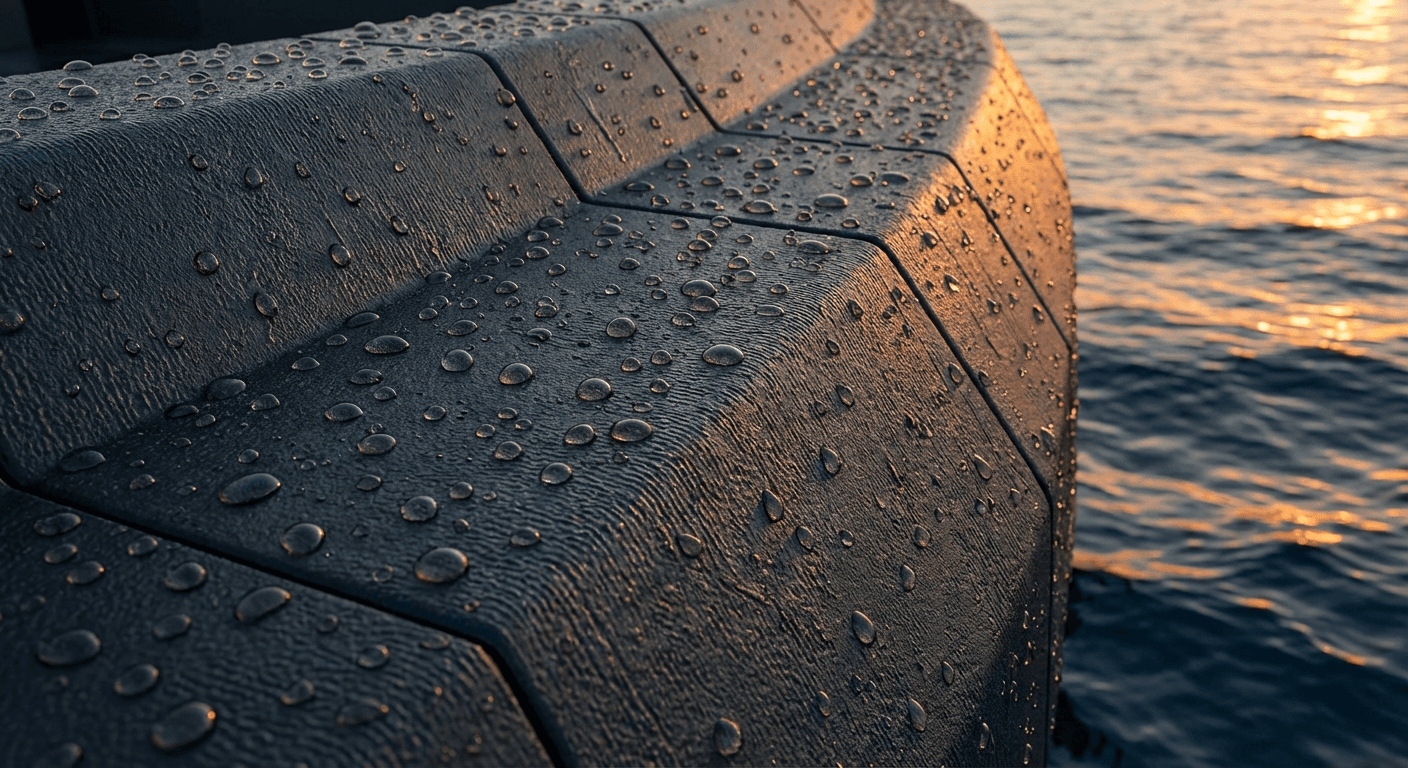
Marine operators have always lived with a harsh reality: saltwater attacks everything. Hulls, decks, offshore structures, and port hardware all face a constant combination of moisture, oxygen, chloride ions, UV exposure, and mechanical wear. Traditional coating systems have improved dramatically over the past few decades, but downtime, recoating costs, and long-term corrosion remain expensive problems. This is exactly where graphene-enhanced marine paints are attracting serious attention.
Graphene is a one-atom-thick carbon material with extraordinary properties: high mechanical strength, chemical stability, and excellent barrier performance when used correctly. In marine coatings, graphene is not used as a magic standalone layer. Instead, it is usually incorporated into coating matrices such as epoxy, polyurethane, or zinc-rich primer systems. The goal is practical: make coatings harder for water and corrosive species to penetrate, improve durability, and extend service intervals.
The core idea behind graphene in marine paint is often called the tortuous-path effect. In a conventional coating, water and ions can find pathways through micro-defects, porosity, or weak interfaces. When graphene sheets are dispersed well in the matrix, they create a more complex pathway for diffusion. Instead of moving straight toward the metal substrate, corrosive species must travel around many nano-scale barriers. This slows ingress, lowers corrosion kinetics, and helps preserve adhesion over time.
From a corrosion engineering perspective, that matters a lot. Corrosion in marine environments is rarely a single event; it is a gradual process driven by transport of reactants to the metal surface and electrochemical reactions at defects. A coating that delays transport and remains mechanically intact under stress can significantly reduce total lifecycle cost. In many published studies, graphene-modified coatings show lower corrosion current density, higher impedance in electrochemical impedance spectroscopy (EIS), and better appearance after prolonged salt spray or immersion testing compared with unfilled controls.
One of the strongest practical opportunities is combining graphene with established marine coating chemistries rather than replacing them. For example, epoxy systems are widely trusted for adhesion and barrier performance, but they can still absorb water over long exposure. Graphene additions can reduce permeability and improve stiffness when loading and dispersion are optimized. In zinc-rich systems, graphene and graphene oxide have been investigated for improving conductive pathways, zinc utilization, and protective corrosion-product morphology. For shipyards and infrastructure operators, this hybrid approach is attractive because it can fit into familiar application workflows.
Graphene is also being explored in antifouling and fouling-resistant coatings. Marine biofouling increases hydrodynamic drag and fuel usage, and it can accelerate underfilm degradation. Conventional antifouling technologies often rely on biocidal release, which is increasingly restricted by regulation and environmental pressure. Graphene-based strategies are being studied as lower-toxicity alternatives or complementary technologies. Depending on formulation, observed effects include reduced microorganism adhesion, changes in surface energy, and contact-mediated interactions that can suppress early-stage biofilm establishment.
That said, it is important to separate laboratory promise from field readiness. Not every graphene coating outperforms standard marine systems, and results vary significantly with graphene type, flake size, oxidation level, functionalization, and loading fraction. Two formulations can both claim to be graphene coatings yet behave very differently in service. The difference is usually in materials engineering discipline: dispersion quality, resin compatibility, rheology control, and curing behavior.
Dispersion is the main bottleneck. Graphene sheets tend to restack or agglomerate due to van der Waals attraction. Poorly dispersed agglomerates can create defects, local stress concentrations, and transport shortcuts that undermine barrier performance. They can also complicate spray application and film leveling. That is why many successful studies use functionalized graphene oxide or hybrid fillers to improve compatibility with waterborne or solventborne resin systems. In practice, formulation strategy is often more important than graphene loading alone.
Electrical behavior is another design nuance. Graphene is conductive, and conductivity can be either helpful or problematic depending on the architecture. In some primer systems, controlled conductivity supports desired protective behavior. In other contexts, uncontrolled conductive pathways may raise galvanic or localized corrosion concerns if the system is poorly designed. For this reason, marine formulators must validate complete coating stacks, not just individual layers, and they should include electrochemical mapping and long-duration exposure protocols in qualification programs.
Mechanical robustness is a major advantage when formulations are tuned correctly. Marine coatings fail not only from chemistry but from impact, abrasion, flexing, and thermal cycling. Graphene can improve hardness and crack resistance while helping maintain adhesion under stress. This is valuable on high-wear surfaces such as working decks, splash zones, and components that undergo frequent maintenance traffic. Improved mechanical retention often translates into better corrosion retention because fewer defects open over time.
For operators evaluating graphene-based marine paints, the smartest adoption path is evidence-based and staged. Start with well-defined use cases where performance gaps already exist: high-salinity exposure, cyclic wet-dry conditions, or aggressive splash-zone duty. Require side-by-side testing against your current baseline coating with identical surface prep and film thickness. Compare not only initial performance but aging behavior, repairability, and recoat compatibility. Good test plans include salt spray, cyclic corrosion, immersion, pull-off adhesion, abrasion, and EIS at multiple intervals.
Cost should be evaluated across the full lifecycle rather than by drum price alone. Graphene-enhanced coatings may carry a higher upfront material cost, but the economic case can still be positive if recoating intervals lengthen, drydock time drops, and substrate loss decreases. In shipping and offshore sectors, even small improvements in maintenance scheduling can produce meaningful operational savings. However, buyers should ask suppliers for reproducibility data, quality controls for graphene feedstock, and batch-to-batch consistency metrics before scaling procurement.
Environmental and regulatory considerations are equally important. The strongest long-term value of graphene in marine coatings may come from supporting lower-toxicity antifouling and reducing total repaint frequency, both of which can lower environmental burden. But sustainability claims must be backed by transparent testing, including ecotoxicity assessments where relevant. Responsible adoption means balancing performance gains with verified environmental behavior across the entire coating lifecycle.
In summary, graphene in marine paint is not hype when treated as an engineering tool rather than a marketing label. The science supports real improvements in barrier protection, corrosion resistance, and potentially antifouling behavior, especially in well-designed composite systems. The gap between promising and practical is closed by formulation quality, application discipline, and rigorous qualification under realistic marine conditions. For companies that approach it methodically, graphene-enhanced marine coatings can become a durable, high-value upgrade in the broader strategy of asset protection and maintenance optimization.
As the field matures, the winning products will be the ones that combine measurable electrochemical performance, robust mechanical durability, application-friendly processing, and credible environmental positioning. Marine corrosion is relentless, but better materials engineering gives operators a way to move from reactive repair cycles to longer, more predictable protection windows. Graphene is increasingly proving it can be part of that shift.