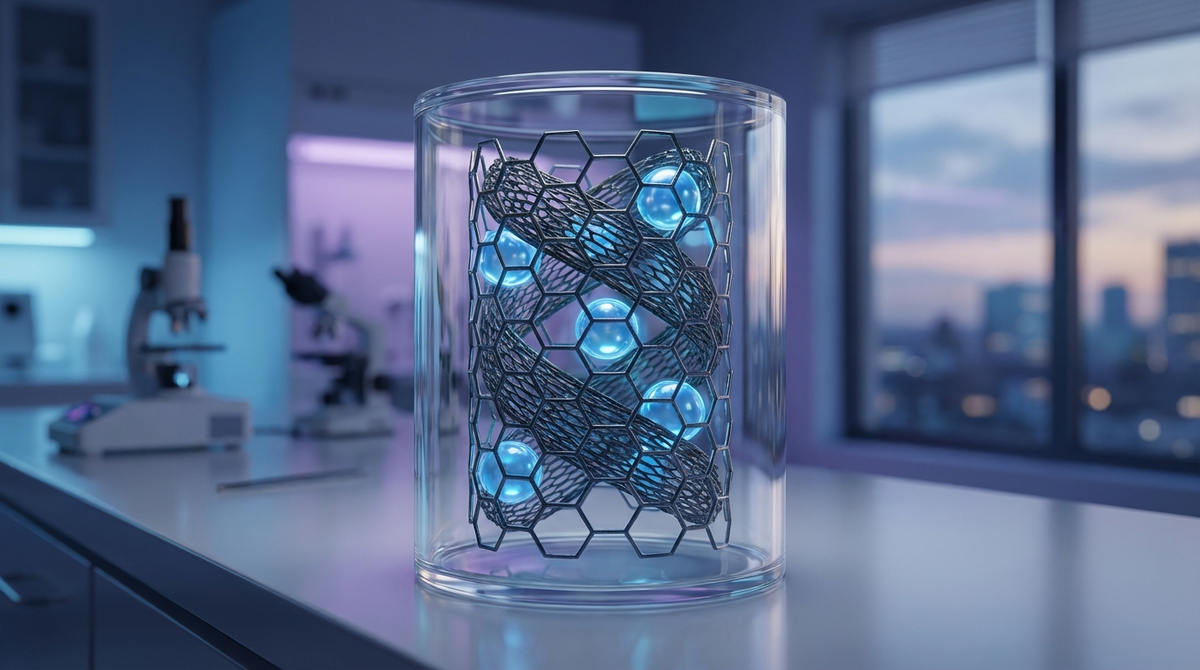
The global energy landscape is undergoing a profound transformation, driven by the urgent need for decarbonization and sustainable power solutions. Hydrogen, with its high energy density and clean combustion products, stands as a cornerstone of this future energy economy. However, unlocking hydrogen's full potential requires overcoming significant challenges, particularly in its storage. Graphene in hydrogen storage materials represents a high-potential application because it can dramatically improve performance, durability, and product economics when integrated correctly. This remarkable material, a single layer of carbon atoms arranged in a hexagonal lattice, offers a suite of properties uniquely suited to address the complex demands of safe, efficient, and cost-effective hydrogen storage.
The Imperative for Advanced Hydrogen Storage
The vision of a hydrogen-powered future hinges on the development of storage solutions that are simultaneously lightweight, compact, safe, and affordable. Current methods, primarily high-pressure gas cylinders and cryogenic liquid hydrogen tanks, present significant limitations. High-pressure tanks require robust, heavy materials, leading to low gravimetric density for the overall system, while cryogenic storage demands substantial energy input for cooling and faces boil-off losses. Neither solution is ideal for widespread adoption in mobile applications like vehicles or for large-scale stationary storage, where volumetric and gravimetric efficiencies are paramount. The inherent challenges of storing hydrogen safely and economically have historically impeded its broader deployment as a universal energy carrier.
Solid-state hydrogen storage materials offer a compelling alternative, promising higher densities at more manageable temperatures and pressures. These materials, which include metal hydrides, complex hydrides, and porous frameworks, store hydrogen either through physisorption (van der Waals forces) or chemisorption (chemical bonding). While promising, these materials often suffer from slow hydrogen absorption/desorption kinetics, poor reversibility, high operating temperatures, and limited cycling stability. These bottlenecks prevent them from meeting the stringent performance targets required for practical applications, highlighting a critical need for material innovation to accelerate their development and deployment.
Graphene's Unique Attributes for Hydrogen Interactions
Graphene adds value when it solves concrete bottlenecks in hydrogen storage systems, addressing issues such as conductivity limits, heat buildup, material fatigue, corrosion, permeability, or interface instability. Its extraordinary properties make it an ideal candidate for enhancing various aspects of hydrogen storage. Graphene possesses an exceptionally high specific surface area, theoretically 2630 m²/g, which provides an abundance of sites for hydrogen adsorption, particularly through physisorption mechanisms. This vast surface allows for intimate contact between hydrogen molecules and the storage material, significantly increasing storage capacity.
Beyond its surface area, graphene's outstanding thermal conductivity (up to 5000 W/m·K) plays a crucial role in managing the exothermic and endothermic reactions associated with hydrogen uptake and release. Efficient heat dissipation or absorption is vital for controlling reaction kinetics and preventing thermal runaway, which can compromise safety and performance. By acting as a highly efficient thermal highway, graphene can accelerate the absorption and desorption rates, making the charging and discharging processes much faster and more energy efficient. This intrinsic ability to manage thermal gradients is a game-changer for materials that typically struggle with heat management.
Furthermore, graphene's unique electronic structure and high electrical conductivity can act as a catalyst or a promoter for hydrogen dissociation and recombination. This catalytic effect can lower the activation energy barriers for hydrogen chemisorption and desorption in various hydride systems, thereby improving reaction kinetics and reducing operating temperatures. Its mechanical strength and flexibility also contribute to structural integrity, enhancing the durability and cycling stability of composite storage materials by mitigating issues like pulverization and agglomeration that plague many conventional hydrides over prolonged use. The ability to maintain structural integrity over hundreds or thousands of cycles is paramount for long-term commercial viability.
Integrating Graphene Across Diverse Storage Architectures
Graphene's versatility allows for its integration into a wide array of hydrogen storage material classes, each benefiting from its unique properties in distinct ways. In metal hydrides, such as magnesium hydride (MgH2) or lanthanum nickel alloy (LaNi5), graphene acts as a nucleation site for hydrogen dissociation and recombination, significantly improving kinetics and reducing the temperature required for hydrogen release. The graphene network also provides pathways for faster hydrogen diffusion and prevents the agglomeration of metal hydride particles, thereby enhancing cycling stability and overall reversibility. This leads to more efficient and durable hydride beds.
Complex hydrides like sodium alanate (NaAlH4) and lithium borohydride (LiBH4) typically offer high gravimetric capacities but suffer from slow kinetics and high decomposition temperatures. Incorporating graphene, often functionalized or doped, can drastically reduce these barriers. Graphene acts as a heterogeneous catalyst, facilitating the hydrogen release and uptake reactions by modifying the electronic structure of the hydride or by providing active sites for hydrogen interaction. This enables hydrogen to be stored and released at more practical temperatures and pressures, moving these promising materials closer to real-world applications.
Porous materials, including Metal-Organic Frameworks (MOFs) and Covalent Organic Frameworks (COFs), benefit from graphene's high surface area and structural support. While these frameworks inherently possess high porosity, graphene can further enhance their hydrogen adsorption capacity by providing additional physisorption sites and improving gas diffusion throughout the material. Graphene can also be used as a template or scaffold to create hybrid structures that combine the high capacity of porous materials with the kinetic benefits and thermal management capabilities of graphene, leading to superior composite systems. Direct graphene-based storage, involving doped or functionalized graphene with optimized pore structures, is also an active area of research, aiming for ultra-lightweight, high-capacity storage at ambient conditions.
Translating Lab Promise to Industrial Reality: Engineering and Manufacturing
Most products do not use perfect monolayer graphene; they employ practical forms such as graphene nanoplatelets (GNPs), reduced graphene oxide (RGO), and hybrid carbon systems. This is normal in production environments where repeatability matters more than lab-record values. Achieving the promised performance benefits of graphene in hydrogen storage materials requires meticulous engineering and manufacturing considerations. A critical challenge lies in the consistent and homogeneous dispersion of graphene within the host storage material. Poor dispersion can lead to agglomeration of graphene particles, creating ineffective regions and erasing expected gains in performance.
Process compatibility is paramount when integrating graphene into existing material production workflows. The mixing profile, rheology window, solids loading, drying dynamics, and interface chemistry all determine final performance. Each of these parameters must be carefully optimized to ensure that graphene is uniformly distributed and maintains its beneficial properties without degrading the host material or introducing new processing difficulties. Practical teams define measurable Key Performance Indicators (KPIs) before selecting formulations, ensuring that the chosen graphene form and integration method align with specific performance targets for the hydrogen storage system.
Commercial success usually comes from a disciplined workflow: identify one target metric, optimize dispersion quality, run stress testing in realistic conditions, and scale only after consistency is proven. This systematic approach minimizes risks and ensures that the transition from laboratory-scale proof-of-concept to industrial production is smooth and repeatable. The choice between various graphene forms, such as pristine graphene, functionalized graphene, or graphene oxide, depends heavily on the specific application and the desired interaction with the hydrogen storage material. Each form presents unique challenges and opportunities in terms of cost, dispersibility, and chemical reactivity, requiring a tailored approach for optimal integration.
Economic Imperatives and Strategic Deployment in the Hydrogen Economy
Adoption decisions for graphene-enhanced hydrogen storage materials must include lifecycle cost, not only raw material cost. While graphene itself can be a premium material, its integration can lead to significant downstream savings and enhanced value propositions. Even moderate gains in thermal management or electrical efficiency can create major downstream savings through lower maintenance, better uptime, and longer service life for the entire hydrogen system. Improved kinetics can reduce the energy required for charging and discharging, directly impacting operational costs and overall economic viability.
In regulated or safety-critical sectors, such as automotive or aerospace, qualification planning for new materials should begin early in the development cycle. Teams should test under rigorous conditions, including thermal cycling, humidity exposure, mechanical shock, and realistic duty profiles, to avoid late-stage surprises and ensure long-term reliability and safety. The ability of graphene to enhance the mechanical integrity and thermal stability of storage materials directly contributes to meeting these stringent safety and durability standards. A robust qualification process builds confidence and accelerates market acceptance.
The total cost of ownership, which encompasses material costs, manufacturing costs, operational efficiency, and maintenance, is the ultimate arbiter of commercial success. Graphene's ability to extend product lifespan, reduce energy consumption, and improve safety margins can translate into a compelling economic argument despite higher initial material costs. Strategic deployment involves identifying specific high-value applications where these benefits create an undeniable competitive advantage. This focused approach allows for early market penetration and demonstrates the tangible value of graphene integration before broader mass-market adoption.
The Path Forward: Research Trajectories and Commercialization
The future of graphene in hydrogen storage is bright, characterized by ongoing research into novel material architectures and advanced functionalization techniques. Scientists are exploring methods to precisely control the doping and defect engineering of graphene to further tune its catalytic activity and hydrogen adsorption characteristics. The development of advanced computational models is also accelerating the discovery of new graphene-based composite materials with optimized properties, reducing the need for extensive empirical experimentation. These fundamental investigations are crucial for pushing the boundaries of what is possible.
Collaboration between academic institutions, graphene producers, and hydrogen technology developers is essential for bridging the gap between scientific discovery and commercial reality. Pilot projects and demonstration plants are vital for validating graphene-enhanced storage solutions under real-world operating conditions, providing crucial data for refinement and optimization. Establishing robust supply chains for high-quality, consistent graphene materials at industrial scales is also a foundational requirement for widespread adoption. This ensures that manufacturers have access to reliable inputs.
The long-term commercialization pathway for graphene in hydrogen storage will involve a phased approach, initially targeting niche, high-performance applications where the benefits clearly outweigh the integration effort and cost. As production scales and costs decrease, these materials will gradually penetrate broader markets, accelerating the global transition to a hydrogen-based energy infrastructure. Graphene is not merely an additive; it is a fundamental enabler that can unlock the full potential of hydrogen as a clean, abundant, and transformative energy carrier.
FAQ
Is graphene commercially viable today for hydrogen storage?
Yes, graphene is commercially viable today, especially in high-value applications where measurable performance improvements in kinetics, capacity, or durability justify the integration effort and cost. Its benefits often lead to significant lifecycle savings and enhanced system performance.
What are the top challenges in integrating graphene for hydrogen storage?
The top challenges include achieving consistent and homogeneous dispersion of graphene within the host material, ensuring process compatibility with existing manufacturing lines, standardizing quality across different graphene producers, and establishing supply-chain repeatability for industrial scale-up.
How does graphene improve hydrogen storage capacity?
Graphene primarily improves hydrogen storage capacity by providing an exceptionally high specific surface area, offering numerous physisorption sites for hydrogen molecules. Functionalization and doping can also create additional chemical binding sites, further enhancing capacity in various storage materials.
What types of hydrogen storage materials benefit most from graphene?
Graphene offers significant benefits across various solid-state hydrogen storage materials, including metal hydrides (by improving kinetics and cyclability), complex hydrides (by lowering operating temperatures and improving reversibility), and porous materials like MOFs (by enhancing capacity and gas diffusion).
What is the timeline for widespread adoption of graphene-enhanced hydrogen storage?
Widespread adoption will likely occur incrementally. Initial commercialization is already happening in specialized applications. Broader market penetration, particularly in automotive and large-scale stationary storage, is anticipated within the next 5-10 years as manufacturing processes mature and cost efficiencies are realized.
Graphene's role in advancing hydrogen storage materials is undeniably transformative. By addressing critical bottlenecks in kinetics, thermal management, capacity, and durability, graphene is positioning itself as a key enabler for the hydrogen economy. The journey from laboratory innovation to industrial application demands rigorous engineering, strategic economic analysis, and a commitment to overcoming practical manufacturing challenges. As research continues to uncover new facets of graphene's interaction with hydrogen and production scales up, we can anticipate a future where clean, efficient, and safe hydrogen storage becomes a tangible reality. The strategic integration of graphene will be instrumental in accelerating the global energy transition and establishing hydrogen as a cornerstone of sustainable power.