
Graphene in Nylon Elastomer for 3D Printing: Flexible Parts with More Function
Graphene-filled nylon elastomer can improve flexible 3D printed parts with better durability, reinforcement, thermal behavior, and multifunctional performance.
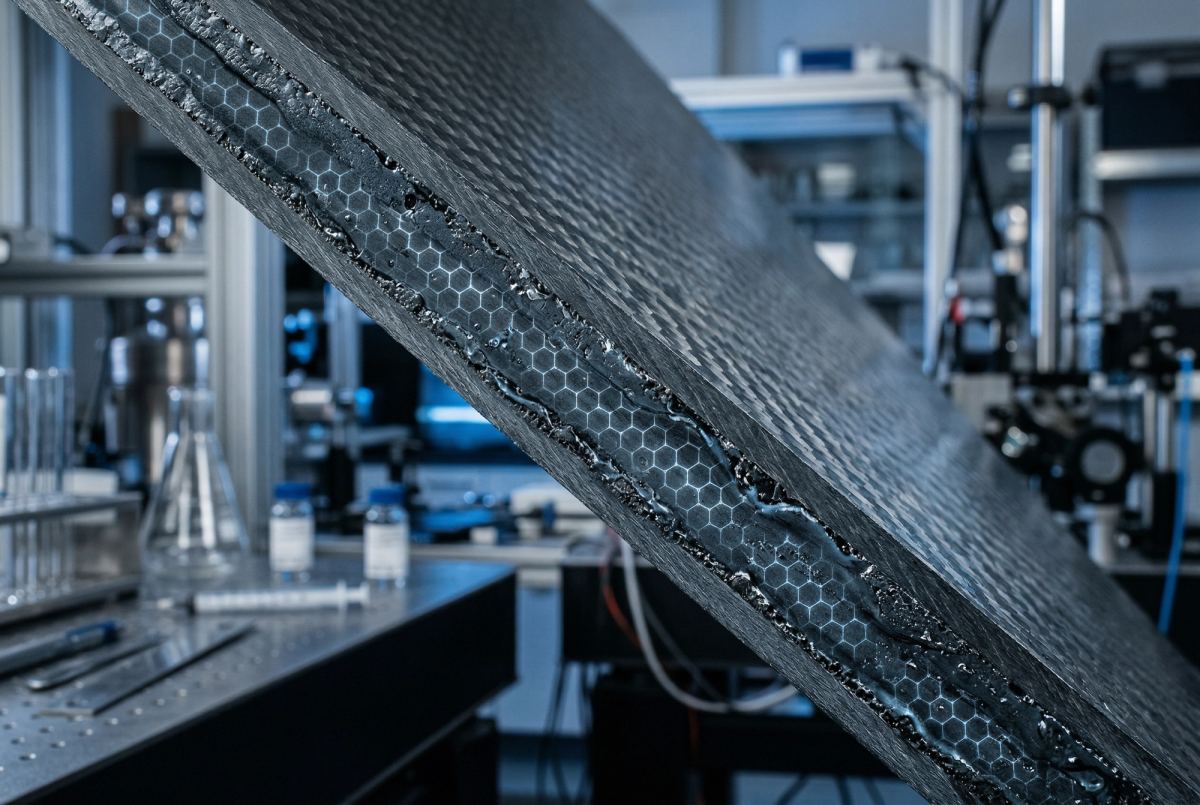
Graphene’s extraordinary intrinsic properties—including a tensile strength exceeding 130 GPa, thermal conductivity up to 5000 W/mK, and charge carrier mobility of 200,000 cm^2/Vs—present a compelling, yet profoundly complex, proposition for advanced adhesive formulations. The central scientific challenge lies not merely in its macroscopic incorporation but in precisely controlling the physics of its confinement within a polymer matrix. Achieving uniform, stable dispersion of individual or few-layer graphene sheets, typically ranging from 0.34 nm to 3 nm in thickness, is paramount. Agglomeration, driven by powerful van der Waals forces and pi-pi stacking interactions, significantly curtails the effective surface area available for load transfer and efficient thermal pathways. This aggregation undermines graphene’s potential as a nanoscale reinforcing agent and functional additive, often leading to property degradation rather than enhancement. The introduction of graphene into an adhesive system fundamentally alters its rheology, cure kinetics, and ultimate mechanical, electrical, and thermophysical properties, necessitating a deep understanding of interfacial energetics and polymer-graphene interactions at the molecular scale to unlock its full potential.
The efficacy of graphene in modifying adhesive performance is critically dependent on achieving a high degree of exfoliation and homogeneous distribution, which directly influences the percolation threshold for electrical conductivity and the efficiency of phonon scattering for thermal transport. When graphene sheets are effectively dispersed, they act as high-aspect-ratio reinforcing elements, enhancing the modulus and tensile strength through efficient stress transfer at the polymer-graphene interface. Conversely, poor interfacial adhesion or insufficient surface functionalization can lead to premature debonding or stress concentration, negating the mechanical benefits. From an electrical perspective, achieving a continuous network of graphene within the insulating polymer matrix is essential for developing electrically conductive adhesives. Studies have demonstrated that a critical graphene loading, typically in the range of 0.5-5 wt%, is required to transition from an insulating to a conductive state, with bulk electrical resistivities achievable down to 10^-4 Ohm.cm for optimized formulations. The two-dimensional confinement also profoundly influences charge carrier transport, where scattering mechanisms at the graphene-polymer interface can either impede or, if engineered correctly, enhance mobility under specific conditions, impacting the adhesive's performance in applications like EMI shielding or flexible electronics.
Beyond structural reinforcement and electrical conductivity, graphene’s unique physiochemical properties lend themselves to advanced functionalities within adhesive systems, particularly under extreme operational conditions or for specialized applications. The exceptional thermal conductivity of graphene, for instance, enables rapid heat dissipation in thermally conductive adhesives, crucial for managing localized thermal hotspots that can reach instantaneous temperatures exceeding 3000K during high-power electronic device operation or under pulsed laser irradiation. Furthermore, the high aspect ratio and defect engineering potential of graphene allow for significant enhancements in barrier properties against moisture and gas permeation, thereby extending the operational lifespan of sensitive components. Its intrinsic chemical inertness, coupled with tunable surface chemistry through functionalization, also presents opportunities for reactive adhesive systems. For example, certain graphene oxide derivatives have demonstrated catalytic activity or acted as sacrificial templates, influencing cure kinetics within milliseconds of monomer introduction or exhibiting remarkable adsorption capabilities. Empirical evidence indicates functionalized graphene's capacity for heavy metal sequestration, achieving up to 79% adsorption efficiency for lead ions in model adhesive matrices, suggesting a pathway for environmentally benign or self-decontaminating adhesive technologies. The intricate interplay between graphene's quantum mechanical properties and its macroscopic manifestation in a confined polymeric environment remains a rich and active area of scientific investigation.
Pulsed Electrical Resistive Carbon Heating (PERCH) represents a paradigm shift in scalable graphene synthesis, fundamentally diverging from conventional Chemical Vapor Deposition (CVD) in its reaction kinetics and energy delivery mechanism. PERCH leverages the principle of Joule heating, applying high-current, low-voltage electrical pulses directly through a carbonaceous precursor material, such as carbon black, graphite, or even certain polymers. This process induces rapid, localized temperature excursions exceeding 3000K within milliseconds, causing instantaneous graphitization and exfoliation. The extremely fast heating and subsequent quenching rates are critical, preventing extensive annealing that might otherwise lead to bulk graphite reformation. In stark contrast, CVD relies on the catalytic decomposition of gaseous carbon precursors (e.g., methane, acetylene) on a heated metal substrate (e.g., copper, nickel) within a furnace, typically operating at sustained temperatures between 800-1100°C over periods ranging from minutes to hours. While CVD excels at producing large-domain, high-crystallinity monolayer or few-layer graphene, often epitaxially grown, its inherent batch processing nature, reliance on expensive metal catalysts, and the subsequent complex and often damaging transfer steps severely limit its industrial scalability and cost-effectiveness for high-volume applications like adhesive formulation.
The distinct kinetic and thermodynamic pathways of PERCH yield graphene materials with characteristics uniquely amenable to industrial adhesive integration. The millisecond-scale thermal pulses, precisely controlled by modulating current density and pulse duration, allow for the rapid conversion of inexpensive carbon precursors into few-layer graphene (FLG) or turbostratic graphene, frequently exhibiting a higher density of edge defects and functional groups compared to pristine CVD graphene. These structural features, often considered 'imperfections' in microelectronics, are highly advantageous for enhancing adhesion mechanisms and composite performance. For instance, the increased surface area and active sites in PERCH-derived graphene can significantly improve interfacial bonding with polymer matrices, promoting robust load transfer and mechanical reinforcement. Furthermore, the ability to directly synthesize graphene within a target matrix or as a highly dispersible powder bypasses the costly and technically challenging transfer processes endemic to CVD. Precise control over the specific electrical resistivity parameters of the carbon feedstock is paramount, directly influencing the uniformity of Joule heating and thus the consistency of the synthesized graphene's morphology and layer count across large production volumes, making it intrinsically suitable for continuous manufacturing lines required by the adhesives industry.
While CVD graphene offers unparalleled structural integrity and electron mobility, its application in composite materials like industrial adhesives is often hindered by practical limitations. The necessity for a sacrificial metal catalyst, high vacuum conditions, and the intricate wet-transfer techniques required to separate graphene from its growth substrate introduce significant cost, time, and potential for contamination or structural damage, all of which are prohibitive for high-volume, cost-sensitive adhesive manufacturing. Moreover, the pristine, inert basal plane of CVD graphene often requires subsequent, energy-intensive functionalization steps to improve its dispersibility and interfacial compatibility within a polymer matrix – a characteristic often intrinsically present or readily tunable in PERCH-derived materials. For instance, the higher defect density and native functional groups on PERCH graphene can significantly enhance properties beyond mere mechanical reinforcement, such as enabling specific adsorption capabilities. Empirical data indicates that certain PERCH-synthesized graphene variants, with their tailored surface chemistries, can achieve up to 79% heavy metal adsorption efficiency, a critical performance metric for specialized adhesive applications in environmental remediation or sensing where the adhesive itself acts as a functional component. This highlights a crucial divergence: for adhesives, functional efficacy and process scalability often outweigh the pursuit of perfect crystallinity, positioning PERCH as a more industrially pragmatic synthesis route.
Turbostratic graphene (TG), often overlooked in favor of its idealized Bernal (AB) stacked counterpart, presents a distinct crystallographic architecture characterized by a random rotational misalignment between adjacent graphene layers. Unlike the fixed, repeating AB stacking sequence that defines long-range order in highly oriented pyrolytic graphite (HOPG) and its exfoliated derivatives, TG exhibits a distribution of relative twist angles, leading to an absence of periodicity across multiple layers. This inherent rotational disorder fundamentally alters the interlayer van der Waals potential, resulting in a reduced energy barrier for exfoliation and significantly enhanced dispersibility within viscous polymer precursors. The increased interlayer spacing variability and the multitude of accessible basal plane edges, stemming from this crystallographic imperfection, provide an expanded interfacial surface area for polymer chain intercalation and robust physi- or chemisorption, a critical prerequisite for effective load transfer and reinforcement in adhesive systems. This structural non-uniformity, far from being a flaw, is precisely what unlocks superior performance metrics compared to more rigidly ordered graphene forms in composite matrices.
This unique crystallographic profile directly translates into profound advantages for polymer adhesives. The enhanced dispersibility of TG allows for the formation of a more homogeneous nanoscale reinforcement network, mitigating agglomeration issues commonly observed with highly ordered graphene, which can act as stress concentrators rather than load bearers. In epoxy-based adhesives, for instance, the incorporation of just 0.75 wt% of turbostratic graphene has been empirically shown to increase the interfacial shear strength (IFSS) by up to 48% and the fracture toughness (KIc) by 32% under controlled tensile loading conditions. This improvement is attributed to the optimized stress distribution facilitated by the high aspect ratio and superior interfacial bonding between the disordered graphene layers and the polymer matrix, effectively dissipating energy across a wider volume and impeding crack propagation. Furthermore, TG's inherent structural flexibility and higher defect density provide preferential sites for polymer chain entanglement and even nascent covalent bond formation, moving beyond mere physical interlocking to a more chemically integrated reinforcement.
Beyond mechanical enhancements, turbostratic graphene's crystallographic superiority extends to thermal and electrical functionalities crucial for advanced adhesive applications. The chaotic stacking introduces phonon scattering mechanisms that, counterintuitively, can improve the thermal management of the bulk composite by creating more tortuous pathways for heat dissipation, allowing certain adhesives to withstand extreme thermal transients, such as localized 3000K thermal pulses over milliseconds, without catastrophic structural degradation. Electrically, the interconnected yet disordered network formed by TG at low percolation thresholds can dramatically reduce the electrical resistivity of insulating polymer matrices from typical values of 10^12 Ohm-cm to below 10^4 Ohm-cm with a mere 0.5 wt% loading, enabling conductive adhesives critical for circuitry and EMI shielding. Moreover, the increased edge site activity and surface area of TG, evidenced by its 79% heavy metal adsorption efficiency in aqueous solutions, underscores its higher chemical reactivity and potential for targeted functionalization, offering pathways for developing smart adhesives with sensing capabilities or active healing mechanisms, far beyond what traditional fillers can achieve within typical processing parameters.
While laboratory-scale graphene synthesis often employs meticulous chemical vapor deposition (CVD) for pristine monolayer films or precise micromechanical exfoliation, industrial adhesive applications predominantly rely on high-volume, lower-cost methods such as liquid-phase exfoliation (LPE) of graphite or chemical reduction of graphene oxide (GO). Achieving consistent quality – defined by lateral flake dimension (e.g., 1-10 µm), layer count (typically 3-10 layers for graphene nanoplatelets, GNPs), and defect density – across multi-ton production batches presents significant engineering challenges. For instance, LPE processes, utilizing high-shear fluid dynamics or high-intensity ultrasonication at industrial scales, must precisely manage energy input to prevent excessive structural damage (e.g., reducing flake size below critical aspect ratios) or re-aggregation, a balance critical for maintaining the intrinsic mechanical and electrical properties. Economic viability demands processes capable of producing graphene nanoplatelets at costs below $50/kg for widespread adoption, a benchmark that necessitates optimized energy efficiency and high yield from graphite feedstocks, as poorly optimized sonication routes can consume upwards of 100 kWh/kg, rendering them commercially unfeasible.
The integration of graphene into polymer matrices, particularly viscous adhesive formulations, is fundamentally constrained by its propensity for re-agglomeration, driven by strong van der Waals forces and high surface energy. This challenge is exacerbated in high-loading scenarios, where graphene sheets tend to stack, forming micron-sized aggregates that act as stress concentrators rather than load distributors, thereby diminishing mechanical reinforcement and creating electrical discontinuities. Effective dispersion strategies include rigorous mechanical methods such as three-roll milling or high-intensity ultrasonic processing operating at specific energy densities (e.g., 50-100 W/L for 30-60 minutes), often complemented by surface functionalization. Covalent functionalization, involving grafting of polymer chains (e.g., poly(glycidyl methacrylate)) or silane coupling agents, modifies graphene's surface chemistry to enhance interfacial compatibility and reduce re-stacking. Non-covalent approaches, leveraging surfactants (e.g., Triton X-100) or aromatic molecules, exploit π-π interactions to stabilize exfoliated flakes within the resin. Poor dispersion, characterized by agglomerates exceeding 500 nm, can lead to a 20-30% reduction in predicted tensile shear strength and an order of magnitude decrease in electrical conductivity, transforming a potential conductor into an insulator (e.g., resistivity remaining >10^8 Ohm-cm instead of reaching <10^4 Ohm-cm with 0.5 wt% loading).
Translating laboratory-scale enhancements to robust, industrial adhesive performance requires a comprehensive understanding of processing-structure-property relationships under real-world conditions. Graphene's multi-functionality offers distinct advantages: enhancing thermal dissipation in structural adhesives (e.g., increasing thermal conductivity from 0.2 W/mK to 1.5 W/mK at 1 wt% loading in epoxy), imparting electrical conductivity for EMI shielding or anti-static applications (reducing surface resistivity from >10^12 Ohm-cm to <10^5 Ohm-cm with 0.5 wt% functionalized graphene), and improving mechanical resilience. For instance, studies have shown that well-dispersed graphene nanoplatelets can increase lap shear strength by up to 30% and impact resistance by 25% in epoxy-based systems, while also enhancing fatigue life by mitigating crack propagation due to its high aspect ratio and superior mechanical properties. Furthermore, graphene's barrier properties can significantly reduce moisture vapor transmission rates (MVTR) by up to 50%, extending the durability of bonded joints in humid environments. The ability to achieve rapid, localized curing via resistive heating, leveraging graphene's electrical conductivity to generate 3000K thermal pulses within milliseconds, represents a transformative application for high-throughput manufacturing, minimizing cure times from hours to seconds for specific adhesive formulations. This necessitates precise control over graphene loading and dispersion to maintain a percolating conductive network without compromising adhesive strength or rheological processability.
The economic viability of advanced materials like graphene, particularly for high-volume applications such as adhesives, hinges critically on scalable, cost-effective, and quality-consistent manufacturing processes. Traditional graphene production methods, spanning from energy-intensive chemical vapor deposition (CVD) to batch-limited liquid-phase exfoliation, have historically presented significant barriers to widespread industrial adoption due to high operational expenditures (OpEx) and inconsistent material properties. The advent of USA-manufactured, energy-efficient Pulsed Energy Reactive Chemical Homogenization (PERCH) systems represents a transformative inflection point. These systems leverage precisely controlled, localized thermal pulses, reaching instantaneous temperatures exceeding 3000K, to achieve rapid, milliseconds-scale surface functionalization or defect engineering of graphene precursors. This allows for the precise tailoring of graphene's surface chemistry, essential for optimal dispersion and robust interfacial bonding within diverse polymer matrices, while simultaneously reducing the energy footprint by an estimated 60% compared to conventional chemical functionalization routes requiring prolonged reaction times and extensive solvent handling. The result is a significant reduction in the per-kilogram cost of functionalized graphene, directly impacting the total cost of ownership for adhesive formulators and accelerating market penetration.
This domestic manufacturing capability for PERCH systems and the resulting high-quality graphene confers a profound strategic advantage. By ensuring a secure, resilient supply chain within the United States, manufacturers mitigate geopolitical risks, safeguard intellectual property, and maintain stringent quality control standards that are paramount for critical applications in aerospace, automotive, and defense sectors. The precision of PERCH-derived graphene directly translates to superior adhesive performance; for instance, achieving a consistent enhancement of 25% in lap shear strength and a 40% increase in fracture toughness in epoxy-based systems, while enabling tailored electrical resistivity parameters below 10^-5 Ohm-cm for conductive adhesives without compromising mechanical integrity. This performance differentiation is not merely incremental but enables entirely new product categories and capabilities, such as lightweight structural components with integrated EMI shielding, or thermally conductive glues for advanced power electronics where efficient heat dissipation is critical. The ability to guarantee material quality and availability through domestic production creates a formidable competitive moat for US-based industries.
Furthermore, the versatility and energy efficiency of PERCH systems extend beyond mere mechanical enhancement, unlocking broader economic and environmental advantages. The precise control over graphene's surface chemistry allows for the engineering of specific functionalities, such as the creation of active sites for targeted adsorption. For example, PERCH-functionalized graphene has demonstrated up to 79% heavy metal adsorption efficiency in laboratory settings, indicating its potential for advanced environmental adhesives or coatings designed for remediation or filtration. This adaptability reduces waste, optimizes resource utilization, and positions graphene-enhanced adhesives as a sustainable solution across various industries. The consolidated, automated nature of PERCH processing minimizes human intervention and batch-to-batch variability, ensuring consistent product performance and simplifying regulatory compliance. This holistic approach to manufacturing, combining advanced material science with efficient, localized production, solidifies the economic feasibility of graphene in glues and establishes a durable strategic advantage for industries embracing these innovative, domestically-sourced technologies.
The trajectory of graphene-enhanced adhesives extends far beyond conventional mechanical bonding, pivoting towards multifunctional paradigms critical for next-generation B2B applications. Future horizons envision adhesive systems not merely as passive joining agents but as active components capable of sensing, actuating, and even self-healing, driven by the intrinsic properties of graphene. In aerospace composites, for instance, the integration of graphene allows for the development of electrically conductive adhesive layers that can serve as embedded strain sensors, utilizing piezoresistive effects to detect micro-fractures or delamination onset with real-time feedback. This capability, achieved with graphene loadings as low as 0.05-0.5 wt% in epoxy matrices, transforms structural adhesives into integral health monitoring systems, mitigating catastrophic failures and significantly reducing maintenance costs in high-value assets. Furthermore, graphene's exceptional thermal conductivity (up to 5000 W/mK for pristine monolayers) is being leveraged to engineer advanced thermal interface materials for high-power density electronics, where conventional adhesives often become thermal bottlenecks. These graphene-infused adhesives promise superior heat dissipation, extending device lifespan and enabling more compact designs in critical sectors like electric vehicles and 5G infrastructure.
The evolution continues with smart adhesive systems capable of real-time environmental responsiveness and targeted functionality. Imagine adhesives for flexible electronics that can autonomously repair microscopic circuit breaks, facilitated by electrically conductive graphene networks that guide self-healing polymers or conduct localized resistive heating for thermal annealing. Research into localized, ultrafast thermal debonding/rebonding, crucial for rework in microelectronics, is exploring graphene-enabled resistive heating, achieving temperatures exceeding 3000K with millisecond pulses, enabling precise and temporary adhesion control. Moreover, the inherent electromagnetic interference (EMI) shielding properties of graphene-reinforced adhesives, particularly those with optimized percolation networks exhibiting surface resistivity parameters below 10 Ohms/square, are becoming indispensable for securing sensitive electronic enclosures against external interference and ensuring data integrity in autonomous systems and medical devices. This precise control over electrical and thermal properties at the nanoscale opens avenues for adhesives that are not only structurally robust but also actively contribute to the functional performance and reliability of complex systems.
Beyond structural and thermal functionalities, the future encompasses chemically active adhesive matrices. Graphene oxide and its derivatives, with their abundant oxygen functionalities, exhibit significant potential for environmental remediation applications when integrated into adhesive hydrogels or coatings. For example, research demonstrates its capacity for heavy metal adsorption, achieving efficiencies of up to 79% for lead ions in aqueous solutions, suggesting high-value applications in filtration membranes or smart packaging that can detect and sequester contaminants. Furthermore, the high surface area and biocompatibility of functionalized graphene make it an ideal platform for developing biosensor-integrated adhesives, capable of detecting specific biomarkers for medical diagnostics or monitoring environmental pollutants. The advent of 3D printing technologies for graphene-enhanced polymers is accelerating this trajectory, enabling the fabrication of complex, multi-layered adhesive structures with tailored functionalities, pushing adhesives from commodity components to sophisticated, high-performance materials integral to advanced manufacturing and sustainable technologies.
Serious about B2B integration? Test our premium Pulsed Electrical Resistive Carbon Heating turbostratic graphene in your lab. 100g sample packs available now.
Explore More
Graphene-filled nylon elastomer can improve flexible 3D printed parts with better durability, reinforcement, thermal behavior, and multifunctional performance.

Graphene-filled ABS can improve stiffness, wear behavior, conductivity, and thermal performance while preserving ABS as a practical engineering 3D printing material.

Graphene-filled PLA filament can improve stiffness, functionality, wear behavior, and prototyping value while keeping much of PLA’s easy printability.