Graphene in Glues and Adhesives: Stronger Bonds, Better Durability, and Smarter Formulations
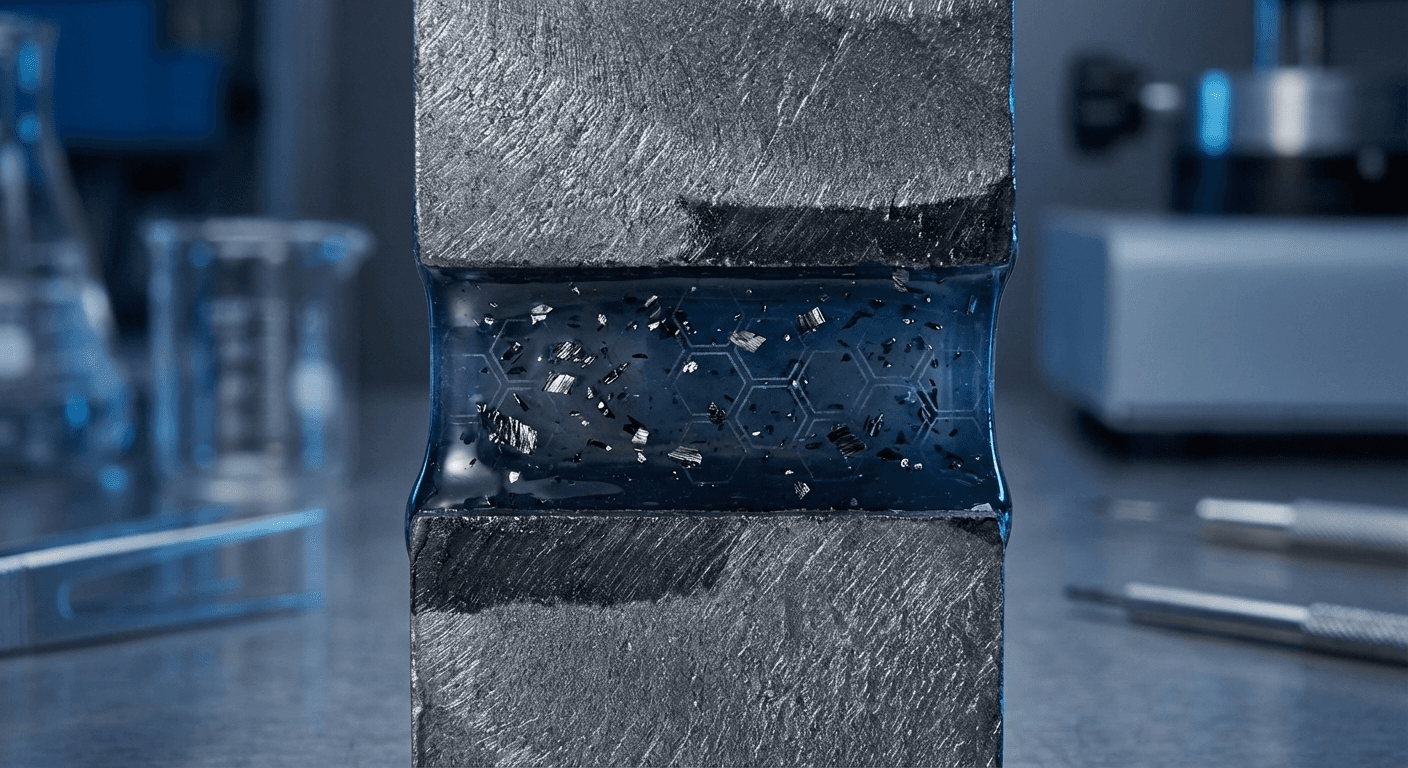
Graphene in Glues and Adhesives: Stronger Bonds, Better Durability, and Smarter Formulations
Adhesives are everywhere in modern manufacturing, yet they are often invisible in final products. A single vehicle can contain dozens of bonded joints. Electronics rely on conductive and non-conductive adhesives for assembly, thermal management, and encapsulation. Construction materials, packaging systems, aerospace composites, and even medical devices all depend on reliable bonding chemistry. As product requirements become more demanding—lighter structures, higher thermal loads, longer service life, and multi-material assemblies—traditional glue formulations are being pushed to their limits. This is where graphene-based additives are gaining attention.
Graphene is a carbon nanomaterial with high aspect ratio, strong mechanical properties, thermal conductivity potential, and chemically tailorable surface behavior. In adhesives, graphene is not a replacement for resin chemistry; it is a performance modifier. Properly dispersed and dosed, graphene can reinforce polymer matrices, improve crack resistance, tune viscosity and thixotropy, and in some systems add electrical or thermal functionality. The practical question is not whether graphene is impressive in theory, but whether it can produce measurable, repeatable gains in real adhesive formulations.
Why adhesives need new performance strategies
Conventional adhesives are optimized around trade-offs. A formulation designed for high stiffness may become brittle under impact. A system with excellent room-temperature strength may degrade rapidly in humidity or heat cycling. Fast-curing adhesives can reduce manufacturing time but may sacrifice long-term durability if interfacial chemistry is not robust. Many industries now demand adhesive joints that survive wide thermal swings, vibration, moisture exposure, and chemical contact while still being compatible with automated production.
Graphene-based additives are interesting because they may improve multiple performance domains at once when formulation is done carefully: toughness, barrier behavior, thermal stability, and in some chemistries interfacial adhesion. This multi-property leverage is especially attractive in sectors where replacing mechanical fasteners with adhesive bonds can reduce weight and simplify assembly.
How graphene can influence adhesive behavior
Several mechanisms are discussed in research and applied formulation work:
1) Matrix reinforcement and crack deflection
Graphene platelets can act as nanoscale reinforcement elements inside the adhesive matrix. Under mechanical load, they may help redistribute stress and deflect crack propagation paths, improving fracture toughness and resistance to catastrophic failure.
2) Interfacial load transfer
Well-functionalized graphene can increase effective stress transfer between polymer and substrate interfaces. In practice, this can contribute to stronger lap-shear or peel performance, especially in systems where interfacial adhesion is the limiting factor.
3) Barrier enhancement
Graphene sheets can create a more tortuous diffusion path for moisture, oxygen, and aggressive species. This may help improve environmental durability, reducing bond degradation in humid or chemically harsh conditions.
4) Thermal behavior tuning
Depending on loading and dispersion quality, graphene may improve thermal conductivity pathways and increase thermal stability of some adhesive systems. This is useful in electronics and battery-adjacent assemblies where heat management affects reliability.
5) Rheology control
Graphene can alter viscosity and flow behavior, which can be beneficial for gap-filling, sag resistance, and vertical-surface application. However, rheology gains are only positive when dispersion and particle-particle interactions are controlled.
Dose and dispersion: the two make-or-break variables
In graphene-enhanced glues, concentration alone does not determine success. Dispersion quality is often more important than nominal loading. Agglomerated graphene can become a defect source, reducing bond quality and increasing variability across batches. Overloading can also increase viscosity beyond process limits, trap voids, or interfere with curing kinetics.
A practical development program should include:
• dispersion method screening (high-shear, ultrasonication, masterbatch routes),
• microscopy and particle-state checks,
• viscosity profiling over shear rate,
• cure behavior analysis,
• mechanical testing across temperature and humidity,
• aging studies with retained-strength benchmarks.
Most successful formulations use calibrated, application-specific loading windows rather than maximal graphene content. In other words, more graphene is not automatically better adhesive.
Adhesive chemistries where graphene is being explored
Epoxy systems are currently among the most studied because they are widely used in structural bonding and composites. Graphene-modified epoxies may show improved toughness and thermal performance when dispersion and surface chemistry are optimized.
Polyurethane adhesives are also strong candidates, particularly where flexibility and impact resistance matter. Graphene additives can sometimes improve durability without fully sacrificing elasticity, though formulation balance is critical.
Acrylic and hybrid systems are relevant for fast-process manufacturing and multi-substrate bonding. In these cases, graphene may support tailored rheology and durability gains, but compatibility with cure speed and line throughput must be validated.
Conductive and functional adhesives represent another high-value segment. With the right conductive filler architecture, graphene can complement silver, carbon black, or other fillers to tune conductivity, reduce filler mass fraction, or improve mechanical reliability.
Where graphene adhesives can create near-term value
1) Electronics assembly and thermal interface bonding
Devices are shrinking while heat density rises. Adhesives that combine mechanical integrity with better thermal management and environmental resistance are in high demand.
2) Lightweight transportation structures
Automotive, EV, rail, and aerospace applications increasingly rely on bonded dissimilar materials. Graphene-modified structural adhesives may support weight reduction targets while maintaining fatigue resistance.
3) Protective and sealing systems
Adhesive/sealant hybrids used in harsh environments may benefit from improved barrier performance and long-term retention of bond integrity.
4) Advanced packaging and specialty laminates
For high-performance packaging and composite laminates, improved crack resistance and moisture control can translate directly into longer product life.
Reliability and qualification requirements
Industrial adhesive adoption is conservative for good reason: joint failure can be expensive or safety-critical. Any graphene-enhanced adhesive must prove more than initial strength. Qualification should include cyclic fatigue, thermal shock, humidity aging, salt or chemical exposure (as relevant), and substrate-preparation sensitivity.
Critical metrics include:
• lap shear and peel retention after aging,
• mode I/II fracture toughness,
• creep under sustained load,
• coefficient of thermal expansion compatibility,
• process-window robustness,
• batch-to-batch consistency in production.
Without this full reliability picture, promising laboratory gains may not survive scale-up.
Economic reality: performance must justify cost
Graphene can add cost and complexity, so commercial success depends on system-level value. The best use cases are those where a modest formulation cost increase avoids bigger costs elsewhere: reduced warranty claims, fewer failures in service, lower weight, or simplified assembly that removes fasteners and processing steps.
For decision-makers, a strong business case usually includes:
• clear performance delta versus incumbent adhesive,
• stable supply chain for graphene additive quality,
• repeatable mixing and QC protocols,
• no unacceptable cycle-time penalties,
• measurable lifecycle ROI.
If value is only marginal in routine applications, adoption will be slow. If graphene enables capabilities that incumbents cannot deliver, adoption can accelerate quickly.
Safety, handling, and regulatory discipline
As with any nanomaterial-enabled product, responsible development requires robust EHS and compliance practices. Worker exposure controls, material handling SOPs, and downstream risk assessment are essential. In many industries, customer qualification and documentation standards are as important as performance claims.
Formulators should plan for:
• safe powder or slurry handling workflows,
• traceable material characterization,
• full SDS and compliance documentation,
• application-specific regulatory checks,
• transparent communication of limits and proper use conditions.
Confidence in governance often determines whether a technically good formulation is accepted by risk-averse customers.
A practical roadmap for graphene-enhanced glues
A realistic development path looks like this:
1. Define a narrow target use case (substrates, load profile, environment).
2. Build baseline against a strong incumbent adhesive.
3. Optimize graphene type, functionalization, and loading at lab scale.
4. Validate dispersion and cure process repeatability.
5. Run accelerated durability and failure-mode analysis.
6. Pilot in real production conditions.
7. Finalize QC controls and supply specifications for scale.
This approach reduces hype-driven experimentation and keeps focus on measurable engineering outcomes.
Conclusion
Graphene in glues and adhesives is not a marketing gimmick when developed with formulation discipline. It offers credible pathways to stronger, tougher, and more durable bonds, along with functional advantages in thermal and conductive applications. The key is precision: correct graphene type, controlled dispersion, calibrated loading, and rigorous reliability validation.
For companies targeting high-performance bonding challenges, graphene can be a strategic additive that improves both material behavior and product durability. The winners in this space will be the teams that treat graphene as an engineering variable to optimize—not a buzzword to sprinkle into glue.