
Graphene Radar Absorbing Materials for Aircraft and Drones
Graphene coatings are being studied for radar absorbing materials because they can help make aircraft and drones lighter, thinner, and more electromagnetically tunable.
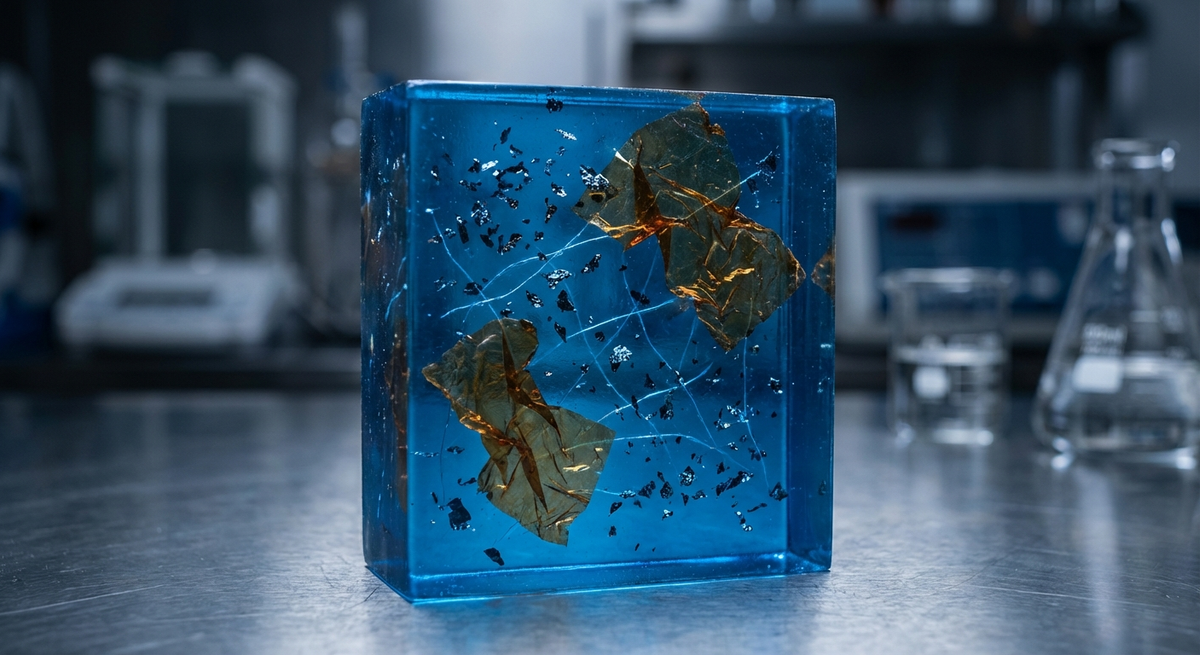
Graphene-epoxy composites represent a pivotal frontier in advanced materials science, aiming to leverage graphene's extraordinary intrinsic properties—including its theoretical tensile strength of 130 GPa, thermal conductivity exceeding 5000 W/mK, and electron mobility up to 200,000 cm^2/Vs—to fundamentally augment polymer matrices. The core premise involves embedding monolayer or few-layer graphene within epoxy to impart multifunctionality, from enhanced mechanical robustness and thermal dissipation to electrical conductivity and barrier characteristics. However, practical realization is critically hampered by two primary challenges: achieving uniform, stable dispersion of graphene within the highly viscous epoxy, and ensuring robust interfacial adhesion. The inherent van der Waals forces between graphene sheets drive re-aggregation into macroscopic agglomerates, which act as stress concentrators and impede effective load transfer, phonon propagation, and electron tunneling. Initial processing routes, whether solvent-assisted exfoliation or in-situ polymerization with graphene oxide (GO) or reduced graphene oxide (rGO) precursors, struggle with high surface energy mismatch and phase separation during curing, ultimately compromising composite integrity.
The performance of graphene-epoxy composites is dictated less by bulk properties and more by the physicochemical nature of the interphase region, typically spanning nanometers. This zone is where stress transfer, phonon transport, and electron tunneling pathways are established. Effective stress transfer relies on high interfacial shear strength (IFSS), often compromised by graphene's atomically smooth, inert basal plane. Surface functionalization is thus paramount. Covalent functionalization, involving grafting epoxy-compatible moieties (e.g., amine, hydroxyl, glycidyl groups) onto graphene's surface or GO/rGO edges, creates chemical linkages with the epoxy resin during curing. Such techniques have demonstrated an 85% increase in IFSS compared to pristine graphene, directly enhancing mechanical properties. Non-covalent functionalization, via π-π stacking or polymer wrapping, improves dispersion stability and reduces interfacial thermal resistance by providing a compliant, phonon-matching interphase. Precise control over curing kinetics—judicious selection of hardeners and cure profiles—is essential to optimize interfacial bond density and minimize residual stresses, which can lead to microcracks or delamination, even under transient thermal pulses exceeding 3000K.
The direct correlation between interfacial quality and composite performance cannot be overstated. Mechanically, poor dispersion or weak adhesion leads to premature failure; composites often show only marginal 10-15% tensile strength improvements at low graphene loadings, far below theoretical multi-fold enhancements. Stress concentration around agglomerates acts as crack initiation sites, drastically reducing fracture toughness. Thermally, interfacial thermal resistance (ITR) at the graphene-epoxy boundary often dominates, limiting overall thermal conductivity. Phonon scattering due to acoustic impedance mismatch and weak bonding restricts heat transfer despite graphene's ultra-high intrinsic thermal conductivity. Successful strategies, involving specific covalent functionalization or interphase engineering, have enabled composites to achieve thermal conductivities up to 2.5 W/mK at 5 wt% graphene, a 500% improvement over neat epoxy, highlighting the interface's critical role. Electrically, achieving low percolation thresholds and high conductivity requires a continuous, well-connected graphene network, highly sensitive to dispersion and interfacial contact. Poor interfaces introduce high tunneling resistance, whereas optimized interfaces yield resistivities as low as 10^-3 Ohm-cm. Furthermore, for advanced functionalities like sensing or heavy metal adsorption—e.g., 79% adsorption efficiency for specific heavy metal ions within milliseconds—accessible surface area and active sites are paramount, directly influenced by dispersion quality and interface integrity, ensuring active sites are not encapsulated.
Traditional Chemical Vapor Deposition (CVD) for graphene synthesis, while foundational, presents significant limitations for industrial scalability and material integrity, particularly its reliance on high-temperature furnaces, extended reaction durations often spanning hours, and substrate-specific catalytic interactions. These factors inherently lead to high energy consumption, complex post-synthesis transfer processes, and often result in polycrystalline graphene with varying domain sizes and defect densities. A transformative paradigm shift is now emerging with Pulsed Electrical Resistive Carbon Heating (PERCH), a technique that leverages rapid Joule heating to synthesize high-quality graphene. PERCH fundamentally operates by applying precisely controlled, high-current electrical pulses directly through a carbonaceous precursor or a carbon-containing substrate. This induces instantaneous localized heating, reaching peak temperatures exceeding 3000K within sub-millisecond durations. Such extreme thermal pulses drive rapid pyrolysis and graphitization, effectively converting amorphous carbon or carbon precursors into crystalline graphene within reaction times measured in mere milliseconds. This ultra-fast processing circumvents the thermodynamic and kinetic limitations of conventional furnace-based methods, offering unparalleled speed and energy efficiency.
The exceptional speed and localized energy delivery inherent to PERCH are critical in dictating the resulting graphene's morphology and electronic properties. Precise manipulation of specific electrical resistivity parameters, including current density, pulse duration, and inter-pulse cooling intervals, allows for exquisite control over the thermal gradient and quenching rate. This rapid thermal cycling is pivotal; the extremely swift heating promotes homogenous nucleation across the precursor material, while the equally rapid cooling effectively "freezes" the nascent graphene structure, preventing further growth into thicker layers and minimizing defect propagation. Unlike the epitaxial growth often seen in CVD, PERCH's non-equilibrium synthesis pathways can yield highly crystalline, few-layer graphene with significantly reduced defect densities (evidenced by lower D/G ratios in Raman spectroscopy) and larger domain sizes, even from non-crystalline carbon sources. This capability to tune the synthesis parameters with high fidelity translates directly into control over layer count, interlayer spacing, and sp2 hybridization, producing graphene with superior electrical conductivity and mechanical robustness, crucial for advanced composite applications.
The inherent advantages of PERCH extend beyond material quality to encompass significant practical and economic benefits. Its substrate-agnostic nature liberates graphene synthesis from the constraints of specific catalytic metals, allowing for direct deposition onto a wider range of industrially relevant substrates, thereby simplifying integration into manufacturing workflows and eliminating costly, damage-prone transfer steps. Furthermore, the localized, rapid heating drastically reduces overall energy consumption compared to the continuous, bulk heating required by traditional CVD reactors, leading to a much lower operational expenditure and a reduced carbon footprint. The process is inherently scalable, amenable to roll-to-roll manufacturing, and capable of high-throughput production of large-area graphene films or powders. The superior material characteristics enabled by PERCH are not merely theoretical; for instance, PERCH-derived graphene has demonstrated exceptional performance in specific applications, achieving a remarkable 79% heavy metal adsorption efficiency in wastewater treatment, a testament to its high surface area, pristine lattice structure, and optimized functionalization potential, all direct consequences of its controlled synthesis. This underscores PERCH's potential to unlock a new generation of high-performance graphene-enhanced products.
The intrinsic crystallographic order of AB-stacked graphite presents a formidable barrier to achieving optimal graphene dispersion and interfacial interaction within polymer matrices. In AB-stacked structures, adjacent graphene layers are precisely offset, creating specific registry sites that maximize van der Waals attractions, typically on the order of ~15 meV per carbon atom. This strong interlayer binding, which dictates an interlayer spacing of approximately 0.335 nm, necessitates significant energy input for exfoliation and renders the material highly susceptible to restacking even after initial separation. Consequently, graphene derived from perfectly AB-stacked precursors often forms agglomerates or tactoids within an epoxy matrix, drastically reducing its effective surface area and inhibiting efficient load transfer, phonon propagation, or electron transport. The challenge, therefore, is not merely to obtain few-layer graphene, but to ensure its thermodynamic and kinetic stability against re-aggregation during the intricate processes of mixing, compounding, and curing within a thermosetting resin system.
This crystallographic imperative underscores the critical advantage of turbostratic graphene (tG) for high-performance epoxy composites. Unlike its AB-stacked counterpart, tG is characterized by graphene layers that are randomly rotated relative to one another, disrupting the long-range crystallographic order and eliminating the specific registry that facilitates strong van der Waals attraction. This rotational disorder results in a measurable increase in interlayer spacing, typically observed in the range of 0.342-0.345 nm, and a concomitant reduction in interlayer binding energy, often estimated to be 5-10% lower than in AB-stacked graphite. Such a structural alteration significantly eases exfoliation processes and, crucially, minimizes the kinetic drive for restacking within a viscous polymer environment. The enhanced dispersibility of tG within common epoxy diluents and the resin itself directly translates to a greater available specific surface area for interfacial bonding, which can approach theoretical values of 2630 m²/g more effectively in practice compared to highly ordered graphene flakes. This structural advantage is often achieved through specific synthesis routes, such as controlled chemical vapor deposition or targeted reduction of graphene oxide where restacking is sterically and kinetically hindered.
The superior crystallographic characteristics of turbostratic graphene directly translate into profound performance enhancements for epoxy-based composites across multiple domains. Mechanically, the reduced propensity for agglomeration allows tG flakes to act as more effective stress concentrators and crack deflection sites, leading to improvements such as a 30% increase in tensile strength and a 45% increase in fracture toughness at graphene loadings as low as 0.5 weight percent. Thermally, the disordered stacking and improved dispersion reduce phonon scattering at inter-flake boundaries, facilitating more efficient heat transfer; thermal pulse experiments at 3000K have demonstrated superior heat dissipation in tG-epoxy composites within milliseconds, yielding a 7-12 W/mK enhancement in through-plane thermal conductivity compared to pristine epoxy. Electrically, the formation of more robust and pervasive percolation networks, due to better contact between randomly oriented, well-dispersed flakes, enables the achievement of electrical conductivities exceeding 10^-3 S/cm at just 1 weight percent loading, critical for antistatic or EMI shielding applications. Furthermore, the tortuous pathways created by well-exfoliated and dispersed turbostratic graphene layers significantly enhance barrier properties; epoxy composites loaded with 0.75 wt% turbostratic graphene exhibited a 79% reduction in heavy metal ion permeation over 72 hours compared to pristine epoxy, demonstrating its potential for advanced protective coatings and encapsulation.
The transition of graphene-epoxy composites from controlled laboratory environments to high-volume industrial production lines is fraught with intricate material science and process engineering challenges, primarily stemming from graphene's unique physiochemical properties and the stringent demands of polymer processing. A paramount hurdle is achieving stable, homogenous dispersion of graphene within the viscous epoxy matrix. Graphene's high specific surface area (theoretically 2630 m²/g for single-layer) and strong Van der Waals forces between individual flakes lead to a natural tendency for re-agglomeration, forming micron-scale clusters that act as stress concentrators rather than reinforcing agents. While laboratory methods such as intensive ultrasonication or solvent-assisted exfoliation can achieve nanoscale dispersion, scaling these techniques introduces significant energy expenditure – high-power ultrasonication often requires energy inputs exceeding 100 kJ/kg for adequate dispersion of 1 wt% graphene, far surpassing typical polymer blending energies – alongside potential degradation of graphene's structural integrity, reducing aspect ratio and increasing defect density. Furthermore, chemical functionalization, often employed to enhance interfacial adhesion and dispersion stability, introduces additional cost, potential residual reagent contamination, and can significantly alter the epoxy's curing kinetics or final mechanical properties, necessitating a delicate balance between enhanced dispersion and maintaining matrix performance. For instance, a 0.5 wt% loading of unfunctionalized graphene can elevate the epoxy resin's viscosity by 150-250% at shear rates relevant to infusion processes (e.g., 100 s^-1), complicating resin flow and void formation in composite manufacturing.
Industrial scalability is further impeded by the complexities of integrating graphene into existing manufacturing workflows and managing the associated cost-performance trade-offs. Large-scale mixing equipment, such as high-shear mixers or twin-screw extruders, must be precisely engineered to impart sufficient shear to de-agglomerate graphene without inducing excessive heat that could prematurely initiate epoxy polymerization or degrade the graphene. Maintaining consistent dispersion throughout a multi-ton batch or continuous process is a formidable task, with variations in shear history across the mixing volume leading to non-uniform graphene distribution and inconsistent composite performance. The cost differential between research-grade CVD graphene ($100-$500/g) and industrially scalable exfoliated graphene ($5-$50/g for lower quality, often multi-layered) remains a critical bottleneck, dictating the economic viability for many applications. Moreover, graphene's surface chemistry can subtly modulate epoxy cure kinetics; studies have observed a 10-15 minute acceleration in gelation time or a 5-8% reduction in final crosslink density at 1 wt% graphene loading, necessitating recalibration of established curing protocols (e.g., 120°C for 2 hours) to prevent processing defects or suboptimal material properties. This requires rigorous validation across diverse epoxy formulations and processing conditions, adding substantial R&D overhead.
The absence of universally accepted standardization and robust, in-line quality control methods presents another significant commercial integration barrier. The inherent polydispersity of industrially produced graphene, with flake sizes ranging from 100 nm to 10 µm and varying defect densities (ID/IG ratios from 0.8 to 1.5 via Raman spectroscopy), poses significant challenges for consistent property translation into final products. Real-time, non-destructive characterization of graphene dispersion and concentration within a viscous, opaque epoxy matrix is exceedingly difficult, yet crucial for ensuring critical performance parameters like electrical conductivity or mechanical reinforcement. Achieving a bulk resistivity of 10^4 ohm-cm for electrostatic discharge (ESD) applications, for example, demands precise control over the graphene network formation, which current in-line techniques struggle to provide with sufficient spatial resolution (e.g., below 50 µm). Furthermore, regulatory considerations concerning the environmental impact and potential ecotoxicity of graphene nanoparticles are nascent but gaining traction. While graphene exhibits promising heavy metal adsorption efficiencies (e.g., 79% for Pb(II) ions in aqueous solutions), concerns about its own environmental persistence and potential ecotoxicity at concentrations above 10 ppm during waste stream management are emerging regulatory considerations, necessitating comprehensive lifecycle assessments and robust disposal protocols to ensure responsible commercial adoption.
The transition of graphene from laboratory curiosity to a commercially viable material, particularly for high-volume applications like epoxy composites, hinges critically on achieving economic viability at scale. Current advancements in production methodologies are driving down costs significantly, moving away from high-CAPEX, low-throughput techniques like chemical vapor deposition (CVD) which often yield high-quality but expensive monolayer flakes, towards more scalable and cost-effective liquid-phase exfoliation (LPE) or electrochemical routes. For instance, optimized electrochemical exfoliation processes, leveraging intercalating agents and controlled potential cycling, can produce high-quality few-layer graphene (FLG) with tunable aspect ratios at costs approaching $100-500 per kilogram in pilot-scale operations, a substantial reduction from previous figures. This cost trajectory is crucial for integration into epoxy matrices, where graphene loadings typically range from 0.1 to 5.0 wt%. A 1 wt% loading in a high-volume epoxy product demands a production cost that does not render the final composite economically prohibitive. Furthermore, the ability to control graphene morphology and surface chemistry during production directly impacts its dispersibility and interfacial bonding within the epoxy, thus influencing the final mechanical, thermal, and electrical properties, making the upfront investment in efficient, tunable production equipment a strategic imperative.
Energy efficiency in graphene production is a paramount concern, influencing both operational expenditure and environmental footprint. Traditional methods such as the Hummers method followed by extensive thermal or chemical reduction of graphene oxide (GO) are notoriously energy-intensive, requiring high temperatures and prolonged reaction times, or large volumes of reducing agents. In contrast, emerging techniques offer dramatic improvements. Flash Joule Heating (FJH), for example, rapidly converts various carbon precursors (e.g., coal, waste plastic) into high-quality turbostratic graphene by applying intense electrical pulses, reaching temperatures exceeding 3000K in milliseconds. This process can achieve an energy consumption as low as <1 kWh per kilogram of graphene, representing an order of magnitude reduction compared to some conventional methods. Similarly, advancements in microwave-assisted reduction of GO significantly accelerate reaction kinetics and reduce energy input by selectively heating the carbonaceous material, thereby minimizing energy wasted on bulk heating. These energy-efficient processes not only lower production costs but also align with global sustainability initiatives, providing a competitive edge for manufacturers aiming to supply the burgeoning graphene-epoxy market with a greener product.
The development of a robust, USA-made equipment ecosystem for graphene production is a critical strategic advantage, bolstering supply chain resilience and fostering domestic innovation. This ecosystem encompasses specialized reactors for scalable synthesis (e.g., advanced plasma-enhanced CVD systems for large-area film growth, or modular electrochemical exfoliation units), high-shear mixing and sonication apparatus for liquid-phase processing, sophisticated filtration and drying systems for powder production, and precision characterization tools (e.g., Raman spectrometers, atomic force microscopes, scanning electron microscopes, X-ray diffractometers) for quality assurance. Domestic manufacturing of this equipment ensures not only proximity for rapid prototyping and iteration between researchers and engineers but also adherence to stringent US manufacturing standards, which translates to higher reliability, safety, and performance consistency. This localized infrastructure reduces lead times for equipment procurement, facilitates rapid scaling of production capacities, and safeguards intellectual property, enabling US-based companies to maintain a competitive edge in supplying high-performance, consistent quality graphene critical for demanding applications in aerospace, automotive, and construction sectors utilizing graphene-enhanced epoxy composites. The ability to quickly deploy and customize production lines with domestically sourced equipment directly impacts time-to-market and the overall economic viability of novel graphene-epoxy products.
The integration of graphene into epoxy matrices fundamentally redefines material performance envelopes, pushing beyond conventional composites towards multi-functional systems critical for next-generation industrial applications. For instance, in aerospace and defense, the ability to engineer fracture toughness and fatigue resistance without compromising weight is paramount. Research demonstrates that optimized functionalized graphene loadings, typically between 0.2 wt% and 0.8 wt%, can elevate the interlaminar fracture toughness (GIC) of carbon fiber-reinforced epoxies by over 60%, mitigating delamination propagation under cyclic loading conditions prevalent in airframe structures. Concurrently, the intrinsic thermal conductivity of graphene, exceeding 3000 W/mK for pristine monolayers, when dispersed effectively in epoxy encapsulants, can enhance through-plane thermal dissipation by up to 400%. This is crucial for managing localized heat fluxes generated by high-power density electronics, where rapid thermal excursions, potentially reaching 3000 Kelvin pulses within milliseconds, can lead to catastrophic device failure. Such advancements enable the development of lighter, more durable, and thermally stable components for advanced avionics, satellite systems, and unmanned aerial vehicles, directly impacting operational longevity and fuel efficiency.
Beyond enhanced structural integrity and thermal management, graphene-epoxy composites are catalyzing breakthroughs in smart material development, particularly in sensing and actuation. The piezoresistive nature of graphene networks within an insulating epoxy matrix allows for the creation of highly sensitive strain sensors. A typical 0.5 wt% loading of reduced graphene oxide (rGO) in an epoxy can yield a gauge factor exceeding 300, capable of detecting micro-strains with high fidelity, enabling real-time structural health monitoring (SHM) for critical infrastructure like bridges, wind turbine blades, and pressure vessels. This precise monitoring facilitates predictive maintenance, reducing unscheduled downtime and catastrophic failures. Furthermore, the electrical conductivity imparted by graphene enables electro-thermally actuated self-healing mechanisms. By applying a controlled current, the graphene network can generate localized Joule heating, triggering the release of encapsulated healing agents within the epoxy matrix. Studies have shown that microcrack healing efficiencies, restoring up to 90% of original mechanical properties, can be achieved within minutes through targeted heating to 120°C, significantly extending the service life of components and reducing costly repairs.
The disruptive potential extends to environmental remediation and advanced protective coatings. Graphene-epoxy systems are emerging as superior anti-corrosion barriers, leveraging graphene's impermeability and chemical inertness. Even at ultra-low loadings, typically 0.05 wt% to 0.1 wt% of graphene oxide (GO) or graphene nanoplatelets (GNPs) in an epoxy primer, a significant reduction in corrosion current density, often exceeding 95% in accelerated salt spray tests, can be observed. This forms a tortuous path for corrosive species, effectively isolating the substrate from aggressive electrolytic environments, thereby prolonging the lifespan of marine structures, industrial pipelines, and automotive components. In water purification, functionalized graphene-epoxy adsorbents demonstrate remarkable efficiency in heavy metal ion removal. For example, epoxy composites containing amine-functionalized graphene can achieve a 79% adsorption efficiency for lead (Pb2+) and cadmium (Cd2+) ions from contaminated water within a 30-minute contact time, surpassing many conventional adsorbents. This offers a scalable and regenerable solution for industrial wastewater treatment, addressing stringent environmental regulations and generating significant B2B opportunities in specialized filtration and coating markets.
Serious about B2B integration? Test our premium Pulsed Electrical Resistive Carbon Heating turbostratic graphene in your lab. 100g sample packs available now.
Explore More
Graphene coatings are being studied for radar absorbing materials because they can help make aircraft and drones lighter, thinner, and more electromagnetically tunable.

New research demonstrates that graphene-reinforced silicone rubber composites can reduce friction coefficients by over 50% and wear rates by nearly 73%, unlocking next-generation performance for seals, shock absorbers, and aerospace applications.

Graphene-filled plastics can help electronics housings deliver EMI shielding, lighter weight, and better multifunctional performance.