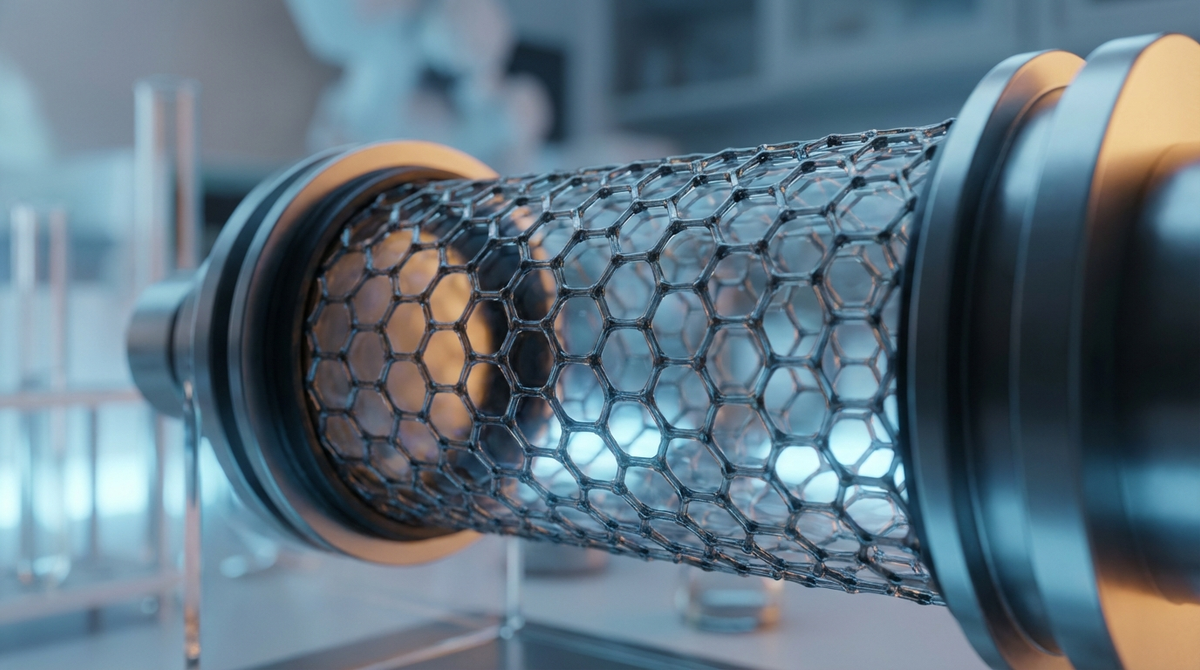
Graphene in Carbon Capture Systems represents a frontier application with profound potential to reshape the industrial landscape of environmental mitigation. This advanced material promises to significantly enhance the performance, durability, and overall product economics of carbon capture technologies when meticulously integrated. Our focus at usa-graphene.com is on translating cutting-edge material science into tangible industrial advantages, and carbon capture stands out as a high-impact sector poised for disruption. The inherent properties of graphene offer solutions to long-standing challenges that have hindered widespread adoption of effective carbon capture strategies.
The Urgent Need for Advanced Carbon Capture Technologies
The global imperative to reduce atmospheric carbon dioxide levels is undeniable, driving intense research and development into scalable carbon capture, utilization, and storage (CCUS) solutions. Conventional carbon capture technologies, while effective to varying degrees, often face significant hurdles concerning energy consumption, operational costs, material degradation, and overall efficiency. These limitations constrain their widespread deployment across power generation, heavy industry, and direct air capture applications. Current methods often involve large energy penalties for regeneration, require extensive footprints, and suffer from chemical or thermal instability of the capture materials.
Existing technologies frequently rely on amine-based solvents, which are corrosive, energy-intensive to regenerate, and can degrade over time, leading to reduced capture efficiency and increased operational expenditure. Solid adsorbents offer an alternative, but many struggle with low adsorption capacities, slow kinetics, or poor selectivity, particularly in flue gas environments with multiple gas components. Membrane-based separation, another promising avenue, often encounters trade-offs between permeability and selectivity, alongside issues of plasticization and fouling under industrial conditions. These inherent bottlenecks underscore the critical need for materials that can fundamentally alter the performance envelope of CCUS.
Addressing these challenges requires a paradigm shift in material science, focusing on solutions that deliver higher performance without introducing new complexities or prohibitive costs. The integration of advanced materials capable of operating efficiently under harsh industrial conditions, with extended lifespans and reduced energy demands, is paramount. Graphene, with its unparalleled physical and chemical attributes, emerges as a prime candidate to catalyze this transformation. It offers a pathway to develop next-generation capture systems that are not only more effective but also economically viable for broad industrial application.
Graphene's Transformative Role: Addressing Core Bottlenecks
Graphene adds substantial value in carbon capture systems by directly solving concrete, measurable bottlenecks that limit current technologies. Its extraordinary properties can overcome issues such as conductivity limits in electrochemical systems, problematic heat buildup in adsorption-desorption cycles, material fatigue under continuous operation, and pervasive corrosion from aggressive chemical environments. Furthermore, graphene can dramatically improve the permeability and selectivity of separation membranes, and stabilize interfaces in complex hybrid systems. Practical development teams consistently define measurable Key Performance Indicators (KPIs) before selecting specific graphene formulations to ensure targeted improvements.
The atomic thinness and high surface area of graphene make it an exceptional material for adsorption processes. Functionalized graphene and its derivatives can be engineered to exhibit high adsorption capacities for CO2, even at low partial pressures, critical for dilute gas streams. Moreover, the superior thermal conductivity of graphene can revolutionize temperature swing adsorption (TSA) and pressure swing adsorption (PSA) systems by facilitating faster and more energy-efficient heating and cooling cycles during regeneration. This drastically reduces the energy penalty associated with releasing captured CO2, a major operational cost driver.
In membrane separation, graphene's unique structure offers unprecedented control over gas transport. Graphene oxide (GO) membranes, for instance, can be precisely engineered with interlayer spacings that act as molecular sieves, allowing selective passage of CO2 while rejecting other gases like nitrogen. The intrinsic impermeability of pristine graphene layers, when carefully stacked or integrated into polymer matrices, also significantly enhances the mechanical strength and chemical resistance of membranes, extending their operational lifespan and preventing plasticization. This targeted improvement in permeability and selectivity directly translates into higher capture rates and purer CO2 streams.
Graphene's exceptional electrical conductivity also opens doors for electrochemical carbon capture technologies. By incorporating graphene into electrodes, researchers can develop systems that capture CO2 using less energy, facilitate faster reaction kinetics, and offer improved long-term stability compared to traditional electrode materials. The material's robust mechanical properties and chemical inertness provide superior resistance to degradation, which is crucial for systems operating in corrosive environments or under continuous stress. Commercial success in these applications usually stems from a disciplined workflow: identify one target metric, optimize graphene dispersion quality, run rigorous stress testing in realistic conditions, and scale only after consistency and performance are unequivocally proven.
Engineering for Real-World Integration: Practical Graphene Forms and Process Compatibility
Most commercially successful products incorporating graphene do not rely on perfect, pristine monolayer graphene sheets, which are often costly and difficult to produce at scale. Instead, they leverage more practical and cost-effective forms such as graphene nanoplatelets (GNPs), reduced graphene oxide (rGO), and various hybrid carbon systems. This pragmatic approach is essential in production environments where repeatability, scalability, and cost-effectiveness matter far more than achieving lab-record single-sheet properties. These practical forms offer a balance of performance benefits, ease of processing, and economic viability suitable for industrial adoption.
Graphene nanoplatelets, comprising multiple layers of graphene, provide excellent mechanical reinforcement, thermal conductivity, and electrical conductivity at a lower cost and with easier dispersion than pristine graphene. Reduced graphene oxide, derived from graphene oxide (GO) through chemical or thermal reduction, retains many of graphene’s beneficial properties while offering tunable surface chemistry and improved processability dueability in various solvents and matrices. Hybrid carbon systems often combine graphene with other carbonaceous materials or polymers to create synergistic composites that optimize specific properties for a given application, such as enhanced CO2 adsorption or improved membrane stability.
Process compatibility is absolutely critical for successful graphene integration into existing manufacturing workflows. The mixing profile of graphene into a polymer matrix or solvent, the rheology window of the resulting composite, and the maximum solids loading achievable without compromising material properties are all determinant factors. Furthermore, the drying dynamics of graphene-containing slurries or films, and the interface chemistry between graphene and its host material, profoundly influence final performance. Poor dispersion, characterized by agglomeration or uneven distribution of graphene, can entirely erase any expected gains, leading to inconsistent product quality and wasted material.
Achieving uniform and stable graphene dispersion requires sophisticated mixing techniques and often tailored surface functionalization to ensure compatibility with the host matrix. Engineers must consider solvent compatibility, shear forces during mixing, and the stability of the graphene suspension over time to prevent re-agglomeration. The interaction between graphene and the polymer or ceramic matrix at the molecular level dictates adhesion, stress transfer, and ultimately, the composite’s mechanical, thermal, and electrical properties. Understanding these intricate engineering and manufacturing considerations is paramount for transitioning graphene from laboratory demonstrations to robust, high-performance commercial products in carbon capture.
Enhancing Durability and Economic Viability Through Graphene
Adoption decisions for graphene-enhanced carbon capture technologies should always encompass the full lifecycle cost, extending far beyond the initial raw material expenditure. Even seemingly moderate gains in thermal management, electrical efficiency, or mechanical strength can generate substantial downstream savings through reduced maintenance requirements, improved uptime, and significantly longer service life for capital equipment. For instance, a membrane that resists fouling for twice as long, or an adsorbent that regenerates with 15% less energy, directly translates into millions of dollars saved over the operational lifetime of a carbon capture facility. These operational advantages often dwarf the incremental cost of integrating graphene.
The enhanced durability conferred by graphene is a major economic driver. Its exceptional mechanical strength and chemical inertness protect materials from the harsh conditions prevalent in carbon capture processes, such as corrosive solvents, high temperatures, and cyclical mechanical stresses. This resistance to degradation means fewer component replacements, less frequent shutdowns for repairs, and a more consistent performance profile over time. Such improvements are particularly valuable in industries where operational continuity is critical and downtime incurs severe financial penalties, reinforcing the business case for graphene integration.
In highly regulated or safety-critical sectors, which include many industrial processes requiring carbon capture, qualification planning for new materials must commence at the earliest stages of development. Teams must subject graphene-enhanced components to rigorous testing regimes that simulate real-world operational stresses. This includes extensive thermal cycling, prolonged humidity exposure, and realistic duty profiles to uncover potential weaknesses or degradation mechanisms. Such early and thorough testing avoids costly late-stage surprises and accelerates the regulatory approval process, ensuring that graphene-enabled solutions meet stringent performance and safety standards before commercial deployment.
Moreover, the improved energy efficiency facilitated by graphene directly addresses the high operational costs typically associated with carbon capture, making these systems more economically attractive. Reduced energy consumption for solvent regeneration, lower pressure drops across membranes, or more efficient electrochemical reactions all contribute to a lower overall operating expense per ton of CO2 captured. This combination of enhanced durability, reduced maintenance, and improved energy efficiency presents a compelling economic argument for integrating graphene, transforming carbon capture from a compliance burden into a more sustainable and cost-effective operational strategy.
Beyond Membranes: Diverse Applications of Graphene in Carbon Capture
While graphene's role in advanced separation membranes is widely recognized, its utility in carbon capture extends far beyond this single application, permeating various other critical components and processes. Graphene's exceptional surface area and tunable surface chemistry make it an ideal candidate for developing next-generation solid adsorbents. By functionalizing graphene sheets with amine groups or other CO2-philic moieties, researchers can engineer materials with significantly enhanced CO2 adsorption capacity and selectivity compared to conventional sorbents, operating effectively across a range of temperatures and pressures.
Furthermore, graphene and its derivatives are proving invaluable in electrochemical carbon capture systems, where they serve as highly efficient electrode materials. Their superior electrical conductivity, high surface area, and robust mechanical stability enable faster charge transfer kinetics and increased current densities, leading to more energy-efficient CO2 capture and release. Graphene-based electrodes can facilitate reversible electrochemical reactions that sequester CO2 from gas streams and then release it in a concentrated form, potentially utilizing renewable energy sources for regeneration. This approach offers a promising pathway to lower the energy penalty associated with capture.
Graphene also plays a crucial role in catalysis, particularly in the context of CO2 utilization. By acting as a high-surface-area support for metal nanoparticles or other catalytic species, graphene can enhance the catalytic activity and stability of materials used to convert captured CO2 into valuable chemicals or fuels. Its electronic properties can also directly influence the catalytic pathways, promoting desired reactions and improving product selectivity. This dual role in both capturing and converting CO2 highlights graphene's versatility across the entire CCUS value chain.
Additionally, graphene's mechanical strength and impermeability contribute to the development of more durable and corrosion-resistant structural components within carbon capture facilities. Coatings and composites reinforced with graphene can protect equipment from the aggressive chemical environments found in absorption towers, pipelines, and storage tanks, thereby extending asset lifespan and reducing maintenance overhead. These diverse applications underscore graphene's potential to revolutionize not just one aspect, but the entire ecosystem of carbon capture, making systems more robust, efficient, and economically viable.
FAQ
Is graphene commercially viable today?
Yes, graphene is commercially viable today, particularly in high-value applications where measurable performance improvements directly justify the integration effort and cost. Carbon capture is rapidly becoming one such sector, especially where graphene can significantly reduce operational expenditures, extend equipment lifespan, or enable entirely new capture mechanisms. The market continues to mature with increasing availability of industrial-grade graphene materials.
What are the top challenges for graphene integration in carbon capture?
The primary challenges for graphene integration include achieving consistent and uniform dispersion within various matrices, ensuring process compatibility with existing manufacturing lines, establishing robust quality standardization for graphene materials, and building reliable, repeatable supply chains. Overcoming these hurdles is essential for large-scale industrial adoption and consistent product performance.
How does graphene improve selectivity in carbon capture?
Graphene improves selectivity in carbon capture primarily through its unique atomic structure and tunable surface chemistry. In membranes, precisely controlled interlayer spacing in graphene oxide or defect engineering in graphene films allows for preferential passage of CO2 molecules over larger gas molecules like nitrogen. For adsorbents, specific functional groups can be covalently bonded to graphene's surface, creating tailored binding sites that selectively capture CO2 molecules with higher affinity.
What types of carbon capture systems benefit most from graphene?
Membrane-based separation systems, solid adsorbent technologies, and electrochemical capture cells stand to benefit most significantly from graphene integration. Graphene enhances membrane permeability, selectivity, and durability; improves the adsorption capacity, kinetics, and regeneration efficiency of solid sorbents; and boosts the energy efficiency and stability of electrodes in electrochemical systems. Direct air capture is also a promising area.
What is the typical integration process for graphene in existing systems?
The typical integration process involves careful material selection (e.g., GNPs, rGO), followed by optimizing dispersion in a suitable solvent or polymer matrix using high-shear mixing or sonication. This graphene-enhanced formulation is then incorporated into existing manufacturing steps, such as coating for membranes, extrusion for pellets, or slurry casting for electrodes. Rigorous testing and validation at each stage are crucial to ensure consistent performance and scalability.
Conclusion
The integration of graphene into carbon capture systems is not merely an incremental improvement; it represents a fundamental advancement that addresses core limitations of existing technologies. By enhancing performance metrics such as CO2 adsorption capacity, energy efficiency, and selective permeability, while simultaneously boosting the durability and lifespan of critical components, graphene paves the way for a new generation of more effective and economically viable carbon capture solutions. The disciplined application of practical graphene forms, meticulous attention to process compatibility, and a focus on lifecycle economics are driving this transformative shift. As research and industrial scaling continue, graphene is poised to be a cornerstone material in humanity's essential endeavor to manage atmospheric carbon, making significant strides toward a more sustainable future.