
Graphene in Rubber Compounds: Tires, Seals, Gaskets, and Wear-Resistant Elastomers
Graphene can improve rubber compounds through better wear resistance, thermal behavior, durability, and functional elastomer performance.
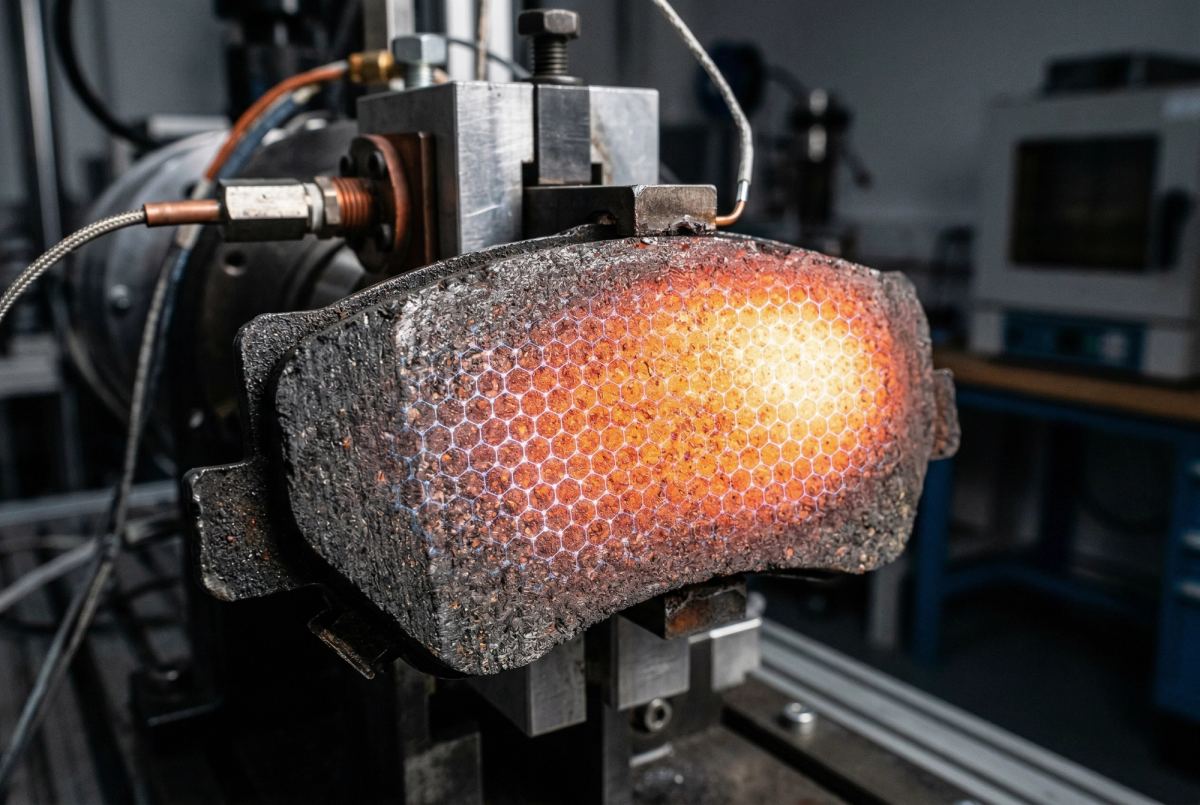
Brake pads and friction materials operate in one of the harshest environments in everyday engineering. They experience repeated heat spikes, wear, pressure, particle generation, and constant demands for consistent performance. That makes them an attractive application area for graphene. The material’s combination of thermal conductivity, strength, and surface behavior creates a strong case for its use in next-generation friction materials. The first reason graphene is interesting in brake materials is heat. Braking performance is directly tied to how well a system handles thermal load. Excess heat can lead to fade, instability, accelerated wear, and inconsistent friction behavior. Graphene can improve heat distribution inside composite friction materials, helping reduce localized hotspots and support more stable performance. Wear resistance is another major factor. Brake pads are consumable by design, but excessive wear is costly and creates dust, maintenance issues, and reduced efficiency. Graphene may help improve the structural integrity of friction composites and reduce the rate of degradation under repeated use. Even small improvements can matter because braking systems are safety-critical and highly sensitive to material consistency. Mechanical stability and friction behavior also matter. Brake materials must maintain predictable contact behavior under changing loads and temperatures. Graphene can influence how fillers and binders behave inside the matrix, potentially contributing to a more stable material response. This is not just a laboratory curiosity; in transport systems, stable braking behavior is directly tied to safety and reliability. There is also growing interest in lower-emission and cleaner friction materials. If graphene can help improve wear performance or reduce the need for more problematic additives, it may support more environmentally responsible brake formulations over time. The opportunity is not limited to automotive brakes. Industrial applications, aerospace systems, and even high-performance sporting equipment demand friction materials that can withstand extreme conditions while delivering unparalleled consistency and longevity. Graphene, with its unique atomic structure and remarkable properties, stands poised to revolutionize this critical field.
Friction materials, particularly those found in brake pads, are engineered to convert kinetic energy into thermal energy, effectively slowing or stopping motion. This fundamental process inherently generates immense heat, often reaching hundreds of degrees Celsius within seconds during hard braking events. Traditional composite formulations, while effective to a degree, frequently struggle with managing these rapid thermal cycles, leading to performance degradation known as brake fade. The constant mechanical shearing and compressive forces also contribute to material wear, releasing particulate matter into the environment and necessitating frequent replacement. These operational stresses highlight a persistent need for advanced materials that can maintain integrity and functionality under such relentless assault, pushing the boundaries of what is currently achievable with conventional metallurgy and polymer science.
The challenges extend beyond simple stopping power. Modern braking systems must also deliver a consistent pedal feel, minimize noise and vibration, and possess a long service life. Environmental regulations are increasingly stringent, demanding the reduction or elimination of harmful constituents like copper, lead, and asbestos from brake pad formulations. These evolving requirements place immense pressure on material scientists to innovate, seeking new compounds that can meet a complex matrix of performance, durability, and ecological criteria. Graphene emerges as a compelling candidate, offering a multifaceted approach to addressing these systemic issues across the entire spectrum of friction material demands.
The singular most critical factor dictating brake performance and longevity is thermal management. When a brake pad engages with a rotor, the friction interface experiences rapid and intense localized heating. Without efficient heat dissipation, these localized hotspots can lead to several detrimental effects, including material decomposition, phase changes in the friction surface, and a dramatic reduction in the coefficient of friction, commonly known as brake fade. Graphene, with its extraordinary in-plane thermal conductivity, which can exceed that of copper by a significant margin, offers a revolutionary solution to this inherent problem. Its atomic lattice allows phonons, the quantum units of heat, to travel with minimal scattering, facilitating rapid heat transfer away from the points of contact.
Incorporating graphene into a composite brake pad material can fundamentally alter its thermal behavior. The two-dimensional structure of graphene sheets, when properly dispersed, creates highly efficient thermal pathways throughout the material matrix. This allows heat generated at the friction surface to be quickly distributed across a larger volume of the pad, preventing the accumulation of heat in specific regions. By evening out the temperature profile within the pad, graphene helps to mitigate the formation of localized hotspots, thereby reducing the risk of thermal degradation and ensuring a more stable and consistent friction coefficient over repeated braking cycles. This enhanced thermal stability translates directly into improved safety and performance reliability, even under the most demanding conditions.
Beyond thermal management, the intrinsic wear resistance of a brake pad is paramount for its operational lifespan and environmental impact. Traditional brake pads are designed to be sacrificial, slowly abrading away during use, which inevitably leads to dust generation and the need for periodic replacement. Graphene’s exceptional mechanical properties, including its tensile strength and stiffness—far surpassing that of steel—present a unique opportunity to significantly bolster the structural integrity of friction composites. When integrated into the matrix, graphene acts as a powerful reinforcing agent, resisting crack propagation and micro-fractures that typically initiate wear processes.
The inclusion of graphene can create a more robust and cohesive material, where the individual components of the composite are more firmly bound together. This enhanced internal bonding and reinforcement reduces the rate at which material is shed from the pad surface during braking. Less material loss means a prolonged service life for the brake pad, translating into reduced maintenance costs and fewer replacements for end-users. Furthermore, the reduced generation of particulate matter contributes to a cleaner environment, addressing concerns related to airborne brake dust. In certain formulations, graphene can also exhibit solid lubrication properties, forming a low-friction layer at the interface under specific conditions, further minimizing abrasive wear and frictional heating without compromising stopping power.
The performance of any friction material is ultimately judged by its ability to maintain a consistent and predictable coefficient of friction (CoF) across a wide range of operating conditions. Variables such as temperature, pressure, speed, and humidity can all significantly influence the CoF of traditional brake materials, leading to erratic braking behavior, reduced driver confidence, and potential safety hazards. Graphene's unique surface chemistry and mechanical properties offer a means to stabilize this critical parameter, ensuring a more reliable and consistent interaction between the brake pad and the rotor.
Graphene's presence within the composite matrix can influence how the various fillers, binders, and abrasive particles interact under dynamic loads. Its high surface area allows for strong interfacial bonding with polymer matrices, creating a more homogenous and stable structure that is less susceptible to macroscopic changes under stress. This enhanced mechanical stability means the brake pad can maintain its structural integrity and contact characteristics even when subjected to extreme pressures and fluctuating temperatures. The result is a more predictable pedal feel, reduced noise, vibration, and harshness (NVH), and a consistent braking response that instills greater confidence in the system. Such stability is not merely a comfort factor; it is a fundamental requirement for safety-critical applications where precise control is paramount.
The global automotive and industrial sectors are increasingly focused on sustainability, driving a significant shift towards more environmentally responsible material choices. Friction materials have historically contained substances such as asbestos, lead, and more recently, copper, all of which pose environmental and health concerns through wear dust. Regulatory bodies worldwide are enacting stricter limits on these materials, prompting manufacturers to seek high-performance alternatives. Graphene emerges as a compelling solution to address these environmental pressures without compromising performance.
By enhancing wear resistance, graphene inherently reduces the amount of particulate matter released into the atmosphere over the lifespan of the brake pad. Furthermore, its ability to improve thermal and mechanical stability means that graphene can potentially replace or significantly reduce the reliance on other problematic additives that contribute to wear or provide specific thermal properties. For instance, graphene's superior thermal conductivity might allow for the reduction or elimination of copper, a heavy metal that can contaminate waterways. Its reinforcing capabilities can likewise diminish the need for other abrasive or binding agents that might be less environmentally benign. This positions graphene as a key enabler for the development of "green" brake formulations that meet stringent environmental standards while simultaneously delivering superior stopping power and durability, aligning performance with ecological responsibility.
While automotive applications represent a significant market for friction materials, the utility of graphene extends far beyond passenger vehicles. Industrial machinery, wind turbine braking systems, high-speed trains, aircraft landing gear, and even specialized sporting equipment all rely on friction materials that can withstand extreme conditions and deliver consistent performance. In each of these sectors, the demands often surpass those of conventional automotive brakes, requiring materials that can handle higher energy loads, operate in more corrosive environments, or maintain functionality over incredibly long service intervals with minimal maintenance.
For instance, in railway braking systems, extreme forces and prolonged braking events necessitate materials with exceptional thermal stability and wear resistance to prevent catastrophic failure. In aerospace, weight reduction is critical, making high-performance, lightweight friction materials highly desirable. Graphene's combination of thermal management, strength-to-weight ratio, and wear reduction capabilities makes it an ideal candidate for these advanced applications. The integration challenges, such as achieving uniform dispersion within complex matrices and scaling production, are actively being addressed by researchers and industry partners. As manufacturing processes mature and costs become more competitive, graphene-enhanced friction materials are poised to become standard, ushering in an era of unprecedented safety, efficiency, and sustainability across a vast array of transport and industrial sectors.
What exactly is graphene and why is it special for brake pads?
Graphene is a single layer of carbon atoms arranged in a two-dimensional hexagonal lattice, essentially a one-atom-thick sheet of graphite. It possesses extraordinary properties, including exceptional thermal conductivity, immense tensile strength, and unique surface behavior. For brake pads, its ability to efficiently dissipate heat, reinforce material structure, and stabilize friction performance makes it a game-changer for durability, safety, and environmental impact.
How does graphene help with heat in brake pads?
Graphene’s atomic structure allows it to conduct heat more efficiently than almost any other known material. When incorporated into brake pads, it acts like a microscopic network of thermal highways, rapidly distributing heat away from localized hotspots that typically form during braking. This prevents excessive temperature buildup, reduces brake fade, and helps maintain consistent performance even under heavy use.
Does graphene make brake pads last longer?
Yes, graphene has the potential to significantly extend the lifespan of brake pads. Its incredible strength and stiffness allow it to reinforce the composite material, making it more resistant to wear, cracking, and degradation under repeated stress. This means less material is lost during braking, resulting in a more durable pad that requires less frequent replacement and generates less particulate dust.
Is graphene safe for the environment in brake pads?
Graphene is primarily composed of carbon, a common element. Its integration into brake pads is considered beneficial for the environment. By improving wear resistance, it reduces the overall generation of brake dust. Furthermore, graphene can potentially reduce the need for other, more problematic additives like copper, lead, or asbestos, which are under increasing regulatory scrutiny due to their environmental impact.
When can we expect graphene brake pads to be widely available?
Graphene-enhanced friction materials are currently undergoing extensive research, development, and testing by leading manufacturers globally. While some specialized or high-performance applications may see earlier adoption, widespread commercial availability for consumer automotive markets will depend on further scaling of production, cost optimization, and full regulatory approvals. The trajectory suggests significant market penetration within the next decade as these factors align.
The evolution of friction materials has always been driven by the relentless pursuit of enhanced safety, performance, and durability. In this ongoing quest, graphene stands out as a truly transformative material, offering a comprehensive solution to many of the long-standing challenges faced by brake pads and other friction components. Its unparalleled thermal conductivity addresses the critical issue of heat management, mitigating fade and ensuring consistent performance under extreme conditions. The exceptional mechanical strength of graphene significantly boosts wear resistance, extending product life and reducing maintenance burdens while simultaneously contributing to cleaner air by limiting particulate emissions.
Moreover, graphene’s influence on the mechanical stability of composites leads to more predictable and reliable friction behavior, a non-negotiable requirement for safety-critical systems. As environmental regulations become more stringent, graphene provides a high-performance, sustainable alternative to traditional problematic additives, paving the way for truly eco-friendly brake formulations. The potential of graphene is not confined to automotive applications; it extends across industrial, aerospace, and high-performance sectors, promising a future where friction materials are not just consumables but advanced components integral to the safety and efficiency of countless systems. The integration of graphene into friction materials represents a pivotal advancement, heralding an era of safer, more durable, and environmentally responsible braking solutions.
Serious about B2B integration? Test our premium Pulsed Electrical Resistive Carbon Heating turbostratic graphene in your lab. 100g sample packs available now.
Explore More
Graphene can improve rubber compounds through better wear resistance, thermal behavior, durability, and functional elastomer performance.

Graphene-filled polyurethane foams can improve lightweight structural behavior, thermal performance, cushioning, and multifunctional material design.

Graphene-filled polypropylene can improve stiffness, conductivity, barrier behavior, and lightweight part performance in large-volume applications.