Transport, Aerospace & Defense, Coatings & Materials
Graphene in Brake Pads and Friction Materials: Heat Control, Wear Reduction, and Performance Stability
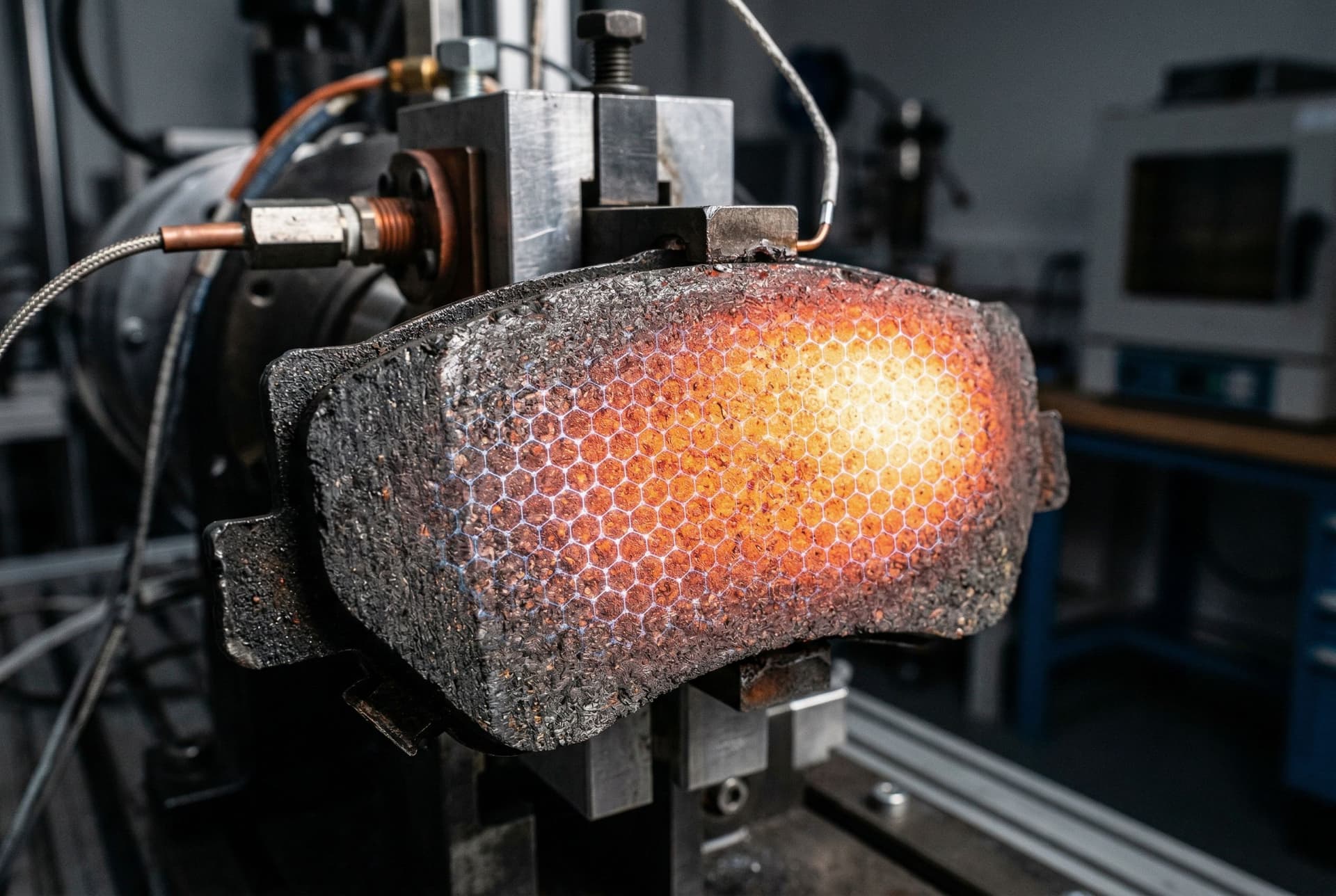
Brake pads and friction materials operate in one of the harshest environments in everyday engineering. They experience repeated heat spikes, wear, pressure, particle generation, and constant demands for consistent performance. That makes them an attractive application area for graphene. The material’s combination of thermal conductivity, strength, and surface behavior creates a strong case for its use in next-generation friction materials.
The first reason graphene is interesting in brake materials is heat. Braking performance is directly tied to how well a system handles thermal load. Excess heat can lead to fade, instability, accelerated wear, and inconsistent friction behavior. Graphene can improve heat distribution inside composite friction materials, helping reduce localized hotspots and support more stable performance.
Wear resistance is another major factor. Brake pads are consumable by design, but excessive wear is costly and creates dust, maintenance issues, and reduced efficiency. Graphene may help improve the structural integrity of friction composites and reduce the rate of degradation under repeated use. Even small improvements can matter because braking systems are safety-critical and highly sensitive to material consistency.
Mechanical stability and friction behavior also matter. Brake materials must maintain predictable contact behavior under changing loads and temperatures. Graphene can influence how fillers and binders behave inside the matrix, potentially contributing to a more stable material response. This is not just a laboratory curiosity; in transport systems, stable braking behavior is directly tied to safety and reliability.
There is also growing interest in lower-emission and cleaner friction materials. If graphene can help improve wear performance or reduce the need for more problematic additives, it may support more environmentally responsible brake formulations over time.
The opportunity is not limited to automotive brakes. Industrial friction materials, clutch systems, transport equipment, and heavy-duty machinery may all benefit from graphene-enhanced composites where heat, wear, and performance stability are crucial.
Challenges remain because friction materials are complex systems with many interacting fillers, fibers, and binders. Graphene has to be incorporated carefully and tested thoroughly to ensure it improves performance rather than destabilizing the formulation. But the core case is strong.
Graphene in brake pads and friction materials matters because this is an application area where better heat control, wear reduction, and performance stability have immediate real-world value. It is exactly the kind of harsh, practical environment where advanced material additives can earn their place.