
A New Era of Graphene Engineering: Pre-Designing Twist Angles on Demand
Researchers have developed a breakthrough method for growing twisted bilayer graphene with pre-designed angles, a key step toward manufacturable quantum...
The arrival of graphene heralded a new era in material science, promising unprecedented advancements in electronics, energy, and beyond. Its exceptional properties, including ultrahigh carrier mobility and low resistivity, positioned it as a groundbreaking material for applications ranging from transparent conducting electrodes to ultrafast transistors and broadband radio mixers. However, one inherent characteristic of pristine graphene presented a significant hurdle for high-performance semiconducting electronics: its zero bandgap.
This fundamental limitation means that electrons in graphene can move almost freely, even when a device is supposed to be "off." In practical terms, this leads to a substantial leakage current in graphene-based field-effect transistors (FETs), resulting in ON/OFF ratios typically less than 10. Such figures fall dramatically short of the millions achieved by conventional silicon-based transistors, making graphene impractical for many mainstream electronic applications where precise control over current flow is paramount. Overcoming this zero bandgap issue became a critical challenge for unlocking graphene's full potential in advanced electronics. The solution, elegantly simple in concept yet profoundly complex in execution, lies in the creation of graphene heterostructures.
Graphene heterostructures involve the atomic-level assembly of graphene with other low-dimensional materials. This innovative approach not only facilitates the creation of artificial architectures capable of opening graphene's inherent bandgap but also paves a promising pathway toward fully integrated and multifunctional graphene electronics. By judiciously combining graphene with its structural analogs and other novel materials, scientists and engineers are now able to precisely tailor its electronic transport properties, including mobility, ON/OFF ratio, and radio frequency response, ushering in a new generation of devices.
The intrinsic nature of graphene, a single layer of carbon atoms arranged in a hexagonal lattice, is responsible for its extraordinary electrical conductivity. Electrons behave as massless Dirac fermions, allowing for ballistic transport and remarkably high mobility. This makes graphene ideal for devices requiring extremely fast signal processing and minimal energy loss. However, this very characteristic, the absence of a bandgap, is also its Achilles' heel in traditional semiconductor applications.
In conventional semiconductors like silicon, a bandgap exists between the valence band (where electrons reside) and the conduction band (where electrons can move freely to conduct electricity). This gap allows engineers to effectively switch a transistor "off" by preventing electrons from jumping into the conduction band at low voltages. Graphene, lacking this energy gap, struggles to achieve this essential switching behavior. The resulting large leakage current severely limits the ON/OFF ratio of FETs, making them unsuitable for digital logic circuits that demand clear distinctions between on and off states.
Addressing this zero bandgap issue became the central focus for researchers aiming to integrate graphene into mainstream electronics. Various strategies were explored, but the creation of graphene heterostructures emerged as one of the most promising and versatile approaches. This method leverages the atomic precision of modern material synthesis to engineer hybrid structures that exhibit desired electronic properties, effectively circumventing graphene's inherent limitation while retaining its other superior attributes. The ability to manipulate graphene's electronic landscape through atomic assembly is transforming theoretical possibilities into tangible technological advancements.
Graphene heterostructures are essentially designer materials, meticulously constructed by integrating graphene with other low-dimensional materials. This integration allows for a synergistic combination of properties, where the strengths of each component are amplified, and their individual weaknesses are mitigated. The primary goal is to introduce a tunable bandgap into graphene while preserving its high carrier mobility and other desirable features.
These sophisticated structures can be broadly categorized into two main classes based on their architectural arrangement: planar layers and vertical stacks. Planar heterostructures involve graphene and other materials existing within the same atomic plane, forming a continuous or patterned sheet. Vertical stacks, on the other hand, are created by layering different two-dimensional (2D) materials one on top of another, often referred to as van der Waals (vdW) solids, due to the weak vdW forces holding the layers together. Beyond these 2D configurations, three-dimensional (3D) heterostructures, such as those involving graphene and carbon nanotubes (CNTs), also offer unique functionalities for energy and other applications. The controlled assembly of these different material types, along with precise manipulation of layer number, ordering, and positioning, opens up an expansive realm of potential applications that were previously unattainable with pristine graphene.
The materials most commonly integrated with graphene include hexagonal boron nitride (h-BN), a wide bandgap insulator with a lattice structure remarkably similar to graphene, and various transition metal dichalcogenides (TMDs) such as molybdenum disulfide (MoS2), tungsten disulfide (WS2), and their selenide and telluride counterparts. These TMDs are semiconductors, providing a crucial bandgap that can be harnessed in hybrid devices. Furthermore, the integration of graphene with one-dimensional carbon nanotubes creates an all-carbon 3D architecture, offering novel possibilities for energy storage and field emission devices. The versatility of these building blocks allows for an unprecedented degree of control over the resulting electronic and optical properties of the composite material.
Lateral graphene heterostructures represent a class of materials where graphene is integrated with other substances within the same atomic plane. This co-planar arrangement allows for unique interactions and functionalities, fundamentally altering graphene's electronic properties. These structures can be broadly classified into two main categories: hybridization through doping and substitution, and shape engineering via patterning.
In the first category, hybridization, graphene's lattice is modified by introducing foreign elements or compounds. This can involve doping graphene with elements like nitrogen or fluorine, or more complex substitutions with h-BN domains. The feature sizes of these domains can range from individual atoms to micron-scale regions. By precisely controlling the composition and concentration of these foreign materials, researchers can tune the physical properties of the hybridized graphene. For instance, creating atomic layers of hybridized h-BN and carbon (h-BNC films) allows for the bandgap to be adjusted based on the atomic concentration of h-BN. This direct chemical modification offers a powerful way to engineer the electronic band structure of graphene. A more ambitious goal involves synthesizing crystals with various stoichiometric ratios of carbon and foreign atoms, such as the BxNyCz system, which are predicted to exhibit metallic or semiconducting behaviors depending on their precise composition. The main challenge in this area is achieving precise control over stoichiometry and preventing unwanted phase separations during synthesis.

The second category, shape engineering, involves patterning graphene alongside other 2D crystals within the same plane. In these configurations, graphene often retains its inherent highly electrical conductivity, with the geometry and interfacial interactions playing a more dominant role in defining the overall sample properties. This approach is geared towards creating fully integrated and multifunctional devices for diverse applications. The fabrication of such sophisticated structures typically involves multistep growth and patterning protocols. For example, graphene/h-BN patterns have been successfully demonstrated in laboratories using intricate two-step growth processes. This method allows for the creation of defined regions of graphene and h-BN side-by-side, forming atomically thin circuitry or specialized transport channels. The ability to precisely define these patterns at the nanoscale opens doors for creating complex electronic architectures directly on a 2D plane, laying the groundwork for next-generation integrated circuits.
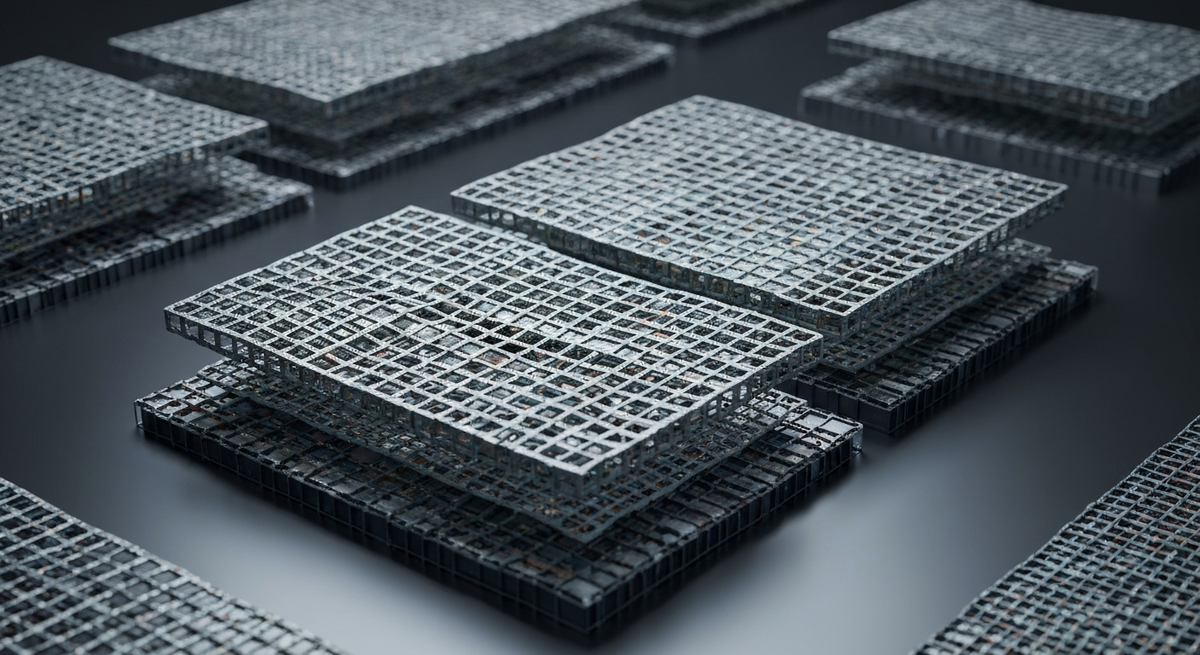
Vertical graphene heterostructures represent a distinct and highly promising approach to engineering graphene's properties, particularly for electronic applications. Instead of integrating materials within the same plane, this method involves stacking different 2D crystals one on top of another, forming what are often referred to as van der Waals (vdW) solids or superlattices. The beauty of vdW solids lies in the weak, non-covalent vdW forces that hold the layers together, allowing for the stacking of dissimilar materials without the stringent lattice matching requirements typically demanded by traditional epitaxial growth methods. This flexibility enables an unprecedented degree of freedom in designing novel material combinations with tailored electronic and optical properties.
One of the most prominent examples of vertical heterostructures involves stacking graphene with hexagonal boron nitride (h-BN). h-BN is an excellent choice for several reasons: it is an insulating material with a wide bandgap, it possesses an atomically flat surface, and its hexagonal lattice structure is remarkably similar to graphene, differing by only a small lattice mismatch. When graphene is placed on h-BN, the h-BN acts as an ideal substrate, significantly enhancing graphene's carrier mobility by reducing scattering from impurities and substrate roughness. More importantly, the interaction between graphene and h-BN layers can induce a bandgap in graphene, a critical step toward its use in high-performance transistors. This interaction can be further tuned by controlling the rotational alignment and stacking order of the layers, leading to superlattice effects that profoundly influence graphene's electronic band structure.
Beyond h-BN, vertical heterostructures incorporating transition metal dichalcogenides (TMDs) like MoS2 or WS2 are also garnering significant attention. TMDs are semiconductors with inherent bandgaps, making them ideal partners for graphene in advanced electronic devices. Stacking graphene with TMDs creates heterostructures where graphene can act as an ultra-high mobility electrode, while the TMD layer provides the necessary semiconducting behavior. This combination has led to the development of highly efficient tunneling FETs (e.g., G/MoS2/G or G/WS2/G structures) with significantly improved ON/OFF ratios compared to pristine graphene FETs. These vertical stacks also find applications in memory cells, optoelectronic devices, and highly sensitive photodetectors, leveraging the unique electronic and optical properties arising from the interlayer interactions. The precise control over the number of layers, their stacking sequence, and their relative orientation provides a vast design space for creating bespoke electronic functionalities.
While 2D planar and vertical heterostructures dominate much of the current research, the integration of graphene with one-dimensional (1D) carbon nanotubes (CNTs) offers a unique pathway to create three-dimensional (3D) all-carbon hybrid systems. This approach capitalizes on the complementary strengths of both materials, leading to novel architectures with enhanced performance, particularly in energy-related applications.
Carbon nanotubes, essentially rolled-up sheets of graphene, possess exceptional mechanical strength, high aspect ratios, and tunable electronic properties (they can be metallic or semiconducting depending on their chirality). When bonded with graphene, CNTs can form a robust 3D network that combines graphene's high surface area and excellent electrical conductivity with the structural integrity and unique transport characteristics of CNTs. This synergistic combination results in materials that outperform either component in isolation for specific applications. The 3D architecture provides a high density of active sites and efficient charge transport pathways, making it highly attractive for electrochemical energy storage and conversion.
One significant application area for G/CNT heterostructures is in supercapacitors. The large surface area of graphene provides ample space for charge accumulation, while the interconnected CNT network facilitates rapid ion transport and electron conduction, leading to high energy density and power density. These hybrid systems also show promise in hydrogen evolution reactions, where the unique electronic interfaces created between graphene and CNTs can act as efficient catalysts. Furthermore, the robust, conductive 3D framework is being explored for field emission devices, where the sharp tips of CNTs integrated within a graphene matrix can efficiently emit electrons, leading to applications in display technologies and high-power vacuum electronics. The ability to create these all-carbon 3D structures with precisely controlled interfaces opens up a vast landscape for innovation in materials science and engineering.

The realization of graphene heterostructures, whether planar, vertical, or 3D, relies on a sophisticated toolkit of fabrication techniques. These methods are crucial for achieving the atomic precision required to engineer materials with tailored properties. Common approaches include chemical vapor deposition (CVD), mechanical exfoliation, liquid exfoliation, and various transfer techniques. CVD is particularly versatile for large-area synthesis and direct growth of complex heterostructures, while mechanical and liquid exfoliation are invaluable for producing high-quality, pristine layers for fundamental research and device prototyping. Transfer methods allow for the precise stacking of independently grown 2D materials, offering flexibility in heterostructure design. Multistep growth protocols are often employed for complex patterned lateral heterostructures, demonstrating the intricate engineering involved in their creation.
The diverse applications stemming from graphene heterostructures are truly transformative, addressing challenges across various sectors. In electronics, the ability to open a bandgap and achieve high ON/OFF ratios pushes graphene into the realm of high-performance transistors, potentially exceeding silicon's limits in speed and power efficiency. Graphene/h-BN heterostructures, for instance, have shown promise in high-mobility FETs and tunneling FETs. The integration with TMDs further enhances these capabilities, enabling advanced memory cells and optoelectronic devices. The unique electronic properties of these hybrid materials also pave the way for spin filters, where the spin of electrons can be manipulated, opening doors for spintronics, a field with potential for ultralow-power computing.
Beyond traditional electronics, graphene heterostructures are being explored for radio frequency (RF) devices, frequency multipliers, and broadband radio mixers, leveraging graphene's ultrafast response. In energy applications, G/CNT heterostructures are leading to breakthroughs in supercapacitors, offering superior energy storage capabilities. They also contribute to hydrogen evolution and efficient harvesting and conversion of energy, addressing critical global energy demands. The development of atomically thin circuitry and one-dimensional transport channels underscores the potential for extreme miniaturization and novel device architectures. From resonators that exploit graphene's mechanical properties to solar cells that enhance light absorption and charge separation, the landscape of graphene heterostructure applications is continually expanding, promising a future of fully integrated, multifunctional, and highly efficient graphene-based technologies.
What is the main challenge of using pristine graphene in electronics?
Pristine graphene possesses a zero bandgap, meaning electrons can move freely even in an "off" state. This leads to high leakage currents and very low ON/OFF ratios in transistors, making it unsuitable for many high-performance digital electronic applications that require precise current control.
How do graphene heterostructures solve the zero bandgap problem?
Graphene heterostructures integrate graphene with other materials, such as h-BN or TMDs, which can induce or introduce a bandgap. This structural engineering allows for the tuning of graphene's electronic properties, enabling better control over current flow and significantly improving ON/OFF ratios in transistor devices.
What are the two main types of 2D graphene heterostructures?
The two main types are planar (lateral) heterostructures and vertical stack heterostructures (van der Waals solids). Planar heterostructures involve materials within the same atomic plane, often through doping or patterning. Vertical heterostructures involve stacking different 2D layers on top of each other.
What other materials are commonly used with graphene in heterostructures?
Common materials include hexagonal boron nitride (h-BN), which is an insulator with a similar lattice structure to graphene, and various transition metal dichalcogenides (TMDs) like MoS2 or WS2, which are semiconductors. Carbon nanotubes (CNTs) are also used to create 3D hybrid structures.
What are some key applications of graphene heterostructures?
Graphene heterostructures are being developed for high-performance transistors with improved ON/OFF ratios, radio frequency devices, THz rectifiers, atomically thin circuitry, spin filters, solar cells, supercapacitors, and devices for hydrogen evolution and energy harvesting. Their versatility opens up a wide range of possibilities across electronics and energy.
The journey from basic material discovery to advanced technological application is often paved with innovative solutions to fundamental challenges. For graphene, the zero bandgap was a significant hurdle, but the scientific community's ingenuity in creating graphene heterostructures has transformed this limitation into an opportunity. By meticulously assembling graphene with other 2D and 1D materials at the atomic scale, researchers are not just opening a bandgap; they are unlocking a vast new landscape of electronic and optoelectronic possibilities.
These atomically engineered architectures, whether lateral, vertical, or three-dimensional, are poised to deliver a new generation of devices with unparalleled performance. From ultrafast, energy-efficient transistors that could surpass silicon to advanced energy storage solutions and novel quantum devices, graphene heterostructures represent a frontier where material science meets groundbreaking engineering. The ability to tailor properties with such precision ensures that graphene, in its hybridized forms, will indeed play a pivotal role in shaping the future of integrated and multifunctional electronics, solidifying its place as a truly transformative material.
Serious about B2B integration? Test our premium Pulsed Electrical Resistive Carbon Heating turbostratic graphene in your lab. 100g sample packs available now.
Explore More
Researchers have developed a breakthrough method for growing twisted bilayer graphene with pre-designed angles, a key step toward manufacturable quantum...

Learn how deep learning is revolutionizing the structural characterization of twisted bilayer materials, accelerating the development of next-generation...

Learn to build a prototype graphene FET biosensor for sensitive DNA detection. This guide covers materials, fabrication, and testing for point-of-care...