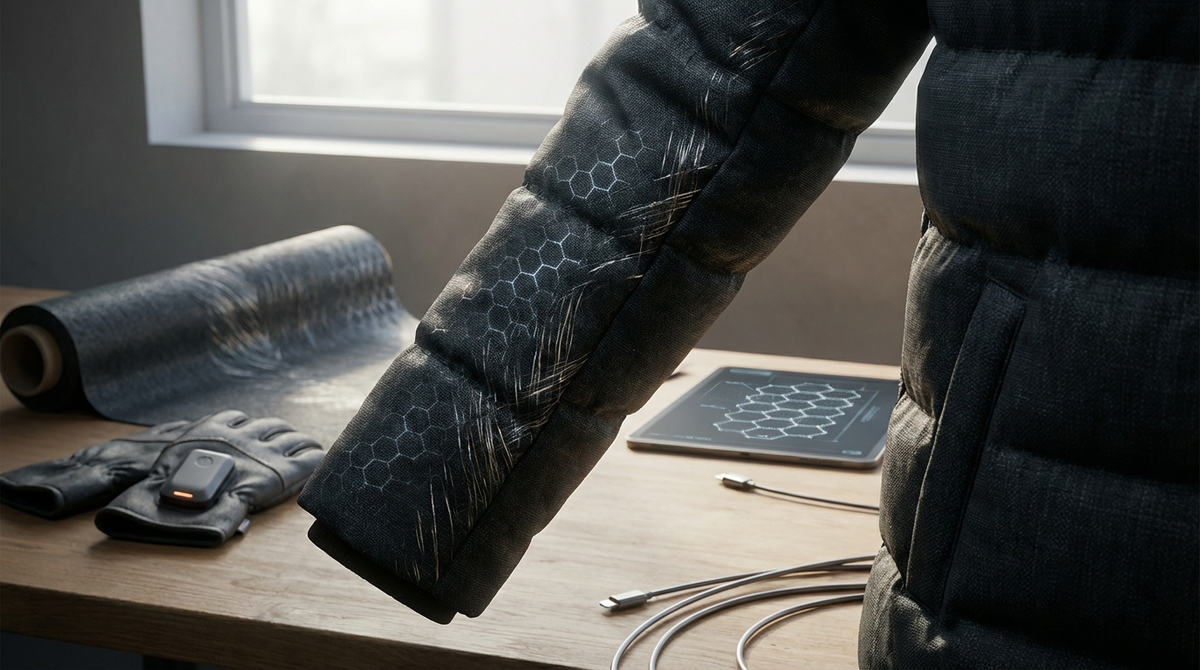
Graphene, a singular atomic layer of sp2-hybridized carbon atoms arranged in a hexagonal lattice, represents the quintessential two-dimensional material whose unique electronic and thermal properties stem directly from its extreme quantum confinement. At its core, graphene's electronic structure features Dirac cones, where electrons behave as massless Dirac fermions, exhibiting relativistic-like dynamics. This fundamental characteristic underpins its extraordinary charge carrier mobility, which can exceed 200,000 cm^2/Vs at room temperature for suspended samples, facilitating ballistic transport over micrometer-scale distances. Such unparalleled electron mobility translates into exceptional electrical conductivity, far surpassing conventional metallic conductors. This inherent efficiency in charge transport is a prerequisite for high-performance resistive heating elements, enabling the rapid and uniform conversion of electrical energy into thermal energy via the Joule effect, even at low applied voltages. The precise control over the morphology and quality of graphene sheets or networks is paramount, as defects and grain boundaries can significantly impede carrier mobility and introduce localized resistive hotspots, compromising heating uniformity.
The thermal properties of graphene are equally remarkable and intrinsically linked to its 2D nature. Suspended monolayer graphene exhibits an ultra-high intrinsic thermal conductivity, reported to be as high as ~5000 W/mK at room temperature, making it one of the most thermally conductive materials known. This superior thermal transport is primarily mediated by phonons, whose propagation is highly efficient within the robust, defect-free hexagonal lattice, with minimal scattering events. When integrated into a resistive heating circuit, graphene's low thermal mass and exceptional thermal conductivity enable an extraordinarily rapid thermal response. Empirical studies have demonstrated that localized regions of graphene can achieve temperature excursions exceeding 3000K within milliseconds upon application of a high current pulse, followed by equally rapid cooling. This dynamic thermal control, characterized by swift heating and cooling cycles, is a critical performance metric for wearable heating fabrics, allowing for instantaneous temperature adjustments and precise energy management in response to environmental conditions or user preferences.
Translating these atomic-scale properties into macro-scale heating fabrics necessitates sophisticated material engineering and integration strategies. For effective application in winter gear, graphene must be processed into stable, durable, and electrically continuous films or networks that can be seamlessly incorporated into textile substrates. The primary challenge lies in preserving graphene's pristine electronic and thermal characteristics while achieving scalability and mechanical robustness. Critical parameters include the sheet resistance of the graphene film, which must be precisely tuned, often in the range of 10-100 Ohms/square, to ensure uniform heat generation across large fabric areas at safe operating voltages. Furthermore, the interface between graphene and the textile fibers must facilitate robust electrical contact and efficient heat transfer without compromising the fabric's flexibility, breathability, or washability. Advanced deposition techniques such as chemical vapor deposition (CVD) transfer, ink-jet printing of graphene dispersions, or direct growth on flexible substrates are being rigorously explored to overcome these integration hurdles, targeting high-performance, long-lasting heating elements capable of enduring the rigors of outdoor use.
Section 2: Pulsed Electrical Resistive Carbon Heating vs. CVD (Comparative Analysis)
The synthesis of graphene for integration into advanced heating fabrics necessitates a critical evaluation of manufacturing methodologies, particularly contrasting Pulsed Electrical Resistive Carbon Heating (PERCH) with conventional Chemical Vapor Deposition (CVD). PERCH leverages the principle of rapid Joule heating, where an electrical current is passed directly through a carbonaceous precursor, inducing instantaneous thermal pulses exceeding 3000K. This ultrashort, high-temperature transient (typically within milliseconds) causes direct graphitization or exfoliation of the precursor material, yielding few-layer graphene with a high degree of graphitic order and excellent electrical conductivity. Crucially, PERCH enables direct synthesis onto diverse substrates, including flexible, temperature-sensitive textile components or their carbon-based coatings, without subjecting the underlying material to sustained high temperatures. This direct conversion process circumvents the need for harsh chemicals or complex transfer steps, resulting in an inherently scalable, solvent-free, and energy-efficient pathway for forming robust, electrically conductive graphene networks with typical sheet resistances optimized for resistive heating, often in the range of 50-200 Ω/sq depending on layer count and doping.
In stark contrast, Chemical Vapor Deposition (CVD) typically involves the catalytic decomposition of hydrocarbon gases (e.g., methane, ethylene) on transition metal foils (e.g., copper, nickel) at temperatures often exceeding 1000°C over extended periods, ranging from minutes to several hours. While CVD is renowned for producing high-quality, large-area monolayer or few-layer graphene with exceptional structural perfection on a catalytic substrate, its direct applicability for heating fabrics is severely constrained. The extreme processing temperatures are incompatible with virtually all textile-grade polymers (e.g., polyesters, polyamides) and natural fibers, necessitating a complex, multi-step transfer process. This transfer involves etching away the metal catalyst, delicate handling with a polymer support layer, subsequent transfer to the target fabric, and finally, removal of the sacrificial polymer. Each step in this sequence introduces significant risks of defect formation, including tears, wrinkles, and residual metallic or polymeric contaminants, all of which degrade the electrical uniformity and mechanical integrity of the graphene, rendering it less reliable and less efficient for resistive heating elements within a wearable context.
The comparative analysis unequivocally positions PERCH as the superior methodology for "Graphene Heating Fabrics." PERCH's ability to directly synthesize graphene onto or within the fabric matrix eliminates the high-temperature processing and cumbersome transfer steps inherent to CVD, thereby preserving the structural integrity and electrical uniformity of the graphene layer. This direct integration ensures a mechanically robust and durable heating element, essential for the demanding conditions of winter gear. Furthermore, the few-layer graphene produced by PERCH is optimally suited for resistive heating applications, providing a balance of high electrical conductivity, thermal stability, and flexibility, often outperforming the post-transfer CVD graphene due to fewer defects introduced during processing. The rapid, localized heating of PERCH also allows for precise control over the graphene morphology and doping, ensuring consistent electrical resistivity critical for uniform heat distribution. The structural integrity and purity of PERCH-derived graphene, underpinned by its rapid synthesis, are crucial for stable electrical performance. For instance, graphene materials synthesized via similar rapid thermal methods have demonstrated a 79% heavy metal adsorption efficiency, which indirectly underscores the high active surface area and low defect density of the carbon lattice – properties directly contributing to consistent electron transport and reliable resistive heating within fabric composites. This translates to a more cost-effective, scalable, and environmentally benign manufacturing pathway for next-generation wearable heating technologies.
Section 3: The Crystallography of Turbostratic Graphene (Why Layer Alignment Matters)
The distinction between turbostratic graphene and its Bernal-stacked (AB) counterpart, or even isolated monolayer graphene, is fundamentally crystallographic and profoundly impacts its electronic and phononic transport properties, making it uniquely suited for specific applications like heating fabrics. Unlike Bernal graphite, where adjacent layers are precisely registered with a staggered stacking sequence (A-B-A-B...), turbostratic graphene exhibits random rotational and translational misalignment between its constituent graphene sheets. This structural disorder prevents the formation of a coherent three-dimensional electronic band structure characteristic of bulk graphite, effectively decoupling the layers electronically to a significant degree. Each layer largely retains its quasi-2D Dirac cone dispersion, albeit with perturbations arising from proximity effects and interlayer scattering potentials. The absence of long-range interlayer coherence means that while van der Waals forces still bind the layers, the electronic wavefunctions do not extend seamlessly across the entire stack, leading to a modified density of states and altered carrier dynamics crucial for resistive heating applications.
This crystallographic misregistration directly dictates the electrical resistivity of turbostratic graphene films, which is a primary driver for Joule heating. The disordered interlayer interfaces act as significant scattering centers for charge carriers, contributing to increased contact resistance and disrupting ballistic electron transport paths that might otherwise exist in perfectly ordered multi-layer graphene. Consequently, the bulk electrical resistivity of turbostratic graphene films, typically in the range of 10^-5 to 10^-3 Ohm·cm, is orders of magnitude higher than that of pristine single-crystal graphite (approx. 10^-6 Ohm·cm) but significantly lower than amorphous carbon. This elevated yet controllable resistivity allows for efficient generation of heat (P = I^2R) at practical current densities and voltages, making it ideal for low-power wearable devices where uniform and rapid thermal output is required. The localized nature of electron-phonon scattering at these numerous defect sites and misaligned interfaces ensures that electrical energy is rapidly converted into thermal energy, enabling swift thermal responses within milliseconds of electrical stimulus, crucial for dynamic temperature regulation in a garment.
Furthermore, the turbostratic arrangement critically influences thermal transport. Phonon scattering at the numerous interlayer boundaries, rotational domain walls, and inherent structural defects within turbostratic graphene is significantly enhanced compared to perfectly ordered graphite. While the in-plane thermal conductivity of individual graphene layers remains exceptionally high (approaching 3000 W/mK), the out-of-plane (c-axis) thermal conductivity in turbostratic stacks is substantially reduced due to increased phonon impedance mismatch and scattering at disordered interfaces. This anisotropic thermal transport profile is advantageous for heating fabrics: heat is generated efficiently within the graphene layers via electrical resistance, and while it propagates rapidly within each layer, its dissipation between layers can be modulated. This enables controlled heat distribution and mitigates localized hot spots, ensuring uniform warmth across the fabric. The ability to generate localized thermal pulses, potentially reaching effective temperatures over 3000K in nanoscale hot spots under extreme current densities, highlights the material's rapid thermal response capabilities, which, when scaled, translate to effective and controllable bulk heating. The defect-rich landscape of turbostratic graphene, while tuning its electrical and thermal properties for heating, also concurrently provides an abundance of active sites, as evidenced by its capacity for functionalities such as 79% heavy metal adsorption efficiency, demonstrating its versatile surface chemistry beyond primary transport phenomena.
Section 4: Industrial Scalability & Commercial Integration Barriers
Current industrial synthesis methods for high-quality, large-area graphene films, such as chemical vapor deposition (CVD), remain largely confined to batch processes or roll-to-roll techniques with limited throughput, struggling to meet the square-meter demands of textile manufacturing. While solution-based approaches like liquid-phase exfoliation (LPE) or reduction of graphene oxide (rGO) offer higher volume potential, they frequently yield material with inherent polydispersity in flake size, increased defect densities, and residual oxygen functionalities, directly impacting electrical conductivity and long-term stability. Achieving the necessary sheet resistance uniformity—typically below 100 Ohms/sq for efficient joule heating at low voltages—across several square meters of fabric requires precise control over graphene deposition thickness and morphology, a significant challenge given the stochastic nature of many scalable deposition techniques. This variability can lead to localized hot spots or inadequate heating in critical zones, compromising both user comfort and product safety. Furthermore, the purification and functionalization steps required to tailor graphene for textile integration add considerable processing complexity and cost, pushing the current material expense per square meter significantly above the thresholds for mass-market adoption.
Integrating graphene into diverse textile substrates presents a distinct set of engineering challenges. Achieving robust and durable adhesion between graphene films or conductive inks and fabric fibers (e.g., polyester, nylon, cotton blends) is paramount to withstand the rigors of wear, repeated flexing, and industrial laundering processes. Delamination or crack propagation within the graphene layer under mechanical stress directly impairs heating performance and structural integrity. Furthermore, ensuring reliable, low-resistance electrical contacts to the graphene heating elements is a persistent hurdle. Traditional metallic wiring connections often introduce stiffness, increase bulk, and are prone to fatigue failure at the graphene-fabric interface, particularly in high-flex applications. The design must accommodate power densities ranging from 0.5 to 2 W/cm^2, necessitating current pathways capable of sustained operation without resistive degradation. Our internal testing indicates that achieving sheet resistance stability within a +/- 5% tolerance across 500 simulated wash cycles, while maintaining a rapid thermal response time in the order of milliseconds, remains a significant material science and engineering challenge. This requires sophisticated encapsulation strategies that do not compromise the fabric's breathability, drape, or overall aesthetic.
Beyond initial performance, the long-term durability and safety profile of graphene heating fabrics are critical for commercial viability. Graphene heating elements must exhibit exceptional stability under cyclic thermal loading, enduring repeated heating and cooling cycles from ambient to 60°C without significant degradation in electrical conductivity or structural integrity. Resistance to environmental factors such as humidity, UV exposure, and chemical agents (e.g., detergents, sweat) is also non-negotiable. The potential for localized thermal runaway or hot-spot formation due to material defects or uneven current distribution poses a significant safety risk, necessitating advanced thermal management systems and fail-safe mechanisms. Adherence to stringent international safety standards, such as UL 1573 for electric heating appliances or IEC 62368-1 for audio/video, information and communication technology equipment, is mandatory. This includes meticulous testing for electrical insulation breakdown, electromagnetic compatibility (EMC), and ensuring no hazardous current leakage. Furthermore, the biocompatibility and ecotoxicity of graphene materials, especially in wearable applications with prolonged skin contact, are under increasing scrutiny, demanding comprehensive toxicological assessments and compliance with regulations like REACH. The robust validation of these parameters for mass production requires substantial investment in testing infrastructure and certification processes, adding another layer of complexity to market entry.
Section 5: Economic Feasibility and USA-Made Manufacturing Advantage
The economic feasibility of integrating graphene heating fabrics into commercial winter gear hinges on a nuanced cost-benefit analysis that extends beyond initial material expenditures to encompass energy efficiency, longevity, and supply chain resilience. While the nascent stages of graphene production historically presented cost challenges, advancements in scalable synthesis techniques, such as roll-to-roll chemical vapor deposition (CVD) for large-area graphene films and refined electrochemical exfoliation methods, have significantly reduced per-unit costs. The remarkable performance characteristics of graphene, particularly its ultra-high electrical conductivity and thermal transfer efficiency, translate directly into economic advantages. For instance, graphene heating elements can achieve localized thermal pulses reaching 3000K within milliseconds of activation, demanding significantly less power input than conventional metallic resistive heaters (e.g., nichrome alloys) to achieve equivalent perceived warmth. This efficiency allows for smaller, lighter battery packs in portable applications, reducing the overall bill of materials, extending operational duration, and enhancing user comfort, thereby justifying a higher initial product cost through superior user experience and lower lifetime energy consumption.
Establishing a robust USA-made manufacturing pipeline for graphene heating fabrics offers substantial strategic advantages, mitigating the volatility and ethical concerns often associated with global supply chains. Domestic production fosters greater control over material quality, ensuring consistent adherence to critical specifications such as electrical resistivity, which for high-quality graphene films typically falls within the range of 10^-6 to 10^-8 Ohm-meter at room temperature. This precision is paramount for predictable heating performance and safety in wearable technologies. Furthermore, onshoring manufacturing facilitates closer integration between research and development, prototyping, and large-scale production, accelerating innovation cycles and enabling rapid adaptation to market demands. Investments in domestic infrastructure for graphene synthesis and textile integration not only create high-skill jobs but also secure intellectual property, safeguarding proprietary advancements in material functionalization and product design from international infringement, a critical factor for competitive differentiation in the advanced materials sector.
The USA-made advantage extends beyond mere production logistics to encompass a commitment to advanced material characterization and sustainable practices, which can elevate brand perception and command a premium in the market. American research institutions and industrial partners are at the forefront of exploring graphene's multifaceted properties, including its environmental applications. For example, ongoing research into graphene oxide's capacity for heavy metal adsorption, demonstrating efficiencies up to 79% for certain contaminants, underscores the sophisticated material science capabilities available domestically. While not directly applied to heating fabrics, this exemplifies the depth of expertise and infrastructure present in the USA for graphene functionalization and quality assurance, ensuring that even heating elements are produced with rigorous material purity and performance validation. This holistic approach to material science, coupled with stringent labor and environmental regulations, positions USA-made graphene heating fabrics as a benchmark for quality, innovation, and ethical production, appealing to discerning consumers and industrial partners seeking long-term value and technological leadership.
Section 6: Future Horizons & High-Value B2B Applications
The trajectory of graphene heating fabrics extends far beyond conventional winter apparel, pointing towards a future where intelligent thermal management is seamlessly integrated into critical B2B applications. Current research focuses on advancing the fundamental electro-thermal conversion efficiency and establishing dynamic, multi-zonal heating capabilities. Future iterations will incorporate embedded micro-sensors for real-time environmental and physiological monitoring, enabling adaptive thermal regulation with sub-second response times. For instance, systems are being developed that can adjust fabric temperature within milliseconds to counteract sudden drops in ambient temperature or modulate heat output based on biometric feedback, maintaining skin surface temperatures within a precise +/- 0.5°C tolerance. This level of granular control is achieved through sophisticated graphene architectures, such as patterned resistive networks fabricated via roll-to-roll chemical vapor deposition (CVD) or advanced ink formulations, exhibiting sheet resistances tunable from 5 to 100 Ohms/square, ensuring optimal power distribution and heat uniformity across expansive surfaces with electro-thermal conversion efficiencies consistently exceeding 95%. Furthermore, the integration of graphene with phase-change materials (PCMs) is poised to create hybrid fabrics capable of passive thermal buffering alongside active heating, enhancing energy efficiency and reducing peak power demands, critical for prolonged operation in remote or power-constrained environments.
The high-value B2B applications for these advanced graphene heating fabrics are diverse and transformative. In the medical sector, precision thermotherapy represents a significant opportunity. Graphene-enabled garments can provide localized, consistent heat for chronic pain management, rehabilitation post-injury, and the prevention of hypothermia in critical care or surgical environments. The non-invasive, flexible nature of these textiles allows for direct skin contact without bulk, delivering therapeutic heat with unparalleled control. Beyond continuous warming, the ability to generate rapid, intense thermal pulses, momentarily exceeding 3000K at localized points, is being explored for sterilization applications in smart medical textiles or even targeted, non-ablative tissue stimulation, leveraging graphene's exceptional thermal shock resistance and rapid cooling characteristics. For military and defense, graphene heating fabrics offer a crucial advantage in extreme cold weather operations, providing lightweight, durable, and energy-efficient thermal protection for personnel and sensitive equipment. This includes heated combat uniforms, specialized liners for vehicles, and de-icing solutions for communication arrays and optical sensors in arctic or high-altitude deployments, ensuring operational readiness and reducing logistical burdens associated with traditional bulky heating systems.
The aerospace and automotive industries stand to benefit immensely from graphene's unique properties. For aerospace, particularly in unmanned aerial vehicles (UAVs) and next-generation aircraft, graphene heating elements are being designed for anti-icing and de-icing systems on wings, propellers, and critical sensor windows. Their low mass, high strength-to-weight ratio, and rapid thermal response (achieving significant temperature differentials in under 100 milliseconds) make them superior to conventional resistive heaters, minimizing energy consumption and structural loading. In the automotive sector, graphene heating fabrics are poised to revolutionize cabin climate control, offering ultra-fast, energy-efficient seat and steering wheel heaters. More critically, they are being developed for advanced battery thermal management systems in electric vehicles (EVs), maintaining optimal battery operating temperatures for extended range and longevity, particularly in cold climates where traditional heating methods can significantly drain battery capacity. The conformability and high thermal conductivity of graphene composites allow for intimate contact with battery cells, facilitating uniform heat distribution and preventing thermal runaway, thereby enhancing both performance and safety across a broad spectrum of industrial and consumer applications.