The relentless march of digital security and advanced computing necessitates a constant evolution in our foundational technologies. At the heart of secure systems, from encrypted communications to blockchain, lies the indispensable concept of true randomness. Hardware Random Number Generators (HRNGs) are the bedrock providing this essential entropy, drawing on unpredictable physical phenomena to create sequences that defy algorithmic prediction. As the demand for robust, high-performance, and energy-efficient security components intensifies, conventional silicon-based HRNGs often encounter inherent limitations in speed, power consumption, and environmental resilience. Graphene, with its extraordinary electronic, thermal, and mechanical properties, emerges as a transformative material poised to revolutionize the design and functionality of HRNGs. This article explores how graphene can unlock unprecedented levels of performance, durability, and economic viability in this critical application, detailing the scientific principles, engineering considerations, and strategic advantages of its adoption.
The Critical Role of Hardware Random Number Generators
Hardware Random Number Generators are specialized devices designed to produce sequences of numbers that are genuinely unpredictable, deriving their randomness from intrinsic physical processes rather than deterministic algorithms. Unlike pseudo-random number generators (PRNGs), which produce sequences that are only statistically random and eventually repeat or can be predicted given their seed, HRNGs tap into chaotic microscopic phenomena. These physical entropy sources are paramount for cryptographic applications, ensuring the integrity and confidentiality of data across a vast spectrum of digital interactions. From generating cryptographic keys and secure communication protocols to enabling robust simulations and authenticating transactions, the quality and reliability of random numbers directly impact system security.
The demand for high-quality random numbers has never been greater, driven by the expansion of the Internet of Things (IoT), the proliferation of artificial intelligence, and the increasing sophistication of cyber threats. Traditional HRNGs often rely on noise sources such as thermal noise in resistors, shot noise in diodes, or phase noise in oscillators. While effective, these conventional approaches can be susceptible to external influences, require significant power, or occupy considerable chip real estate. Furthermore, their performance can degrade over wide temperature ranges or in harsh operating environments, posing significant challenges for deployment in critical infrastructure or compact, power-constrained devices. Addressing these inherent limitations requires a material that offers superior noise characteristics, enhanced stability, and seamless integrability.
Graphene's Unique Properties as an Entropy Source
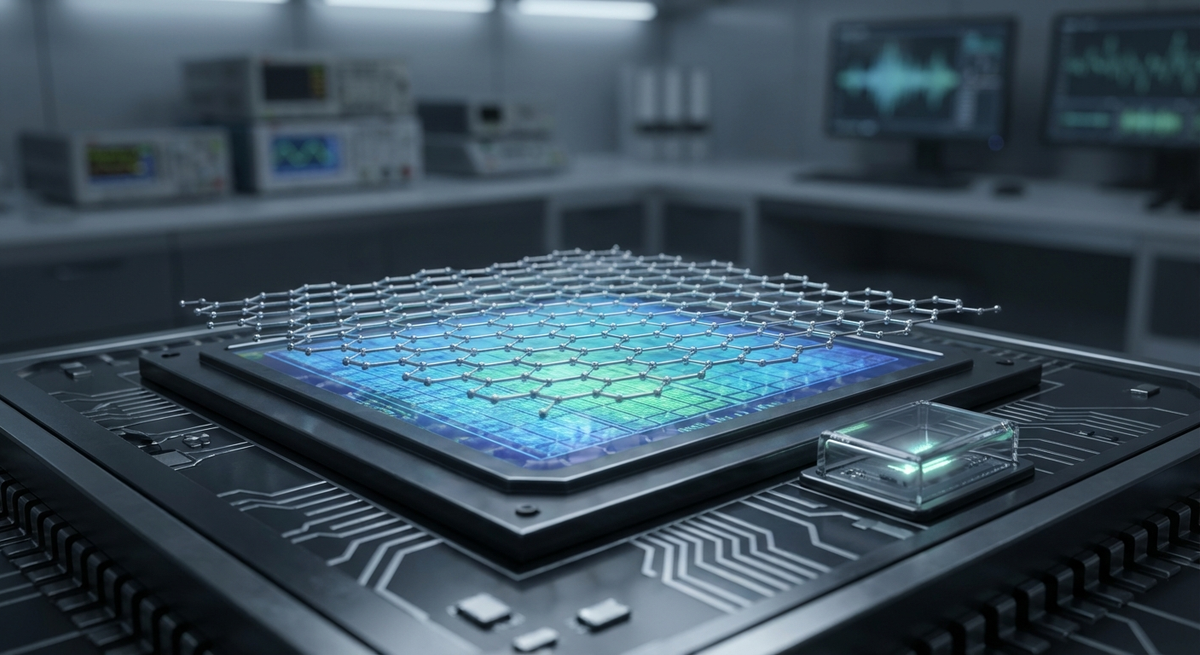
Graphene, a single layer of carbon atoms arranged in a hexagonal lattice, possesses a suite of exceptional properties that make it an ideal candidate for generating true random numbers. Its two-dimensional structure and unique electronic band structure lead to distinct noise characteristics that can be harnessed more effectively than in traditional materials. One primary mechanism is Johnson-Nyquist noise, which arises from the thermal agitation of charge carriers within a conductor. In graphene, the exceptionally high carrier mobility and its atomically thin nature amplify this thermal noise, making it a potent and easily detectable entropy source.
Beyond thermal noise, graphene exhibits other intrinsic sources of randomness. Quantum tunneling noise, stemming from the probabilistic nature of electrons tunneling through potential barriers, can be leveraged in specific graphene device architectures. The inherent fluctuations in current due to defects, boundaries, and variations in carrier density within graphene also contribute to a rich tapestry of low-frequency noise (often referred to as 1/f noise), which, while often considered a nuisance in other electronic components, can be carefully characterized and utilized for randomness generation. The material's robust chemical stability and mechanical strength ensure that these intrinsic noise sources remain consistent and resilient against external perturbations, providing a stable and reliable foundation for HRNG operation. Its high surface-to-volume ratio further maximizes the interaction with environmental fluctuations, enhancing the overall entropy yield.
Enhancing HRNG Performance: Beyond Pure Randomness
Integrating graphene into HRNG designs offers substantial performance improvements that extend far beyond merely generating true randomness. One of the most significant advantages is the potential for increased speed. Graphene's extraordinarily high electron mobility allows for rapid sampling of its intrinsic noise, enabling the generation of random bits at significantly higher rates compared to many conventional HRNGs. This high throughput is crucial for demanding applications like high-speed data encryption or real-time secure communications, where the demand for fresh entropy is constant.
Furthermore, graphene-based HRNGs promise superior energy efficiency. The atomically thin nature of graphene, combined with its efficient noise generation mechanisms, means these devices can operate with extremely low power consumption. This makes them particularly attractive for battery-powered devices, IoT sensors, and edge computing nodes where power budgets are severely constrained. The potential for miniaturization is another compelling benefit. Graphene’s 2D structure enables the creation of ultra-compact random number generators that can be seamlessly integrated into smaller form factors, reducing the overall footprint of secure hardware components. This compactness is vital for portable electronics and embedded systems where space is at a premium.
The inherent robustness and durability of graphene also translate into more reliable HRNGs. Unlike some conventional HRNGs that can be sensitive to temperature fluctuations, humidity, or electromagnetic interference, graphene maintains its structural and electronic integrity across a wide range of operating conditions. This environmental resilience ensures consistent performance, reduces the likelihood of entropy degradation, and extends the operational lifetime of the device, ultimately leading to greater system integrity and reduced maintenance overheads. These combined performance enhancements make graphene a strategic choice for next-generation HRNGs.
Engineering Graphene for Practical HRNG Integration
The successful integration of graphene into commercial HRNGs hinges on practical engineering and manufacturing considerations, moving beyond pristine lab-scale demonstrations. Most industrial applications do not utilize perfect monolayer graphene but rather practical forms such as graphene nanoplatelets (GNPs), reduced graphene oxide (RGO), or hybrid carbon systems. These materials offer a balance of performance, scalability, and cost-effectiveness, making them suitable for mass production environments where repeatability is paramount. GNPs, for instance, can be incorporated into inks for printing, while RGO offers tunable electrical properties through controlled reduction processes. Chemical Vapor Deposition (CVD) graphene can be grown directly on substrates for high-performance applications requiring pristine layers.
A critical challenge in leveraging these materials is achieving consistent dispersion. Poor dispersion, where graphene particles agglomerate, can severely degrade expected performance gains by creating non-uniform electrical pathways and reducing the effective surface area for noise generation. Optimizing mixing profiles, rheology windows, and solids loading during formulation is essential to ensure a homogeneous distribution of graphene within a matrix or coating. Moreover, process compatibility with existing manufacturing lines, such as inkjet printing, spin coating, or roll-to-roll processes, is non-negotiable for large-scale adoption. Parameters like drying dynamics and interface chemistry must be meticulously controlled to ensure stable, low-resistance electrical contacts and optimal device functionality. The choice of graphene form and its processing method must be carefully tailored to the specific HRNG architecture and the desired performance metrics.
Economic and Strategic Advantages of Graphene-Enabled HRNGs
The adoption of graphene in HRNGs presents compelling economic and strategic advantages that extend well beyond the initial material cost. When evaluating new technologies, a comprehensive lifecycle cost analysis is crucial. Graphene's inherent durability and thermal management capabilities can lead to significant downstream savings. For instance, even moderate improvements in thermal stability or electrical efficiency within an HRNG can translate into lower operational temperatures for the overall system, reducing cooling requirements and extending the lifespan of surrounding electronic components. This directly contributes to lower maintenance costs, better system uptime, and a longer service life for products embedding graphene-enabled HRNGs.
Strategically, the enhanced performance and reliability offered by graphene can open new market opportunities. Industries requiring extremely robust and secure random number generation, such as aerospace, defense, critical infrastructure, and automotive, stand to benefit immensely. The ability to deploy HRNGs that are less susceptible to environmental degradation or tampering provides a significant competitive edge. In highly regulated or safety-critical sectors, early qualification planning is essential. Graphene-based HRNGs, with their intrinsic stability, can simplify compliance with stringent security standards and certification processes. Teams should implement rigorous testing under thermal cycling, humidity exposure, and realistic duty profiles to validate long-term performance and avoid costly late-stage surprises, ensuring that the economic and reliability benefits are fully realized throughout the product's lifespan.
Overcoming Integration Challenges and Scaling Production
While the promise of graphene for HRNGs is significant, successful commercialization requires addressing several key integration challenges and establishing robust scaling strategies. Dispersion consistency remains a paramount concern. Ensuring that graphene materials are uniformly distributed within their matrix or across a substrate is critical for predictable and high-performance noise generation. This necessitates advanced characterization techniques, such as Raman spectroscopy, atomic force microscopy (AFM), and comprehensive electrical mapping, to verify homogeneity at micro and nano scales. Quality standardization for graphene materials is another vital step; the industry needs agreed-upon metrics and certification processes to ensure consistency across different suppliers and batches.
Supply-chain repeatability is equally important. Manufacturers need reliable access to high-quality graphene materials that consistently meet specified criteria, minimizing variability in end-product performance. This involves close collaboration with graphene producers to establish robust quality control protocols from synthesis to delivery. Furthermore, optimizing process compatibility for existing and future manufacturing infrastructure is essential. This includes fine-tuning parameters for printing, coating, or integration processes to accommodate graphene's unique properties without requiring entirely new capital investments. Rigorous testing protocols are indispensable, encompassing not only electrical performance but also environmental resilience. Testing under extreme thermal cycling, prolonged humidity exposure, and diverse duty profiles is crucial to confirm the HRNG’s stability and reliability in real-world scenarios, building confidence for widespread deployment.
Frequently Asked Questions
What makes graphene a superior material for Hardware Random Number Generators?
Graphene's unique two-dimensional structure and exceptional electronic properties lead to amplified intrinsic noise sources, such as Johnson-Nyquist thermal noise and low-frequency fluctuations. These phenomena provide a highly robust and efficient source of true randomness, surpassing the limitations of conventional materials in terms of noise magnitude and stability. Its high carrier mobility also enables faster noise sampling, leading to higher bit rates.
How do graphene-based HRNGs contribute to enhanced security?
By providing a genuinely unpredictable source of entropy from physical phenomena, graphene-based HRNGs strengthen the foundation of cryptographic systems. Their enhanced speed, reliability, and resistance to environmental factors mean that secure keys and random numbers can be generated more quickly and consistently, bolstering protection against sophisticated attacks that target weak or predictable random number sources.
What are the main performance advantages of using graphene in HRNGs?
Graphene-enabled HRNGs offer several key performance advantages: significantly increased speed in random bit generation due to high carrier mobility, improved energy efficiency for low-power applications, enhanced compactness for integration into miniaturized devices, and superior robustness against environmental stressors like temperature fluctuations and humidity, ensuring consistent performance over time.
Is graphene-based HRNG technology commercially viable today, and for what applications?
Yes, graphene-based HRNG technology is becoming commercially viable, particularly for high-value applications where measurable performance improvements justify the integration effort and cost. These include critical infrastructure, defense systems, secure IoT devices, and advanced cybersecurity solutions where the demand for robust, high-speed, and reliable true randomness is paramount. Ongoing research is expanding its applicability to broader markets.
What are the primary challenges in integrating graphene into HRNG manufacturing?
The top challenges include ensuring consistent dispersion of graphene materials within device structures, establishing stringent quality standardization for graphene at industrial scales, and guaranteeing supply-chain repeatability from raw material to final product. Additionally, optimizing process compatibility with existing manufacturing lines and developing comprehensive testing protocols for long-term reliability are crucial for successful integration.
Conclusion
The pursuit of robust, high-performance, and secure digital systems inevitably leads to the core component of true randomness. Hardware Random Number Generators, as the providers of this essential entropy, are undergoing a significant transformation with the advent of graphene. The material's unparalleled electronic, thermal, and mechanical properties offer a compelling pathway to overcome the inherent limitations of conventional HRNGs, ushering in an era of enhanced speed, superior energy efficiency, greater compactness, and unparalleled durability. From leveraging intrinsic thermal noise to withstanding harsh operational environments, graphene is poised to redefine what is possible in random number generation. While engineering challenges related to dispersion, standardization, and process compatibility remain, a disciplined approach to material science, manufacturing optimization, and rigorous testing will undoubtedly accelerate its widespread adoption. The strategic and economic advantages, including extended product lifecycles and enhanced security, underscore graphene's pivotal role in shaping the future of secure computing and advanced digital infrastructure.