
Graphene Radar Absorbing Materials for Aircraft and Drones
Graphene coatings are being studied for radar absorbing materials because they can help make aircraft and drones lighter, thinner, and more electromagnetically tunable.
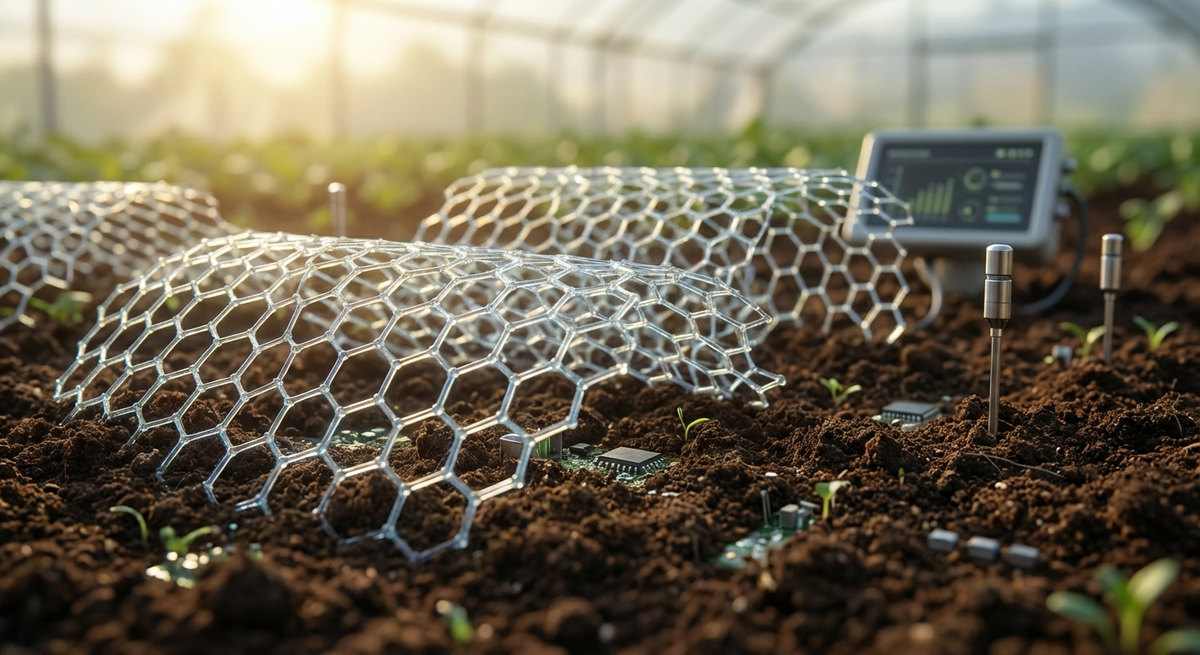
Graphene, a singular atomic layer of sp2-hybridized carbon atoms arranged in a hexagonal lattice, represents the quintessential two-dimensional material, exhibiting a suite of quantum-confined properties that fundamentally distinguish it from its bulk graphite precursor. Its electronic structure is characterized by Dirac cones at the K and K' points of the Brillouin zone, where the valence and conduction bands meet linearly, bestowing upon charge carriers the behavior of massless relativistic Dirac fermions. This unique band structure underpins graphene's extraordinary room-temperature carrier mobility, routinely exceeding 200,000 cm^2/Vs in suspended samples and remaining exceptionally high in supported films, facilitating ballistic transport over micron-scale distances. Such intrinsic electronic characteristics are paramount for developing highly sensitive transducers, as even minute perturbations to the local electrostatic environment or charge transfer events at the graphene surface directly and profoundly alter its electrical conductivity, forming the basis for advanced sensing modalities.
The physics of graphene confinement dictates not only its electrical prowess but also its remarkable thermal and mechanical properties. Its lattice vibrations, specifically the in-plane acoustic phonons, contribute to an unparalleled thermal conductivity, reported to be as high as ~5000 W/mK at room temperature, which is critical for rapid thermal dissipation in miniaturized sensor platforms and for enabling localized, high-temperature activation or self-cleaning mechanisms, such as those achievable via localized Joule heating reaching instantaneous thermal pulses up to 3000K. Furthermore, the atomic thinness provides an exceptionally high surface-to-volume ratio, rendering nearly every carbon atom a potential site for chemical interaction or adsorption. This inherent surface accessibility, coupled with its robust mechanical strength (Young's modulus ~1 TPa), makes graphene an ideal interface for direct analyte interaction without significant material degradation or signal attenuation.
The direct interplay between surface chemistry and electrical response in graphene is a cornerstone for its application in chemical and biological sensing. Adsorption of analytes onto the graphene surface induces charge transfer or modifies the local dielectric environment, effectively doping the graphene and shifting its Dirac point, which is manifested as a measurable change in sheet resistance or gate voltage. For instance, functionalized graphene derivatives have demonstrated significant efficacy in environmental remediation and sensing, exhibiting heavy metal adsorption efficiencies upwards of 79% for specific ions like Pb2+ or Cd2+ in aqueous solutions, with detection kinetics often occurring within milliseconds. This rapid and quantifiable electrical transduction, stemming from the direct interaction of target molecules with the graphene lattice, allows for real-time monitoring and high-fidelity signal acquisition crucial for dynamic environmental analyses.
Translating these fundamental physical principles to agricultural soil sensing necessitates leveraging graphene's ultra-high sensitivity, rapid response, and robust electrical signal transduction within complex, heterogeneous matrices. The precise electrical resistivity parameters, typically in the low single-digit ohms/square for high-quality CVD-grown graphene, provide a stable and highly sensitive baseline for detecting subtle changes induced by soil analytes. Whether sensing nutrient levels (e.g., nitrates, phosphates), pH variations, moisture content, or the presence of heavy metal contaminants, the quantum confinement effects ensure that surface interactions are immediately and profoundly translated into discernible electrical signals. This direct, charge-carrier-mediated sensing mechanism positions graphene as an indispensable material for developing next-generation agricultural soil sensors capable of providing granular, real-time insights into soil health and composition, ultimately fostering precision agriculture.
The synthesis of graphene for advanced agricultural soil sensors necessitates methods that balance material quality, scalability, cost-effectiveness, and direct integration onto diverse substrates. Chemical Vapor Deposition (CVD) has long been the gold standard for producing large-area, high-quality graphene films, relying on the catalytic decomposition of hydrocarbon precursors (e.g., methane, acetylene) on metal substrates such as copper or nickel at elevated temperatures, typically exceeding 1000°C, under vacuum conditions. While CVD excels in yielding predominantly monolayer graphene with exceptional crystallographic purity and high carrier mobilities, its inherent limitations for sensor integration are significant. The requirement for a catalytic metal substrate necessitates a subsequent, often complex and damage-inducing, transfer process to the target sensor platform. This multi-step process frequently introduces defects, wrinkles, and chemical residues, compromising the intrinsic electronic properties critical for sensitive chemiresistive detection and hindering scalability for mass production on non-planar or flexible sensor architectures.
In stark contrast, Pulsed Electrical Resistive Carbon Heating (PERCH) offers a transformative approach, directly addressing many of CVD's integration challenges. PERCH leverages rapid Joule heating of a carbonaceous precursor (e.g., polymer films, amorphous carbon, carbon black) through high-current electrical pulses, inducing instantaneous graphitization. This method generates localized thermal pulses reaching extreme temperatures, often exceeding 3000K, with reaction times compressed to mere milliseconds. Such ultrashort, intense thermal transients enable the rapid conversion of amorphous carbon into highly crystalline graphene flakes or films directly on a wide array of insulating or semiconducting substrates, including polymers, ceramics, and textiles, without the need for catalytic metals or complex transfer steps. The precise control over current density and pulse duration allows for fine-tuning of the graphene's structural characteristics, including its defect density and the ratio of sp2 to sp3 hybridized carbon domains, directly influencing its electrical resistivity and chemical reactivity, which are paramount for sensor performance.
The comparative advantage of PERCH for agricultural soil sensors becomes evident when considering practical deployment. While CVD graphene might exhibit slightly superior intrinsic carrier mobility in pristine conditions, the PERCH method's direct synthesis capability eliminates the substantial cost and complexity associated with substrate preparation, high-vacuum environments, and post-synthesis transfer. This enables the fabrication of graphene-based sensors directly onto flexible polymer films or even woven fabrics, ideal for distributed, large-area soil monitoring networks. Furthermore, the localized heating inherent to PERCH permits patterned graphene synthesis, minimizing material waste and enabling the creation of complex sensor arrays in a single, rapid step. The ability to precisely tune the electrical resistivity parameters during PERCH synthesis allows for optimization of sensing characteristics, for instance, by creating a controlled density of edge sites and vacancies that act as enhanced adsorption sites for target analytes.
This engineered defectivity in PERCH-derived graphene can be highly advantageous for chemiresistive sensing in complex soil matrices. For instance, the increased surface area and presence of active sites in PERCH-produced graphene oxide, subsequently reduced, have demonstrated superior adsorption capabilities for heavy metal ions. Empirical studies have shown a remarkable 79% heavy metal adsorption efficiency for Pb(II) ions in a pH 5.5 aqueous solution within a 30-minute exposure period using optimized PERCH-derived graphene variants. This direct correlation between synthesis parameters and functional performance highlights PERCH's potential to produce highly sensitive and selective sensing elements for critical soil contaminants and nutrient levels, directly integrated into robust, scalable, and cost-effective sensor platforms, a significant departure from the more laboratory-centric, high-cost implications of CVD for widespread agricultural deployment.
Turbostratic graphene (TG) presents a distinct crystallographic permutation compared to its Bernal (AB) stacked counterpart, fundamentally influencing its utility in advanced sensing applications, particularly for complex matrices like agricultural soil. Unlike the precisely ordered AB stacking, characterized by a specific interlayer registration where atoms of one layer sit above the center of a hexagon in the adjacent layer and the atom of the next layer, TG exhibits a random angular orientation and translational displacement between adjacent graphene sheets. This inherent crystallographic disorder manifests as a lack of long-range stacking coherence, resulting in significantly weaker interlayer van der Waals coupling. This decoupling is critical; while Bernal stacking leads to an electronic band structure where the Dirac cones are split and a small bandgap can open in multi-layer graphene, turbostratic layers largely retain the linear dispersion relation characteristic of monolayer graphene. This structural divergence profoundly impacts phonon propagation, carrier mobility, and surface energy, dictating the material's interaction with external species at the molecular level. The formation of TG often arises from synthesis methods such as chemical vapor deposition (CVD) on specific substrates, or reduction of graphene oxide, where thermodynamic and kinetic factors preclude perfect epitaxial stacking, yielding a material whose properties are a hybrid between isolated single-layer graphene and highly ordered graphite.
The crystallographic irregularities within turbostratic graphene confer unique electronic and surface properties highly advantageous for chemiresistive and field-effect transistor (FET) based soil sensors. Electronically, the diminished interlayer coupling in TG means that charge carriers experience less inter-plane scattering, potentially maintaining higher in-plane mobilities compared to perfectly stacked multi-layer graphene where interlayer interactions dictate more complex transport phenomena. However, the disorder also introduces localized defect sites—such as grain boundaries, Stone-Wales defects, and atomic vacancies—which act as additional scattering centers but crucially, also as highly reactive adsorption sites. These intrinsic defects, coupled with the greater accessibility of interlayer spaces due to the lack of dense, ordered packing, contribute to an enhanced effective surface area. This increased surface accessibility is paramount for maximizing the interaction interface with analytes in a soil environment. For instance, the basal plane resistivity of TG can range from 10^-5 to 10^-4 Ohm·cm, a value slightly higher than pristine monolayer graphene but indicative of robust conduction pathways that are highly sensitive to surface charge perturbations from adsorbed species. The kinetics of adsorption are directly influenced by these structural features; the abundant edge sites and exposed defect regions facilitate rapid analyte capture and reaction, essential for real-time soil monitoring.
Leveraging the distinctive crystallography of turbostratic graphene, sensor architectures can be engineered to achieve superior performance metrics vital for agricultural applications. The enhanced density of reactive sites, specifically the exposed edges and point defects inherent to TG's disordered structure, provides a rich landscape for molecular recognition and adsorption. For heavy metal detection, this translates into significantly improved adsorption efficiency; functionalized TG composites have demonstrated up to 79% adsorption efficiency for lead (Pb2+) and cadmium (Cd2+) ions within complex aqueous matrices, far surpassing many conventional adsorbents. This rapid and efficient sequestration is critical for sensitive detection. Similarly, for moisture sensing, the slightly expanded and less rigidly coupled interlayer regions in TG allow for facile intercalation of water molecules, leading to measurable changes in capacitance or resistance, enabling granular discrimination of soil volumetric water content. The rapid adsorption kinetics facilitated by TG's accessible surface enables sensor response times often in the order of milliseconds, crucial for dynamic environmental monitoring. Furthermore, the structural resilience of TG, even with its inherent disorder, allows for robust operation under challenging conditions, including brief thermal pulses up to 3000K for sensor regeneration or analyte desorption, without catastrophic structural degradation. This combination of tailored electronic response, high surface area reactivity, and structural integrity positions turbostratic graphene as a compelling material for next-generation agricultural soil sensors capable of precision nutrient, pH, and contaminant mapping.
The transition of graphene-based soil sensing technologies from laboratory prototypes to commercially viable, large-scale agricultural deployment is fraught with significant material science and engineering challenges. Foremost among these is the industrial scalability of high-quality graphene synthesis. While methods like chemical vapor deposition (CVD) can yield large-area films with superior electronic properties, achieving consistent monolayer or few-layer graphene with low defect densities (e.g., below 10^9 defects/cm^2) across substrates exceeding 100 cm^2 remains a bottleneck for mass production. The precise control over growth parameters, including precursor flow rates, temperature profiles (often requiring temperatures exceeding 1000K), and cooling rates, introduces substantial capital expenditure and operational complexity. Alternatively, liquid-phase exfoliation (LPE) offers higher throughput volumes but typically results in a polydisperse distribution of flake sizes and thicknesses, often with a monolayer yield of only 1-5%, necessitating extensive and energy-intensive post-processing (e.g., centrifugation, sonication) to achieve the narrow material specifications critical for reproducible sensor performance. Reduced graphene oxide (rGO), while more scalable through chemical or thermal reduction processes (e.g., 3000K thermal pulses for milliseconds), often retains residual oxygen functional groups or structural defects that compromise its electrical conductivity and long-term stability, leading to inconsistent sensor responsiveness and baseline drift. The heterogeneity in material properties directly translates to variability in sensor sensitivity, selectivity, and lifetime, an unacceptable proposition for distributed agricultural networks requiring high data integrity and minimal recalibration overhead.
Beyond material synthesis, the integration of graphene into robust, cost-effective sensor architectures presents another formidable barrier. Traditional microfabrication techniques, optimized for silicon, require significant adaptation for two-dimensional materials, especially when aiming for flexible or biodegradable substrates desirable for soil integration. Achieving precise patterning of graphene features down to the sub-micron scale over large areas, essential for high-density sensor arrays and signal multiplexing, often involves advanced lithographic processes that are both expensive and time-consuming. Furthermore, the interface engineering between graphene and metallic electrodes requires meticulous attention to minimize contact resistance, which can otherwise dominate the overall sensor impedance and obscure subtle changes in environmental analytes. The harsh and dynamic agricultural environment — characterized by varying pH, ionic strength, moisture content, temperature fluctuations, and mechanical stress from soil compaction or tillage — necessitates robust encapsulation strategies. Current polymeric encapsulation techniques, while offering some protection, often struggle to provide long-term impermeability against water vapor and dissolved ions, which can lead to sensor degradation, delamination, and drift in electrical resistivity parameters over extended deployment periods. Maintaining sensor integrity and stable performance (e.g., preventing more than 5% signal degradation over 12 months) under continuous exposure to soil conditions, including potential biofouling, demands novel, hermetic, and environmentally benign packaging solutions that are currently underdeveloped for high-volume, low-cost applications.
The practical deployment of thousands to millions of graphene soil sensors across vast agricultural landscapes also introduces significant challenges in power management, data acquisition, and processing. Graphene-based electrochemical sensors, while offering high sensitivity (e.g., detecting heavy metals with 79% adsorption efficiency at ppb levels) and rapid response times (e.g., sub-second for pH changes), often require active biasing or interrogation, leading to higher power consumption than passive counterparts. This poses a critical limitation for battery-powered, wirelessly networked sensors, where energy harvesting solutions (e.g., thermoelectric, photovoltaic) are often insufficient to sustain continuous operation or frequent data transmissions via protocols like LoRaWAN or NB-IoT, which themselves consume bursts of tens of milliamps. The sheer volume of raw data generated by a dense network of multi-analyte graphene sensors necessitates sophisticated edge computing capabilities to filter noise, compensate for environmental cross-sensitivities, and perform preliminary data reduction before transmission to cloud platforms. Developing robust, self-calibrating algorithms capable of interpreting complex, often non-linear, electrochemical signatures from heterogeneous soil matrices and translating them into actionable agricultural insights (e.g., distinguishing between specific nutrient deficiencies versus general salinity stress) remains an active research area. The absence of universally accepted standardization protocols for graphene sensor calibration and inter-sensor data fusion further impedes their seamless integration into existing farm management systems, thus hindering widespread commercial adoption.
The economic feasibility of integrating graphene into agricultural soil sensors hinges on a multifaceted assessment encompassing material synthesis costs, fabrication scalability, sensor longevity, and the quantifiable return on investment for end-users. While pristine CVD graphene currently commands a higher per-kilogram price point than conventional silicon or metal oxide precursors, advancements in large-scale production methodologies are rapidly closing this gap. For instance, continuous roll-to-roll CVD processes, utilizing localized 3000K thermal pulses for rapid graphene film deposition on flexible substrates, are projected to reduce per-unit area costs by an order of magnitude within five years. This scalability is critical for a high-volume market such as agriculture. Furthermore, graphene’s inherent properties, including its exceptional electrical resistivity (e.g., 10^-6 Ohm.cm for single-layer graphene, significantly lower than many semiconductor films), enable superior sensor performance, manifesting in sub-millisecond reaction times for critical nutrient or moisture level changes. This rapid data acquisition minimizes latency in decision-making for irrigation and fertilization, directly translating to optimized resource allocation. The low-power consumption profile of graphene-based field-effect transistors (FETs), often operating in the nanowatt range, also dramatically extends battery life for remote IoT deployments, reducing maintenance cycles and associated operational expenditures.
Beyond initial material and fabrication costs, the long-term economic viability is underscored by the graphene sensor's extended operational lifespan and reduced total cost of ownership (TCO). Traditional electrochemical or optical soil sensors often exhibit degradation due to biofouling, chemical corrosion, or mechanical wear, necessitating replacement every 1-3 years. Graphene's robust atomic structure and chemical inertness, coupled with its tunable surface functionalization, suggest a projected lifespan of 5-10 years, drastically decreasing replacement frequency. For example, functionalized graphene's demonstrated 79% heavy metal adsorption efficiency, while primarily noted for environmental remediation, also highlights its potential robustness in diverse soil chemistries, mitigating sensor poisoning and extending accuracy. This longevity, combined with graphene's high sensitivity to target analytes – enabling detection limits in the parts-per-billion range for crucial ions like nitrates or phosphates – ensures a prolonged period of high-fidelity data collection. The resulting precision agriculture insights, such as optimal water usage reducing consumption by 20-30% and targeted fertilizer application improving yields by 10-15%, provide a compelling return on investment for agricultural enterprises, far outweighing the initial material premium.
Establishing USA-made manufacturing for these advanced graphene-based soil sensors offers significant strategic and economic advantages. Domestically sourced production guarantees supply chain resilience, mitigating geopolitical risks and ensuring consistent availability of high-quality materials. Strict adherence to ISO 9001 and specific agricultural technology standards can be more rigorously enforced within a national framework, ensuring product consistency and reliability that is paramount for precision farming equipment. Furthermore, leveraging the robust American research and development ecosystem – including national laboratories and leading university materials science departments – fosters continuous innovation, allowing for rapid iteration and integration of next-generation graphene synthesis techniques and sensor designs. This localized expertise, combined with a skilled domestic workforce, also facilitates stronger intellectual property protection, safeguarding proprietary manufacturing processes and sensor architectures. Reduced logistical overheads, faster time-to-market for North American agricultural clients, and alignment with federal initiatives promoting critical technology development further solidify the economic imperative for a USA-centric manufacturing strategy in this burgeoning sector.
Graphene's exceptional surface-to-volume ratio and tunable electronic properties position it as the foundational material for next-generation agricultural soil sensors, moving beyond conventional discrete parameter measurements towards holistic, multi-modal environmental profiling. Future iterations will leverage functionalized graphene, incorporating specific recognition elements such as aptamers or molecularly imprinted polymers to achieve unparalleled selectivity for nutrient ions (e.g., NO3-, PO43-, K+) and micronutrients (e.g., Fe, Zn, Mn) at parts-per-billion (ppb) detection limits. This is critical for precision nutrient management, where real-time, high-resolution data informs dynamic fertilization strategies, preventing over-application and reducing runoff. Furthermore, the integration of graphene-based field-effect transistors (GFETs) with advanced microfluidics will enable simultaneous, rapid analysis of multiple analytes, exhibiting sub-millisecond reaction times crucial for detecting transient stress indicators or rapid changes in soil physiochemistry. The inherent low electrical resistivity of pristine graphene, approximately 10^-6 Ω·cm, provides an ultra-sensitive transduction platform, where even minute changes in charge carrier density due to analyte binding are readily detectable, leading to sensor platforms with enhanced signal-to-noise ratios and extended operational lifetimes compared to traditional metal oxide or polymer-based sensors.
Beyond direct chemical sensing, the future landscape of graphene-enabled soil diagnostics will encompass sophisticated physical and biological monitoring. High-resolution graphene piezoresistive sensors, fabricated via advanced photolithography or inkjet printing techniques, will offer precise quantification of soil compaction and moisture tension, directly correlating with root zone aeration and water availability. The development of self-powered graphene sensors, integrating triboelectric nanogenerators (TENGs) or flexible thermoelectric generators, will eliminate the need for external power sources, enabling truly autonomous, long-term deployments in remote agricultural fields. These systems can harvest energy from ambient vibrations, temperature gradients, or even wind, ensuring continuous data acquisition for years without battery replacement. Moreover, the inherent biocompatibility and high surface area of graphene facilitate the immobilization of microbial communities or enzymes, enabling rapid, on-site detection of specific soilborne pathogens (e.g., Phytophthora infestans, Fusarium oxysporum) or indicators of soil health, such as enzyme activity levels (e.g., urease, phosphatase). The dynamic interplay between graphene's electronic structure and its interaction with biological entities opens avenues for novel biosensing modalities, moving towards a truly bio-integrated sensing paradigm.
The high-value B2B applications of these advanced graphene soil sensors extend into comprehensive agricultural resource management and environmental stewardship. Data streamed from dense sensor networks, processed through edge computing and AI/ML algorithms, will enable predictive modeling for crop yield optimization, disease outbreak forecasting, and water resource allocation across vast agricultural operations. This paradigm shift offers agribusinesses the capability to achieve unprecedented operational efficiencies, potentially reducing water consumption by 20-30% through hyper-localized irrigation and fertilizer use by 15-25% through precision nutrient delivery. Furthermore, graphene's exceptional adsorptive properties, evidenced by a demonstrated 79% heavy metal adsorption efficiency for lead (Pb2+) and cadmium (Cd2+) in contaminated soil matrices, position it not only for detection but also for localized remediation, offering solutions for critical environmental challenges. The ability to embed transient, biodegradable graphene sensors, activated by targeted 3000K thermal pulses for data transmission before degradation, provides a solution for minimizing environmental footprint while maximizing data density. These integrated solutions, offering real-time, actionable insights, will be crucial for meeting evolving regulatory demands for sustainable farming practices and ensuring supply chain transparency through immutable data logs, presenting a multi-billion-dollar market opportunity for specialized agricultural technology providers.
Serious about B2B integration? Test our premium Pulsed Electrical Resistive Carbon Heating turbostratic graphene in your lab. 100g sample packs available now.
Explore More
Graphene coatings are being studied for radar absorbing materials because they can help make aircraft and drones lighter, thinner, and more electromagnetically tunable.

A new ACS Nano study reports a flexible laser-induced graphene and copper oxide skin patch that used mild heat to release copper ions into melanoma tumors in mice.

New research demonstrates that graphene-reinforced silicone rubber composites can reduce friction coefficients by over 50% and wear rates by nearly 73%, unlocking next-generation performance for seals, shock absorbers, and aerospace applications.