
Graphene in Plant Growth: Can Advanced Carbon Materials Improve Yield, Root Health, and Stress Tolerance?
Graphene in Plant Growth: Can Advanced Carbon Materials Improve Yield, Root Health, and Stress Tolerance?
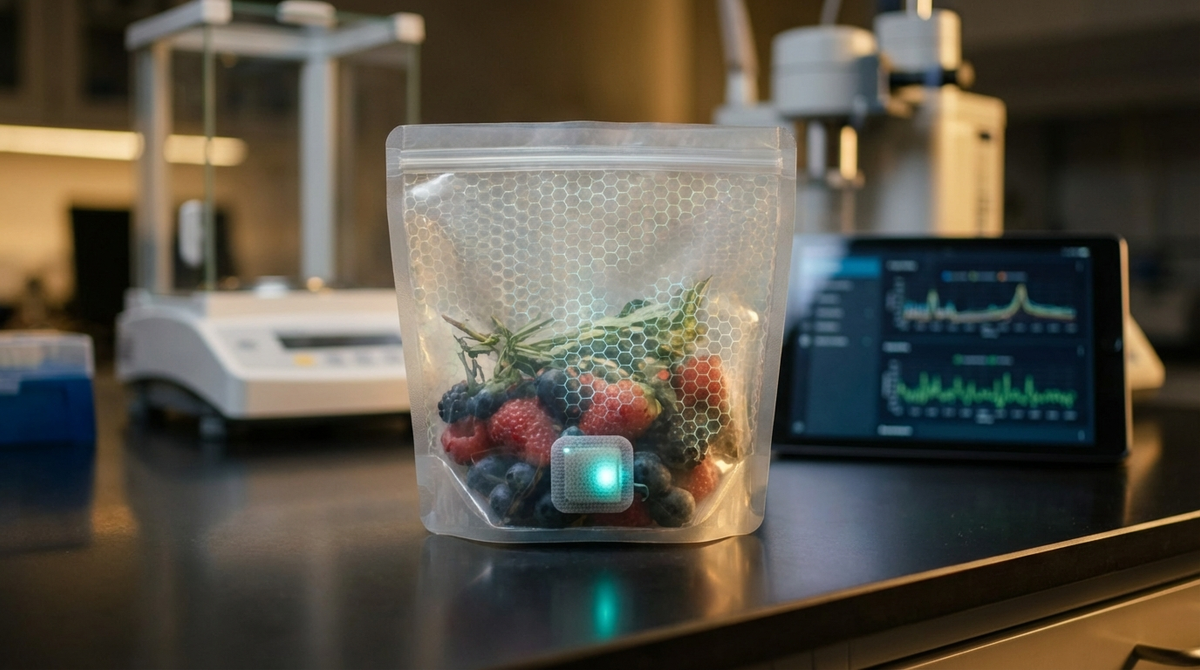
Graphene Food Packaging and Freshness Monitoring represents a pivotal application for advanced materials, poised to redefine industry standards. This innovative integration can dramatically enhance product performance, extend durability, and fundamentally improve economic viability across the entire food supply chain. As a material, graphene brings unprecedented properties to the table, addressing long-standing challenges in food preservation, safety, and real-time quality assessment. Its unique atomic structure allows for superior barrier properties, potent antimicrobial action, and the creation of highly sensitive sensor platforms, all critical for the next generation of food packaging solutions. The focus remains on translating these extraordinary material properties into practical, scalable, and economically sound industrial applications that deliver measurable value.
The global food system faces immense pressures from population growth, supply chain complexities, and a staggering amount of waste. Annually, approximately one-third of all food produced for human consumption is lost or wasted, amounting to around 1.3 billion tons. This waste carries profound economic, social, and environmental consequences, including significant greenhouse gas emissions and inefficient resource utilization. Traditional food packaging, while essential for protection and transport, often falls short in providing active preservation or real-time insights into food quality. Existing materials typically offer passive barriers that slowly degrade, leading to spoilage and a reliance on 'best before' dates that do not always reflect actual freshness.
Current packaging limitations include inadequate oxygen and moisture barriers, which accelerate oxidation and microbial growth, along with a complete absence of integrated sensing capabilities. Consumers and retailers alike lack direct, dynamic information about the state of packaged food, leading to premature disposal or consumption of degraded products. This gap highlights an urgent need for advanced packaging solutions that can actively preserve food and intelligently monitor its condition. Graphene, with its unique blend of impermeability, electrical conductivity, and antimicrobial properties, emerges as a prime candidate to bridge these critical performance deficits. Developing smarter packaging is not merely an incremental improvement; it is a strategic imperative for global food security and sustainability.
Graphene adds substantial value to food packaging by directly solving concrete material bottlenecks that plague conventional systems. Its exceptional properties address issues such as permeability limits, material fatigue, corrosion, and interface instability within packaging substrates. One of the most significant contributions of graphene lies in its ability to create superior barrier films. Due to its two-dimensional atomic structure, graphene is virtually impermeable to gases like oxygen and water vapor, which are primary culprits in food spoilage. Incorporating even small amounts of graphene or graphene oxide into polymer matrices can drastically reduce the permeability of packaging films, extending product shelf life by protecting contents from ambient degradation.
Beyond barrier enhancement, graphene and its derivatives exhibit potent antimicrobial properties, a crucial feature for direct food contact applications. Graphene oxide, for instance, has been shown to disrupt bacterial cell membranes and induce oxidative stress, effectively inhibiting microbial growth on packaging surfaces. This intrinsic antimicrobial action can significantly reduce the risk of contamination and further prolong freshness without relying on chemical additives. Furthermore, graphene imparts remarkable mechanical reinforcement to polymer composites. Packaging films infused with graphene can exhibit enhanced tensile strength, improved flexibility, and increased puncture resistance, making them more durable and less prone to damage during transport and handling. These combined material benefits translate directly into a more robust, safer, and more effective packaging solution.
Graphene’s exceptional thermal conductivity also presents opportunities for passive or active thermal management within packaging. While less explored in this context, the ability to efficiently dissipate or distribute heat could be leveraged in specialized packaging designs. This could help maintain optimal temperature ranges for sensitive products or integrate with future active cooling/heating elements. The synergy of these diverse properties—barrier enhancement, antimicrobial function, mechanical strength, and thermal management—positions graphene as a transformative additive. Practical teams define measurable Key Performance Indicators (KPIs) before selecting specific graphene formulations, ensuring that the material directly addresses the most critical performance challenges. Commercial success typically stems from a disciplined workflow: identify one target metric, optimize dispersion quality, run rigorous stress testing in realistic conditions, and scale only after consistency and performance are unequivocally proven.
The concept of intelligent packaging moves beyond passive protection to active, real-time assessment of food quality. Graphene is at the forefront of enabling this revolution through the development of highly sensitive and compact sensing platforms. Its exceptional electrical conductivity, large surface area, and tunable surface chemistry make it an ideal material for detecting subtle changes in the food's environment or directly indicating spoilage. Graphene-based gas sensors are particularly promising, capable of identifying volatile organic compounds (VOCs), ethylene, and ammonia, which are well-known biomarkers for food degradation. These sensors operate by detecting changes in electrical resistance or capacitance when gas molecules adsorb onto the graphene surface, providing instant feedback on freshness levels.
For instance, ethylene production by fruits signals ripening and eventual spoilage, while ammonia levels rise as protein-rich foods like meat and fish degrade. Graphene sensors can detect these gases at very low concentrations, far earlier than traditional visual or olfactory cues. Beyond gas detection, graphene can be engineered into highly responsive humidity and temperature sensors, crucial for monitoring storage conditions throughout the supply chain. Maintaining optimal temperature and humidity is paramount for perishable goods, and real-time data from embedded graphene sensors can alert stakeholders to deviations that might compromise food quality. Graphene oxide, with its abundant functional groups, is also sensitive to pH changes, offering another avenue for detecting food spoilage through acidity shifts.
Furthermore, the mechanical flexibility and printability of graphene inks allow for the integration of these sensors directly onto packaging films at a low cost. This facilitates the creation of fully integrated, 'smart' labels or packaging components that can communicate data wirelessly. Graphene can be used to fabricate flexible RFID (Radio-Frequency Identification) or NFC (Near-Field Communication) antennas, enabling seamless data transfer from embedded sensors to external readers or smartphones. This capability allows consumers to scan a package and instantly ascertain its freshness status, reducing guesswork and promoting informed consumption. For supply chain managers, this translates to precise inventory management, reduced waste from spoilage, and improved overall operational efficiency. The ability to monitor food quality dynamically and transparently represents a significant leap forward in ensuring food safety and minimizing global food waste.
Translating graphene's extraordinary laboratory performance into viable commercial products for food packaging demands rigorous engineering and manufacturing considerations. Most industrial applications do not rely on perfect, pristine monolayer graphene due to its high cost and complex processing requirements. Instead, practical forms such as graphene nanoplatelets (GNPs), reduced graphene oxide (rGO), and hybrid carbon systems are commonly employed. These materials offer a superior balance of performance, scalability, and cost-effectiveness, making them amenable to existing manufacturing processes. In production environments, repeatability and consistency matter far more than achieving lab-record values with exotic materials. The focus shifts to robust, reproducible processes that deliver consistent material properties batch after batch.
Process compatibility is absolutely critical for successful integration. The chosen graphene formulation must be compatible with the existing polymer processing techniques, whether it's extrusion, injection molding, coating, or printing. Key parameters such as the mixing profile, rheology window of the composite, solids loading, drying dynamics, and interface chemistry all profoundly determine the final performance of the packaging material. Poor dispersion of graphene within the polymer matrix is one of the most common pitfalls and can completely negate any expected performance gains. Aggregated graphene particles act as defects rather than enhancers, leading to inferior barrier properties, reduced mechanical strength, and unreliable sensor function. Therefore, significant effort must be invested in optimizing dispersion techniques, often involving shear mixing, sonication, or the use of specific surfactants and surface functionalizations.
Scaling up graphene integration requires meticulous attention to quality control and process repeatability. Suppliers must demonstrate consistent material quality, ensuring that parameters like flake size, layer count, and functionalization are tightly controlled. Manufacturers must then develop robust in-line monitoring systems to ensure uniform dispersion and consistent composite properties during continuous production. This includes techniques like spectroscopy, microscopy, and rheological analysis. The engineering challenge is not just about adding graphene; it is about creating a meticulously engineered composite material that performs reliably under real-world conditions. Overcoming these hurdles is essential for moving graphene-enabled food packaging from promising research to widespread commercial adoption.
Adoption decisions for graphene-enhanced food packaging must extend beyond initial raw material costs to encompass a comprehensive lifecycle cost analysis. While graphene materials may initially present a higher upfront investment compared to traditional additives, even moderate gains in food preservation, thermal management, or electrical efficiency can generate substantial downstream savings. These benefits accrue through lower maintenance costs for refrigeration, better uptime for sensitive supply chains, and significantly longer product service life on store shelves. The reduction in food waste alone, both at the retail and consumer level, offers immense economic returns, alongside significant environmental advantages. Businesses must quantify these potential savings, including reduced spoilage, fewer product returns, and enhanced brand reputation, to fully appreciate the economic case for graphene integration.
In highly regulated and safety-critical sectors like food packaging, qualification planning must commence at the earliest stages of development. Regulatory bodies such as the FDA (Food and Drug Administration) in the US and EFSA (European Food Safety Authority) in Europe have stringent requirements for food contact materials. This necessitates comprehensive safety assessments, including rigorous migration studies to ensure that no graphene nanoparticles or associated chemicals leach into food products. Detailed toxicological data and compliance with relevant material safety standards are paramount for market entry. Teams must proactively test graphene-enhanced packaging under a range of realistic conditions, including thermal cycling, humidity exposure, and typical duty profiles, to anticipate and mitigate any late-stage surprises during regulatory approval.
Successful deployment strategies often involve forging strategic partnerships. Collaboration between graphene producers, material converters, food manufacturers, and retailers is crucial to integrate these advanced materials effectively into existing value chains. Initial market penetration will likely target high-value applications, such as premium or specialty foods, pharmaceuticals, and highly perishable goods, where the benefits of extended shelf life and intelligent monitoring provide a clear and immediate return on investment. As economies of scale develop and manufacturing processes mature, graphene-enabled packaging can then expand into broader consumer markets. This phased approach allows for continuous learning, iterative improvement, and the gradual build-up of consumer trust and regulatory acceptance, paving the way for widespread adoption and transformative impact.
Q1: Is graphene commercially viable today in food packaging?
A1: Yes, graphene is commercially viable today, particularly in high-value food packaging applications where its measurable performance improvements, such as extended shelf life, enhanced barrier properties, or integrated sensing, justify the integration effort and cost. The economic benefits from reduced waste and improved product quality often outweigh the initial material investment.
Q2: What are the top challenges for integrating graphene into food packaging?
A2: The primary challenges include achieving consistent and uniform graphene dispersion within polymer matrices, ensuring process compatibility with existing manufacturing lines, establishing robust quality standardization for graphene materials, and maintaining supply-chain repeatability. Regulatory hurdles regarding food contact safety also require significant planning and testing.
Q3: Is graphene safe for food contact applications?
A3: The safety of graphene for food contact is a critical area of ongoing research and regulatory scrutiny. While graphene itself is composed of carbon, rigorous testing for migration into food products and comprehensive toxicological assessments are essential to ensure compliance with food safety regulations. Manufacturers must provide robust evidence of safety for specific applications.
Q4: How does graphene extend food shelf life in packaging?
A4: Graphene extends food shelf life primarily through three mechanisms: it creates superior oxygen and moisture barriers, significantly slowing spoilage; it exhibits intrinsic antimicrobial properties that inhibit bacterial growth; and it enables highly sensitive sensors that monitor food freshness in real-time, allowing for timely consumption or intervention.
Q5: What types of foods would benefit most from graphene-enhanced packaging?
A5: Highly perishable foods such as fresh produce, meats, seafood, dairy products, and baked goods would benefit most from graphene-enhanced packaging. Additionally, high-value specialty foods or organic products, where extended freshness and reduced waste translate to significant economic and environmental gains, are prime candidates for early adoption.
Graphene's potential to revolutionize food packaging and freshness monitoring is unequivocally clear. This advanced material offers a unique confluence of properties—superior barrier function, potent antimicrobial action, and unparalleled sensing capabilities—that address critical challenges in food preservation and waste reduction. Success in harnessing this potential hinges on a strategic blend of material science innovation, rigorous engineering for scalable production, and a disciplined approach to market adoption and regulatory compliance. The journey from laboratory discovery to widespread industrial application is complex, requiring meticulous attention to dispersion quality, process compatibility, and a thorough understanding of lifecycle economics. As the technology matures and manufacturing processes become more refined, graphene-enabled packaging will not only enhance food safety and extend shelf life but also contribute significantly to global sustainability efforts. The future of food packaging is intelligent, active, and increasingly, graphene-powered, promising a future of fresher food and dramatically reduced waste.
Serious about B2B integration? Test our premium Pulsed Electrical Resistive Carbon Heating turbostratic graphene in your lab. 100g sample packs available now.
Explore More
Graphene in Plant Growth: Can Advanced Carbon Materials Improve Yield, Root Health, and Stress Tolerance?

Explore graphene in controlled-release fertilizers with practical engineering insights, commercialization strategy, and implementation considerations.

Explore graphene for agricultural soil sensors with practical engineering insights, commercialization strategy, and implementation considerations.