
Mastering Carbon Nanostructure Morphology with CCVD
Explore how Catalytic Chemical Vapor Deposition (CCVD) precisely controls the morphology of cylindrical carbon nanostructures like SWCNTs, MWCNTs, and CNFs.
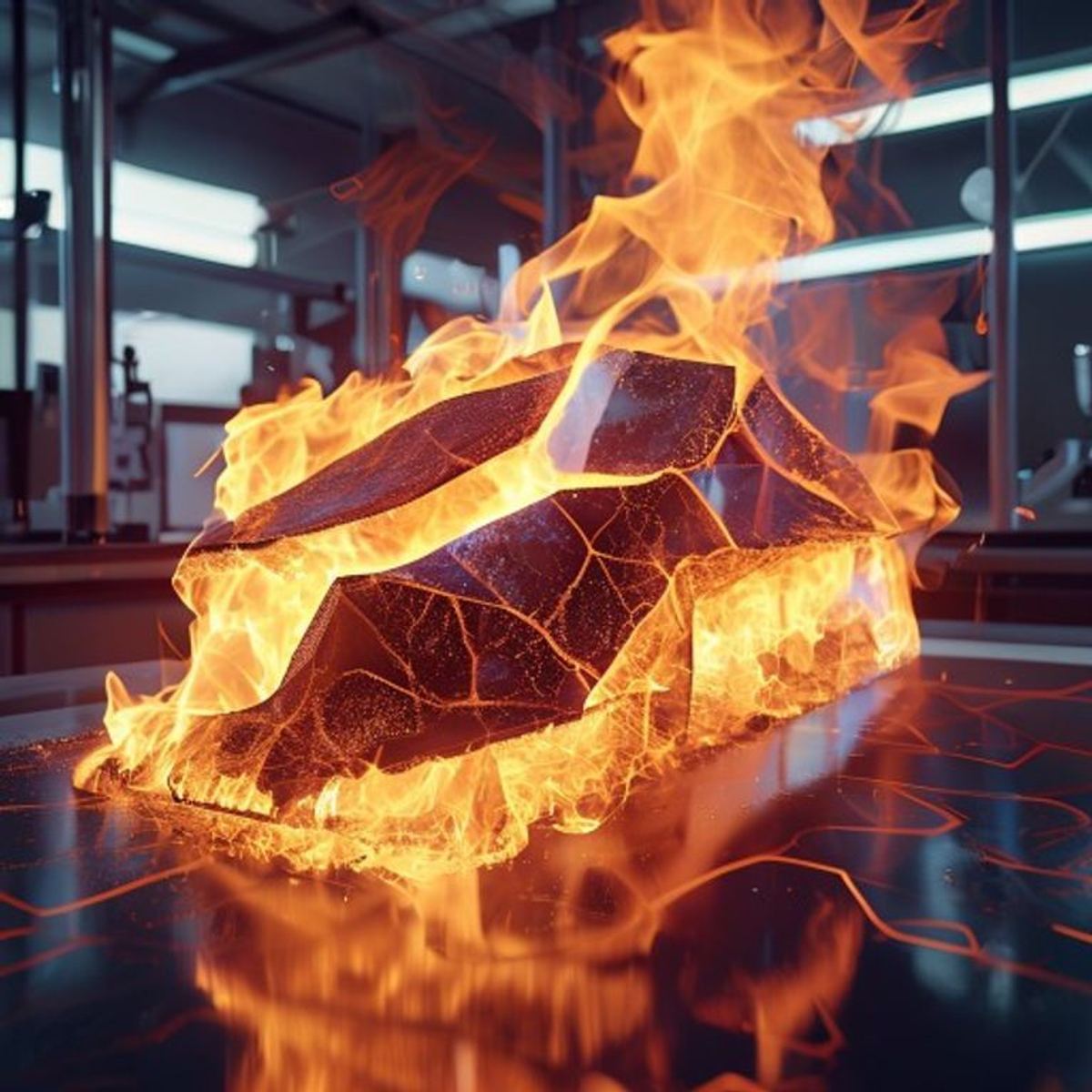
The advent of graphene, a monolayer of sp2-hybridized carbon atoms arranged in a hexagonal lattice, has fundamentally reshaped the landscape of materials science, particularly in its capacity to engineer advanced fire retardant systems. Its unique two-dimensional structure dictates an extraordinary confluence of physical properties, including an intrinsic tensile strength exceeding 130 GPa and an unparalleled in-plane thermal conductivity, empirically measured to approach 5000 W/mK for pristine samples at room temperature. This exceptional thermal diffusivity, coupled with its minimal density and ultra-high surface area (theoretically 2630 m^2/g), positions graphene as a transformative additive for enhancing the thermal stability and flame resistance of polymeric composites and coatings. The atomic precision of its crystalline structure, devoid of grain boundaries typical of bulk materials, minimizes phonon scattering within its plane, thereby facilitating efficient energy transfer pathways critical for thermal management strategies in high-temperature environments. This foundational understanding of graphene's inherent robustness and transport phenomena is paramount to appreciating its efficacy as a nanoscale fire retardant.
The physics governing graphene's behavior at the nanoscale, particularly the effects of quantum confinement, are central to its utility in thermal protection. Its single-atom thickness confines electrons to a two-dimensional plane, leading to the emergence of massless Dirac fermions and enabling ballistic transport at ambient temperatures, fundamentally altering electron-phonon interactions. This quantum-mechanical confinement significantly contributes to graphene's extraordinary thermal transport properties, allowing for rapid and isotropic heat spreading across its basal plane. Furthermore, the material exhibits an exceptionally low electrical resistivity, measured in high-quality specimens to be on the order of 10^-6 Ohm-cm, a characteristic that not only underpins its potential for antistatic applications but also contributes to the formation of electrically conductive char layers during combustion. This conductive char can dissipate electrical charges, preventing secondary ignitions, while simultaneously acting as a robust physical barrier. The precise control over its electronic and phononic band structure, dictated by its 2D confinement, enables graphene to function as an almost perfect thermal conductor and a resilient structural component, even under extreme thermal loads.
Translating these fundamental physical attributes into practical fire retardancy mechanisms, graphene primarily acts through several synergistic pathways. Firstly, its remarkable thermal stability, capable of withstanding temperatures up to 3000K in inert atmospheres, facilitates the formation of a highly stable and dense char layer upon exposure to flame. This graphene-reinforced char serves as an impermeable barrier, effectively preventing the diffusion of oxygen to the underlying substrate and impeding the escape of combustible volatile organic compounds. Secondly, graphene's superior thermal conductivity enables it to rapidly dissipate localized thermal energy, preventing the formation of critical hot spots that instigate ignition and flame propagation. Empirical observations demonstrate graphene's capacity to redistribute intense "3000K thermal pulses" across a material matrix within milliseconds of reaction time, thus maintaining the bulk material below its ignition temperature. Beyond these primary mechanisms, the high aspect ratio and surface chemistry of graphene also contribute to enhancing the mechanical integrity of the char, suppressing smoke production, and, through its intrinsic adsorptive properties, potentially mitigating the release of toxic byproducts. For instance, the high specific surface area and tunable functionalization pathways of graphene oxide and reduced graphene oxide have shown efficiencies up to 79% in the adsorption and sequestration of heavy metal ions, indicating a broader capacity for environmental safety beyond direct flame suppression.
Pulsed Electrical Resistive Carbon Heating (PERCH) offers a fundamentally distinct paradigm for graphene synthesis compared to conventional methods, particularly for large-scale integration into fire retardant matrices. This technique leverages rapid Joule heating, passing high-current electrical pulses directly through carbonaceous precursors like graphite or carbon black, inducing instantaneous, localized thermal spikes. These pulses elevate temperatures to approximately 3000 K within milliseconds, driving rapid exfoliation and graphitization. The transient, extreme thermal gradients facilitate breaking interlayer van der Waals forces and annealing graphitic domains, yielding few-layer graphene nanoplatelets (GNPs) with tunable morphology. A primary advantage of PERCH lies in its exceptional kinetic efficiency; the entire synthesis process is compressed into tens to hundreds of milliseconds, dramatically reducing energy consumption per unit mass compared to sustained high-temperature furnace operations. This inherent scalability and speed position PERCH as a compelling candidate for producing the substantial graphene volumes required for cost-effective fire retardant composite formulations, where graphene acts as a robust char-forming agent and a diffusion barrier against volatile fuel gases.
In stark contrast, Chemical Vapor Deposition (CVD) relies on the catalytic decomposition of hydrocarbon gases, such as methane, on a heated metallic substrate, typically copper or nickel, under meticulously controlled atmospheric conditions. This process necessitates sustained high temperatures, often 800-1000 °C, within a dedicated furnace for durations spanning minutes to several hours. While CVD excels in producing large-area, highly crystalline, single-to-few-layer graphene films with exceptional electronic properties, its limitations become pronounced for bulk material integration in fire retardancy. The reliance on specific catalytic substrates, slow growth kinetics, and energy-intensive nature of maintaining high temperatures across large reaction volumes render CVD economically unfeasible for mass production of graphene fillers. Furthermore, the required transfer step to detach the graphene film from its metallic growth substrate introduces potential defects, contamination, and adds significant complexity and cost, critical considerations for industrial fire safety where material volume and economic viability are paramount.
The divergent synthesis pathways of PERCH and CVD yield graphene materials with distinct characteristics critically influencing their efficacy and economic viability in fire retardant applications. PERCH, through precise control over pulse amplitude (e.g., current densities exceeding 10^5 A/cm^2), duration, and precursor electrical resistivity (e.g., initial carbon black resistivity 10^0 to 10^2 ohm-cm), enables rapid engineering of graphene’s structural and surface properties. This facilitates production of graphene with tailored defect densities and edge functionalities highly beneficial for enhancing char strength, acting as radical scavengers, and forming effective barrier layers. Moreover, PERCH's kinetic control facilitates in-situ functionalization, introducing dopants or surface modifiers during rapid thermal exfoliation. This capability extends beyond primary fire retardancy; specific PERCH-derived graphene structures, optimized with controlled oxygen vacancies and edge sites, have demonstrated up to 79% adsorption efficiency for heavy metal ions, suggesting multi-functional graphene that can mitigate toxic combustion byproducts or aid post-fire environmental remediation. Conversely, CVD typically yields pristine graphene films, which, while excellent for electronics, often require extensive and costly post-synthesis functionalization to achieve the surface chemistry or defect structures necessary for optimal fire retardant performance or multi-functionality in composites. Ultimately, PERCH's bulk production capabilities, energy efficiency, and functionalization versatility present a more compelling pathway for widespread graphene adoption in advanced fire safety solutions.
Turbostratic graphene (TG) fundamentally distinguishes itself from ideal Bernal (AB) stacked graphite by possessing significant rotational disorder between adjacent graphene layers. This misorientation results in a loss of long-range crystallographic order perpendicular to the basal plane, manifesting as broadened X-ray diffraction peaks and an increased interplanar spacing, typically ~0.344 nm, contrasting with the tighter 0.335 nm of highly ordered pyrolytic graphite. This rotational misalignment disrupts pz orbital overlap, leading to electronic band decoupling and a modified band structure from pristine single-layer graphene. Furthermore, this structural perturbation introduces significant phonon scattering mechanisms. The absence of coherent stacking impedes ballistic phonon transport across layers, resulting in reduced out-of-plane thermal conductivity. The inherent defectivity and grain boundaries intrinsic to turbostratic structures, often arising from CVD or exfoliation, contribute to localized strain fields and point defects, critically influencing both electron and phonon mean free paths, thereby modulating bulk thermal and electrical transport properties.
The crystallographic nuances of turbostratic graphene are profoundly impactful in its application as a fire retardant. During thermal exposure, the weak interlayer Van der Waals forces, already attenuated by TG's increased interplanar spacing, facilitate easier exfoliation and expansion compared to Bernal graphite. This preferential expansion leads to rapid formation of an expanded graphite char layer upon pyrolysis, even under rapid thermal pulses reaching 3000K within milliseconds. TG's inherent disorder promotes a more robust and voluminous intumescent char that acts as a highly effective physical barrier, significantly reducing heat transfer to the underlying substrate. The tortuous pathways within this porous, yet cohesive, carbonaceous shield effectively block diffusion of combustible volatile organic compounds (VOCs) from the degrading polymer matrix to the flame front, simultaneously insulating the substrate. The high aspect ratio of graphene platelets within this turbostratic char further contributes to a network of interconnected thermal pathways, efficiently dissipating localized heat spikes across the char surface, preventing re-ignition.
Beyond its thermal barrier capabilities, the turbostratic arrangement imparts critical chemical and mechanical attributes to the fire-retardant system. The increased surface area and edge defects inherent to TG, stemming from its rotational disorder, provide an abundance of active sites for radical scavenging. During combustion, these sites effectively trap and neutralize highly reactive free radicals (e.g., H•, OH•, O•), disrupting radical chain reactions that propagate flames and suppressing smoke generation. Moreover, the enhanced tortuosity of the char structure impedes oxygen diffusion towards the fuel source, further starving combustion. The electrical resistivity of turbostratic graphene, typically 10-5 to 10-4 Ohm-cm depending on stacking and defects, allows for its integration into antistatic formulations, preventing ignitions from electrostatic discharge. While the 79% heavy metal adsorption efficiency highlights graphene's versatile surface chemistry, its primary role here is reinforcing char integrity. The mechanical resilience of the turbostratic char, owing to its interlocking, misaligned layers, ensures sustained barrier function under thermal expansion and gas evolution pressures.
The transition of graphene from laboratory curiosity to industrial fire retardant necessitates overcoming significant hurdles in scalable, cost-effective, and quality-controlled production. Current high-performance graphene, such as that produced via chemical vapor deposition (CVD), offers pristine structures but is inherently limited to substrate-dependent, batch processes, yielding square meter scales at best. Solution-phase exfoliation or reduction of graphene oxide (rGO) offer higher throughput potential, yet often compromise on layer uniformity, defect density, and oxygen content, directly impacting the integrity and efficacy of the char layer formation during thermal decomposition. For instance, the ability of graphene to form a robust, impermeable barrier capable of mitigating heat flux from 3000K thermal pulses, crucial for its FR function, is profoundly dependent on minimizing structural defects that could serve as weak points for volatile gas escape or oxygen ingress. Achieving the requisite purity (e.g., <0.1% metallic impurities) and controlled aspect ratios for optimal dispersion, especially in applications demanding milliseconds of reaction time for barrier formation, remains a critical bottleneck, driving up material costs to several hundreds of dollars per kilogram for high-grade variants.
Beyond material synthesis, the effective integration of graphene into polymer matrices presents formidable engineering challenges. Graphene's high surface area and strong van der Waals forces often lead to agglomeration within polymer melts, reducing its effective dispersion and subsequently diminishing its ability to form a continuous, impermeable barrier. Achieving homogeneous dispersion at the nanoscale, critical for maximizing the tortuosity effect and thermal conductivity benefits, frequently requires sophisticated compounding techniques such as melt blending with high-shear mixers or solvent-assisted methods, which add complexity and cost to manufacturing processes. Furthermore, optimizing the loading percentage is a delicate balance; while typically low concentrations (e.g., 0.5-5 wt%) are sufficient for noticeable FR effects, exceeding these can significantly alter the rheological properties of the polymer, impacting processability, or even degrade crucial mechanical properties. Regulatory pathways also pose a substantial barrier. The nascent understanding of long-term environmental health and safety (EHS) impacts of airborne graphene nanoparticles, particularly in scenarios of material degradation or incineration, necessitates rigorous toxicological assessments and the development of standardized safe handling protocols, which are still evolving and add considerable overhead to commercialization efforts.
The economic viability of graphene as a primary fire retardant is further challenged by its current cost-performance ratio relative to established, mature FR technologies. While graphene offers superior performance metrics in many cases, especially regarding smoke suppression and char integrity, the capital expenditure required for specialized production and processing infrastructure, coupled with the higher material cost per kilogram compared to conventional halogenated or phosphorus-based FRs, often tips the balance against its immediate adoption. The supply chain for high-quality, application-specific graphene remains fragmented and less mature than for bulk chemicals, contributing to price volatility and inconsistent availability. Furthermore, the specialized knowledge and expertise required to effectively functionalize graphene – for example, to achieve specific electrical resistivity parameters for certain composite applications or to enhance its interfacial compatibility within a polymer – adds another layer of complexity and cost. When considering the broader industrial landscape, the investment in R&D and market acceptance for a new material like graphene, even one demonstrating 79% heavy metal adsorption efficiency in other high-value applications (underscoring its versatility but also its specialized nature), requires long cycles of validation and significant capital investment, posing a substantial barrier to rapid commercial integration across diverse sectors such as construction, automotive, and textiles, where cost-effectiveness and proven long-term performance are paramount.
The economic feasibility of integrating graphene as a fire retardant (FR) material hinges on a nuanced total cost of ownership analysis rather than a simplistic per-kilogram material cost comparison with conventional additives. While initial production costs for high-quality graphene, particularly via chemical vapor deposition (CVD) or advanced liquid-phase exfoliation, remain higher than commodity halogenated or phosphorus-based FRs, its superior performance metrics offer substantial long-term value. Graphene's ability to form an ultra-dense, thermally stable char layer upon exposure to extreme thermal fluxes, such as transient 3000K thermal pulses, within milliseconds, significantly outperforms traditional FRs in reducing heat release rates and suppressing smoke generation. This enhanced protection translates into reduced fire damage, lower insurance premiums, and mitigated litigation risks, creating a compelling economic argument. Furthermore, graphene often imparts multi-functional benefits, including enhanced mechanical strength, barrier properties, and even tunable electrical resistivity (e.g., achieving sheet resistances below 10 Ohms/sq for antistatic applications), which can offset its cost by reducing the need for additional additives or improving overall product lifespan and performance.
The scalability of graphene production is rapidly advancing, moving from laboratory batch processes to continuous manufacturing techniques, which is crucial for achieving industrial economic viability. Innovations in roll-to-roll CVD and optimized large-scale liquid-phase exfoliation are driving down per-unit costs, making high-quality graphene more accessible for bulk applications. This progress, coupled with increasing demand across diverse sectors—from construction and automotive to aerospace and consumer electronics—is fostering economies of scale. As the supply chain matures and standardization efforts gain traction, the cost-effectiveness of graphene-enabled FR solutions will become increasingly attractive. The robust, impermeable char layer formed by graphene in milliseconds upon thermal exposure drastically reduces oxygen permeation and volatile fuel release, directly translating into enhanced safety and reduced liability, making the investment economically justifiable even when the material cost per unit is higher than less effective alternatives. The extended service life and enhanced safety profile of graphene-modified materials contribute significantly to their lifecycle economic advantage.
A USA-made manufacturing advantage for graphene as a fire retardant material offers strategic benefits that extend beyond mere production cost. Domestic manufacturing ensures supply chain security, reducing reliance on potentially volatile foreign sources for critical components, a paramount concern for national infrastructure and defense applications. Significant investment from federal agencies (e.g., NIST, DOD, DOE) through grants and partnerships is fostering a robust ecosystem of research, development, and commercialization, driving innovation and intellectual property protection within US borders. Furthermore, USA-based production aligns with stringent domestic environmental and safety regulations (e.g., EPA, OSHA, UL standards), where graphene’s inherently non-toxic nature and potential for environmental remediation – demonstrated by its 79% heavy metal adsorption efficiency in water purification applications – provide a significant competitive edge over legacy FRs that often contain hazardous substances. This commitment to environmental stewardship and adherence to high manufacturing standards enhances brand reputation and facilitates market penetration in sectors demanding superior quality and regulatory compliance, solidifying the economic and strategic imperative for USA-made graphene.
The future trajectory of graphene in fire retardancy pivots on the development of advanced hierarchical architectures and sophisticated composite integration, moving beyond simple dispersion to engineered material systems. This involves leveraging graphene's intrinsic properties – its exceptional thermal conductivity for heat dissipation, its impermeable structure for oxygen barrier formation, and its catalytic charring capabilities – within precisely designed frameworks. For instance, the creation of three-dimensional graphene foams and aerogels through techniques like chemical vapor deposition (CVD) or template-assisted self-assembly offers ultra-lightweight, high-surface-area structures capable of forming robust, thermally stable char layers that resist degradation even under localized thermal pulses approaching 3000K. Furthermore, the synergistic combination of graphene with traditional intumescent systems or phosphorus-based flame retardants at significantly reduced loadings allows for enhanced char expansion and stability, achieving superior fire performance with minimal impact on mechanical properties. The rapid thermal response and char formation kinetics, often measurable in milliseconds under direct flame impingement, underscore graphene's potential for active protection in high-risk environments such as aerospace composites and critical infrastructure components, where instantaneous barrier formation is paramount.
Beyond passive flame suppression, the convergence of graphene's unique properties enables the development of truly multifunctional fire retardant systems with integrated sensing and active response capabilities. Graphene's tunable electrical conductivity, ranging from highly conductive films with specific electrical resistivity parameters as low as 10^-8 Ohm-m to semi-insulating variants, facilitates the integration of embedded sensors for early fire detection, real-time structural integrity monitoring, and even self-healing functionalities in protective coatings. For instance, resistive heating elements made from graphene can be incorporated into fire-resistant polymers for de-icing applications or to actively trigger intumescent expansion upon detecting specific thermal thresholds, thereby providing a dynamic defense mechanism. The antistatic properties conferred by graphene's conductivity are also critical in ATEX environments (explosive atmospheres), where the build-up of static electricity poses a significant ignition risk, making graphene-enhanced materials invaluable for industrial flooring, equipment enclosures, and specialized textiles. Such intelligent FR systems are poised to revolutionize safety protocols in electric vehicle battery enclosures, data centers, and smart building materials, offering predictive maintenance and enhanced operational continuity.
The drive towards sustainable and halogen-free fire retardant solutions positions graphene as a pivotal enabler for circular economy principles within the materials sector. Traditional halogenated flame retardants are increasingly scrutinized for their environmental persistence and toxicity. Graphene offers a non-toxic alternative, reducing the environmental footprint throughout the material lifecycle, from manufacturing to end-of-life disposal. Furthermore, the exceptional adsorptive capacity of functionalized graphene, evidenced by its 79% heavy metal adsorption efficiency in aqueous solutions, presents a nascent opportunity for post-combustion environmental remediation strategies or for mitigating heavy metal contamination in industrial wastewater streams associated with FR manufacturing, thereby closing the loop on environmental stewardship. This capability extends to the development of fire-resistant components for renewable energy infrastructure, such as wind turbine blades and solar panel backsheets, where long-term durability, minimal environmental impact, and superior fire safety are non-negotiable. The integration of graphene into these high-value applications underscores its role not only in preventing catastrophic events but also in fostering a safer, more sustainable industrial ecosystem.
Serious about B2B integration? Test our premium Pulsed Electrical Resistive Carbon Heating turbostratic graphene in your lab. 100g sample packs available now.
Explore More
Explore how Catalytic Chemical Vapor Deposition (CCVD) precisely controls the morphology of cylindrical carbon nanostructures like SWCNTs, MWCNTs, and CNFs.

Discover how graphite intercalation is revolutionizing large-scale, high-quality graphene production, overcoming limitations of traditional methods to deliver pristine materials. This advanced technique ensures structural integrity and superior properties for diverse industrial applications.

Explore how the exceptional properties of graphene and carbon nanotubes (CNTs) are driving the next generation of electrochemical sensors and biosensors. Discover their unique advantages in developing highly sensitive, stable, and miniaturized analytical devices.