
Graphene Radar Absorbing Materials for Aircraft and Drones
Graphene coatings are being studied for radar absorbing materials because they can help make aircraft and drones lighter, thinner, and more electromagnetically tunable.
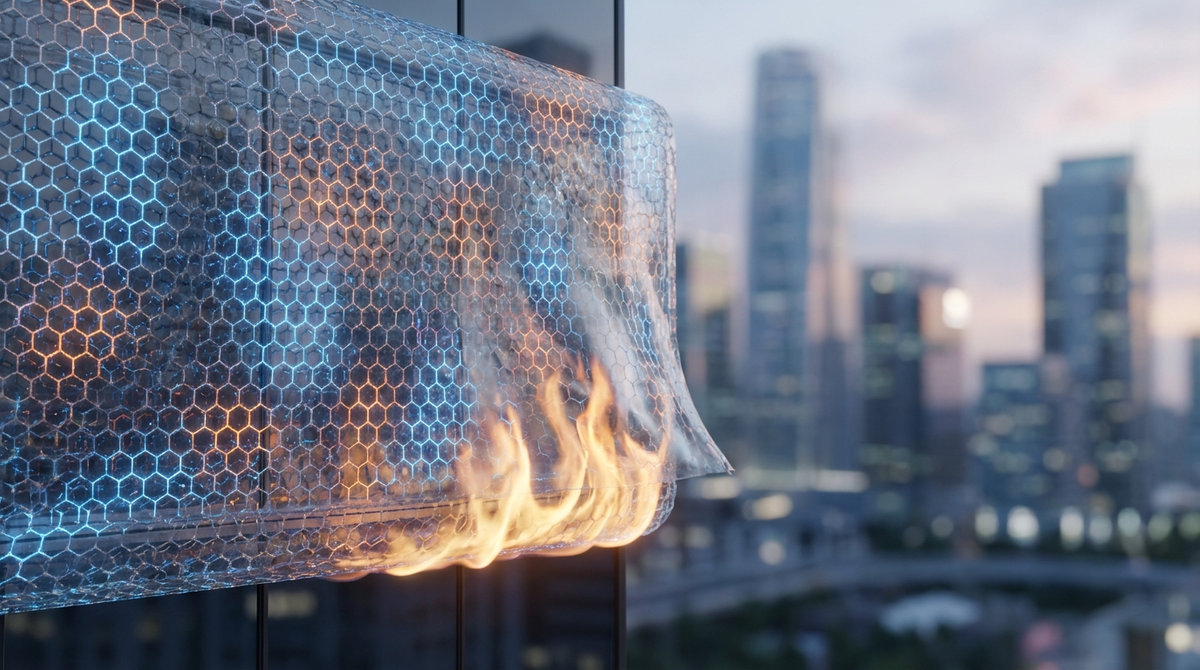
Fires pose a relentless and devastating threat to buildings, infrastructure, and human life worldwide, exacting an immense toll in fatalities, injuries, and economic damage each year. Traditional fire safety measures, while essential, often rely on materials that present their own set of challenges, including environmental concerns, limited durability, or a compromise on structural integrity. The imperative to develop more effective, sustainable, and long-lasting fire-retardant solutions has never been more pressing. In this landscape of urgent need, graphene emerges as a revolutionary material with the potential to transform fire protection strategies for the built environment. Its unique atomic structure and remarkable properties position it as a game-changer for next-generation fire-retardant coatings, promising unparalleled performance and durability.
The consequences of building fires extend far beyond immediate destruction, encompassing long-term health impacts from smoke inhalation, significant financial burdens from rebuilding and business disruption, and the tragic loss of cultural heritage. Existing fire protection strategies, largely comprising intumescent paints, flame-retardant additives, and passive fire barriers, have served us for decades. However, these conventional solutions often come with inherent limitations that demand innovation. Many traditional flame retardants, particularly halogenated compounds, are increasingly scrutinized for their environmental persistence and potential toxicity, leading to regulatory pressures and a global search for safer alternatives.
Furthermore, intumescent coatings, while effective, can suffer from durability issues, degrading over time due to UV exposure, humidity, or mechanical abrasion, which necessitates frequent maintenance and reapplication. This degradation compromises their protective capabilities, leaving buildings vulnerable as their fire resistance diminishes with age. The challenge lies in developing materials that not only effectively suppress fire but also maintain their performance over extended periods without posing additional risks to health or the environment. Meeting these stringent demands requires a fundamental shift in material science, moving towards advanced solutions that integrate superior performance with enhanced sustainability and longevity.
Graphene introduces a paradigm shift in fire-retardant technology by offering a multifaceted approach to fire suppression and prevention, leveraging its unique physicochemical properties. Its primary mechanism involves forming an exceptionally dense, stable, and highly insulating char layer when exposed to heat, effectively creating a physical barrier between the flame and the underlying substrate. This char layer acts as a tortuous path for volatile gases and heat, significantly impeding the combustion process and preventing the rapid spread of fire. The incredible mechanical strength of graphene ensures this protective char remains intact and robust, even under intense thermal stress, unlike the often brittle char produced by conventional intumescents.
Beyond barrier formation, graphene's extraordinary thermal conductivity plays a crucial role in dissipating heat away from localized hotspots, thereby reducing the surface temperature of the material and slowing down thermal decomposition. This rapid heat distribution helps to prevent the ignition of combustible materials and mitigates the intensity of the fire. Moreover, some graphene derivatives exhibit radical scavenging capabilities, where they can chemically interact with highly reactive free radicals produced during combustion, disrupting the chain reactions that sustain a fire. This combination of barrier formation, heat dissipation, and chemical inhibition makes graphene an exceptionally potent and versatile fire-retardant agent, offering a level of protection that surpasses many traditional materials.
The successful translation of graphene's laboratory promise into practical, deployable fire-retardant coatings for buildings hinges on sophisticated engineering and manufacturing considerations. Most commercial products do not rely on perfect monolayer graphene but instead utilize practical, scalable forms such as graphene nanoplatelets (GNPs), reduced graphene oxide (rGO), or innovative hybrid carbon systems. These materials offer a balance of performance, cost-effectiveness, and processability, making them suitable for large-scale production environments where repeatability and consistency are paramount. The choice of graphene type significantly influences the coating's rheological properties, adhesion to various substrates, and ultimately, its fire-retardant efficacy.
Process compatibility stands as a critical determinant of final product success. Achieving a homogeneous dispersion of graphene within a coating matrix is perhaps the most significant challenge; poor dispersion can completely negate the expected performance enhancements. Engineers must meticulously optimize the mixing profile, ensuring adequate shear forces to delaminate and distribute the graphene without damaging its structure. The rheology window of the coating must be carefully controlled to facilitate various application methods, whether spraying, brushing, or rolling, while maintaining consistent solids loading and film thickness. Furthermore, understanding the drying dynamics and interface chemistry is vital to ensure robust adhesion, prevent cracking, and guarantee the long-term integrity of the graphene-enhanced fire-retardant layer on diverse building materials such as steel, concrete, wood, and various polymers.
Adoption decisions for advanced materials like graphene fire-retardant coatings should always encompass a comprehensive lifecycle cost analysis, extending far beyond the initial raw material expenditure. While the upfront cost of graphene-enhanced coatings might be perceived as higher than conventional options, the long-term economic advantages and superior performance metrics often create substantial downstream savings and value. Graphene significantly enhances the durability of coatings, imparting improved resistance to environmental degradation factors such as UV radiation, moisture ingress, and abrasion. This superior resilience translates directly into an extended service life for the coating, reducing the frequency and cost of maintenance, repair, and reapplication cycles.
Even moderate gains in the thermal management or protective capabilities afforded by graphene can yield major economic benefits. Reduced heat transfer through building elements can contribute to lower energy consumption for heating and cooling, offering ongoing operational savings. More critically, the enhanced fire resistance provides greater protection of assets, reduces potential insurance premiums, and minimizes business interruption risks in the event of a fire incident. In regulated and safety-critical sectors, the exceptional reliability and sustained performance of graphene coatings can dramatically simplify qualification planning and reduce the likelihood of costly late-stage surprises. Teams should rigorously test these coatings under realistic duty profiles, including thermal cycling, prolonged humidity exposure, and mechanical stress, to fully validate their long-term reliability and secure their economic viability over the building's lifespan.
Bringing graphene fire-retardant coatings to widespread commercialization requires navigating a complex landscape of technical challenges, market dynamics, and stringent regulatory requirements. One significant hurdle remains the standardization of graphene materials themselves; defining consistent quality metrics and scalable production methods is essential for building trust and ensuring reliable supply chains. Manufacturers must establish robust intellectual property strategies to protect their formulations and application techniques, securing their competitive advantage in an evolving market. Collaborations between graphene producers, coating formulators, and construction industry stakeholders are vital for accelerating product development and market penetration.
A critical aspect of deployment, particularly in the highly regulated construction sector, is early and thorough engagement with certification bodies and regulatory authorities. Qualification planning must commence well before product launch, involving extensive testing to meet international fire safety standards such such as ASTM E84, EN 13501, or UL 723, and adherence to local building codes. Proving the long-term efficacy and safety of graphene coatings under various environmental conditions will be paramount for gaining official approvals and market acceptance. This includes demonstrating non-toxicity, environmental benignity, and sustained performance over decades, establishing a foundation of confidence for architects, engineers, and building owners alike. The commercial success of graphene fire-retardant coatings will ultimately depend on a disciplined workflow that rigorously identifies target metrics, optimizes dispersion quality, runs comprehensive stress testing, and scales only after consistency and compliance are unequivocally proven.
Graphene fire-retardant coatings represent more than just an incremental improvement over existing technologies; they embody a fundamental shift in how we approach building safety and material performance. As research and development continue to advance, we anticipate even more sophisticated graphene-based solutions, potentially integrating other smart functionalities into protective coatings. Imagine coatings that not only resist fire but also self-monitor their integrity, communicate their status, or even actively respond to environmental changes. The high surface area and electrical conductivity of graphene open avenues for such multi-functional coatings, paving the way for truly intelligent building materials.
The long-term vision involves a future where graphene-enhanced coatings are standard practice in construction, offering superior protection without compromising sustainability or aesthetics. The material’s ability to reduce lifecycle costs, improve durability, and meet evolving environmental standards positions it as a cornerstone for resilient and future-proof infrastructure. As supply chains mature, production costs decrease, and regulatory pathways become clearer, the widespread adoption of graphene fire-retardant coatings will contribute significantly to safer communities, more sustainable buildings, and a more secure built environment for generations to come.
Is graphene commercially viable today?
Yes, especially in high-value applications where measurable performance improvements justify integration effort and cost. Its commercial viability is growing rapidly as production scales and application methods become more refined, particularly in areas demanding superior material properties.
What are the top challenges?
Dispersion consistency within the matrix, process compatibility with existing manufacturing lines, quality standardization across different graphene suppliers, and ensuring supply-chain repeatability are the most common constraints. Overcoming these requires dedicated R&D and industry collaboration.
How does graphene compare to traditional fire retardants?
Graphene offers significant advantages over many traditional fire retardants by providing a non-toxic, highly durable, and multifaceted fire suppression mechanism, including superior char formation and heat dissipation. It avoids the environmental and health concerns associated with halogenated compounds, while offering enhanced long-term performance compared to conventional intumescents.
What types of buildings or materials benefit most from graphene fire coatings?
Graphene fire-retardant coatings are particularly beneficial for high-occupancy buildings, critical infrastructure, and structures where fire safety is paramount, such as hospitals, schools, data centers, and high-rise residential buildings. They offer superior protection for combustible materials like wood and polymers, and enhance the fire resistance of structural steel and concrete, providing extended evacuation times and improved asset protection.
What is the environmental impact of graphene fire retardants?
Graphene fire retardants generally have a more favorable environmental profile compared to many traditional solutions, especially those containing halogens, which are known for their persistence and toxicity. Graphene itself is a carbon-based material, and when properly synthesized and incorporated into coatings, it offers a sustainable alternative that can contribute to reducing the environmental footprint of fire protection systems. Research continues into the full lifecycle environmental impacts, but early indications are promising for a greener future in fire safety.
The pursuit of enhanced fire safety in our built environment is an ongoing imperative, driven by the need to protect lives, property, and the planet. Graphene fire-retardant coatings represent a monumental leap forward in this critical endeavor, offering a compelling blend of superior performance, unmatched durability, and favorable economics when integrated correctly. The material's unique ability to form a robust char barrier, dissipate heat effectively, and reinforce coating integrity establishes a new benchmark for passive fire protection. As we move beyond laboratory demonstrations to widespread commercial adoption, the disciplined application of engineering principles, rigorous testing, and strategic regulatory engagement will unlock the full potential of graphene. The future of fire safety is undoubtedly being reshaped by this remarkable material, promising a safer, more resilient, and more sustainable world for all.
Serious about B2B integration? Test our premium Pulsed Electrical Resistive Carbon Heating turbostratic graphene in your lab. 100g sample packs available now.
Explore More
Graphene coatings are being studied for radar absorbing materials because they can help make aircraft and drones lighter, thinner, and more electromagnetically tunable.

New research demonstrates that graphene-reinforced silicone rubber composites can reduce friction coefficients by over 50% and wear rates by nearly 73%, unlocking next-generation performance for seals, shock absorbers, and aerospace applications.

Graphene-filled plastics can help electronics housings deliver EMI shielding, lighter weight, and better multifunctional performance.