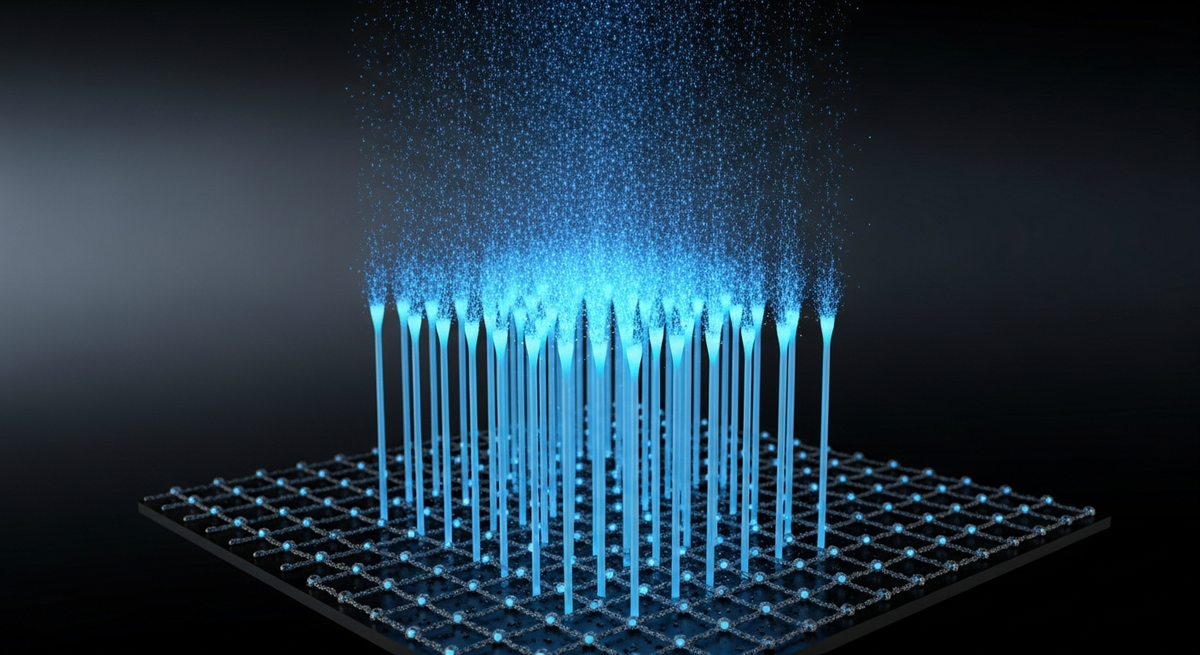
The Dawn of a New Era: Graphene Field Emission Devices in Advanced Electronics
In the ever-accelerating march of technological progress, the fundamental components that power our most critical systems are constantly being refined. For decades, vacuum electronics have formed the backbone of essential applications, from the high-frequency amplifiers in communication satellites to the precise electron guns in metrology equipment and the X-ray sources vital for security screening. Yet, many of these established technologies still rely on emitter designs that, while proven, are reaching their performance limits, often constrained by high power consumption, slow response times, and material instability. This landscape is now undergoing a dramatic transformation, spearheaded by the advent of advanced nanomaterials, with graphene emerging as a groundbreaking candidate.
Graphene field emission devices represent a paradigm shift in the realm of electron sources, promising to unlock unprecedented levels of efficiency, speed, and durability. As the world's first two-dimensional material, graphene brings a unique combination of atomic thinness, exceptional electrical conductivity, and a remarkably high aspect ratio to the forefront. These intrinsic properties make it an ideal material for cold cathode electron emission, a process that liberates electrons under the influence of a strong electric field without the need for extreme heat. The implications of this innovation are profound, paving the way for a new generation of high-performance, energy-efficient electronic systems that can operate at room temperature with superior temporal responses and long operational lifetimes.
At usa-graphene.com, we are at the forefront of exploring and developing these revolutionary graphene-based solutions. This article delves into the science behind graphene field emission, highlights its distinct advantages over conventional and other nanomaterial emitters, discusses the ongoing advancements in fabrication techniques, and illuminates the diverse applications where graphene is set to redefine the standards of electron emission. Prepare to discover how this remarkable material is poised to power the next generation of critical technologies, from advanced displays to sophisticated communication systems and beyond.
The Quantum Mechanics of Field Emission: Unlocking Electron Flow
To fully appreciate the transformative potential of graphene, it is crucial to understand the fundamental principles governing electron emission. Electrons can be liberated from a solid material through various mechanisms, including thermionic emission, photoemission, and field emission. While thermionic emitters, commonly found in cathode ray tubes, require heating to extreme temperatures exceeding 1500°C to stimulate appreciable current, leading to high power consumption and morphological instabilities, photoemission relies on incident radiation to excite electrons, often requiring specific ultraviolet to blue optical windows and suffering from low emission efficiency due to reflection and energy redistribution within the bulk material. Both methods present significant limitations in terms of operational efficiency and device longevity.
Field emission, in contrast, is a wholly quantum mechanical phenomenon first meticulously examined by Fowler and Nordheim (FN) in 1928. It is defined as the emission of electrons from an electron-rich condensed phase surface into a separate electron-deficient phase, typically a vacuum, under the influence of a large electric field. Unlike thermionic emission, field emission occurs at room temperature, making it intrinsically more energy-efficient and enabling the use of polymer substrates. This process involves electrons at the Fermi level quantum mechanically tunneling through a deformed potential barrier at the emitter-vacuum interface, resulting in an exponential relationship between the emission current and the applied bias voltage. The ability to liberate electrons without thermal excitation allows for instantaneous responses to field variations, offering high bandwidths and exceptionally large on/off ratios, typically up to 10^9.
For stable operation, field emission devices require high vacuum conditions, generally less than 10^-8 mbar, to prevent tip damage from gas ionization and subsequent ion bombardment. When an electric field of the order of 10 V/µm is applied across an electron-dense surface and a counter electrode (often a scintillator coated with a transparent conductive oxide and a light-emitting phosphor), electrons are emitted across the vacuum cavity. This precise control over electron liberation, coupled with the inherent advantages of room-temperature operation, positions field emission as a superior mechanism for a wide array of modern electronic applications, especially when integrated with advanced materials like graphene.
Graphene's Unparalleled Advantages as an Electron Emitter
Carbon allotropes, including fullerenes and carbon nanotubes (CNTs), have long been recognized for their promise in cold cathode electron emission due to their robust properties. However, graphene distinguishes itself even among these advanced materials, presenting a suite of advantages that position it as a superior candidate for next-generation graphene field emission devices. Its unique two-dimensional structure provides an exceptionally high aspect ratio, a critical factor that greatly enhances electron emission performance by concentrating the electric field at the emitter's edges.
Beyond its structural advantages, graphene exhibits a remarkable combination of material properties. It possesses incredibly low sputter coefficients, meaning it resists degradation from ion bombardment, which is crucial for maintaining long-term stability in vacuum environments. Its rapid temporal responses ensure swift switching times, far superior to the several seconds typical of thermionic emitters. Furthermore, graphene boasts low surface defect densities and largely hysteresis-free emission profiles, requiring minimal conditioning before operation. This intrinsic stability and reliability are vital for consistent performance in demanding applications.
Perhaps one of graphene's most compelling attributes is its negative variation in resistance with temperature. This property intrinsically ballasts its electron emission during operation, effectively preventing the phenomenon of avalanche run-away and consequent emitter burn-out that plagues many conventional materials. Moreover, nanocarbons, including graphene, can support current densities three orders of magnitude greater than copper, showcasing their extraordinary electron transport capabilities. Coupled with their high resistance to electromigration, these materials offer thermodynamically stable nanoscopic morphologies, ensuring the longevity and reliability of the emitter structure even under intense current loads. For almost all standardized metrics, including low energy spread, high lifetime, low emitter work function, high optical brightness, low operating temperature, low turn-on electric field, and high current density (up to 1 mA/cm²), graphene and CNTs consistently outperform current ubiquitous electron emission technologies.
Innovating Graphene Emitter Fabrication: From Vertical to In-Plane
The immense potential of graphene as a field emitter is undeniable, yet realizing this potential on a commercial scale hinges on overcoming significant fabrication challenges. The ideal configuration for many field emission applications involves large-area, vertically aligned graphene emitters that offer high uniformity and reproducibility in their emission characteristics. Despite impressive recent advances in material synthesis and device integration, fabricating such structures en masse remains a complex endeavor, requiring precise control over graphene's orientation, morphology, and integration with substrate materials.
One of the primary difficulties lies in achieving consistent vertical alignment across large areas while maintaining the critical high aspect ratio necessary for optimal field enhancement. Traditional methods often struggle with scalability, leading to variations in emitter density, tip sharpness, and overall emission uniformity, which can compromise device performance and reliability. These challenges necessitate innovative approaches that can bridge the gap between laboratory-scale demonstrations and commercially viable production.
Addressing these hurdles, researchers are actively exploring scalable routes to exploit graphene's extremely high in-plane field enhancement. A promising development is the creation of an in-plane edge emitter geometry. This design strategically decouples the electric field of the horizontal graphene from the proximal bulk substrate on which it lies. By leveraging the sharp edges of horizontally oriented graphene flakes or films, this geometry allows for significant field enhancement without the complexities of achieving perfect vertical alignment. This approach simplifies fabrication, offers greater control over emitter placement, and holds considerable promise for developing high-performance, uniform, and reproducible graphene field emission arrays that can be scaled for mass production and commercial deployment, opening new avenues for advanced electron sources.
Beyond Emission: Graphene as an Electron-Transparent Gate in Advanced Vacuum Microelectronics
While graphene's primary role in field emission devices often centers on its capabilities as a direct electron source, its unique properties extend to alternative, equally impactful applications within the broader field of vacuum microelectronics. One such innovative use case positions graphene not as the emitter itself, but as a critical component that enhances the performance and functionality of other electron emission systems: specifically, as an electron-transparent gate in vacuum microelectronic triodes.
In conventional vacuum triodes, a gate electrode is positioned between the electron source (cathode) and the anode to control the flow of electrons. This gate typically needs to be thin and highly conductive to minimize electron scattering and maximize modulation efficiency. However, traditional gate materials can introduce limitations such such as electron absorption, energy spread, or structural fragility, particularly in devices requiring high precision and efficiency. The ideal gate would allow electrons to pass through with minimal interaction, providing precise control over the electron beam without impeding its trajectory or energy.
Graphene, with its atomic thickness and exceptional electrical conductivity, is uniquely suited for this role. As an electron-transparent gate, it can be strategically placed to modulate the electric field and thereby control the emitted electrons with unprecedented precision. Its single-atom-thick structure ensures minimal electron scattering and absorption, allowing for a highly efficient and well-defined electron beam. This capability enables the development of vacuum microelectronic triodes with superior switching speeds, lower power consumption, and enhanced spatial resolution, making them invaluable for applications such as high-frequency communication devices, advanced sensors, and next-generation display technologies. The integration of graphene in this capacity represents a significant leap forward, pushing the boundaries of what is achievable in vacuum electronics by offering a gate material that is virtually invisible to the electrons it controls.
The Transformative Impact of Graphene in Vacuum Electronics
The integration of graphene into field emission technology marks a pivotal moment for the entire vacuum electronics industry. The limitations of traditional emitters—high operating temperatures, slow switching times, and susceptibility to morphological instabilities—have long constrained innovation in areas critical for modern society. Graphene's emergence provides a potent solution, enabling devices that are not only more efficient and reliable but also open doors to entirely new functionalities and applications previously deemed impractical or impossible. Its ability to operate at room temperature with instantaneous response times and remarkably high current densities fundamentally alters the design paradigm for electron sources.
Consider the impact on critical applications: enhanced flat-panel displays with higher refresh rates and lower power draw; more sensitive and compact electron guns for advanced metrology and scientific instrumentation; and more powerful, compact X-ray sources for improved medical imaging, industrial inspection, and security screening. In communications, graphene-based traveling wave tubes and microwave amplifiers could deliver unprecedented bandwidths and efficiency, revolutionizing satellite communication and high-speed data transfer. The high current densities and exceptional on/off ratios (up to 10^9) ensure that graphene emitters can provide the power and precision required for the most demanding applications, while their inherent stability promises significantly extended operational lifetimes.
The ongoing research and development into scalable fabrication methods, such as the in-plane edge emitter geometry, are steadily bringing these advanced devices closer to widespread commercialization. Furthermore, graphene's versatility as an electron-transparent gate in vacuum microelectronic triodes underscores its broader potential to enhance existing vacuum technologies. As material scientists and engineers continue to refine synthesis techniques and device integration strategies, graphene field emission devices are poised to become the standard for high-performance electron sources, driving innovation across a spectrum of industries and shaping the future of electronics for decades to come.
SEO FAQ: Graphene Field Emission Devices
Q1: What are graphene field emission devices?
A1: Graphene field emission devices are advanced electron sources that utilize graphene's unique properties to emit electrons under the influence of a strong electric field, rather than heat. These devices are designed to operate as cold cathodes, offering superior efficiency, rapid response times, and enhanced stability compared to traditional thermionic emitters, making them ideal for next-generation vacuum electronics.
Q2: How does graphene improve electron emission performance?
A2: Graphene improves performance due to its atomic thickness, high electrical conductivity, and exceptionally high aspect ratio, which concentrates electric fields at its edges. These properties lead to a low turn-on electric field, high current densities (up to 1 mA/cm²), and intrinsic self-ballasting that prevents emitter burn-out, ensuring stable and efficient electron liberation.
Q3: What are the key advantages of field emission over thermionic emission?
A3: Field emission offers several key advantages, including room-temperature operation, instantaneous response times, high bandwidth, and significantly lower power consumption. Unlike thermionic emitters that require heating above 1500°C, field emitters like those based on graphene exhibit high stability, low energy spread, and exceptionally large on/off ratios without thermal degradation, leading to longer device lifetimes.
Q4: What challenges exist in fabricating graphene field emitters?
A4: The primary challenges involve fabricating large-area, vertically aligned graphene emitters with high uniformity and emission reproducibility on a commercial scale. Researchers are addressing these by developing scalable routes, such as the in-plane edge emitter geometry, which simplifies the manufacturing process while still leveraging graphene's excellent field enhancement capabilities.
Q5: Can graphene be used for purposes other than direct electron emission?
A5: Yes, beyond direct emission, graphene can function as an electron-transparent gate in vacuum microelectronic triodes. Its atomic thickness and high conductivity allow it to modulate electron flow with minimal scattering and absorption, providing precise control over electron beams for advanced communication devices, sensors, and displays, enhancing the performance of existing vacuum technologies.
Powering Tomorrow's Innovations with Graphene
The journey into the capabilities of graphene field emission devices reveals a material poised to revolutionize the landscape of vacuum electronics and beyond. From enabling more efficient communication systems and advanced displays to powering precision metrology and critical security technologies, graphene offers a pathway to electron sources that are faster, more stable, and significantly more energy-efficient than anything previously available. Its unparalleled properties, coupled with ongoing innovations in fabrication and integration, position graphene at the forefront of cold cathode technology, promising to redefine performance benchmarks across a multitude of industries.
At usa-graphene.com, we are committed to harnessing the extraordinary potential of graphene to develop and deliver cutting-edge solutions. We invite you to explore our advanced graphene materials and discover how our expertise can accelerate your research and development in next-generation electron emission technologies. Partner with us to unlock the full power of graphene and build the future of electronics, one emitted electron at a time. Visit usa-graphene.com today to learn more about our innovative products and how graphene can transform your projects.