
A New Era of Graphene Engineering: Pre-Designing Twist Angles on Demand
Researchers have developed a breakthrough method for growing twisted bilayer graphene with pre-designed angles, a key step toward manufacturable quantum...
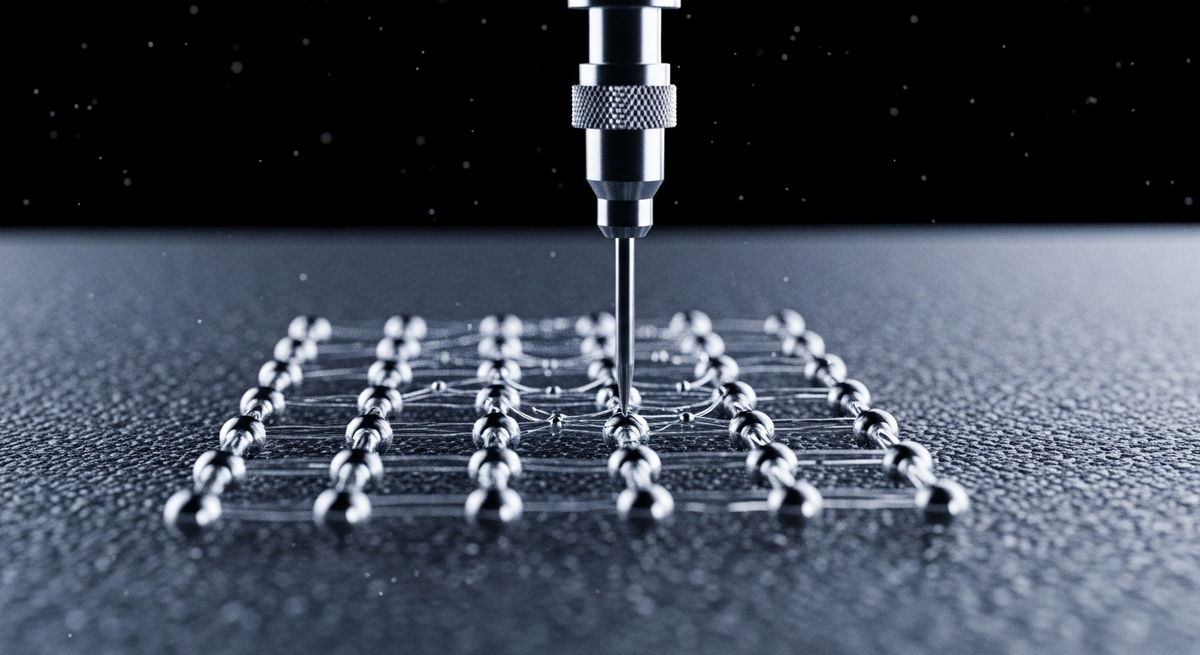
Unlocking Graphene Exfoliation: Atomic-Scale Control for Future Nanotechnology
Exfoliation and adhesion are ubiquitous phenomena, from peeling a sticker to a gecko clinging to a wall. Yet, when these seemingly simple interactions are examined at the atomic and molecular scales, their behaviors become profoundly complex and often counterintuitive. Understanding and controlling these forces at the nanoscale is not merely an academic pursuit; it is the cornerstone for developing the next generation of advanced materials and revolutionary technologies, particularly in the realm of nanocarbon structures like graphene and carbon nanotubes. At usa-graphene.com, we recognize that the future of materials science hinges on our ability to manipulate matter with atomic precision. The intricate dance of atomic-scale exfoliation and adhesion dictates everything from the durability of coatings to the efficiency of nanomachines. By delving into the fundamental mechanics of how nanocarbon interacts with substrates, we unlock unprecedented possibilities for engineering materials with tailored properties, offering solutions that far surpass the capabilities of conventional approaches. This deep dive explores the cutting-edge research into atomic-scale exfoliation and adhesion, highlighting the fascinating insights gained from studying carbon nanotubes (CNTs) and graphene. We will uncover how precise control over these interactions can lead to breakthroughs in reducing friction, enhancing adhesion, and enabling the development of sophisticated nanomachines and biomolecular motors – applications that demand a level of control previously thought impossible. The principles governing graphene exfoliation at this fundamental level are critical for its widespread adoption in high-performance applications.
The study of exfoliation and adhesion at the atomic scale presents unique challenges and opportunities. Unlike macroscopic phenomena, where bulk properties and continuum mechanics often suffice, understanding exfoliation and adhesion at the nanoscale demands a deeper dive into quantum mechanics and surface science. At these dimensions, surface effects dominate over volume effects, and the discrete nature of atoms and molecules becomes paramount. The presence of defects, adsorbed molecules, and even slight changes in local electronic structure can drastically alter material behavior.
Investigating these subtle interactions requires an arsenal of advanced experimental and computational techniques. Atomic Force Microscopy (AFM) stands as a primary tool, allowing researchers to directly measure forces between a tiny tip and a sample surface with piconewton precision. Transmission Electron Microscopy (TEM) and Scanning Tunneling Microscopy (STM) provide atomic-resolution imaging, revealing the precise arrangement of atoms and any structural defects. In-situ experiments, conducted under controlled environments, are crucial for observing dynamic processes like exfoliation or adhesion in real time.
Complementing these experimental observations are sophisticated computational methods. Density Functional Theory (DFT) calculations enable the prediction of electronic structure and interatomic forces with high accuracy, elucidating the quantum mechanical origins of adhesion. Molecular Dynamics (MD) simulations, often parameterized by DFT results, allow researchers to model the time-evolution of atomic systems, simulating the peeling or sliding of graphene layers. These combined approaches offer an unprecedented window into the fundamental forces that govern the intricate mechanics of nanocarbon materials. Understanding these mechanics is vital for predicting and controlling how graphene layers interact with each other and with various substrates.
At the atomic scale, the forces dictating exfoliation and adhesion transcend simple mechanical linkages, delving into the quantum realm of fundamental interactions. Van der Waals forces are particularly dominant for layered materials like graphene, arising from temporary fluctuations in electron density that induce transient dipoles. These include London dispersion forces, which are universal and arise from instantaneous dipoles, as well as Keesom and Debye forces involving permanent or induced dipoles. While individually weak, their cumulative effect across the vast surface area of graphene can be substantial, holding layers together.
Beyond van der Waals interactions, other subtle forces also play a significant role. The Casimir effect, a quantum electromagnetic phenomenon, becomes noticeable at extremely close separations, where fluctuations in the vacuum energy can create an attractive force between uncharged conductive surfaces. Electrostatic interactions, arising from charge transfer between graphene and its substrate or from variations in local work function, can also contribute to adhesion, particularly in the presence of surface charges or dopants. Controlling these forces means understanding their precise balance and how they are influenced by environmental factors.
Environmental conditions, such as humidity and temperature, can profoundly alter these interfacial forces. Adsorbed water molecules, for instance, can introduce capillary forces that enhance adhesion or act as lubricants to reduce friction, depending on the specific surface chemistry and geometry. Variations in temperature can affect the vibrational states of atoms, subtly changing the effective range and strength of van der Waals interactions. A comprehensive understanding of these quantum and environmental factors is essential for truly achieving atomic-scale control over graphene's behavior.
Achieving atomic-scale control over graphene exfoliation is the holy grail for widespread industrial adoption, allowing for tailored properties and consistent performance. Historically, mechanical exfoliation, famously known as the "Scotch tape method," provided the first high-quality single-layer graphene flakes. While invaluable for fundamental research due to its ability to produce pristine samples, this method is inherently unscalable and lacks precise control over flake dimensions or placement. It served as a critical proof-of-concept, but modern applications demand more sophisticated approaches.
Liquid-phase exfoliation (LPE) offers a scalable route by dispersing graphite in suitable solvents, followed by sonication or shear mixing to delaminate the layers. The key to atomic control here lies in selecting solvents with surface energies matching graphene, which minimizes the energy penalty for exfoliation and stabilizes the dispersed flakes. Parameters like sonication power, duration, and the concentration of surfactants are meticulously tuned to control flake size distribution, thickness, and defectivity. This method is gaining traction for producing large quantities of graphene inks and composites.
Chemical Vapor Deposition (CVD) provides a different pathway, growing graphene directly onto catalytic metal substrates. While it produces large-area, continuous films, the subsequent transfer of graphene from the growth substrate to a target substrate is a critical step where atomic-scale control over adhesion and potential damage is crucial. Advanced transfer techniques, involving sacrificial layers and carefully controlled interfaces, are being developed to minimize defects and wrinkles, ensuring the integrity of the atomically thin material.
Electrochemical exfoliation offers another avenue, using an electrochemical cell to intercalate ions between graphite layers, causing them to separate. By precisely controlling the applied voltage, electrolyte composition, and reaction time, researchers can influence the degree of intercalation and the resulting graphene quality. This method promises tunable control over the exfoliation process, allowing for the production of graphene with specific properties. Furthermore, supercritical fluid exfoliation, a newer technique, leverages the unique properties of supercritical fluids to penetrate and separate graphite layers with high efficiency and minimal damage, offering exceptional control over defect density and flake morphology. Each of these advanced techniques strives to produce high-quality, single-to-few-layer graphene with a level of control that truly harnesses its atomic precision.
The ability to precisely engineer graphene's interfacial properties, specifically its adhesion and friction, is transformative for its integration into next-generation technologies. By understanding the atomic-scale forces, we can manipulate them to achieve desired outcomes, whether it is ultra-low friction for nanomechanical systems or robust adhesion for advanced composites and flexible electronics. This engineering often involves strategic surface modification and careful substrate selection, turning graphene into a highly adaptable material.
One powerful approach involves surface functionalization, where specific chemical groups are covalently or non-covalently attached to the graphene surface. These functional groups can dramatically alter graphene's interaction with other materials, enhancing hydrophobicity, increasing specific adhesion to certain polymers, or even reducing friction by forming a passivating layer. The precise placement and density of these functional groups are critical for achieving atomic-level control over the desired interfacial properties, opening up vast possibilities for tailored applications.
The choice of substrate also plays a pivotal role in dictating graphene's adhesion and frictional behavior. Different materials, such as silicon dioxide (SiO2), hexagonal boron nitride (hBN), or various polymers, exhibit distinct surface energies and atomic structures, leading to varying van der Waals and electrostatic interactions with graphene. For instance, hBN provides an atomically flat, dangling-bond-free surface that often leads to higher quality graphene devices due to reduced scattering and weaker interaction compared to SiO2. By carefully selecting and preparing the substrate, engineers can fine-tune the interfacial forces.
Furthermore, strain engineering offers an elegant method to manipulate graphene's adhesion and friction. Applying mechanical stress can alter the electronic band structure of graphene and its interlayer interactions, influencing both its mechanical and tribological properties. This allows for dynamic control, where adhesion or friction can be tuned on demand. These strategies combined allow us to create graphene-based surfaces that are either incredibly slippery, reducing energy loss in nanomachines, or incredibly sticky, providing robust interfaces for composite materials and flexible electronics.
The unparalleled properties of graphene, coupled with atomic-scale control over its exfoliation and interfacial interactions, position it as a foundational material for the development of futuristic nanomachines and biomolecular motors. Its extraordinary strength, flexibility, high surface area, and electrical conductivity are precisely what these miniature devices demand. The ability to control how graphene interacts at the molecular level allows for the creation of components that operate with unprecedented precision and efficiency.
In the realm of nanomachines, graphene can serve as the building block for gears, switches, and sensors that operate at the nanoscale. Imagine graphene-based NEMS (Nanoelectromechanical Systems) that are ultra-sensitive to minute forces or chemical changes, far surpassing current technologies. Precise exfoliation ensures that these graphene components have the correct thickness, minimal defects, and controlled surface properties for reliable operation. The ability to tune graphene's adhesion means these parts can be assembled and integrated into complex architectures without degradation.
For biomolecular motors and biosensing applications, graphene's unique interface with biological molecules is critically important. Its high surface-to-volume ratio makes it an excellent platform for attaching proteins, DNA, or other biomolecules. Controlling the adhesion of these biological elements to graphene, either enhancing it for stable immobilization or reducing it for easy release, is vital for drug delivery systems, advanced biosensors, and even in-situ DNA sequencing. Graphene's electrical properties can also be harnessed to detect subtle changes in biological binding events.
The precise control over graphene's surface energy and wettability, achieved through atomic-scale exfoliation and functionalization, allows for highly specific and reversible interactions with biological systems. This is fundamental for developing implantable devices that seamlessly integrate with living tissue or for creating advanced diagnostic tools. The synergy between graphene's intrinsic properties and our growing ability to manipulate its surface at the atomic level is opening new frontiers in bionanotechnology, promising revolutionary advancements in medicine and materials science.
While the promise of atomic-scale control over graphene exfoliation is immense, significant challenges remain on the path to widespread industrial adoption and manufacturing. The primary hurdle is scalability: moving from meticulous lab-scale production of pristine graphene flakes to high-volume, cost-effective manufacturing that maintains atomic precision and uniformity. Consistency in flake size, thickness, defect density, and surface chemistry across large batches is paramount for industrial applications, and current methods often struggle to meet these stringent requirements.
Another critical area is defect engineering. While often seen as undesirable, precisely introduced defects or functional groups can tailor graphene's properties for specific applications, such as enhanced catalytic activity or selective molecular sensing. The challenge lies in developing methods that allow for controlled, site-specific defect creation at the atomic level, rather than random imperfections. This level of control will unlock even more sophisticated functionalities, pushing the boundaries of what graphene can achieve.
The future also lies in the realm of heterostructures – atomically thin stacks of different 2D materials, such as graphene, hexagonal boron nitride (hBN), and transition metal dichalcogenides (TMDs). Precisely stacking these materials with atomic registration opens up vast possibilities for creating novel electronic, optical, and quantum devices with tailored properties. Achieving this requires unprecedented control over the transfer and alignment of individual layers, ensuring minimal contamination and perfect interfaces, a field where atomic-scale adhesion and exfoliation are crucial.
Ultimately, the goal is to seamlessly integrate these atomically precise graphene materials into existing manufacturing processes, from semiconductor fabrication to advanced composite production. This requires developing robust, environmentally sustainable, and economically viable methods for graphene synthesis, characterization, and integration. The ongoing research and development efforts by institutions and companies like usa-graphene.com are dedicated to overcoming these challenges, ensuring that the transformative potential of atomic-scale graphene manufacturing is fully realized for the benefit of countless industries worldwide.
---
1. What is atomic-scale exfoliation of graphene?
Atomic-scale exfoliation refers to the precise separation of single or few-layer graphene sheets from bulk graphite, or from each other, using methods that allow control over the material's thickness, morphology, and defect density at the atomic level. This precision is crucial for maintaining graphene's unique properties and enabling high-performance applications.
2. Why is controlling adhesion important for graphene technology?
Controlling adhesion is vital because it dictates how graphene interacts with substrates, other graphene layers, and biological materials. Precise adhesion control enables the fabrication of stable electronic devices, robust composite materials, efficient transfer processes, and specific bio-interfaces for sensors and drug delivery, preventing unwanted detachment or ensuring strong bonding where needed.
3. What are the main forces at play during nanoscale exfoliation?
The primary forces involved in nanoscale exfoliation are van der Waals forces (London dispersion, Keesom, and Debye forces), which are weak individually but significant cumulatively across graphene's large surface area. Other forces include electrostatic interactions, arising from charge transfer or surface charges, and at very close distances, the quantum mechanical Casimir effect can also play a role.
4. How do we experimentally study these atomic-scale interactions?
Researchers use advanced techniques such as Atomic Force Microscopy (AFM) to measure piconewton forces, Transmission Electron Microscopy (TEM) and Scanning Tunneling Microscopy (STM) for atomic-resolution imaging, and in-situ experiments to observe dynamic processes. These experimental methods are often complemented by computational approaches like Density Functional Theory (DFT) and Molecular Dynamics (MD) simulations.
5. What are some future applications enabled by precise graphene exfoliation?
Precise graphene exfoliation enables a wide range of future applications, including ultra-low friction coatings for energy-efficient nanomachines, highly sensitive sensors for environmental monitoring and medical diagnostics, advanced flexible electronics, and robust composites with superior strength-to-weight ratios. It is also critical for next-generation biomolecular motors and drug delivery systems.
---
The journey to harness graphene's full potential is intrinsically linked to our mastery of atomic-scale exfoliation and interfacial control. From the delicate dance of van der Waals forces to the intricacies of electrochemical separation, every step forward in understanding these fundamental interactions brings us closer to revolutionary technologies. The ability to precisely engineer graphene's surface and separate it into pristine, single-atom-thick sheets is not just an academic achievement; it is the cornerstone of a new era of materials science and engineering. Usa-graphene.com is at the forefront of this exciting revolution, committed to pushing the boundaries of what is possible with atomically precise nanocarbon materials, paving the way for innovations that will redefine industries and improve lives globally.
Serious about B2B integration? Test our premium Pulsed Electrical Resistive Carbon Heating turbostratic graphene in your lab. 100g sample packs available now.
Explore More
Researchers have developed a breakthrough method for growing twisted bilayer graphene with pre-designed angles, a key step toward manufacturable quantum...

Learn how deep learning is revolutionizing the structural characterization of twisted bilayer materials, accelerating the development of next-generation...

Learn to build a prototype graphene FET biosensor for sensitive DNA detection. This guide covers materials, fabrication, and testing for point-of-care...