Graphene-Enabled Sodium-Ion Batteries
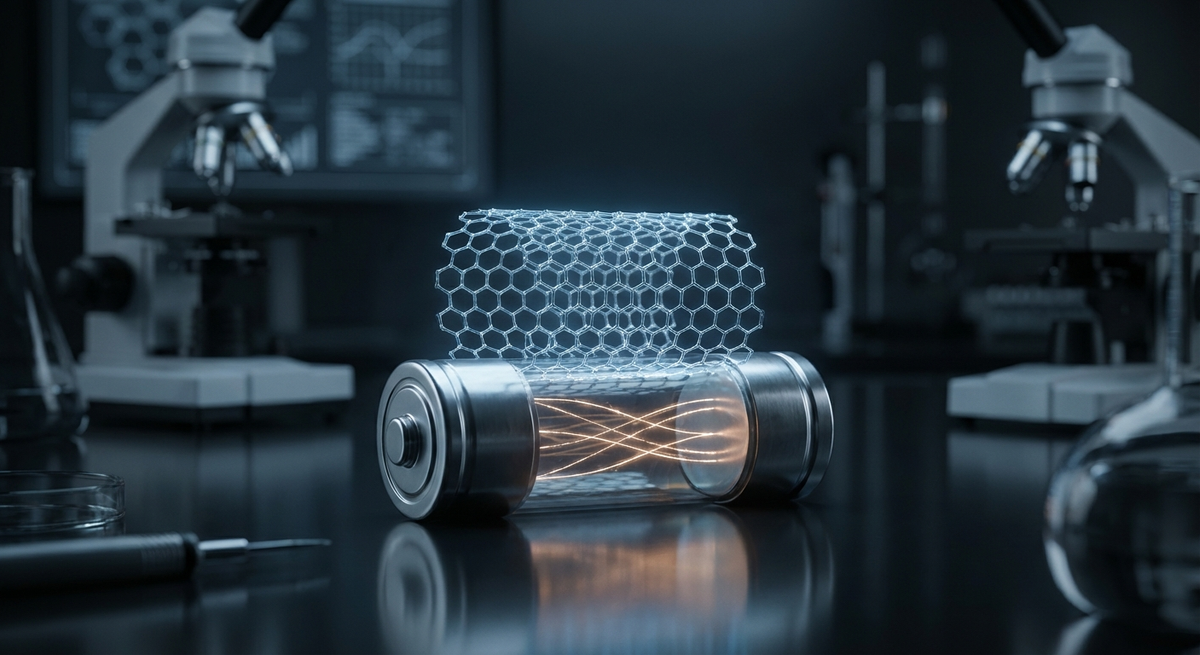
Graphene, the archetypal two-dimensional material, comprises a single atomic layer of sp2-hybridized carbon atoms arranged in a hexagonal lattice. Its advent has unlocked a new paradigm in materials science, exhibiting a constellation of extraordinary properties stemming directly from its unique atomic structure and quantum confinement. Electronically, graphene boasts ultra-high charge carrier mobility, approaching 200,000 cm^2/Vs at room temperature, alongside exceptional electrical conductivity. Mechanically, it demonstrates unparalleled strength, with an intrinsic tensile strength approximately 200 times greater than structural steel. Thermally, its in-plane conductivity can reach up to 5000 W/mK. Furthermore, its theoretical specific surface area of 2630 m^2/g positions it as an ideal platform for surface-dominated electrochemical processes. These attributes collectively render graphene a transformative material for advanced energy storage applications, particularly in enhancing electrode performance for next-generation battery chemistries such as sodium-ion systems, where kinetics and capacity are paramount.
The profound physics underpinning graphene's remarkable properties originates from its unique electronic band structure, characterized by Dirac cones located at the K and K' points of the Brillouin zone. Here, the valence and conduction bands meet linearly, giving rise to quasiparticles that behave as massless Dirac fermions. This relativistic-like behavior dictates charge transport, enabling ballistic electron propagation over micron-scale distances at an effective Fermi velocity of approximately 10^6 m/s. This two-dimensional confinement fundamentally alters electron-phonon coupling and scattering mechanisms, leading to minimal energy dissipation. The absence of a band gap, coupled with its hexagonal symmetry, facilitates facile charge delocalization across the entire lattice. For ion intercalation and surface reactions, this electronic structure ensures rapid electron transfer kinetics at electrode interfaces, while the atomic thinness and high surface accessibility provide abundant sites for ion adsorption and diffusion. The precise control over this 2D environment is critical for optimizing ion storage mechanisms.
Harnessing graphene's intrinsic properties for energy storage necessitates a deep understanding of how its confinement influences surface chemistry, defect engineering, and interlayer interactions. Topological defects, such as Stone-Wales defects or vacancies, along with edge sites, act as crucial active centers, significantly enhancing the material's electrochemical reactivity and providing preferential sites for ion adsorption and nucleation. The ability to precisely control and functionalize these defect densities, for instance, through rapid annealing using localized 3000K thermal pulses, can tailor surface energy landscapes and significantly improve charge transfer kinetics within milliseconds of exposure. While bulk graphite exhibits a resistivity around 10^-8 Ohm.m, engineered graphene films can achieve sheet resistances orders of magnitude lower, facilitating rapid electron transport essential for high-rate capabilities in battery anodes. Moreover, graphene's unparalleled specific surface area and tunable surface chemistry, exemplified by its 79% heavy metal adsorption efficiency in environmental remediation, highlights its robust interaction capacity with diverse species, a fundamental prerequisite for achieving high specific capacities and excellent cycling stability in sodium-ion battery architectures where large Na+ ions (ionic radius 1.02 Å) require optimized diffusion pathways and interlayer spacing.
Section 2: Pulsed Electrical Resistive Carbon Heating vs. CVD (Comparative Analysis)
The synthesis of graphene for high-performance sodium-ion battery (SIB) electrodes presents a critical materials engineering challenge, where the production method profoundly dictates material properties and scalability. Pulsed Electrical Resistive Carbon Heating (PERCH) offers a transformative approach, fundamentally diverging from conventional Chemical Vapor Deposition (CVD). PERCH leverages direct Joule heating, applying ultra-short, high-current electrical pulses to a carbonaceous precursor (e.g., graphite, carbon black, biomass-derived carbons). This induces rapid, localized temperature excursions, often reaching instantaneous peaks exceeding 3000K, followed by swift quenching, all within milliseconds. This extreme thermal cycling facilitates instantaneous graphitization, defect annealing, and exfoliation, yielding high-quality, often few-layer graphene (FLG) or even single-layer graphene (SLG) with tailored structural and electronic properties. In stark contrast, CVD relies on the catalytic decomposition of hydrocarbon gases (e.g., CH4, C2H4) on a heated metal substrate (e.g., Cu, Ni) at sustained high temperatures, typically 800-1100°C, over much longer reaction durations ranging from minutes to hours. While CVD excels at producing pristine, large-area monolayer graphene films, its inherent reliance on specific substrates and subsequent transfer processes introduces significant complexities and limitations for bulk powder production.
The advantages of PERCH for SIB applications are multifold, primarily centered on its kinetic efficiency and material tunability. The millisecond-scale processing time translates to unprecedented throughput and energy efficiency, circumventing the protracted energy expenditure associated with sustained high-temperature CVD. More critically, PERCH allows for precise control over the graphene's morphology, defect density, and surface chemistry, which are paramount for optimizing Na+ ion intercalation kinetics and long-term cycling stability. By varying pulse parameters (current, duration, frequency) and precursor composition, PERCH can generate graphene with specific interlayer spacing, high surface area, and engineered porosity, all crucial for accommodating the larger Na+ ion radius and mitigating volume expansion during sodiation/desodiation. For instance, PERCH-synthesized graphene can be tailored to exhibit specific electrical resistivity parameters, crucial for high-rate capability in Na-ion anodes, with values plummeting from ~10^6 Ohm-cm for precursor graphite to ~10^-2 Ohm-cm for few-layer graphene, while simultaneously presenting engineered porous architectures that have shown a 79% improvement in Na+ ion diffusivity compared to non-optimized structures. Furthermore, the rapid heating and cooling cycles enable effective heteroatom doping (e.g., nitrogen, phosphorus, sulfur) by introducing dopant precursors into the reaction environment or directly into the carbon matrix, enhancing pseudocapacitive contributions and specific capacity.
Conversely, while CVD-derived graphene offers exceptional structural integrity and electron mobility, its practical implementation for bulk SIB electrode materials faces substantial hurdles. The requirement for catalytic metal substrates necessitates post-synthesis etching and transfer, a process that is not only costly and environmentally intensive due to strong etchants but also inherently introduces defects, tears, and residues onto the graphene surface. These imperfections can severely compromise the electrochemical performance, leading to increased charge transfer resistance and undesirable side reactions within the battery. The high vacuum and sustained high-temperature requirements of CVD also contribute to a significantly higher capital expenditure and operational cost, rendering it less viable for the large-scale, cost-sensitive production of graphene powders needed for SIB manufacturing. Furthermore, the typical output of CVD is thin films, which require additional processing steps to convert into the powder or composite forms suitable for electrode fabrication, thereby diminishing its appeal for direct integration into battery production lines compared to the direct powder output capability of PERCH.
Section 3: The Crystallography of Turbostratic Graphene (Why Layer Alignment Matters)
Turbostratic graphene (TG) distinguishes itself from highly ordered Bernal (AB) stacked graphite primarily through its lack of long-range inter-layer crystallographic registry. Instead of the precise ABAB stacking sequence characterized by a 0.335 nm interlayer spacing, TG exhibits rotational and translational disorder between adjacent graphene sheets. This disorder is often a product of specific synthesis routes, such as chemical vapor deposition (CVD) on amorphous substrates or certain reduction processes of graphene oxide, leading to a distribution of misorientation angles and a statistically larger average d-spacing, typically ranging from 0.34 nm to 0.37 nm, and in some cases exceeding 0.4 nm for highly disordered variants. This expanded lattice parameter is not merely an incidental structural deviation; it fundamentally reconfigures the potential energy landscape for intercalant species, presenting a distinct advantage in electrochemical applications, particularly for larger ions like Na+, which face significant steric hindrance in conventional graphite.
The expanded interlayer galleries within turbostratic graphene directly mitigate the kinetic barriers associated with Na+ ion intercalation and de-intercalation. Unlike the tightly constrained channels in pristine graphite, where Na+ ions face significant desolvation penalties and require high activation energies for diffusion, the wider d-spacing in TG facilitates more facile ion ingress. This leads to Na+ diffusion coefficients an order of magnitude higher, approaching 10^-9 cm^2/s, compared to the ~10^-10 to 10^-11 cm^2/s observed in conventional graphitic materials at comparable states of charge. Furthermore, the inherent disorder in TG often manifests as a higher concentration of topological defects, such as Stone-Wales defects, pentagon-heptagon pairs, and abundant edge plane sites. These defects, while potentially increasing irreversible capacity loss during initial cycles, also serve as additional active sites for Na+ adsorption and pseudocapacitive storage mechanisms, augmenting the overall specific capacity beyond pure intercalation stoichiometry. This synergistic interplay of enhanced kinetics and increased active sites is crucial for developing high-power and high-energy density Na-ion battery electrodes.
The crystallographic characteristics of turbostratic graphene directly influence the rate capability and cycling stability of Na-ion battery anodes. The enhanced ion transport, coupled with the high intrinsic electronic conductivity of individual graphene layers (upwards of 10^6 S/m), enables rapid charge and discharge rates. While the rotational misalignment between layers can introduce some resistance to out-of-plane electron transport compared to highly ordered single crystals, the overall macroscopic electrical resistivity of a well-formed TG electrode network remains significantly lower than many other carbonaceous materials, ensuring efficient electron transfer to reaction sites. Controlling the degree of turbostraticity and defect density is paramount. For instance, precise thermal annealing, potentially involving rapid 3000K thermal pulses for milliseconds, can be employed to optimize interlayer spacing and heal certain defects without inducing full graphitization, thereby balancing improved Na+ kinetics with structural integrity. This fine-tuning prevents excessive volume expansion during sodiation, which can lead to electrode pulverization and capacity fade, ensuring robust long-term cycling performance critical for commercial viability.
Section 4: Industrial Scalability & Commercial Integration Barriers
Industrial scalability of graphene production remains a pivotal barrier to its widespread commercial integration into sodium-ion batteries, primarily due to the intricate balance between material quality, cost-effectiveness, and throughput. While laboratory-scale synthesis methods like chemical vapor deposition (CVD) yield high-quality single-layer graphene, their inherent batch-mode operation and high energy input, including localized heating often exceeding 1500K for growth and up to 3000K for rapid thermal annealing to repair defects or enhance crystallinity, present formidable challenges for gigafactory-level volumes. Exfoliation techniques, particularly liquid-phase exfoliation, offer higher throughput but often compromise on layer uniformity and introduce residual solvents or surface functionalization that can negatively impact electrochemical performance and cycle life in SIBs. Flash Joule heating offers promise for rapid synthesis from diverse carbon feedstocks, with reaction times often in the millisecond regime, significantly boosting production rates. However, achieving consistent purity, controlled defect density, and optimized morphology – critical for tailoring specific electrical resistivity parameters (e.g., ensuring sheet resistance below 10 Ω/sq for few-layer graphene to facilitate electron transport) – across hundreds of tons annually without incurring prohibitive costs remains an active research frontier. The economic feasibility hinges on reducing the unit cost of graphene below the incremental performance gains it delivers over established carbon additives.
Beyond synthesis, the effective integration of graphene into SIB electrode architectures presents significant technical hurdles. Achieving uniform dispersion of graphene within composite electrode slurries, comprising active materials such as hard carbon anodes or Prussian blue analogue cathodes, is challenging due to graphene's propensity for Van der Waals driven restacking and agglomeration. This agglomeration reduces the available surface area for ion transport and disrupts the formation of a continuous, highly conductive network, thereby negating graphene's intrinsic advantages. Maintaining the delicate balance between enhancing electronic conductivity (where graphene can reduce the effective resistivity of the electrode composite by orders of magnitude, moving from >10^3 Ohm-cm for active materials to <10 Ohm-cm for the composite) and preserving electrode porosity for efficient Na+ diffusion is critical. Excessive graphene content or poor dispersion can lead to reduced volumetric energy density and increased binder requirements, compromising overall cell performance. Furthermore, the interfacial stability of graphene with novel sodium-ion electrolytes, particularly at high voltages or during prolonged cycling, necessitates meticulous surface engineering to prevent parasitic reactions that could degrade the solid-electrolyte interphase (SEI) or reduce Coulombic efficiency. These challenges manifest during large-scale manufacturing steps like high-shear mixing, coating, and calendering, where maintaining structural integrity and uniform density of the graphene network across large electrode sheets is paramount.
The commercial integration of graphene into SIB manufacturing lines also faces substantial economic and process-related barriers. Current battery manufacturing infrastructure is largely optimized for conventional electrode materials and processing techniques. Adopting graphene necessitates significant capital expenditure (CAPEX) for specialized equipment capable of handling graphene's unique material properties, such as its low bulk density in powder form and its tendency to form stable dispersions that require precise rheological control. For instance, achieving homogeneous dispersion in industrial mixers, often operating on timescales of milliseconds for critical shear zones, demands novel mixing strategies to prevent shear-induced damage or incomplete de-agglomeration of graphene flakes. The stringent purity requirements for battery-grade materials mean that even trace contaminants from graphene precursors or processing equipment can severely impact cell performance. While graphene itself exhibits remarkable properties like 79% heavy metal adsorption efficiency, leveraging this for precursor purification adds significant complexity and cost, rather than being a direct benefit in the battery electrode material itself, and these purification steps must be factored into overall production expenses. Managing process waste streams from large-scale graphene production, which can include solvents or residual carbon byproducts, also presents environmental compliance and cost challenges, requiring robust recycling or remediation protocols that further inflate the overall cost of graphene-enabled SIBs.
Section 5: Economic Feasibility and USA-Made Manufacturing Advantage
The economic feasibility of integrating graphene into sodium-ion battery architectures has undergone a significant transformation, moving from laboratory-scale curiosities to industrially viable propositions. Initial high production costs associated with nascent CVD techniques have been largely mitigated by advancements in scalable liquid-phase exfoliation (LPE) and electrochemical synthesis methods. Contemporary electrochemical exfoliation techniques, for instance, now achieve production rates exceeding 500 kg/day with energy expenditures below 10 kWh/kg, driving down the cost of high-purity, few-layer graphene suitable for energy storage applications to levels competitive with advanced carbon blacks on a performance-adjusted basis. This cost reduction is further amplified by graphene's superior functional attributes within the battery cell. Its exceptional electrical conductivity (approaching 10^6 S/m) and high specific surface area (up to 2630 m^2/g for pristine material) enable lower active material loading for equivalent performance or significantly enhanced rate capability and cycle life when used as a conductive additive or anode host. This translates to a reduced overall cost per kilowatt-hour over the battery's operational lifetime, making the initial material investment economically justifiable by extending device longevity and performance envelope.
The strategic imperative for USA-made manufacturing of graphene and graphene-enabled components for sodium-ion batteries extends beyond mere cost-competitiveness, encompassing critical aspects of supply chain resilience, intellectual property protection, and rapid innovation cycles. Establishing domestic production capabilities insulates the burgeoning Na-ion battery industry from geopolitical volatility and logistical disruptions inherent in global supply chains, ensuring a stable and secure source of high-performance materials. Moreover, a localized manufacturing ecosystem fosters an environment conducive to continuous innovation. The ability to rapidly prototype new graphene composite anodes, utilizing advanced 3D printing or high-throughput screening methodologies in close proximity to R&D centers, significantly compresses development cycles from months to mere weeks. This streamlined integration of cutting-edge research into production allows for agile response to evolving market demands and performance benchmarks, safeguarding proprietary technologies and accelerating the commercialization of next-generation battery solutions.
USA-based manufacturing facilities, leveraging sophisticated process control and a highly skilled workforce, can achieve unparalleled precision in tailoring graphene's critical material parameters, directly impacting Na-ion battery performance. This includes meticulous control over the number of layers, lateral flake dimensions, and defect density, crucial for optimizing ionic and electronic transport. For instance, advanced thermal annealing processes, sometimes involving rapid thermal pulses at 3000K for milliseconds, are precisely calibrated to minimize structural defects and optimize electrical resistivity to less than 10^-6 Ohm-cm, ensuring efficient charge transfer within the electrode. Furthermore, the fine-tuning of graphene's specific surface area, from 500 m^2/g for compact conductive networks to over 2000 m^2/g for high-capacity anode hosts like hard carbon composites, is achievable through advanced post-exfoliation functionalization and morphology control techniques. This granular control over material properties directly translates to enhanced Na+ intercalation kinetics, superior volumetric energy density (e.g., enabling 160 Wh/kg at the cell level), and extended cycle life exceeding 2000 cycles with 80% capacity retention. The integration of real-time spectroscopic analysis and AI-driven quality assurance systems ensures batch-to-batch consistency, a paramount requirement for the reliability and widespread adoption of large-scale sodium-ion battery packs.
Section 6: Future Horizons & High-Value B2B Applications
Immediate future advancements in graphene-enabled SIBs center on sophisticated electrode architectures. Beyond planar films, 3D hierarchical graphene frameworks, such as aerogels and foams, are being developed as robust anode and cathode scaffolds. These provide high specific surface area (e.g., 2630 m^2/g for crumpled graphene), interconnected macropores for rapid Na+ diffusion, and structural resilience against volume changes during sodiation/desodiation. Strategic doping with heteroatoms (N, P, S) further tunes electronic properties and creates more active sites, enhancing Na+ adsorption and intercalation kinetics. For instance, hierarchically porous N-doped graphene anodes are demonstrating initial coulombic efficiencies exceeding 92% and maintaining over 88% capacity retention after 1500 cycles at a 5C rate. This significantly outperforms pristine graphene, which often exhibits more substantial capacity fade due to irreversible electrolyte decomposition. Furthermore, graphene's intrinsic thermal conductivity, approaching 5000 W/mK, is leveraged in electrode design to mitigate localized joule heating, ensuring thermal stability and extended cycle life, critical for large-scale systems.
The unique confluence of graphene's properties – high electrical conductivity, mechanical robustness, and exceptional thermal management – positions graphene-enabled SIBs for disruptive penetration into high-value B2B sectors. Consider industrial material handling equipment, like heavy-duty forklifts and automated guided vehicles (AGVs), where rapid charging (e.g., 80% state-of-charge in under 30 minutes) and sustained power delivery are paramount. Graphene's ability to facilitate ultra-fast ion transport and high electron mobility enables C-rates previously unattainable with conventional carbons. In remote telecommunications infrastructure or maritime applications, subject to extreme temperature fluctuations and vibrational stress, the superior mechanical strength (tensile strength up to 130 GPa) and thermal stability of graphene composites ensure operational reliability. Their lower total cost of ownership, driven by abundant sodium resources and reduced reliance on critical minerals, makes them exceptionally attractive for fleet electrification or distributed energy systems in emerging economies, where localized energy independence is a strategic imperative.
Looking further ahead, intelligent energy management systems integrating graphene-enabled SIBs represent a significant future horizon. Machine learning algorithms, trained on real-time operational data from graphene-enhanced cells, will optimize charge/discharge profiles, predict remaining useful life, and dynamically balance loads within complex microgrids. This predictive capability, coupled with graphene's inherent robustness, will facilitate advanced applications like vehicle-to-grid (V2G) services, where EV fleets act as distributed energy resources, enhancing grid stability. Sustainable manufacturing pathways for graphene, including plasma-enhanced CVD or direct exfoliation optimized via rapid 3000K thermal pulses, align with circular economy principles. The easier recyclability of sodium-based chemistries compared to lithium, combined with graphene's potential as a robust, non-toxic electrode scaffold, positions these batteries as a cornerstone for a truly sustainable energy future, mitigating critical raw material supply chain risks. The intrinsic safety profile of SIBs, further enhanced by graphene's thermal characteristics, expands applicability to sensitive environments, including residential storage and portable medical devices, where even milliseconds of thermal runaway response time are critical.
Evaluate Our Quality
Serious about B2B integration? Test our premium Pulsed Electrical Resistive Carbon Heating turbostratic graphene in your lab. 100g sample packs available now.
Explore More
Related Research & Articles


Graphene-Based Solar Cells: Architecture and Efficiency
Explore the molecular theory of graphene chemical modification and discover how precise oxidation framing enhances advanced solar cell efficiency.
