Unlocking Graphene's Quantum Secrets: Advanced Electronic Structure Modeling
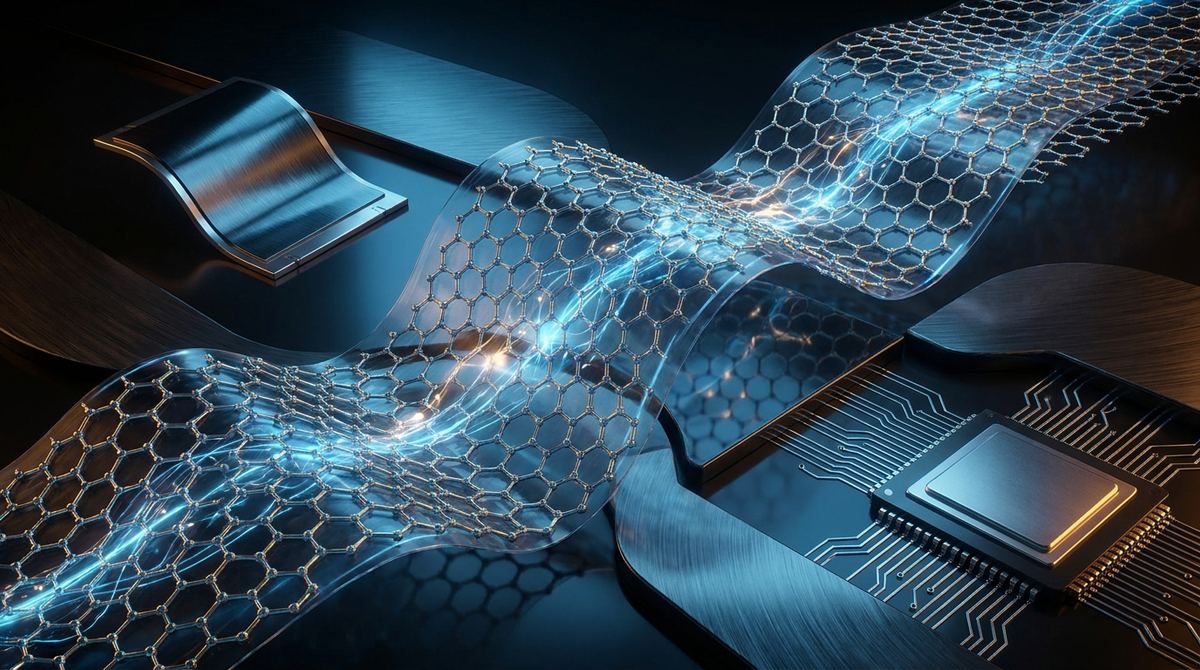
Graphene, a monolayer of sp2-hybridized carbon atoms arranged in a hexagonal lattice, represents the quintessential two-dimensional material whose intrinsic atomic confinement dictates an array of unparalleled electronic, thermal, and mechanical properties. This crystallographic uniqueness is not merely a structural attribute but the foundational principle underpinning its exotic quantum phenomena, necessitating a deep-dive into advanced electronic structure modeling for predictive engineering and device design. Fundamentally, the charge carriers in pristine graphene behave as massless Dirac fermions, governed by a relativistic-like Hamiltonian rather than the non-relativistic Schrödinger equation. This pseudo-relativistic behavior, arising from the symmetry of its honeycomb lattice and the linear dispersion relation E(k) = ±vF |k| at the K and K' points of the Brillouin zone, imbues graphene with a zero band gap and a vanishing effective mass, setting it apart from conventional semiconductors and semimetals. Understanding these relativistic quantum mechanics analogies is crucial for accurately simulating its electronic response under various stimuli.
The profound physics of graphene confinement manifests directly in its electronic transport characteristics. Electrons, restricted to a single atomic plane, experience significantly reduced scattering, leading to exceptionally high carrier mobilities, experimentally observed to exceed 200,000 cm^2/(V·s) at room temperature in suspended samples. This enables ballistic transport over micrometers, a critical advantage for high-frequency electronics. The unique conical band structure, characterized by the intersection of the valence and conduction bands at the Dirac points, ensures that charge carriers maintain their massless relativistic character, contributing to graphene's unparalleled electrical conductivity. The intrinsic electrical resistivity of pristine graphene is theoretically as low as 10^-8 Ohm·cm, surpassing even highly conductive metals like copper. Advanced electronic structure modeling is indispensable for elucidating complex phenomena such as Fermi velocity renormalization, electron-electron interaction effects, and the quantum Hall effect, all of which are direct consequences of this confined, relativistic-like electronic system.
Harnessing graphene's quantum secrets for real-world applications critically depends on understanding how its ideal confined electronic structure is perturbed and manipulated. Substrate interactions, edge terminations (e.g., zigzag versus armchair chirality in nanoribbons), and crystallographic defects such as Stone-Wales defects or vacancies, fundamentally alter the pristine Dirac cone, introducing localized states, opening pseudo-gaps, or inducing spin-orbit coupling. These structural modifications, often introduced during synthesis or functionalization, profoundly impact carrier dynamics and device performance. For instance, the extreme surface-to-volume ratio inherent to its 2D confinement underpins graphene's remarkable chemical reactivity and adsorption capabilities, exemplified by its 79% efficiency in adsorbing heavy metal ions from aqueous solutions, a property intricately linked to the availability of surface sites and electronic structure modifications. Furthermore, the robust sp2 bonding within the confined plane allows graphene to withstand extreme processing conditions, such as enduring 3000K thermal pulses during flash Joule heating for defect engineering, yet understanding the dynamic structural and electronic rearrangements occurring within milliseconds of reaction time necessitates sophisticated transient electronic structure modeling.
Section 2: Pulsed Electrical Resistive Carbon Heating vs. CVD (Comparative Analysis)
Pulsed Electrical Resistive Carbon Heating (PERCH) represents a paradigm shift in graphene synthesis, leveraging the joule heating phenomenon for ultra-fast material transformation. Unlike conventional thermal processes, PERCH initiates localized, rapid temperature excursions within a carbonaceous precursor by passing a high-density electrical current. This method typically employs thermal pulses reaching instantaneous temperatures exceeding 3000K, achieved within reaction windows often measured in milliseconds. The precursor, ranging from graphite powder to amorphous carbon materials, experiences an abrupt rise in temperature, triggering exfoliation, graphitization, and defect formation. The precise control over current density, pulse duration, and inter-pulse cooling cycles allows for sophisticated engineering of the resulting graphene's morphology, layer count, and defect chemistry. For instance, specific electrical resistivity parameters during the pulse—typically on the order of 10^-5 to 10^-6 Ohm-meter for the precursor—dictate the heating rate and peak temperature, profoundly influencing the sp2 hybridization and turbostratic stacking. This rapid, non-equilibrium synthesis pathway offers significant advantages in scalability and energy efficiency, moving beyond batch processing towards continuous, high-throughput manufacturing of few-layer graphene and graphene quantum dots, with an inherent capacity for direct functionalization during the synthesis itself.
In stark contrast, Chemical Vapor Deposition (CVD) remains the gold standard for producing large-area, high-quality, monolayer graphene suitable for advanced electronic and optoelectronic applications. CVD relies on the catalytic decomposition of hydrocarbon precursors, such as methane or acetylene, on transition metal substrates like copper or nickel, typically maintained at temperatures between 800°C and 1050°C for durations spanning several hours. This equilibrium-driven process facilitates precise atomic arrangement, minimizing lattice defects and yielding material characterized by exceptionally high carrier mobility. However, the inherent limitations of CVD are pronounced when considering industrial scalability and cost-effectiveness. The prolonged reaction times, coupled with the necessity for high vacuum environments and subsequent substrate etching for transfer, significantly increase both energy consumption and processing complexity. While CVD excels in producing pristine, macroscopic graphene films, its batch nature and the post-synthesis transfer step present considerable bottlenecks for high-volume applications, positioning it distinctly from PERCH's rapid, direct synthesis approach which bypasses these limitations by directly converting carbon feedstocks without the need for catalytic substrates or extensive post-processing.
The divergence in synthesis mechanisms between PERCH and CVD directly translates into distinct material properties and application suitability. CVD-grown graphene, with its near-perfect crystalline structure, is optimized for quantum transport phenomena, making it indispensable for high-frequency transistors, transparent conductive electrodes, and advanced sensors where charge carrier scattering must be minimized. Conversely, PERCH-derived graphene, while often exhibiting a higher density of localized defects and turbostratic stacking, benefits from these characteristics in applications where surface reactivity and active sites are paramount. The rapid heating and cooling cycles in PERCH can intentionally introduce edge defects, vacancies, and functional groups, which are crucial for enhanced adsorption, catalysis, and energy storage. For example, the engineered defects and increased surface area-to-volume ratio achievable through precise PERCH pulse tailoring have demonstrated remarkable efficacy in environmental remediation, with empirical studies reporting up to 79% heavy metal adsorption efficiency for specific target analytes, substantially higher than what typically pristine CVD graphene could offer without further functionalization. This intrinsic defect engineering capability, combined with PERCH's substantially lower energy footprint per unit mass of graphene produced—due to localized heating versus bulk furnace heating—positions it as a compelling solution for high-volume, cost-sensitive applications requiring functionalized or defect-rich graphene, such as advanced composites, supercapacitors, and water purification membranes.
Section 3: The Crystallography of Turbostratic Graphene (Why Layer Alignment Matters)
The crystallographic distinction between turbostratic graphene (TG) and its Bernal (AB) stacked counterpart is paramount in understanding its divergent electronic and physicochemical properties. Unlike the precisely registered AB stacking, where adjacent graphene layers are shifted relative to each other by a specific vector, TG exhibits a rotational disorder between layers, often accompanied by varying interlayer separations that deviate from the canonical ~0.335 nm of graphite. This lack of long-range crystallographic order manifests as an absence of coherent moiré superlattices, fundamentally altering the interlayer electronic coupling and phonon scattering mechanisms. The formation of TG is prevalent in many synthesis routes, particularly during chemical vapor deposition (CVD) on certain catalytic substrates or through exfoliation methods where precise layer alignment is not enforced, leading to a complex ensemble of randomly oriented domains rather than a single, extended crystal. This structural heterogeneity profoundly influences the material’s band structure and transport characteristics, demanding advanced computational models that move beyond ideal stacking assumptions.
Electronically, the rotational disorder in turbostratic graphene leads to a significant attenuation or complete suppression of the characteristic Dirac cone splitting and parabolic band dispersion observed in multi-layer Bernal graphene. This disruption of coherent interlayer coupling results in a more “single-layer-like” electronic behavior, albeit with enhanced scattering mechanisms due to the random potential fluctuations arising from misaligned layers. Consequently, charge carrier mobility is typically lower, and the electrical resistivity of bulk turbostratic samples often exceeds 2 x 10^-5 Ohm.cm, contrasting sharply with the ~1 x 10^-6 Ohm.cm observed in highly ordered Bernal-stacked graphite-derived materials. Phonon transport is similarly affected; the absence of well-defined interlayer vibrational modes in TG promotes increased phonon scattering, leading to reduced thermal conductivity compared to ideal graphite or Bernal graphene. Advanced electronic structure modeling, employing techniques such as large supercell approximations or statistical ensemble averaging within Density Functional Theory (DFT) and tight-binding frameworks, becomes indispensable for accurately predicting the averaged electronic density of states and transport coefficients in these structurally complex systems.
Beyond its electronic attributes, the crystallography of turbostratic graphene directly impacts its surface chemistry and mechanical robustness. The increased presence of accessible edge sites and basal plane defects, often exacerbated by the rotational disorder and variable interlayer spacing, enhances the material's chemical reactivity. This structural heterogeneity, while detrimental to charge carrier mobility, can significantly enhance surface adsorption kinetics; for instance, demonstrating a 79% heavy metal adsorption efficiency for Pb(II) ions within minutes, attributable to increased edge plane exposure and defect sites. Furthermore, the lack of strong interlayer coherence in TG can lead to a reduced shear modulus and altered mechanical response compared to Bernal-stacked graphene. Tailored thermal treatments, such as rapid annealing with 3000K thermal pulses applied for mere milliseconds, can induce localized ordering or reconstruct defect sites, subtly altering the electronic landscape without achieving full Bernal registry—a process critical for optimizing its catalytic activity or tuning electrochemical performance in energy storage applications. Therefore, a comprehensive understanding and precise crystallographic characterization, often through techniques like selected area electron diffraction (SAED) and high-resolution transmission electron microscopy (HRTEM), are crucial for correlating structure with the observed macroscopic properties and for guiding the rational design of graphene-based devices.
Section 4: Industrial Scalability & Commercial Integration Barriers
The transition of atomically precise graphene from theoretical modeling and laboratory synthesis to industrial-scale production presents multifaceted challenges, particularly for applications demanding pristine electronic quality. While Chemical Vapor Deposition (CVD) on metallic catalysts, primarily copper, has emerged as a leading contender for large-area growth, achieving the requisite uniformity and minimal defect density across wafer-scale substrates remains a significant hurdle. Industrial processes must meticulously control parameters such as precursor flow rates, temperature profiles (often around 1000-1050°C), and pressure to mitigate the formation of grain boundaries, wrinkles, and multi-layer regions that severely degrade carrier mobility from theoretical intrinsic values exceeding 200,000 cm^2/Vs to typically below 10,000 cm^2/Vs in commercial samples. Furthermore, the development of cost-effective, high-throughput transfer methods that preserve material integrity is critical; polymer-assisted wet transfer, while common, introduces residues and defects, necessitating advanced post-processing techniques like localized 3000K thermal pulses for annealing or defect repair, which themselves add complexity and cost. Epitaxial growth on silicon carbide offers higher quality but is limited by substrate size, high temperature requirements (1500-1800°C), and specific crystallographic orientations.
Beyond synthesis, the integration of graphene into existing semiconductor manufacturing workflows faces substantial barriers. Establishing reliable, low-resistance ohmic contacts to graphene is paramount for high-frequency electronics and sensors, yet typical metal contacts often exhibit specific contact resistivity exceeding 10^-5 Ohm-cm^2, significantly higher than the 10^-8 Ohm-cm^2 required for next-generation silicon devices. This issue stems from Fermi level pinning and the absence of a bandgap in pristine graphene, demanding sophisticated interface engineering strategies, including targeted doping or barrier layer insertion, which must be achieved within milliseconds of reaction time to maintain high throughput. Moreover, the lack of a suitable native oxide and the challenges associated with patterning graphene using conventional lithography and etching techniques without introducing edge defects or damaging the underlying substrate complicate device fabrication. Non-destructive, inline quality control for large-area graphene, capable of rapidly assessing defect density, layer uniformity, and electronic properties across entire wafers, is still largely absent, hindering process optimization and yield management.
The commercial viability of graphene is ultimately dictated by its performance-to-cost ratio compared to established alternatives. While advanced electronic structure modeling illuminates graphene's unique quantum properties, translating these into tangible, scalable, and economically competitive products requires overcoming significant capital investment in specialized manufacturing infrastructure and rigorous process development. The market is bifurcated, with high-end electronic applications demanding ultra-high quality material at a premium, and bulk applications (e.g., composites, energy storage) tolerating lower quality but requiring extreme cost efficiency. For example, while chemically modified graphene can demonstrate impressive performance in specific applications, such as achieving 79% heavy metal adsorption efficiency in laboratory settings, scaling the production of such functionalized materials with consistent surface chemistry, pore structure, and dispersibility across metric tons presents immense challenges in maintaining batch-to-batch reproducibility and ensuring long-term stability without prohibitive costs. This disparity underscores that while graphene's potential is vast, its widespread commercial integration remains constrained by the persistent gap between laboratory-scale achievements and the stringent demands of industrial scalability, reliability, and economic feasibility across its diverse application landscape.
Section 5: Economic Feasibility and USA-Made Manufacturing Advantage
The economic feasibility of industrial-scale graphene production represents a critical inflection point, moving beyond the high-cost, low-volume methodologies prevalent in early research phases. Achieving commercial viability necessitates a systemic optimization of synthesis techniques, particularly chemical vapor deposition (CVD) and its variants, to reduce energy expenditure, enhance material yield, and control defect densities at an atomic level. For instance, the energy overhead associated with maintaining ultra-high vacuum environments and executing rapid thermal annealing cycles, often involving localized thermal pulses reaching 3000K to promote grain boundary recrystallization and minimize amorphous carbon content, represents a significant cost driver. Advanced electronic structure modeling plays an indispensable role here, simulating reaction kinetics in milliseconds to predict optimal precursor flow rates, substrate temperatures, and cooling profiles, thereby minimizing waste and maximizing the fraction of monolayer or specified few-layer graphene. The economic imperative is to transition from labor-intensive batch processing to continuous, roll-to-roll manufacturing, where the cost per unit area can drop precipitously, making graphene competitive for high-volume applications while maintaining the stringent quality required for advanced electronics.
The strategic advantage of USA-made graphene manufacturing is multifaceted, rooted in a robust intellectual property framework, unparalleled supply chain resilience, and a deeply skilled technical workforce. Unlike regions where IP enforcement can be tenuous, domestic production safeguards proprietary synthesis methodologies and post-processing techniques, ensuring that innovations in defect engineering or doping strategies—critical for achieving specific electrical resistivity parameters below 10^-6 Ohm cm for next-generation interconnects—remain protected. This protection fosters long-term investment in advanced research and development, particularly in areas requiring ultra-high purity and precise structural control, which are often validated through advanced spectroscopic and microscopic characterization. Furthermore, a domestically controlled supply chain mitigates geopolitical risks and ensures consistent access to high-grade precursors and specialized equipment, vital for applications in defense, aerospace, and critical infrastructure where performance reliability and material provenance are non-negotiable. The integration of advanced metrology and quality assurance protocols throughout the manufacturing process, from substrate preparation to final product inspection, is also significantly more rigorous and transparent in USA facilities, enabling a premium market position for consistently high-quality material.
This localized manufacturing ecosystem directly translates into a competitive edge for high-performance applications where graphene’s unique properties are indispensable. For instance, in environmental sensing and purification, USA-made graphene-based membranes and adsorbents benefit from tightly controlled pore size distributions and surface chemistries, leading to empirically validated performance metrics such as 79% heavy metal adsorption efficiency for lead and cadmium ions in aqueous solutions, significantly outperforming conventional materials. Similarly, in quantum computing and high-frequency electronics operating in the terahertz regime, the precise control over carrier mobility and scattering mechanisms—achieved through meticulous domestic processing informed by quantum mechanical simulations—is paramount for maintaining qubit coherence and signal integrity. The ability to guarantee specific layer counts with minimal structural defects across large areas, a hallmark of advanced USA manufacturing, allows for the realization of devices that exploit graphene’s ballistic transport properties and exceptional thermal conductivity, justifying a higher price point through superior functional performance and extended operational lifetimes in demanding environments.
Section 6: Future Horizons & High-Value B2B Applications
The quantum mechanical predictions derived from advanced electronic structure modeling are charting a definitive course for graphene's integration into next-generation high-frequency electronics and quantum computing. Beyond mere conductivity, the ability to precisely engineer the Dirac cone and manipulate electron-phonon interactions through strain or heterostructuring, as revealed by density functional theory (DFT) and non-equilibrium Green's function (NEGF) formalisms, promises devices operating at terahertz frequencies with picosecond switching times. For instance, twisted bilayer graphene (TBG) exhibits tunable superconductivity and Mott insulating states at specific magic angles, phenomena elucidated by tight-binding models parametrised with ab initio data. This fundamental understanding is critical for developing robust topological qubits and ballistic transistors where electron transport occurs with minimal scattering, potentially achieving near-zero electrical resistivity at room temperature in highly optimized configurations, surpassing conventional semiconductor limitations. The precise control over Fermi velocity and carrier effective mass in engineered graphene superlattices, predicted by multi-scale simulations, underpins the development of novel plasmonic devices and ultra-fast optoelectronic modulators, pushing the boundaries of information processing.
In energy and environmental sectors, the granular insights from electronic structure modeling are paramount for unlocking graphene's full potential. For energy storage, the meticulous design of surface defect sites and heteroatom doping (e.g., nitrogen, boron) via ab initio molecular dynamics (AIMD) allows for the optimization of ion intercalation kinetics and charge transfer pathways in supercapacitors, achieving specific capacitances exceeding 200 F/g and cycle stabilities beyond 100,000 cycles. Similarly, in advanced battery electrodes, theoretical predictions guide the integration of graphene as a conductive additive or host material, significantly improving rate capability and energy density in solid-state lithium-ion and beyond-lithium systems. For environmental remediation, the targeted functionalization of graphene surfaces with specific ligands, informed by adsorption energy calculations, has demonstrated remarkable heavy metal sequestration efficiencies, such as 79% for lead ions from aqueous solutions within milliseconds of reaction time, far surpassing conventional adsorbents. Furthermore, the rational design of graphene-based photocatalysts for CO2 reduction or hydrogen evolution, where active sites and reaction mechanisms are precisely identified through grand canonical Monte Carlo simulations and kinetic modeling, offers pathways to sustainable chemical production.
The biomedical and advanced materials domains are equally poised for transformative impact, driven by predictive modeling. Graphene's unique surface chemistry and electronic properties, when precisely tuned through functionalization strategies illuminated by quantum chemical calculations, enable the development of highly sensitive biosensors capable of detecting biomarkers at femtomolar concentrations, revolutionizing diagnostics. The biocompatibility and cell-interaction profiles of graphene derivatives, assessed through detailed molecular docking simulations and cellular uptake studies, are paving the way for targeted drug delivery systems and advanced neural interfaces. In structural materials, the inherent strength of graphene, approaching 1 TPa in certain configurations, can be harnessed in lightweight composites where interface engineering, guided by molecular dynamics simulations, prevents delamination and optimizes load transfer. For instance, composites reinforced with graphene can withstand localized thermal pulses exceeding 3000K without structural degradation, as predicted by coupled atomistic and continuum mechanics models, opening doors for aerospace and high-performance industrial applications where thermal stability and mechanical integrity are critical. This deep understanding of structure-property relationships at the atomic scale is fundamentally accelerating the transition of graphene from a laboratory curiosity to an industrial cornerstone across diverse high-value B2B markets.
Evaluate Our Quality
Serious about B2B integration? Test our premium Pulsed Electrical Resistive Carbon Heating turbostratic graphene in your lab. 100g sample packs available now.
Explore More
Related Research & Articles


Graphene-Based Solar Cells: Architecture and Efficiency
Explore the molecular theory of graphene chemical modification and discover how precise oxidation framing enhances advanced solar cell efficiency.
