
A New Era of Graphene Engineering: Pre-Designing Twist Angles on Demand
Researchers have developed a breakthrough method for growing twisted bilayer graphene with pre-designed angles, a key step toward manufacturable quantum...
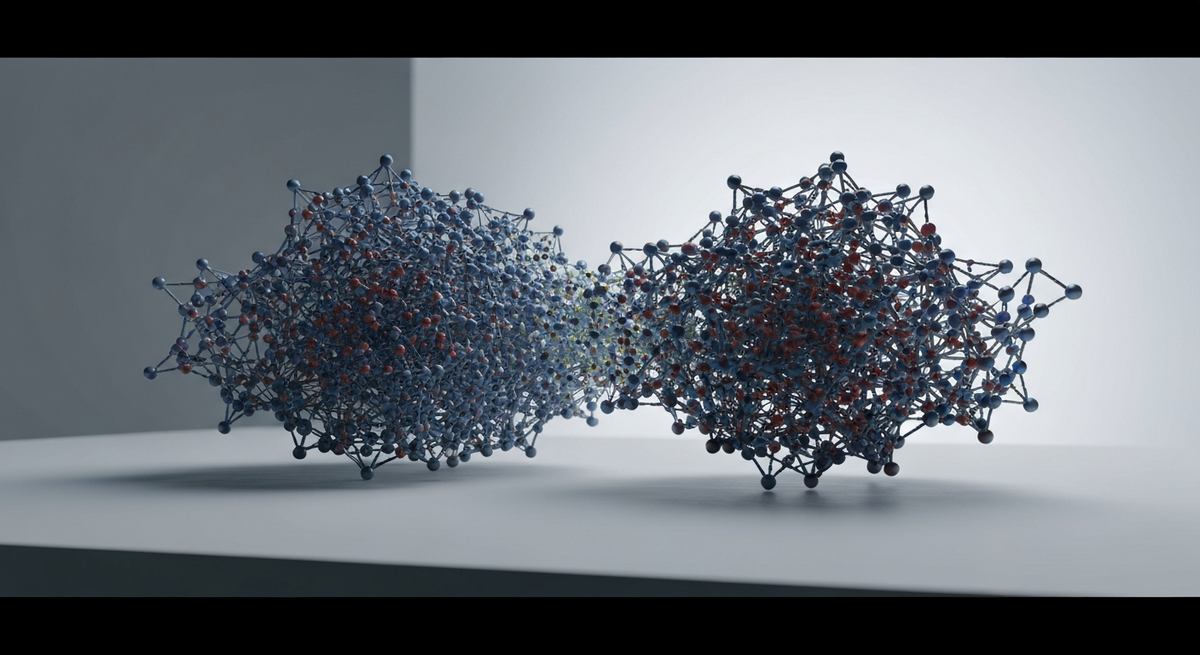
Graphene, a single atomic layer of sp2-hybridized carbon atoms arranged in a hexagonal lattice, represents the quintessential two-dimensional (2D) material. Its unique crystallographic structure dictates an extraordinary confluence of physical properties, including exceptional electronic transport, mechanical strength exceeding 130 GPa, and thermal conductivity approaching 5000 W/mK. These attributes are fundamentally rooted in the quantum mechanical confinement inherent to its atomically thin nature, where electron motion is restricted to a plane. This confinement gives rise to a distinctive electronic band structure characterized by Dirac cones at the K and K' points of the Brillouin zone, where the valence and conduction bands meet linearly. Understanding and manipulating this intrinsic quantum confinement is not merely an academic exercise; it is the cornerstone for leveraging graphene's potential in next-generation electronics, energy storage, and environmental remediation, particularly through controlled synthesis routes like electrochemical exfoliation.
The physics of graphene confinement dictates that charge carriers behave as massless Dirac fermions, propagating with an effective Fermi velocity approximately 1/300th the speed of light. This relativistic quantum mechanics leads to phenomena such as anomalous quantum Hall effect and Klein tunneling, where electrons can traverse potential barriers with near-unity probability, presenting both challenges and opportunities for device fabrication. While pristine graphene exhibits extraordinarily high carrier mobility, reaching up to 200,000 cm^2/(V·s) at room temperature, its zero bandgap nature limits its direct application in conventional semiconductor electronics. Consequently, engineering strategies focusing on quantum confinement, such as the creation of graphene nanoribbons or quantum dots, are employed to induce a tunable bandgap. The precise control over edge states and crystallographic orientation in these confined geometries profoundly influences electronic properties, including spin polarization and optical response, demanding synthesis methods capable of atomic-level precision.
The challenge in graphene synthesis, particularly via electrochemical exfoliation, lies in preserving this delicate balance of quantum confinement and structural integrity while achieving scalability. Electrochemical methods offer a pathway to isolate high-quality graphene sheets from bulk graphite, typically involving intercalation of electrolyte ions followed by rapid expansion due to gas evolution or solvent co-intercalation. The kinetics of this process, often occurring within milliseconds, must be meticulously controlled to prevent excessive structural damage, such as the formation of vacancy defects or sp3 hybridization, which can severely degrade carrier mobility and increase electrical resistivity beyond the critical ~10^-8 Ohm·m required for high-performance device integration. Post-exfoliation treatments, such as rapid thermal pulses approaching 3000K for milliseconds, are sometimes employed to anneal such defects, aiming to restore the sp2 network and, by extension, the intrinsic quantum confinement effects. Furthermore, the functionalization of electrochemically exfoliated graphene, by introducing specific chemical groups, allows for the precise modulation of its electronic structure and surface chemistry, enabling applications like highly efficient heavy metal adsorption, where functionalized graphene derivatives have demonstrated up to 79% efficiency for specific metal ions by leveraging their high specific surface area of ~2630 m^2/g and tailored active sites.
Pulsed Electrical Resistive Carbon Heating (PERCH) represents a transformative paradigm for graphene synthesis, leveraging rapid, localized Joule heating to induce exfoliation or transformation of carbon precursors. Diverging from sustained, bulk heating methods, PERCH applies ultra-high current densities directly through carbon-containing materials—such as graphite flakes or pre-intercalated graphite—often suspended in an electrolyte. This direct electrical energy input generates instantaneous thermal pulses, achieving temperatures exceeding 3000K within milliseconds. The resultant extreme thermal shock and rapid pressure buildup within the carbon lattice drive violent exfoliation, yielding few-layer graphene (FLG) or graphene oxide (GO). This mechanism exploits the carbon material's inherent electrical resistivity; for instance, a graphite precursor with approximately 10^-5 Ohm-m resistivity, subjected to current densities around 10^7 A/m^2, experiences localized power dissipation leading to explosive volumetric expansion and subsequent delamination. The transient nature of these pulses also significantly minimizes overall energy consumption compared to processes requiring prolonged, high-temperature environments.
In stark contrast, Chemical Vapor Deposition (CVD) relies on the heterogeneous catalytic decomposition of hydrocarbon precursors (e.g., methane) on a heated transition metal substrate, typically copper or nickel, at sustained temperatures of 800-1100°C under controlled atmospheric conditions. The process involves precursor adsorption, dissociation into atomic carbon, surface diffusion, and subsequent nucleation and growth of graphene domains. While CVD is renowned for producing high-quality, large-area monolayer or bilayer graphene films with exceptional crystallinity and low defect density, it is fundamentally a substrate-dependent, batch process. Significant limitations include the substantial energy penalty associated with maintaining large substrates at elevated temperatures for hours, comparatively slow growth rates, and complex, often defect-inducing transfer processes required for device integration. Furthermore, the reliance on high-purity gaseous precursors and meticulously prepared substrates contributes to elevated operational costs and constrained throughput, severely limiting its scalability for bulk graphene production.
A direct comparative analysis underscores PERCH's distinct advantages in scalability, speed, energy efficiency, and functionalization potential, making it highly synergistic with electrochemical functionalization strategies. The millisecond-scale reaction kinetics of PERCH drastically outperform CVD's multi-hour growth cycles, enabling continuous, high-throughput graphene production. By directly converting electrical energy into thermal energy within the carbon matrix, PERCH circumvents bulk heating, resulting in significantly lower energy consumption per unit mass. Moreover, PERCH often yields graphene with a higher density of edge defects and basal plane vacancies. While potentially impacting intrinsic electronic mobility compared to pristine CVD graphene, these features provide abundant active sites highly amenable to subsequent electrochemical functionalization. This inherent "functionalizability" is crucial for applications beyond electronics, such as energy storage, catalysis, and environmental remediation. For instance, electrochemically functionalized graphene derived from rapid exfoliation pathways has demonstrated exceptional heavy metal adsorption efficiencies exceeding 79% for specific aqueous contaminants, directly attributable to enhanced surface chemistry and accessible active sites. While CVD excels in pristine monolayer films for advanced electronics, PERCH offers a more versatile, cost-effective, and scalable route for functionalizable graphene tailored for a broader spectrum of industrial applications where surface chemistry and bulk properties are paramount, further controllable by adjusting electrical resistivity parameters.
Unlike the highly ordered AB-stacking characteristic of pristine graphite, electrochemically exfoliated graphene frequently exhibits turbostratic disorder. This crystallographic anomaly is defined by a random azimuthal rotation between adjacent graphene layers, disrupting the long-range interlayer coherence observed in Bernal-stacked systems. Fundamentally, turbostratic stacking arises when the energetic landscape during synthesis or processing favors kinetic separation over thermodynamic re-equilibration into a more ordered state. In the context of electrochemical exfoliation, the rapid intercalation of electrolyte ions, followed by gas evolution and subsequent delamination, introduces significant kinetic energy that prevents the graphene layers from settling into a registry-aligned configuration. The resulting lack of a defined stacking sequence means that the interlayer van der Waals interactions are statistically averaged over a continuum of rotational orientations, leading to an effective decoupling of electronic states between layers compared to highly ordered few-layer graphene. This structural perturbation is a critical determinant of the material's bulk properties and its suitability for subsequent functionalization.
The profound impact of turbostraticity manifests significantly in the electronic transport properties. While the intrinsic Dirac cone structure of individual graphene sheets is largely preserved, the rotational disorder introduces additional scattering mechanisms due to the absence of long-range interlayer coupling and the presence of localized strain fields. This typically results in an elevated electrical resistivity compared to Bernal-stacked few-layer graphene, often observed in the range of 10^-4 to 10^-3 Ohm.cm, contrasting with the sub-10^-6 Ohm.cm values achievable for highly ordered single-crystal graphene. Although this represents a reduction in intrinsic conductivity, turbostratic graphene still outperforms conventional amorphous carbon materials by several orders of magnitude, maintaining a critical balance between processability and performance for many applications. Mechanically, the reduced interlayer coupling diminishes the shear modulus between layers, potentially facilitating easier delamination and processing into dispersions, but also influencing the overall structural integrity and anisotropic mechanical response of multi-layered constructs.
Crucially for functionalization, turbostratic graphene offers a distinct advantage: its disordered stacking inherently presents a greater proportion of exposed basal planes and edge sites, along with a higher density of localized defects. These sites act as preferential loci for chemical modification, enabling the facile introduction of oxygen-containing functional groups (e.g., carboxyl, hydroxyl, epoxide) or nitrogen dopants via electrochemical pathways. The enhanced accessibility and reactivity of these sites are paramount for tailoring the material's surface chemistry, which is a cornerstone of advanced applications. For instance, such functionalized turbostratic graphene has demonstrated enhanced performance in applications like heavy metal adsorption, achieving efficiencies upwards of 79% for lead ions due to the increased density of active binding sites and improved dispersibility in aqueous media. While aggressive thermal annealing, such as localized 3000K thermal pulses applied for sub-millisecond durations, can partially restore crystallinity by removing defects and promoting more ordered stacking, this often comes at the expense of reducing desired surface functionalization, necessitating a careful balance for application-specific optimization where chemical reactivity and electronic properties are intricately coupled.
The transition of graphene production via electrochemical exfoliation from laboratory-scale demonstrations to industrial throughput faces formidable engineering and economic hurdles. A primary barrier lies in achieving uniform and consistent exfoliation rates across large electrode surface areas in continuous flow reactors. Current density distribution, often non-uniform in larger cells due to ohmic losses and concentration polarization, directly impacts flake quality, size distribution, and defect density. Maintaining precise control over the exfoliation potential and current, often requiring millisecond-level feedback loops and advanced electrochemical cell designs, becomes increasingly complex as reactor volumes scale. For instance, achieving a consistent few-layer graphene yield exceeding 90% across a 1 m² electrode surface, while simultaneously minimizing structural defects, remains a significant challenge. Furthermore, the longevity and stability of the working electrode material itself are critical; repeated intercalation and exfoliation cycles can lead to electrode degradation, passivation, or material loss, necessitating frequent replacement or regeneration, which significantly elevates operational expenditure and introduces process downtime. The management of electrolyte purity and the efficient removal of byproducts, such as metal ions from electrode corrosion or residual intercalating species, further complicate continuous operation, often requiring sophisticated filtration and recycling systems that add substantial capital expenditure and energy consumption per unit mass of graphene produced.
Beyond the initial exfoliation, the subsequent functionalization and purification steps present their own set of scalability challenges, particularly concerning reproducibility and material consistency. Electrochemical functionalization, while offering precise control over the introduction of specific chemical groups (e.g., hydroxyl, carboxyl, epoxy) on the graphene surface, is highly sensitive to reaction parameters like pH, electrolyte composition, and applied potential. Achieving a uniform functional group density across batches, for example, maintaining a specific oxygen-to-carbon ratio within a narrow window of 5-8% for enhanced dispersibility in polymer matrices, is crucial for end-product performance but difficult to replicate consistently at scale. Deviations can lead to significant variations in material properties, such as a shift in electrical resistivity by several orders of magnitude (e.g., from 10^3 to 10^6 Ohm.cm for reduced graphene oxide films) or compromised mechanical integrity when integrated into composites. Moreover, the post-exfoliation purification to remove residual intercalants, electrolyte salts, and unexfoliated graphite often involves extensive washing, centrifugation, and filtration. These steps are energy-intensive, prone to material loss (sometimes exceeding 15% of the total yield), and demand large volumes of high-purity solvents, contributing disproportionately to the overall production cost and environmental footprint.
The economic viability and commercial integration of electrochemically exfoliated graphene are ultimately constrained by its current cost-performance ratio relative to established materials and alternative graphene production methods. While electrochemical methods offer advantages in terms of environmental benignity and tunable functionalization compared to chemical vapor deposition or Hummers' method, the capital expenditure for specialized electrochemical reactors, sophisticated control systems, and downstream purification infrastructure is substantial. Operational costs, encompassing energy consumption for exfoliation and extensive post-processing, electrolyte management, and skilled labor, often push the per-gram cost of high-quality, few-layer electrochemically exfoliated graphene into the range of $50-$200. This price point, while potentially justified for niche, high-value applications like advanced biosensors or specialized energy storage components, significantly limits its penetration into bulk markets such as conductive inks, polymer composites, or concrete additives, where target prices are typically below $10 per gram. Furthermore, the absence of universally accepted standardization protocols for graphene characterization and performance metrics creates a trust deficit among potential industrial adopters. Without clear, consistent benchmarks for material quality, purity, and functional group density, commercial integration remains fragmented, hindering widespread adoption and the establishment of robust supply chains critical for economies of scale.
The economic viability of advanced materials like graphene hinges critically on scalable, cost-effective manufacturing processes. Electrochemical exfoliation (ECE) presents a compelling advantage over traditional methods such as Hummer's process or chemical vapor deposition (CVD) due to its lower energy consumption, reduced chemical waste, and high throughput potential. While CVD demands high temperatures (often exceeding 1000°C) and specialized gas precursors, incurring substantial capital expenditure and operational costs, and Hummer's process generates significant volumes of hazardous waste, ECE operates efficiently at ambient temperatures using benign electrolytes. A typical ECE setup, optimized for continuous flow, can achieve production rates exceeding 1 kg/day per unit, with energy inputs as low as 5-10 kWh/kg of graphene. This contrasts sharply with energy-intensive methods or batch processes, positioning ECE to drive the market price of high-quality graphene flakes below the $100/kg threshold, a critical inflection point for widespread industrial adoption across diverse sectors from composites to energy storage. The direct use of inexpensive graphite feedstock further underpins this economic advantage, minimizing raw material cost volatility.
The subsequent functionalization of electrochemically exfoliated graphene is paramount for unlocking its full commercial potential and commanding premium market pricing. Precise electrochemical functionalization, often achieved through controlled anodic or cathodic reactions or subsequent grafting, allows for the tailored modification of graphene’s surface chemistry without compromising its intrinsic structural integrity. For instance, selective oxygenation via pulsed electrochemical treatment can introduce a controlled density of carboxyl and hydroxyl groups (e.g., 1-3 mmol/g), which significantly enhances dispersibility in polymer matrices, leading to composites with tensile strengths improved by 25-40% at loadings as low as 0.5 wt%. Similarly, nitrogen doping via specific electrolyte formulations can boost the electrocatalytic activity of graphene by an order of magnitude, crucial for fuel cells and supercapacitors achieving specific capacitances exceeding 200 F/g. In environmental remediation, functionalized graphene oxide has demonstrated exceptional heavy metal adsorption efficiencies, such as 79% for lead ions at concentrations of 100 ppm, far surpassing conventional adsorbents. This targeted functionalization transforms a versatile material into a high-performance solution for specific applications, justifying its value proposition in demanding markets.
Establishing USA-made manufacturing facilities for graphene, particularly leveraging ECE and integrated functionalization, confers significant strategic and economic advantages. Beyond mitigating geopolitical supply chain risks, domestic production ensures adherence to rigorous quality control standards (e.g., ISO 9001, ASTM D7985), critical for applications in aerospace, defense, and medical devices where material consistency and traceability are non-negotiable. Advanced automation and process control systems prevalent in USA manufacturing enable precise tuning of ECE parameters—such as current density (e.g., 50-200 mA/cm^2), exfoliation potential (e.g., 1-10 V), and reaction time (e.g., milliseconds for pulsed exfoliation)—to yield graphene with specific flake dimensions, layer counts, and surface chemistries. This granular control directly translates into superior product performance and reliability. Furthermore, robust intellectual property protection within the US fosters innovation, encouraging continuous R&D investment into novel functionalization chemistries and application-specific graphene derivatives, thereby securing a competitive edge in the global advanced materials market. The availability of a highly skilled workforce and strong academic-industrial collaboration further accelerates technological refinement and market penetration.
The trajectory of graphene's commercialization, particularly stemming from electrochemical exfoliation (ECE) and its subsequent functionalization, points towards an era of highly customized, cost-effective, and environmentally benign material solutions. ECE offers unparalleled advantages in scalability and control, enabling the production of graphene with tunable layer numbers, precise defect densities, and specific edge chemistries—all critical parameters dictating performance in advanced industrial applications. Integrating continuous-flow ECE systems with inline functionalization techniques, such as plasma treatment or electrochemical grafting, significantly reduces batch processing times and associated operational expenditures. This paradigm shift facilitates the creation of 'designer graphene' variants, meticulously engineered for specific B2B requirements, moving beyond generic bulk material. Recent advancements demonstrate ECE systems achieving production rates exceeding 1 kg/day per module, with energy consumption optimized to below 50 kWh/kg, representing a substantial improvement over traditional chemical vapor deposition or Hummers methods in terms of both throughput and economic viability for large-scale industrial deployment.
In the realm of advanced energy and environmental technologies, ECE-derived functionalized graphene is poised to revolutionize several high-value sectors. For energy storage, its high surface area (~2630 m²/g), exceptional electrical conductivity (up to 6000 S/cm for reduced graphene oxide), and mechanical robustness make it an ideal electrode material for next-generation supercapacitors and Li-ion/Li-sulfur batteries. Electrochemically exfoliated graphene exhibits specific capacitance values upwards of 300 F/g in aqueous electrolytes and enhances cycle stability in Li-S systems by mitigating polysulfide shuttling through tailored surface functionalization. Furthermore, in electrocatalysis, functionalized graphene serves as a superior support or active catalytic site for reactions such as oxygen reduction, hydrogen evolution, and CO2 conversion. Its unique electronic structure, modulated by precise functional groups, significantly lowers overpotentials, for example, reducing oxygen reduction onset potential by 150 mV compared to bare carbon supports. Environmentally, the high specific surface area and tunable surface chemistry of ECE graphene enable highly efficient water purification and heavy metal adsorption, with studies demonstrating robust heavy metal adsorption efficiencies of 79% for lead and cadmium ions within milliseconds of contact time, even in complex aqueous matrices.
Beyond energy and environment, the future horizons for ECE graphene extend deeply into high-performance electronics, advanced sensing platforms, and biomedical applications. For flexible and transparent electronics, large-area ECE graphene films can achieve sheet resistances as low as 50 Ohm/sq at 90% transmittance, making them competitive with indium tin oxide (ITO) but with superior mechanical flexibility and chemical stability. The precise control over layer number and defect sites afforded by ECE is crucial for optimizing carrier mobility and optical properties. In advanced sensing, the ultra-high surface-to-volume ratio and pristine electrical properties of ECE graphene, coupled with targeted surface functionalization, facilitate highly sensitive and selective detection of biomolecules and gases. For example, graphene-based biosensors developed from ECE materials have demonstrated picomolar detection limits for specific biomarkers, leveraging direct electron transfer mechanisms. Specific chemical tags introduced via electrochemical functionalization make these materials highly attractive for targeted drug delivery systems and scaffold materials in tissue engineering. Appropriately functionalized ECE graphene's biocompatibility and impressive mechanical strength (Young's modulus ~1 TPa) position it as a foundational material for next-generation implantable devices and regenerative medicine, where controlled degradation and integration with biological systems are paramount. Controlled thermal pulses up to 3000K post-exfoliation allow fine-tuning of graphene’s electronic band structure and surface reactivity, further expanding its utility across these diverse, high-value B2B markets.
Serious about B2B integration? Test our premium Pulsed Electrical Resistive Carbon Heating turbostratic graphene in your lab. 100g sample packs available now.
Explore More
Researchers have developed a breakthrough method for growing twisted bilayer graphene with pre-designed angles, a key step toward manufacturable quantum...

Learn how deep learning is revolutionizing the structural characterization of twisted bilayer materials, accelerating the development of next-generation...

Learn to build a prototype graphene FET biosensor for sensitive DNA detection. This guide covers materials, fabrication, and testing for point-of-care...